 Created by renowned Harvard health care professionals.


Carpal Tunnel Surgery Recovery
Recovery from Carpal Tunnel Surgery is not as simple as it is sometimes represented. Many people elect not to undergo surgery on their other hand after having it on one hand. With a patient satisfaction rate lower than 69% – it is one of the lowest in healthcare for surgical procedures.


Written by Julie Sunberg, Director of Marketing and Customer Service at First Hand Medical · Medically reviewed by Michael E. Ruff, MD, orthopedic hand surgeon and associate clinical professor of orthopedic surgery at Ohio State University · Last reviewed: November 2026
Table of Contents
Recovery From Carpal Tunnel Surgery: Before You Decide
 By the time a patient has elected to undergo carpal tunnel surgery, he or she has likely experienced a range of difficult emotions and pain sensations. Often people are desperate and confused and are rushed into a surgery decision on the threat of nerve damage before they have all the facts about the prognosis of post Transverse Carpal Tunnel Surgical Procedures. The fact is, permanent nerve damage is uncommon in mild to moderate CTS, and there is usually time to try conservative treatment first. See a doctor promptly for constant numbness, weakness or thinning of the thumb muscles.
Carpal tunnel syndrome starts slyly and nefariously, usually as slight numbness and tingling in the wrists, forearms, and hands. Another pre-symptom is often soreness in the forearms. It progresses over time as inflamed and fatigued muscles are forced beyond their work capacities–and as sufferers put off treatment often due to frustration with the conventional treatment options or lack of reliable information.
 Family physicians, health insurers and the medical community at large concur that carpal tunnel surgery should only be considered as a last resort. This agreement amongst professionals makes sense because the invasive surgical procedure can be uncomfortable to say the least and potentially debilitating, with complications, lingering symptoms, rehabilitation that can take months, downtime and relapses. Yes, unfortunately, even surgery when it goes well is not a permanent fix for Carpal Tunnel.
Even after full recovery from Carpal Tunnel Surgery the symptoms will often come back due to the repetitive stress activities and / or metabolic conditions that combined to create the onset of the syndrome in the first place.
Naturally, with all the complications, patient satisfaction with this surgery is lower than 69%: about 31% of patients report lingering or recurring symptoms after surgery, and no patient is satisfied with lingering symptoms (Bland, Muscle & Nerve, 2001). Most patients expect complete recovery after a short, trouble-free rehab program if they are going to go through with the invasive procedure. The recovery period is often long with painful time consuming rehabilitation. It’s all too common for patients to relapse with reoccurring symptoms after surgery and some patients are even told to change careers after surgery.
What Is Recovery From Carpal Tunnel Surgery Like?
Wondering whether it is time for an operation? Read when to get carpal tunnel surgery and why our doctors recommend trying the Carpal Solution first.
Recovery from Carpal Tunnel Surgery is not as simple as it is sometimes represented. Many people elect not to undergo surgery on their other hand after having it on one hand. With a patient satisfaction rate lower than 69% – it is one of the lowest in healthcare for surgical procedures.
Transverse carpal ligament release surgery has a patient satisfaction rate lower than 69% overall, one of the lowest in modern healthcare, and about 8% of patients say they are worse after surgery (Bland, Muscle & Nerve, 2007).
Well-informed carpal tunnel syndrome sufferers are seeking alternatives to surgery to relieve pressure on the median nerve through natural therapies. Thanks to published reports on the dangers associated with CTS surgery from credible sources, people now know that they should only seek surgery as a last resort after all other clinically documented and natural therapies have been employed.
The good news is that these CTS patients can now benefit from Carpal Solution Therapy, a unique nighttime stretching therapy using a comfortable hand orthosis that gently stretches and reshapes the fascia, relieving pressure on the Median Nerve. In our doctors’ two decades of experience, most people feel their worst pain and numbness ease around three weeks, and over 90% reach remission within the six-week protocol.
Recovery From Carpal Tunnel Surgery: A Realistic Timeline
Every patient and every surgery is different, but recovery from carpal tunnel surgery usually follows this pattern:
- First 1 to 2 weeks: The hand is bandaged and sore. You keep it raised to limit swelling, move your fingers gently, and avoid heavy use. Stitches usually come out at about two weeks.
- Weeks 2 to 6: Light daily activities return. Many people with desk jobs go back to work, while people with heavy or repetitive hand jobs often need more time. Tenderness around the scar and pillar pain on either side of the palm are common.
- Months 2 to 3: According to the American Academy of Orthopaedic Surgeons, grip and pinch strength usually return within about 2 to 3 months.
- Months 6 to 12: If the nerve was badly compressed before surgery, strength and feeling can take 6 to 12 months to recover, and some numbness may never fully go away.
This is why the decision deserves time. Carpal tunnel surgery has a patient satisfaction rate lower than 69%, and recovery is rarely as quick or as complete as patients expect.
Carpal Tunnel Surgery Recovery Tips
- Keep the dressing clean and dry, and watch the incision for signs of infection.
- Keep the hand raised above your heart for the first few days.
- Move your fingers gently several times a day, as your surgeon directs, to prevent stiffness.
- Ease back into activities; avoid heavy gripping and lifting until your surgeon clears you.
- Ask about hand therapy if stiffness, weakness or scar sensitivity lingers.
- Avoid squeeze-ball, grip and putty exercises unless your surgeon or therapist prescribes them.
Returning to Work After Carpal Tunnel Surgery
When you can return to work depends on what your hands do all day. People with desk jobs often return within a week or two with some limits on typing. People whose jobs involve heavy lifting, vibrating tools or forceful gripping often need six weeks or more before full duty. Ask your surgeon for written work restrictions, and plan for reduced hours at first if your employer allows it. Going back too fast can bring back swelling and pain and slow your recovery from carpal tunnel surgery.
Caring for the Scar and Pillar Pain
Once the incision has fully closed and your surgeon agrees, gentle scar massage a few times a day can soften the scar and reduce sensitivity. Pillar pain, a deep ache on either side of the scar at the base of the palm, is one of the most common complaints after carpal tunnel release. It usually fades over several weeks to months. Padded gloves can make pushing, leaning and gripping more comfortable in the meantime. Tell your surgeon if pillar pain is getting worse instead of better.
Life After Carpal Tunnel Surgery: Protecting Your Results
Surgery releases the ligament, but it does not change the habits or health conditions that led to carpal tunnel syndrome in the first place. Life after carpal tunnel surgery goes better when you:
- Take regular breaks from repetitive hand work and relax your grip.
- Keep your wrists straight while you sleep and type.
- Manage conditions that add inflammation and fluid, such as diabetes, thyroid problems and excess weight.
- Do gentle daytime stretches: up to 6 sets of 10, holding each for 15 seconds with 30 seconds of rest.
- Use the Carpal Solution for maintenance nights, from once a week to once every six months, once you are at least 3 months past surgery.
These carpal tunnel surgery recovery tips help protect your results, because symptoms can return even after a successful surgery.
If Symptoms Linger After Carpal Tunnel Surgery
About 31% of patients report lingering or recurring symptoms after carpal tunnel surgery. If that happens to you, wait 3 months after surgery so the surgically disturbed tissue can heal, then the Carpal Solution’s gentle nighttime stretching can help with lingering symptoms. Many of our customers come to us after surgery for exactly this reason. Read more in our guide to recurrence after surgery.
How does The Carpal Solution compare to surgery?
How does The Carpal Solution compare to surgery?
Surgery
$1,800–$9,000
Cost without Insurance
Under 69%
Patient Satisfaction
2–12 months
Recovery of grip strength (AAOS)
Surgery cost source: $1,800–$9,000 without insurance, national median about $4,200 (CoveredUSA, How Much Does Carpal Tunnel Surgery Cost in 2026, August 2026).
The Carpal Solution
$92.95
Cost without Insurance
97%
Patient Satisfaction
0 days
Downtime (worn while you sleep)
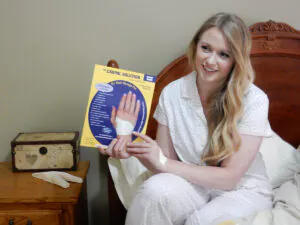
 The answer is clear.
You need to try a treatment with no surgical risk, no downtime and higher patient satisfaction before you consider carpal tunnel surgery.

 Surgery should always be a last resort for any ailment, but this is especially true with Carpal Tunnel because the syndrome and symptoms return even after surgery.
There is no permanent fix.
Discover an alternative to Carpal Tunnel Surgery
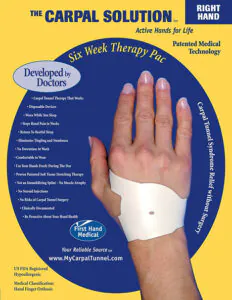 There is a new orthosis device on the market that has demonstrated 97% patient satisfaction with people suffering from carpal tunnel syndrome. That compares with a patient satisfaction rate lower than 69% for carpal tunnel surgery.
Do not be rushed into surgery without the facts or without trying the best clinically documented conservative therapy – The Carpal Solution.
Start getting back to your active life today without the risks, complications and downtime associated with surgery.
Be proactive and confident about protecting your hand health, call today:
1-800-798-5210
Here at mycarpaltunnel.com, you can review a wealth of evidence, with compelling 9 minute video programs featuring interviews with leading physicians and specialists on preventative wellness and natural healing.
You can watch video interviews of real carpal tunnel syndrome sufferers sharing their experience gaining relief without the extended downtime and long recovery periods associated with surgery. There are also “how to” application instructions with diagrams, and statistics about the Carpal Solution.
Frequently Asked Questions About Recovery From Carpal Tunnel Surgery
How long does recovery from carpal tunnel surgery take?
Most people return to light activities within a few weeks, and grip strength usually returns in about 2 to 3 months. If the nerve was badly compressed, full recovery can take 6 to 12 months.
Is pain after carpal tunnel surgery normal?
Some soreness, scar tenderness and pillar pain are normal and usually fade over weeks to months. Pain that gets worse, especially with redness, heat or drainage, should be checked right away.
Can carpal tunnel come back after surgery?
Yes. Symptoms can return, especially if the activities or health conditions that caused them continue. Long-term recurrence has rarely been studied; in one published study, 57% of patients had at least some symptoms return within five and a half years. Based on two decades of clinical experience with patients, our doctors estimate that symptoms return for 80 to 90% of patients within 10 years of surgery. This is not a statistically researched figure. It is their best estimate until the work is done to follow carpal tunnel patients for 10 years or more, as other orthopedic fields do for hip and knee replacements. Why so little certainty? Published recurrence rates range from about 4% to 57%, a spread that shows how poorly this question has been studied. Studies define recurrence differently, follow patients for only a few years and lose many of them along the way. The lowest figures count only repeat operations, a biased approach that ignores patient satisfaction and the patient’s perspective, so they are not credible.
Can I avoid surgery altogether?
Many people can. In our doctors’ two decades of experience, over 90% of people reach remission within six weeks of nightly Carpal Solution treatment, with 97% patient satisfaction over 21 years and 4.9 out of 5 stars on independent review sites like Google Reviews. If your symptoms improve over 6 to 8 weeks, surgery is not necessary.
Recovery is harder and relapse more likely with some health conditions. Read Who Should Avoid Carpal Tunnel Surgery? Inflammatory Conditions and Other Red Flags.
When Healing Needs a Doctor’s Help and Professional Medical Evaluation
- Constant numbness that does not improve or loss of feeling in the fingertips that does not improve in 4 to 8 weeks.
- Extreme loss of the muscle at the base of the thumb, with loss of grip strength that does not improve over 6 to 8 weeks.
- Worsening symptoms over 6 to 8 weeks while using the best conservative treatments
- Symptoms that begin suddenly after hand or wrist trauma, a fracture or severe sprain from a fall or auto accident.
- Odd Symptoms that are not consistent with the Carpal Tunnel Symptoms listed on this website, that might be indicative of other nerve issues. A nerve conductivity study can clear up the confusion with minimal costs and not too much pain and no risk.
These signs may mean more advanced nerve involvement or a different condition and deserve professional medical evaluation and in person consultation. Home treatment can be used alongside professional in-person medical care while you wait for the healthcare delivery system to fit you into their schedule. There is no reason to wait doing nothing. You can start proven natural conservative treatment with good patient reviews while you wait for your appointments. If your symptoms start improving over 6 to 8 weeks, then you know you are on the right track and surgery is not necessary.