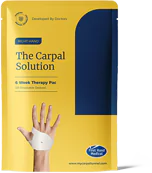
Created by renowned Harvard health care professionals.


Conventional Carpal Tunnel Treatment: Options, Limits and Alternatives
Since Carpal Tunnel Syndrome is a chronic recurring condition. It is important to treat it with a convenient, non-invasive, conservative treatment that has strong patient satisfaction results. There are 4 types of conservative treatments for Carpal Tunnel; wrist braces and wrist splints, passive stretching devices for sleep, oral medications, and steroid injections. The Carpal Solution Passive Nighttime stretching devices offers the patient the best treatment option for this chronic recurring syndrome.


Written by Jeff Conley, President, First Hand Medical · Medically reviewed by Michael E. Ruff, MD, orthopedic hand surgeon and associate clinical professor of orthopedic surgery at Ohio State University · Last reviewed: November 2026
Table of Contents
There are Four basic types of conservative conventional treatments:
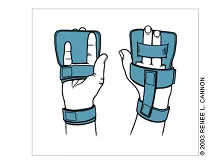 1) Wrist supports, Wrist splints, Cock-up Splints or Rigid Hand Braces
2) The Carpal Solution Nighttime Passive Stretching Devices
3) Oral corticosteroid therapy
4) Local corticosteroid injections (not that conservative)
Wrist supports or splints may be helpful, but these can result in muscle atrophy and other complications. A splint holds the wrist in a neutral position, which can reduce pain from movement, but it does not promote healing from carpal tunnel syndrome. It causes muscle atrophy and stiffness, and its tight compression restricts blood circulation and lymphatic fluid exchange, which slows the dispersion of entrapped swelling, the root cause of carpal tunnel syndrome.
Our medical team has observed that splints give some relief at first but aggravate symptoms in the long run. Immobilization is great for fractures and sprains, but not for carpal tunnel syndrome. Oral corticosteroid therapy and local corticosteroid injections can offer short-term relief, but have long-term side effects.
Also, oral therapy has the disadvantage of treating the whole body rather than just the point where it is needed. Most people would rather not deal with routine injections. Conventional carpal tunnel treatment can offer short-term relief, but it often does not address the cause of the symptoms.
Other Oral Pain Medications
Diuretics, nonsteroidal anti-inflammatory drugs (NSAIDs), pyridoxine (vitamin B6), and orally administered corticosteroids have been used with some temporary success in relieving symptoms in patients with carpal tunnel syndrome. A systematic review of conservative treatments for carpal tunnel syndrome the authors concluded that NSAIDs, diuretics, and pyridoxine are no more effective than placebo in relieving the symptoms of carpal tunnel syndrome (O’Connor and colleagues, Cochrane, 2003).
In our doctors’ clinical experience, symptoms return in over 80 percent of patients after conventional conservative treatments such as splints, medications and injections (clinical experience, not a published statistic). Better options are needed that allow daily activity, relieve pain, allow uninterrupted sleep and stop the progression of the syndrome without side effects such as muscle atrophy or steroids use.
Splints and supports are covered in more detail in our guide on why to avoid wrist splints and braces.
For general medical background on conventional carpal tunnel treatment, see the NINDS fact sheet on carpal tunnel syndrome.
Treatment Options for Carpal Tunnel Syndrome at a Glance
Carpal tunnel syndrome is a chronic, recurring condition, so the best treatment options for carpal tunnel syndrome are convenient, non-invasive and conservative, with strong patient satisfaction results. There are four types of conservative treatment: wrist braces and splints, passive stretching devices for sleep, oral medications and steroid injections. Surgery is the invasive option when conservative care fails. Here is how these carpal tunnel interventions compare over the long term.
| Treatment | What it does | Prognosis – Long-Term Results |
|---|---|---|
| Wrist splints | Hold the wrist still to reduce pain from movement | Do not promote healing; muscle atrophy, compression and restricted circulation and restricted lymph channels block natural healing. Helpful to immobilize to reduce pain from movement in the beginning. In the long-run Splints and rigid braces prevent healing and will make CTS worse for most patients. |
| Oral corticosteroids | Reduce inflammation throughout the body | Short-term benefit only; treat the whole body, with side effects, Not viable for a chronic recurring condition like CTS. |
| Steroid injections | Reduce inflammation inside the carpal tunnel | Relief beyond one month not demonstrated; repeat injections add little, risk of joint deterioration with repeated exposure. |
| NSAIDs, diuretics, vitamin B6 | Pain relief or fluid reduction | No significant benefit over placebo in clinical trials |
| Carpal tunnel release surgery | Cuts the transverse carpal ligament | Patient satisfaction rate lower than 69%; symptoms often return for 57 – 80 % of patients ever after a “successful surgery” over 5 to 10 years. Second carpal tunnel surgeries have a very low patient satisfaction rate. Second surgeries are not a viable option or plan for the future. |
| The Carpal Solution | Gently stretches the soft tissue around the carpal tunnel during sleep, jump-starts body’s natural healing processes, disperses entrapped inflammation – which is the root cause of CTS. | 97% Patient Satisfaction. Jump-starts- body’s natural healing to disperse trapped inflammation. As a conservative treatment that Treats the root cause of CTS, it is the best first line treatment to try before trying higher risk invasive procedures. Also allows preventative treatment to prevent recurrence of CTS. Another reason this is the best option for a chronic recurring condition. No Downtime, No Risks, No Scar Tissue, No Complications form invasive procedures. |
What the Research Says About Common Interventions for Carpal Tunnel Syndrome
Two Cochrane systematic reviews looked at the common interventions for carpal tunnel syndrome. A review of 12 trials with 671 people found that a local steroid injection gave more improvement than a placebo one month after the injection, but significant symptom relief beyond one month was not demonstrated, and two injections did no better than one (Marshall, Tardif and Ashworth, 2007).
A second review of 21 trials found short-term benefit from oral steroids, while diuretics and nonsteroidal anti-inflammatory drugs showed no significant benefit compared with placebo, and vitamin B6 did not significantly improve symptoms in two small trials. The authors noted that the duration of benefit from these carpal tunnel interventions remains unknown (O’Connor and colleagues, Cochrane, 2003).
Splints also give some short-term relief. That is short-term symptom relief, not healing. A splint holds the wrist in a neutral position, which can reduce pain from movement, but it does not promote healing from carpal tunnel syndrome, and immobilization leads to muscle atrophy. In one study, 14 days of immobilization cost healthy young men about 8% of muscle size and about 23% of strength (Wall et al., Acta Physiologica, 2014).
Why Conventional Carpal Tunnel Treatment Often Falls Short
Most conventional carpal tunnel treatment aims at symptoms rather than the soft tissue problem underneath. Swelling and entrapped inflammation in the soft tissue in and around the carpal tunnel squeeze the median nerve and restrict blood flow and lymphatic fluid transport, so the nerve becomes irritated, short of oxygen and compressed. Medication can quiet the inflammation for a while, and a splint can stop painful movement, but neither restores flexibility to the tight soft tissue. The forearm matters too: the muscles that bend the fingers and thumb are in the forearm, and their nine tendons pass through the carpal tunnel beside the median nerve.
There is also the waiting. The average wait for a new-patient physician appointment is 31 days, up 19% since 2022 (AMN Healthcare, 2025), and each step in the conventional sequence often means another appointment. A safe home treatment can ease sleep loss, pain and numbness while you wait. Read more about waiting for carpal tunnel treatment.
How to Choose Among Treatment Options for Carpal Tunnel Syndrome
With so many carpal tunnel interventions on the table, a simple order helps:
- Confirm the diagnosis. See a doctor for an in-person evaluation, especially for constant numbness, weakness or thinning of the thumb muscles.
- Start conservative. Use pillows to keep your wrists in a neutral position during sleep, and start the Carpal Solution at night.
- Give it a full trial. Follow the six-week protocol. Over 90% of people resolve in 6 weeks, and about 10% need 8 to 12 weeks.
- Add therapies that speed healing. Physical or occupational therapy, TENS, daytime stretches as a bonus and an anti-inflammatory diet can all help. Skip grip exercises, squeeze balls and putty while you heal.
- Keep surgery as the last resort. Consider it only when conservative carpal tunnel syndrome treatment options have truly failed or your doctor finds signs of nerve damage.
Your doctor can explain each conventional carpal tunnel treatment. Just remember that splints, medications and injections offer short-term relief at best, while a chronic, recurring condition needs a treatment you can return to safely whenever symptoms come back. That is why gentle, consistent passive stretching during sleep is the best long-term plan.
Why the Carpal Solution Is the Best Option for a Chronic, Recurring Condition
Of the four conservative treatment options for carpal tunnel syndrome, the Carpal Solution passive nighttime stretching device offers the best option for a chronic, recurring condition. It is the one built to treat the root cause, the entrapped inflammation in the soft tissue, rather than just the symptoms. Its targeted passive stretching restores flexibility to the injured soft tissue, relieves pressure on the median nerve, relieves restrictions on blood circulation and lets lymph fluid flow freely to clear out the swelling. It is your body that does the healing; the Carpal Solution just jump-starts it, with over 220 hours of targeted stretching across the six-week protocol.
Most people are better from their worst symptoms in two to three weeks, and over 90% resolve in 6 weeks. About 10% need 8 to 12 weeks and are usually 50 to 70% better at 6 weeks. The Carpal Solution has a 97% patient satisfaction rate over 21 years, 4.9 out of 5 stars on independent review sites like Google Reviews, and over 100,000 users over two decades. Neurologists, including Dr. James S. Zu, MD, PhD, of Edison, New Jersey, call the Carpal Solution “a better first line of defense.” Other conservative therapies, such as physical or occupational therapy, TENS and diet, can speed it up.
Because carpal tunnel syndrome is chronic and recurring, the Carpal Solution also works as prevention. Prevention nights, from once a week to once every six months, help keep symptoms from coming back, and remission usually lasts 5 to 7 years. There is no downtime, no surgical risk, no scar tissue and no complications, which makes it the best first line treatment to try before higher-risk invasive procedures.
Carpal Tunnel Release Surgery
 When conventional conservative treatments have been tried and failed for at least six months, it is generally recommended by most surgeons that the patient consider carpal ligament release surgery, but to be considered for reimbursement the diagnosis must be confirmed through nerve conductivity testing. Carpal tunnel strain has to have progressed to carpal tunnel syndrome at that point.
Surgery is done under twilight anesthesia. The drugs cause amnesia so it feels like one has been completely knocked out. Through an incision on the wrist, the carpal ligament is severed to relieve the pressure on the nerve.
The incision is sutured closed with the expectation that the ligament tissue will scar back together over several months leaving more space. This is not an exact science. One hopes that there will be no complications.
 Relief from pain is likely, but full recovery is uncertain. Patients usually have stiffness, and / or pain at the scar and may have complications with infection or nerve damage. The wrist will often lose strength because the carpal ligament has been severed and scars back together. Surgery requires months of rest and physical therapy after surgery to regain some of the original hand / wrist strength.
Carpal tunnel release surgery has a patient satisfaction rate lower than 69%, because about 31% of patients report lingering or recurring symptoms, and no patient is satisfied with lingering symptoms. A surgery that leaves symptoms is not a successful surgery. Even after a successful surgery, symptoms often return: in one study, 57% had at least some symptoms come back within 5.5 years (Nancollas 1995, reviewed in Louie, Earp and Blazar, 2012). Our doctors estimate 80 to 90% within 10 years, based on clinical experience, not statistically researched. See recurrence after carpal tunnel surgery.
Surgery can be repeated when symptoms return, but second surgeries have a patient satisfaction rate between 16% and 40%, so a second surgery is not a viable plan for a chronic, recurring condition. It is generally not recommended to perform this type of surgery more than twice. Before doing surgery a second time most medical professionals will suggest a change of the repetitive activity causing the carpal tunnel syndrome. Often patients with work related CTS will still need to adjust job duties or change jobs after recovery from surgery.
Without insurance, carpal tunnel surgery typically costs $1,800 to $9,000, with a national median of about $4,200 (CoveredUSA), before therapy and time off work. The majority of the costs is usually borne by the medical insurer. However, over the last five years insurers and employers have been actively shifting more of the costs of healthcare services to the patient. This trend is accelerating. With increasing co-pays, the emergence of health saving accounts and much higher deductibles, informed proactive consumers are taking a more active role in self-managing the cost / benefit and the consequences of their medical services. This phenomenon will lead to an acceleration of the development of viable alternatives to conventional conservative treatments.
Ask your doctor to explain each conventional carpal tunnel treatment option and its trade-offs. If conventional carpal tunnel treatment has not worked for you, read about carpal tunnel surgery and its risks and see how the Carpal Solution works.
Frequently Asked Questions
What are the treatment options for carpal tunnel syndrome?
There are four types of conservative treatment options for carpal tunnel syndrome: wrist braces and splints, passive stretching devices for sleep such as the Carpal Solution, oral medications and steroid injections. Surgery is the invasive option. Because carpal tunnel is chronic and recurring, our doctors recommend the Carpal Solution as the first line treatment and keep surgery as the last resort.
Which carpal tunnel interventions have the best evidence?
Cochrane reviews found short-term benefit from oral steroids and local steroid injections, but relief from an injection beyond one month has not been demonstrated. NSAIDs and diuretics did not beat placebo.
Is conventional carpal tunnel treatment covered by insurance?
Usually, yes. The Carpal Solution can also be reimbursed by health insurance, often 70 to 80%, and it comes with a 30-Day Patient Satisfaction Guarantee.
What is the most common conventional carpal tunnel treatment?
A wrist splint is usually the first conventional carpal tunnel treatment doctors suggest. Our doctors’ position is that a splint gives temporary relief from movement but does not promote healing, and night after night it leads to muscle atrophy and restricted circulation. Pillows that keep the wrists neutral during sleep, plus the Carpal Solution, are a better start.
Can I use the Carpal Solution with other carpal tunnel interventions?
Yes. The Carpal Solution is worn at night, so it fits alongside physical or occupational therapy, TENS and other conservative carpal tunnel interventions. If you have had carpal tunnel surgery, wait 3 months after the operation before starting it.
How long do conventional carpal tunnel syndrome treatment options last?
The research shows mostly short-term benefit. Relief from a steroid injection beyond one month has not been demonstrated, and the duration of benefit from oral steroids and other non-surgical options is unknown.
How do I know if I have carpal tunnel?
In our doctors’ two decades of clinical experience, people with three or more of the common carpal tunnel symptoms can be about 95% confident they have carpal tunnel syndrome. That is clinical experience, not a published statistic, so see a doctor for an in-person evaluation and formal diagnosis.
When Healing Needs a Doctor’s Help and Professional Medical Evaluation
- Constant numbness that does not improve or loss of feeling in the fingertips that does not improve in 4 to 8 weeks.
- Extreme loss of the muscle at the base of the thumb, with loss of grip strength that does not improve over 6 to 8 weeks.
- Worsening symptoms over 6 to 8 weeks while using the best conservative treatments
- Symptoms that begin suddenly after hand or wrist trauma, a fracture or severe sprain from a fall or auto accident.
- Odd Symptoms that are not consistent with the Carpal Tunnel Symptoms listed on this website, that might be indicative of other nerve issues. A nerve conductivity study can clear up the confusion with minimal costs and not too much pain and no risk.
These signs may mean more advanced nerve involvement or a different condition and deserve professional medical evaluation and in person consultation. Home treatment can be used alongside professional in-person medical care while you wait for the healthcare delivery system to fit you into their schedule. There is no reason to wait doing nothing. You can start proven natural conservative treatment with good patient reviews while you wait for your appointments. If your symptoms start improving over 6 to 8 weeks, then you know you are on the right track and surgery is not necessary.
Call Experts on CTS to Ask Questions or Order the Carpal Solution
Toll Free: 1-800-798-5210 or 801-930-9240

RISK FREE 30-Day Patient Satisfaction Guarantee
The ONLY treatment for carpal tunnel that comes with a no questions asked 30-Day Patient Satisfaction Guarantee and in-house dedicated pain relief team.