 Created by renowned Harvard health care professionals.


Carpal Tunnel Relief Cream and Topicals: What Actually Helps
A carpal tunnel relief cream can ease aching, tingling and night pain for a few hours, but no cream reaches the pressure on the nerve inside the carpal tunnel. Our doctors rated the most common carpal tunnel relief products by the evidence and show how to pair comfort with a treatment that works on the cause.
Written by Jeff Conley, First Hand Medical · Medically reviewed by Clyde E. Morgan, DC, co-founder of First Hand Medical · Last reviewed: November 2026
A carpal tunnel relief cream can make your hands feel better for a few hours. Menthol cools, lidocaine numbs, and plant-based oils can calm aching and stiffness. For many people, a cream for carpal tunnel brings welcome comfort, especially at the end of a long day or before bed.
What a cream cannot do is take the pressure off the median nerve inside the carpal tunnel. That pressure, driven by trapped inflammation and swelling, is what causes the numbness, tingling and night pain in the first place. This guide rates the most common carpal tunnel relief products by the evidence, explains how to use them safely, and shows how to pair a cream with a treatment that works on the cause.
Table of Contents
Carpal Tunnel Relief Cream: The Short Answer
- Creams and gels can ease symptoms, usually for a few hours. Menthol has the best small trial in carpal tunnel; a prescription lidocaine patch has a small industry-funded study.
- No carpal tunnel relief cream has been shown to treat carpal tunnel itself. None of them lowers pressure in the tunnel or helps the nerve recover.
- Natural topicals are a reasonable comfort add-on, especially products without petroleum-based additives, and they avoid the side effects of oral pain pills.
- The best results come from pairing comfort with treatment: a cream for symptom relief, plus nighttime passive stretching to work on the cause.
Why a Cream Can Ease Symptoms but Not Fix the Cause
Carpal tunnel syndrome is an entrapment syndrome. Inflammation and swelling build up inside the narrow tunnel at the wrist and squeeze the median nerve, along with the small blood vessels and lymph channels that pass through it. When blood flow and lymph drainage slow, fluid stays trapped and pressure climbs further. Read the root cause of carpal tunnel: trapped inflammation.
Most carpal tunnel relief creams and other topical carpal tunnel relief products work on the skin and the nerve endings just under it. Menthol triggers cold receptors, which can quiet pain signals for a while. Lidocaine blocks nerve signals in the area where it is applied. Anti-inflammatory ingredients can calm surface tissue and aching muscles in the hand and forearm.
The median nerve, though, sits under a thick ligament, deep in the wrist. Very little of any carpal tunnel relief cream reaches the inside of the tunnel, and nothing in a cream stretches the tight tissue over it. That is why a cream can make your hand feel better tonight while the numbness comes back tomorrow. It is also why the best carpal tunnel relief products are the ones you combine with a treatment that targets the trapped inflammation itself.
7 Carpal Tunnel Relief Products and Topicals, Rated
1. Menthol Gels and Creams
Evidence: limited but positive for short-term relief. In a small triple-blind, randomized, placebo-controlled trial of slaughterhouse workers with carpal tunnel syndrome, a menthol gel reduced hand and arm pain by about 1.2 points on a 0 to 10 scale compared with a placebo gel, roughly a one-third drop in pain (Rehabilitation Research and Practice, 2014). The trial was very small, about 10 people, and measured the short-term effect only.
Best for: quick comfort after a long day of gripping, typing or tool use. Menthol is the most common carpal tunnel relief cream on drugstore shelves, inexpensive and available over the counter.
2. Lidocaine Creams and Patches
Evidence: limited. In a small, industry-funded pilot study, a prescription lidocaine 5% patch worn on the wrist reduced carpal tunnel pain about as well as a single steroid injection over 4 weeks (Journal of Family Practice, 2006). It was open-label, so patients knew what they received. Over-the-counter lidocaine creams for carpal tunnel and patches are weaker (usually 4% or less) and have not been studied in carpal tunnel.
Best for: numbing a sore wrist for a few hours. Lidocaine does not reduce numbness or tingling caused by nerve compression, and some people find a numb hand harder to use.
3. Topical Anti-Inflammatory Gels (NSAID Gels)
Evidence: not studied in carpal tunnel. Diclofenac and similar gels help some people with arthritis. A Cochrane review found they work for a minority of people with osteoarthritis beyond placebo, and found no evidence for other chronic painful conditions (Cochrane, 2016).
Best for: people whose hand pain includes arthritis in the thumb base or wrist. Check with your doctor first if you take blood thinners or have kidney problems, and expect mild skin irritation in some cases.
4. Capsaicin Cream
Evidence: very limited for carpal tunnel. Capsaicin, from chili peppers, is used for some kinds of nerve pain. It works by first irritating and then desensitizing pain fibers in the skin, which is why it burns at first and must be used for days to weeks. There are no good-quality trials showing that capsaicin, or any similar carpal tunnel relief cream, helps carpal tunnel syndrome.
Best for: people who tolerate the burning well and want to try it for aching. Wash your hands well after use and keep it away from your eyes.
5. Arnica
Evidence: limited, after surgery only. In a double-blind trial of 37 patients after carpal tunnel release surgery, those given arnica (tablets plus an herbal ointment) reported less pain at 2 weeks, with no difference in grip strength or wrist swelling (Alternative Therapies in Health and Medicine, 2002). It has not been tested as a treatment for carpal tunnel itself.
Best for: bruising and post-surgical soreness. Do not apply to broken skin.
6. CBD Creams
Evidence: not yet tested. CBD creams are popular, and a small University of Virginia trial of topical cannabidiol for carpal tunnel syndrome has been registered, but no results have been posted (ClinicalTrials.gov). Products vary widely in strength and quality.
Best for: people curious to try a CBD cream for carpal tunnel, as a comfort measure only. Choose a product with third-party testing.
7. Doctor-Developed Botanical Pain Reliever
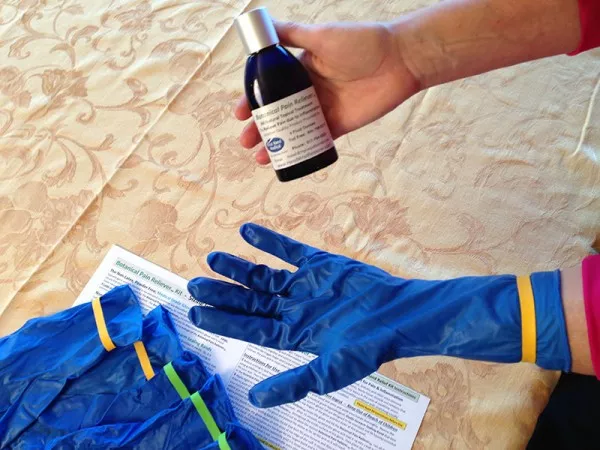
Evidence: clinical experience and patient use; no published trials. The Botanical Pain Reliever was developed by the same doctors behind the Carpal Solution, as a natural alternative to oral pain medication. It is a cold-pressed plant oil made from natural anti-inflammatory agents, with no preservatives and no petroleum-based additives.
What makes it different from a typical carpal tunnel relief cream is contact time. The hand kit uses hypoallergenic gloves that keep the oil against the hand, wrist and forearm for 2 to 3 hours in the evening or up to 7 hours during sleep, instead of a few minutes before a cream rubs off. It does not rub off on your sheets.
Best for: people who want natural, drug-free comfort for aching hands, wrists and joints, including those with arthritis or tendonitis alongside carpal tunnel. Like every topical, it eases symptoms; it is not a replacement for treatment that lowers pressure in the tunnel.
Topical Relief at a Glance
| Product | How it works | Evidence in carpal tunnel | Treats the cause? |
|---|---|---|---|
| Menthol gel | Cooling; quiets pain signals | One small positive trial | No |
| Lidocaine patch or cream | Numbs the skin and nerve endings | One small pilot study (prescription patch) | No |
| NSAID gel | Local anti-inflammatory | Not studied in carpal tunnel | No |
| Capsaicin cream | Desensitizes pain fibers | No good-quality trials | No |
| Arnica | Herbal anti-inflammatory | After surgery only | No |
| CBD cream | Uncertain | Trial registered, no results | No |
| Botanical Pain Reliever | Plant-based anti-inflammatory oil with long contact time | Clinical experience; no published trials | No; comfort measure |
| Carpal Solution (for comparison) | Passive stretching during sleep | Clinical documentation and strong patient-reported results | Yes; works on trapped inflammation |
The pattern is clear. Whether it is a cream for carpal tunnel, a gel or a patch, carpal tunnel relief products applied to the skin can help you feel better, but none of them is a treatment for carpal tunnel on its own.
How to Use a Carpal Tunnel Relief Cream Safely
Every carpal tunnel relief cream is safer when you follow a few simple rules:
- Patch test first. Try a small amount on your forearm and wait a day, especially with essential oils, capsaicin or arnica.
- Never combine with heat. Do not use menthol or capsaicin under a heating pad or tight wrap; it can burn the skin.
- Follow the label. Don’t exceed the number of lidocaine patches or the amount of gel listed, and don’t apply to broken or irritated skin.
- Wash your hands after applying capsaicin or menthol, and keep them away from your eyes.
- Check medicines. Ask your doctor or pharmacist before using NSAID gels if you take blood thinners or have kidney, heart or stomach problems.
- Don’t let numbness hide a problem. If you need a cream every day just to get through, that is a sign to treat the cause, not to apply more cream.
Why Night Treatment Matters More Than Any Cream
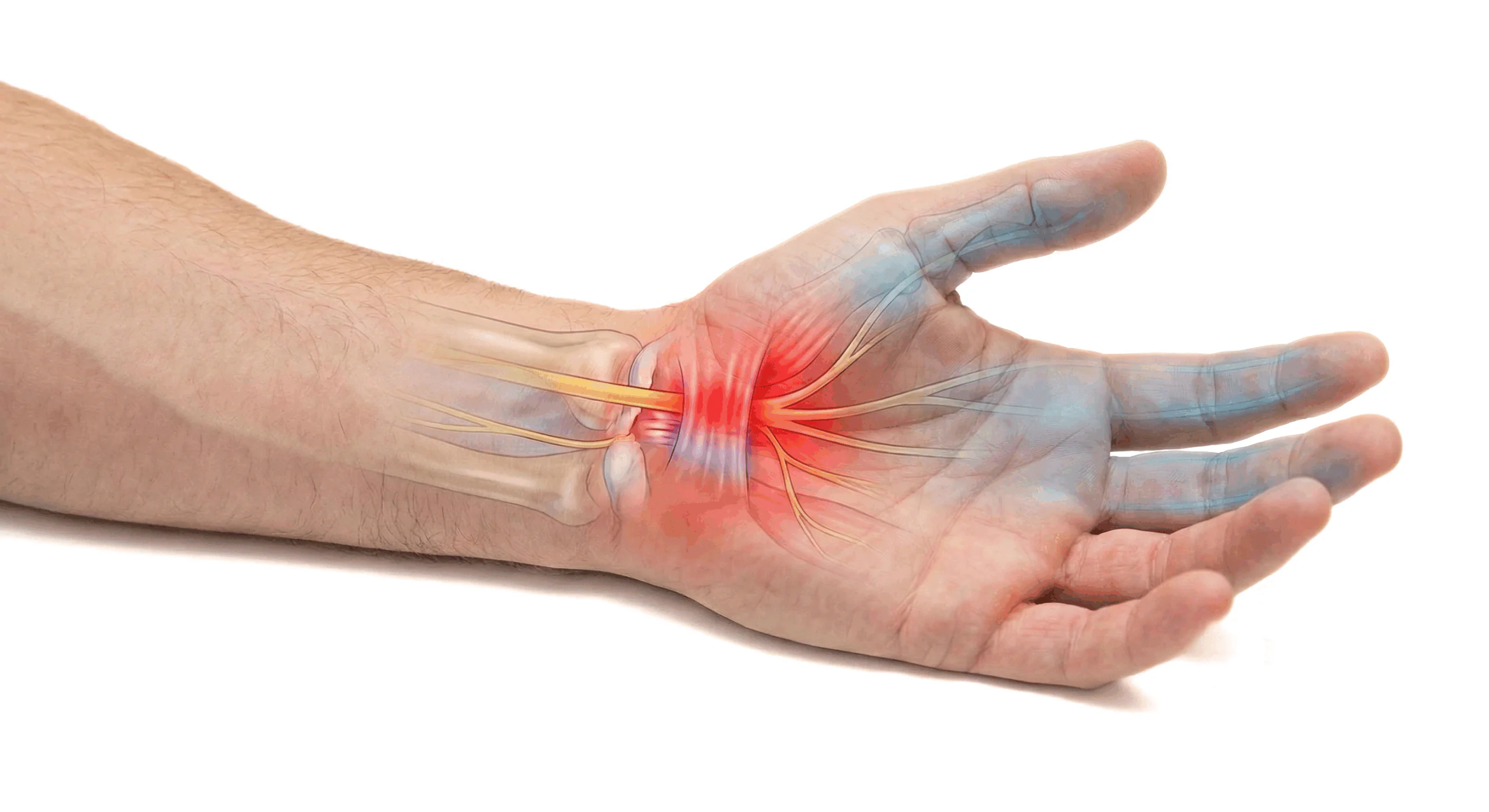
Most people bend their wrists for hours while they sleep, which raises pressure in the tunnel. That is why carpal tunnel symptoms are often worst at night and first thing in the morning. A carpal tunnel relief cream applied at bedtime may wear off before you fall asleep; the pressure keeps building all night.
The Carpal Solution works during those hours instead. Its gentle straps apply light, constant tension to the tissue around the carpal tunnel for 6 to 8 hours while you sleep, loosening the tight tissue so trapped inflammation can disperse and blood and lymph can flow again. Over a 6-week program, that adds up to more than 250 hours of passive stretching, done while you rest. Patients rate it 4.9 out of 5 stars on Google Reviews.
If you have had carpal tunnel surgery, wait 3 months before starting passive stretching, so the surgical tissue can heal first.
A Simple Plan: Cream for Comfort, Treatment for the Cause
- Nights: passive stretching with the Carpal Solution for 6 weeks.
- Evenings or bad days: a carpal tunnel relief cream, another of the carpal tunnel relief products above, or the Botanical Pain Reliever for comfort.
- Days: gentle stretches if your schedule allows, up to 6 sets of 10 reps, holding each stretch 15 seconds with 30 seconds’ rest. See the best exercises for carpal tunnel.
- Work and home: straight wrists, a lighter grip and short breaks every 30 to 60 minutes.
- Track it: note night wake-ups and numbness each week. Improvement over 4 to 6 weeks shows the treatment is working.
Compare more options in Natural Remedies for Carpal Tunnel: 10 Options Rated by the Evidence, Carpal Tunnel Pain Relief at Home and Carpal Tunnel Relief Without Surgery.
What Patients Say About Creams
Many patients on our site tried a carpal tunnel relief cream or two before they found lasting relief. Marcee, a hairstylist, lived with carpal tunnel for 13 or 14 years. She describes trying ibuprofen, pain-relief rubs, numbing creams and every drugstore wrist wrap and brace she could find.
“I used Ben Gay, I used numbing creams to get rid of the pain… did any of those things work? No, not at all.” — Marcee, hairstylist
Within two to three days of starting passive stretching at night, she says, she had about an 80% change in her hands. She now uses the Carpal Solution once or twice a week to keep her symptoms manageable. Watch her video in Hair Stylist Saves Career, or see seven more patient videos in How I Cured My Carpal Tunnel Without Surgery. Each story is personal, and results vary.
When Healing Needs a Doctor’s Help and Professional Medical Evaluation
- Constant numbness that does not improve or loss of feeling in the fingertips that does not improve in 4 to 8 weeks.
- Extreme loss of the muscle at the base of the thumb, with loss of grip strength that does not improve over 6 to 8 weeks.
- Worsening symptoms over 6 to 8 weeks while using the best conservative treatments
- Symptoms that begin suddenly after hand or wrist trauma, a fracture or severe sprain from a fall or auto accident.
- Odd Symptoms that are not consistent with the Carpal Tunnel Symptoms listed on this website, that might be indicative of other nerve issues. A nerve conductivity study can clear up the confusion with minimal costs and not too much pain and no risk.
These signs may mean more advanced nerve involvement or a different condition and deserve professional medical evaluation and in person consultation. Home treatment can be used alongside professional in-person medical care while you wait for the healthcare delivery system to fit you into their schedule. There is no reason to wait doing nothing. You can start proven natural conservative treatment with good patient reviews while you wait for your appointments. If your symptoms start improving over 6 to 8 weeks, then you know you are on the right track and surgery is not necessary.
Carpal Tunnel Relief Cream: FAQ
What is the best carpal tunnel relief cream?
For quick comfort, menthol gels have the best small trial in carpal tunnel. For natural, longer-lasting comfort, a plant-based oil like the Botanical Pain Reliever stays in contact for hours. No cream treats the cause, so pair it with nighttime passive stretching.
Do creams for carpal tunnel actually work?
They can ease pain and aching for a few hours, but none has been shown to reduce pressure on the median nerve or help it recover. Think of a cream as comfort, not treatment.
Is lidocaine or menthol better for carpal tunnel?
Menthol cools and quiets pain signals and has one small positive trial. A prescription lidocaine patch numbed pain about as well as a steroid injection in a small pilot study. Both are short-term comfort measures.
Can I use a carpal tunnel relief cream with the Carpal Solution?
Yes. Many people use a cream or the Botanical Pain Reliever in the evening for comfort and wear the Carpal Solution during sleep to work on the cause. Let any cream absorb fully before putting on the straps.
Are natural carpal tunnel relief products safe?
Most are safe for most people when used as directed. Patch test first, avoid broken skin and heat, and ask your doctor or pharmacist if you take blood thinners or have allergies to plants.
Why does my carpal tunnel come back after the cream wears off?
Because the cream calms the skin and nerve endings, not the pressure inside the tunnel. Treatments that loosen the tight tissue and help trapped inflammation disperse work on the reason symptoms return.
Sources
- Sundstrup E, et al. Acute effect of topical menthol on chronic pain in slaughterhouse workers with carpal tunnel syndrome: triple-blind, randomized placebo-controlled trial. Rehabilitation Research and Practice. 2014. PMC
- Nalamachu S, Crockett RS, Mathur D. Lidocaine patch 5% for carpal tunnel syndrome: how it compares with injections. The Journal of Family Practice. 2006;55(3):209–214. MDedge
- Derry S, et al. Topical NSAIDs for chronic musculoskeletal pain in adults. Cochrane Database of Systematic Reviews. 2016. Cochrane
- Jeffrey SL, Belcher HJ. Use of arnica to relieve pain after carpal-tunnel release surgery. Alternative Therapies in Health and Medicine. 2002. PubMed
- University of Virginia. Topical cannabidiol for treating carpal tunnel syndrome (NCT06108349). ClinicalTrials.gov
Disclosure: First Hand Medical makes the Carpal Solution and the Botanical Pain Reliever, and Dr. Morgan is a co-founder of the company. This article is for education and is not a substitute for advice from your own doctor.