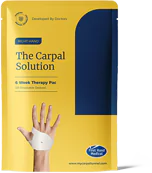
 Created by renowned Harvard health care professionals.


Carpal Tunnel Night Splint and Sleep Brace Guide
A carpal tunnel night splint holds your wrist straight while you sleep, and it can ease night numbness for a while. But it does not stretch the tight tissue or clear the trapped inflammation behind carpal tunnel. Here is what the research shows, how to sleep with a carpal tunnel brace, and a better plan for your nights.
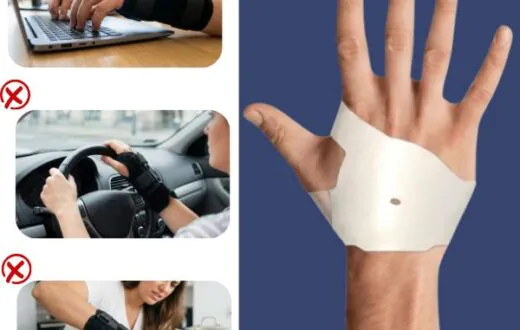
Written by Jeff Conley, First Hand Medical · Medically reviewed by Michael E. Ruff, MD, orthopedic hand surgeon and associate clinical professor of orthopedic surgery at Ohio State University · Last reviewed: November 2026
A carpal tunnel night splint is often the first thing a doctor or pharmacist suggests. It holds your wrist straight while you sleep, which can ease the numbness and tingling that wake you up at night. For some people, it helps for a while.
But a splint only holds the wrist still. It does not stretch the tight tissue over the carpal tunnel or help the trapped inflammation inside it clear, which is why symptoms so often come back. This guide explains what a night splint for carpal tunnel can and can’t do, what the research shows, how to sleep with a carpal tunnel brace if you use one, and a better plan for your nights.
Table of Contents
Carpal Tunnel Night Splint: The Short Answer
- A night splint keeps your wrist neutral, which lowers pressure in the tunnel while you sleep.
- The evidence is modest. Splints help some people in the short term, but the most recent Cochrane review rated the evidence as low certainty.
- Splints don’t treat the cause. They don’t stretch the tissue or clear trapped inflammation, and many people end up needing more treatment.
- Rigid braces have downsides: discomfort, broken sleep, stiffness and weakness with heavy use. Our doctors recommend avoiding them except for short periods of heavy lifting.
- A better option for your nights: passive stretching during sleep with the Carpal Solution, which keeps working on the cause for 6 to 8 hours.
Why Carpal Tunnel Is Worse at Night

Most people curl their wrists while they sleep, often for hours. Bending the wrist far forward or back raises pressure inside the carpal tunnel. At the same time, you are not moving your hands, so the fluid that builds up in the tissue is not pumped away.
Carpal tunnel syndrome is an entrapment syndrome. Inflammation and swelling build up in the narrow tunnel at the wrist and squeeze the median nerve, along with the small blood vessels and lymph channels that pass through it. When blood flow and lymph drainage slow at night, fluid stays trapped and pressure climbs. That is why you wake up with numb, tingling hands and feel the urge to shake them out. Read why carpal tunnel symptoms are worse at night and why hands go numb at night.
So the instinct behind a carpal tunnel night splint is sound: nights are where the problem builds. The question is whether holding the wrist still is enough.
What a Night Splint for Carpal Tunnel Does, and Doesn’t Do
What it does: a night splint for carpal tunnel holds the wrist in a straight, neutral position, so it can’t curl into the positions that raise pressure. Over-the-counter versions are usually fabric braces with a rigid metal or plastic stay along the palm side. Custom splints are molded by a hand therapist.
What it doesn’t do: a splint does not stretch the transverse carpal ligament or the tight tissue around the tunnel. It does not help the trapped inflammation and fluid disperse, and it does not restore blood and lymph flow. When you take it off, the tissue is just as tight as before.
That is why many people find that a carpal tunnel sleep brace helps at first and then stops being enough, or that symptoms come right back when they stop wearing it. Read Carpal Tunnel Splints vs. The Carpal Solution: Night-by-Night Results.
What the Research Says About Night Splints
- The latest review is cautious. A 2023 Cochrane review concluded that splints may not improve symptoms in the short term, based on low-certainty evidence (Cochrane, 2023).
- Older reviews were more positive. A 2007 systematic review rated splinting as having moderate evidence of effectiveness (Clinical Rehabilitation, 2007).
- Many splint users go on to need more. In a 176-patient trial comparing night splinting with surgery, 54% of the splint group reported success at 3 months, but by 18 months 41% of the splint group had gone on to have surgery (JAMA, 2002).
- Night-only wear may not be enough. In a small randomized study of 17 patients, those told to wear neutral splints full-time showed more improvement on nerve tests than those who wore them only at night, though many people did not follow the full-time schedule (Archives of Physical Medicine and Rehabilitation, 2000).
Put together, the research says a carpal tunnel night splint can ease symptoms for some people, but its benefit is modest and often temporary. And wearing a rigid splint around the clock to get more benefit brings its own problems.
The Downsides of Rigid Splints and Braces

Our doctors have seen many patients who wore splints and braces for months. The most common problems are:
- Discomfort and broken sleep. Rigid stays dig into the hand and arm, and many people wake up tangled or sore, or keep a partner awake.
- Stiffness and weakness. Holding the wrist still for long periods, especially in the daytime, can lead to joint stiffness and weaker hand muscles.
- Getting in the way. Daytime braces restrict normal activities and fine motor skills, so they are hard to wear at work.
- Masking, not treating. Splints can quiet symptoms without changing the tight tissue and trapped inflammation behind them.
That is why our doctors recommend avoiding rigid wrist splints except for short periods of heavy lifting. Read why wrist splints and braces can make carpal tunnel worse.
When a Night Splint for Carpal Tunnel Still Makes Sense
A carpal tunnel night splint is not useless. There are a few situations where it can play a short, supporting role:
- Heavy lifting. Our doctors’ protocol allows a brace for short periods of heavy lifting during the day, to keep the wrist from bending under load.
- While you wait to start treatment. If you are waiting for your Carpal Solution kit or an appointment, a soft carpal tunnel sleep brace that keeps the wrist straight can take the edge off night symptoms for a few nights.
- A doctor’s specific advice. If your doctor or hand therapist has prescribed a custom splint for a particular reason, follow their instructions.
What a night splint for carpal tunnel should not become is your long-term plan. If you find yourself reaching for a splint night after night for months, that is a sign the tight tissue and trapped inflammation behind your symptoms have not been treated. Our doctors explain why in carpal tunnel braces and splints.
How to Sleep With a Carpal Tunnel Brace
If you already have a carpal tunnel sleep brace or night splint and want to use it, these tips make it more comfortable and more effective:
- Choose neutral, not cocked-up. The wrist should be straight, in line with the forearm, not bent back.
- Snug, not tight. You should be able to slide a finger under the straps. Numbness or swelling in the fingers means it is too tight.
- Don’t sleep on your hands. Sleep on your back or side with your arms relaxed at your sides or resting on a pillow, not tucked under your head or body.
- Prop your arm. A pillow under the forearm keeps the wrist from dropping and helps fluid drain.
- Move in the morning. Take the brace off when you wake up and gently open and close your hands and stretch your wrists to bring back circulation.
- Keep daytime use short. Use a brace in the daytime only for short periods of heavy lifting, not all day.
For more sleep tips, read how to sleep with carpal tunnel and how to wear a carpal tunnel splint.
Night Splint vs. the Carpal Solution
| Carpal tunnel night splint | The Carpal Solution | |
|---|---|---|
| How it works | Holds the wrist still in a neutral position | Gentle, constant passive stretching of the tissue around the tunnel |
| Works on the cause? | No; tissue is just as tight when you take it off | Yes; helps trapped inflammation disperse and restores blood and lymph flow |
| Comfort | Rigid stays; can dig in and disturb sleep | Soft, flexible, disposable straps; barely noticeable |
| Daytime use | Often recommended, but restricts work | Not needed; worn only at night |
| Typical course | Open-ended; symptoms often return when stopped | 6 weeks nightly, then occasional maintenance nights |
| Evidence | Moderate to low; often short-term | Clinical documentation and strong patient-reported results; 4.9 stars on Google Reviews |
For a full comparison of braces, read Best Wrist Brace for Carpal Tunnel: The Carpal Solution With Passive Stretching.
A Better Night Plan for Carpal Tunnel
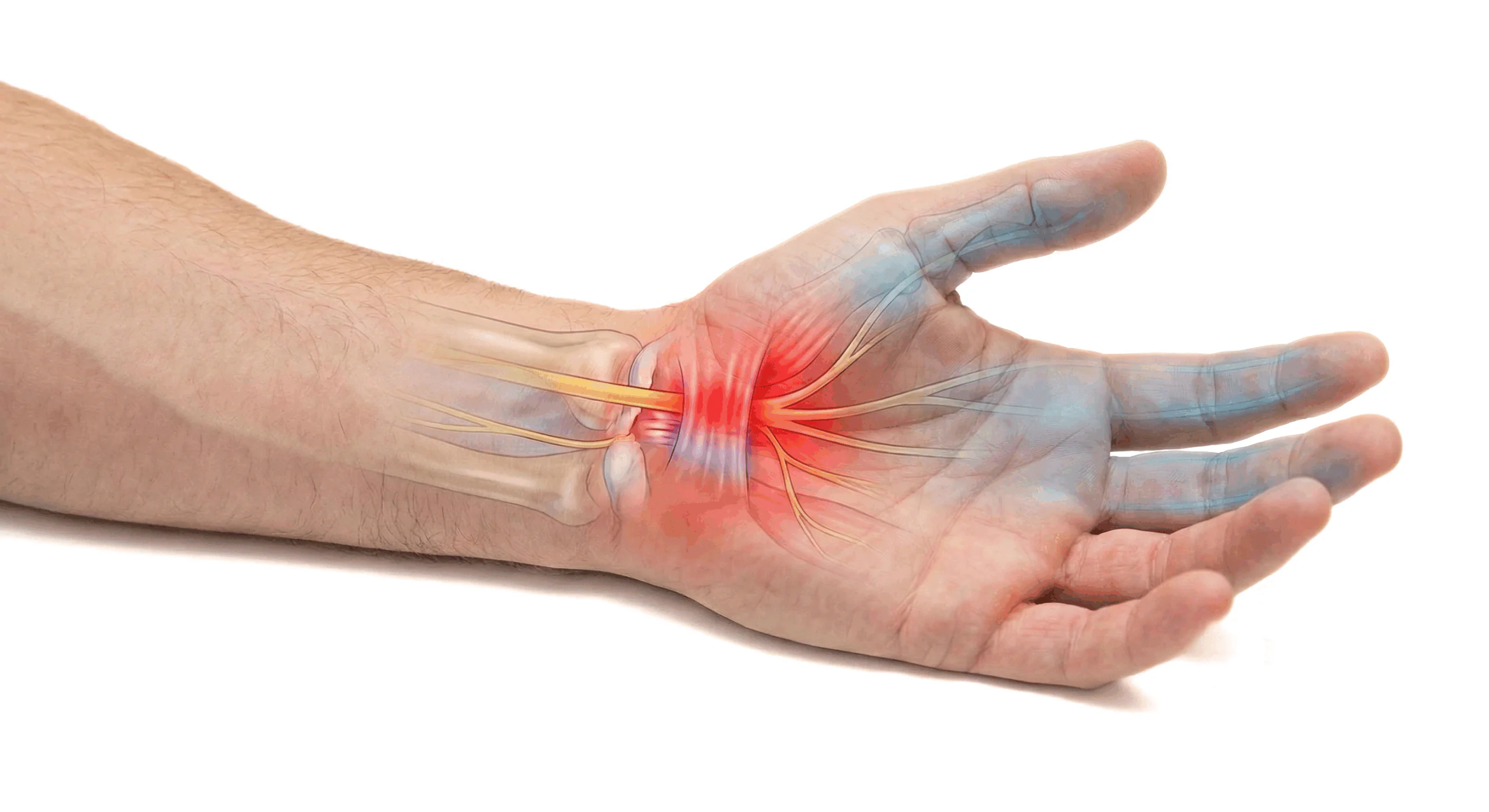
Since nights are where carpal tunnel builds, the best treatment works during those hours, and goes further than any carpal tunnel night splint. Our doctors recommend this plan:
- Nights: wear the Carpal Solution for 6 to 8 hours while you sleep, every night for 6 weeks. Its gentle straps apply light, constant tension to the tissue around the carpal tunnel, loosening the tight tissue so trapped inflammation can disperse. Over 6 weeks, that adds up to more than 250 hours of passive stretching.
- Days: gentle stretches if your schedule allows, up to 6 sets of 10 reps, holding each stretch 15 seconds with 30 seconds’ rest. See the best exercises for carpal tunnel.
- Sleep position: keep your wrists straight and off your hands, as in the tips above.
- Track it: note night wake-ups each week. Improvement over 4 to 6 weeks shows the treatment is working.
- Persistent symptoms: follow our doctors’ recommendations for persistent carpal tunnel symptoms, which extend nightly treatment to 10 to 12 weeks.
If you have had carpal tunnel surgery, wait 3 months before starting passive stretching, so the surgical tissue can heal first. Learn more in how nighttime stretching works for carpal tunnel and Mild Carpal Tunnel Treatment: What to Do First.
What Patients Say About Night Splints
Many of our patients tried a carpal tunnel night splint before finding lasting relief. Marla, a hairstylist and salon owner in Boca Raton, Florida, describes her experience:
“I tried the night splints, and thought they sometimes helped me sleep better, but often I woke up in uncomfortable positions where the rigid splints would dig into my body or disturb my partner.” — Marla, hairstylist
Her husband nicknamed them her “Mummy Hands.” Marla switched to the Carpal Solution and says she got back to a full night’s sleep within days. Read her story in Hair Stylist Saves Career, or see seven more patients, five of whom tried splints or braces first, in How I Cured My Carpal Tunnel Without Surgery. Each story is personal, and results vary.
When Healing Needs a Doctor’s Help and Professional Medical Evaluation
- Constant numbness that does not improve or loss of feeling in the fingertips that does not improve in 4 to 8 weeks.
- Extreme loss of the muscle at the base of the thumb, with loss of grip strength that does not improve over 6 to 8 weeks.
- Worsening symptoms over 6 to 8 weeks while using the best conservative treatments
- Symptoms that begin suddenly after hand or wrist trauma, a fracture or severe sprain from a fall or auto accident.
- Odd Symptoms that are not consistent with the Carpal Tunnel Symptoms listed on this website, that might be indicative of other nerve issues. A nerve conductivity study can clear up the confusion with minimal costs and not too much pain and no risk.
These signs may mean more advanced nerve involvement or a different condition and deserve professional medical evaluation and in person consultation. Home treatment can be used alongside professional in-person medical care while you wait for the healthcare delivery system to fit you into their schedule. There is no reason to wait doing nothing. You can start proven natural conservative treatment with good patient reviews while you wait for your appointments. If your symptoms start improving over 6 to 8 weeks, then you know you are on the right track and surgery is not necessary.
Carpal Tunnel Night Splint: FAQ
Does a carpal tunnel night splint work?
It can ease symptoms for some people by keeping the wrist straight while you sleep, but the evidence is modest and the benefit is often temporary. A splint does not stretch the tissue or clear the trapped inflammation behind carpal tunnel.
How long should I wear a night splint for carpal tunnel?
Splints are usually worn every night for several weeks. Many people find symptoms return when they stop, because the tissue around the tunnel is just as tight. Our doctors prefer a 6-week course of passive stretching at night, followed by occasional maintenance nights.
Should I wear a carpal tunnel brace during the day?
Our doctors recommend avoiding rigid braces during the day except for short periods of heavy lifting. Daytime bracing restricts work and fine motor skills and can lead to stiffness and weakness.
How do I sleep with a carpal tunnel brace?
Keep the wrist straight, not bent back; wear it snug but not tight; sleep on your back or side without lying on your hands; prop your forearm on a pillow; and gently move your hands when you take it off in the morning.
What is better than a night splint for carpal tunnel?
Passive stretching during sleep. The Carpal Solution applies gentle, constant tension to the tissue around the carpal tunnel for 6 to 8 hours a night, working on the trapped inflammation instead of just holding the wrist still.
Can I wear a splint and the Carpal Solution together?
There is no need. The Carpal Solution is worn at night in place of a splint. If you lift heavy objects during the day, a brace for short periods is fine.
Sources
- Karjalainen TV, et al. Splinting for carpal tunnel syndrome. Cochrane Database of Systematic Reviews. 2023. Cochrane Library
- Piazzini DB, et al. A systematic review of conservative treatment of carpal tunnel syndrome. Clinical Rehabilitation. 2007;21(4):299–314. PubMed
- Gerritsen AA, et al. Splinting vs surgery in the treatment of carpal tunnel syndrome: a randomized controlled trial. JAMA. 2002;288(10):1245–1251. PEDro
- Walker WC, Metzler M, Cifu DX, Swartz Z. Neutral wrist splinting in carpal tunnel syndrome: a comparison of night-only versus full-time wear instructions. Archives of Physical Medicine and Rehabilitation. 2000;81(4):424–429. PEDro
Disclosure: First Hand Medical makes the Carpal Solution, and Dr. Ruff is an investor and advisory board member of the company. This article is for education and is not a substitute for advice from your own doctor.