Created by renowned Harvard health care professionals.


Carpal Tunnel and Arthritis: Choosing the Safest Treatment
Carpal tunnel and arthritis feed each other: arthritis adds swelling and scar tissue in the wrist, and carpal tunnel symptoms recur faster when arthritis is present. Our doctors explain why surgery is riskier with arthritis and why a natural, non-invasive treatment is the safest first choice.


Carpal Tunnel Question:
Written by Julie Sunberg, Director of Marketing and Customer Service at First Hand Medical · Medically reviewed by Michael E. Ruff, MD, orthopedic hand surgeon and associate clinical professor of orthopedic surgery at Ohio State University · Last reviewed: November 2026
“If I have Arthritis, Is Carpal Tunnel Surgery A Good Option?
If Not, What is the Best Way to Treat Carpal Tunnel when I have both conditions?”
Question from: Benjamin – Houston, Texas
 Carpal Tunnel Surgery is a treatment option that should be weighed carefully before proceeding for anyone. This is because Patients report an overall Carpal Tunnel Surgery patient satisfaction rate lower than 69% (about 31% of patients report lingering or recurring symptoms after surgery, and no patient is satisfied with lingering symptoms). Also, Carpal Tunnel Syndrome (CTS) comes back even after a successful surgery for up to 57% of people within about five and a half years. Surgeons rarely follow patients long enough to know how often this happens; most studies stop at two years, and the longest published follow-up found that 57% of patients had at least some symptoms return within five and a half years, usually about two years after surgery (Nancollas et al., 1995). Second Surgeries have a lower patient satisfaction rate between 16% and 40%. These rates are spread over patients of all types with all kinds of contributing factors.
However, when a person has arthritis of any kind, Carpal Tunnel Surgery is a questionable treatment option at best for CTS. This is due to the high potential for scar tissue formation post-surgery during the healing process. There are so many small bones in the hand and wrist all held carefully together and cushioned from one another with soft tissue.
Arthritic soft tissue when disturbed or cut generates significantly more scar tissue than normal soft tissue. In our doctors’ clinical experience, this is one of the reasons patient satisfaction rates for carpal tunnel surgery are much lower for people with arthritis.
In fact, many patients with Arthritic conditions get worse after surgery due to the generation of excess scar tissue. In an already tight space, excessive scar tissue will constrict the space further in the Carpal Tunnel. Any scar tissue will create additional pressure on the median nerve, making Carpal Tunnel Symptoms even worse after surgery than it was before.
For these reasons, many surgeons are cautious about recommending carpal tunnel surgery for patients with arthritis.
With Arthritis, CTS Symptoms Return Quicker even with a successful Surgery.

Often the Symptoms Get Worse After Surgery due to Scar Tissue.
Ironically, Arthritis is one of over 27 possible contributing factors that can contribute to Carpal Tunnel Syndrome.
You can learn more about contributing factors or Causes of Carpal Tunnel here.
There are several different types of Arthritis that can affect the area around the Hand and Wrist. The types most relevant to Carpal Tunnel Syndrome are listed below:
Avascular Necrosis in the Bones of the Wrist
– when the bone tissue is damaged, embrittled, fractured or actually dies due to restricted blood flow to the bone. Since most people with CTS always have restricted blood flow to the hand, wrist and forearm this is a condition of which one should be acutely aware if CTS has gone untreated for many years. Usually, prior trauma from a fall or accident combines with restricted blood flow from CTS or some other condition to contributing to an Avascular Necrosis condition. Swelling of the Carpal Bones from this condition can actually contribute to CTS. So, these two conditions can be cyclical one contributing to the other.
Rheumatoid Arthritis
– This is an autoimmune disorder that will also contribute to Carpal Tunnel Syndrome. It is a chronic condition that over time will lead to bone and joint deformation. It affects the joint lining and causes the joints to swell. It can contribute to Carpal Tunnel through swelling as well as through formation of scar tissue and deformation of the bone with rheumatoid nodules or bumps.
Osteoarthritis
– This is the classic arthritic condition associated with wear and tear – repeated minor trauma (repetitive stress) over and over again throughout a life time. It usually begins in people over 50 years of age.
Post-Traumatic Arthritis
– This is caused by a prior traumatic injury which can lead to joint instability and damage to the soft tissue around the joints. There are so many small bones in the hand and wrist that there is an ample opportunity for injury to the soft tissue that cushions these joints and holds them in place
If you’re over 50 and have a family history of Arthritis or have other reason to believe you might have an arthritic condition, you should check with a rheumatologist for an evaluation and diagnosis.
 Everyone with CTS should seek clinically documented, non-invasive Carpal Tunnel Treatment and consider Carpal Tunnel Surgery a last resort.
However, if you are found to have any kind of arthritis, then this approach becomes essential. Undergoing this surgery with an arthritic condition would be considered by most medical professionals as highly questionable and only justified in extreme situations.
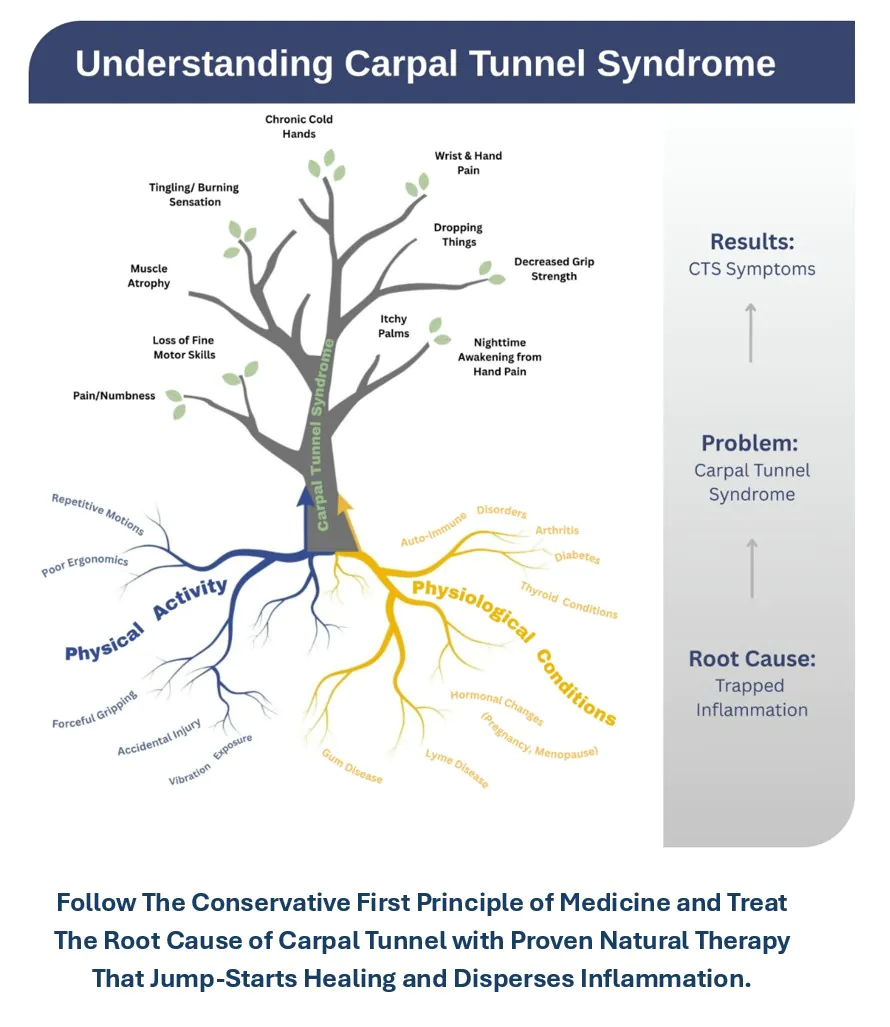
So, what can be done if you have Carpal Tunnel Syndrome and Arthritis?
The best place to start is using a Carpal Tunnel Treatment option that restores full blood circulation and returns flexibility to the injured soft tissue. Full blood circulation promotes naturally healing and is good for arthritic tissue as well as removing swelling fluids in the Carpal Tunnel.
One of the best options for you to consider is the Carpal Solution Therapy. It was developed by Doctors working with patients and provides gentle targeted stretching of the soft tissue around the Carpal Tunnel during sleep. Most people get relief of their worst symptoms in two to three weeks and complete remission within Six Weeks.
For People with Arthritis sometimes it can take longer than the Six Weeks because the symptoms are what the doctors call “more persistent”. However, it is still the best treatment options for people suffering with CTS that also have arthritis. The issue is Arthritis keeps bringing it back even after it is successfully treated. Restoring blood flow to the injured tissue is a key to alleviating CTS Symptoms and slowing the advances of arthritis. The thermal images below demonstrate how the Carpal Solution Therapy immediately jump starts the healing process.
Diet can play a big role in managing inflammation at the source, and inflammation drives arthritis and most other chronic diseases including Carpal Tunnel Syndrome. The Carpal Solution Diet will provide you with the direction would likely help you minimize the impact of inflammation on Arthritis, Carpal Tunnel Syndrome and improve your overall health. Turmeric is an additive that can help the lymph system to draw out toxins and inflammation from injured soft tissue. Learn more about Turmeric Supplements.
Arthritis adds to the whole-body inflammation that feeds CTS; see how to control carpal tunnel inflammation for a plan that addresses both.
 The picture on the right is a Thermal Imaging Picture. Where pink represents normal skin temperature, yellow below normal skin temperature and blue represents cold skin temperature.
It shows blood circulation is significantly restored within 15 minutes of putting on the Carpal Solution Soft Tissue Stretching Therapy.
With the Carpal Solution Six Week Therapy Pac, you are able to apply 224 hours of gentle targeted stretching to the soft tissue around the Carpal Tunnel while you sleep.
If that much circulation is restored in 15 minutes, imagine the impact of the stretching therapy over 6 weeks for 8 hours each night during sleep
People with Arthritis and CTS usually have more persistent symptoms.
They often have to use the Carpal Solution Devices on the maintenance schedule 2 – 4 nights per month once they have completed the Six Week Protocol developed by the Doctors.
It is worth the extra effort for people with Arthritis andCTS to avoid the downtime, risks and frequent complications of Carpal Tunnel Surgery.
Patients Report that wearing the Carpal Solution also relieves Arthritic Pain.
Neurologists Say The Carpal Solution Therapy Is the Best First Line Treatment for Carpal Tunnel Syndrome for all CTS Sufferers.
It is perhaps the only viable treatment for those who also have Arthritis.
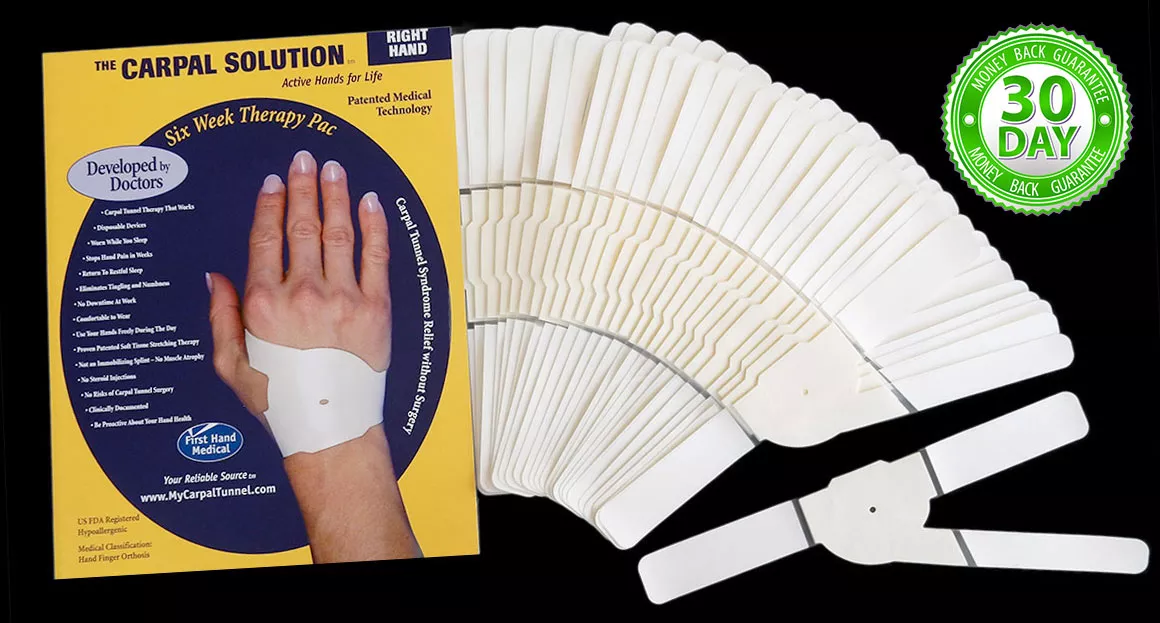
Over 90% Success Rate with Arthritic Patients
Call The Carpal Tunnel Experts and Order the Carpal Solution at:
1-800-798-5210
Rheumatoid Arthritis and Carpal Tunnel
Rheumatoid arthritis and carpal tunnel are closely linked. Rheumatoid arthritis is an autoimmune condition that inflames the lining of joints and tendon sheaths. In the wrist, that lining surrounds the nine flexor tendons that pass through the carpal tunnel beside the median nerve: four flexor digitorum superficialis, four flexor digitorum profundus and the flexor pollicis longus. When the lining swells, the tunnel gets more crowded and the nerve gets squeezed.
That is why people with rheumatoid arthritis and carpal tunnel often find their symptoms more persistent and quicker to return. The inflammation that drives the arthritis keeps refilling the tunnel with swelling. Osteoarthritis and post-traumatic arthritis add to the problem in a different way, through joint changes and scarring that narrow the space.
If you have rheumatoid arthritis and carpal tunnel, work with your doctor or rheumatologist on the arthritis itself. The Carpal Solution treats the carpal tunnel symptoms; no one should rely on it alone to treat arthritis or other inflammatory conditions.
How the Carpal Solution Helps When You Have Carpal Tunnel and Arthritis
Start with pressure. Swelling and entrapped inflammation in the soft tissue in and around the carpal tunnel squeeze the median nerve and restrict blood flow and lymphatic fluid transport, so the nerve becomes irritated, short of oxygen and compressed. The Carpal Solution’s targeted passive stretching restores flexibility to the injured soft tissue, relieves pressure on the median nerve, frees circulation and lets lymph fluid flow to clear out the swelling. It is your body that does the healing; the Carpal Solution just jump-starts it.
Most people are better from their worst symptoms in two to three weeks, and over 90% resolve in six weeks. About 10%, usually people with excess systemic inflammation, which includes many people with arthritis, need 8 to 12 weeks and are typically 50 to 70% better at six weeks. Because arthritis keeps generating inflammation, prevention nights from once a week to once every six months matter even more. The Carpal Solution has 97% patient satisfaction over 21 years and 4.9 out of 5 stars on independent review sites like Google Reviews.
Avoid relying on a splint. A splint holds the wrist in a neutral position, which can reduce pain from movement, but it does not promote healing, and stiff arthritic joints do not need more immobilization: healthy adults lost about 8% of muscle size and 23% of strength after 14 days in a cast (Wall et al., Acta Physiologica, 2014). Skip grip exercises, squeeze balls and putty while you heal.
Surgery When You Have Carpal Tunnel and Arthritis
For everyone, carpal tunnel surgery has a patient satisfaction rate lower than 69%: about 31% of patients report lingering or recurring symptoms, and no patient is satisfied with lingering symptoms. Second surgeries have a patient satisfaction rate of only 16 to 40%. Even after a successful surgery, 57% had at least some symptoms return within five and a half years (Nancollas et al., 1995, reviewed in Louie, Earp and Blazar, 2012). Read why the recurrence numbers are so poorly studied.
With arthritis, our doctors’ clinical experience is that these numbers get worse, because arthritic tissue scars more and inflammation keeps returning. That is why carpal tunnel and arthritis together call for a conservative-first plan, with surgery as the last resort.
Our doctors’ clinical experience is that people with three or more classic carpal tunnel symptoms can be about 95% confident they have carpal tunnel syndrome; that is clinical experience, not a published statistic, so get a formal diagnosis, which matters even more when arthritis can cause similar hand pain. If you are waiting for an appointment, the average new-patient physician wait is 31 days (AMN Healthcare, 2025); see relief while waiting for carpal tunnel treatment.
A Daily Plan for Living With Carpal Tunnel and Arthritis
Managing carpal tunnel and arthritis together is about lowering inflammation and keeping the hands moving gently. At night, wear the Carpal Solution so the tissue around the carpal tunnel gets hours of gentle stretch. During the day, compression gloves can increase circulation and cushion sore joints, and gloves by day with the Carpal Solution at night is one of the best combinations we know.
Diet matters with rheumatoid arthritis and carpal tunnel, because inflammation drives both. A diet low in sugar and refined carbohydrates is a good start; the protocol’s reading list includes Dr. Valter Longo’s The Longevity Diet, Dr. Nicole Avena’s Why Diets Fail and Max Lugavere’s Genius Foods. Drink plenty of water, and once symptoms are in remission, regular aerobic exercise helps keep inflammation down.
Pace hand-heavy tasks. People with carpal tunnel and arthritis often feel worst after long stretches of gripping, typing or gardening. Break those tasks up, keep the wrists relaxed, and use daytime stretches as a bonus: up to six sets of ten, holding each 15 seconds with 30 seconds of rest.
Finally, keep both doctors in the loop. Rheumatoid arthritis and carpal tunnel each need their own care, and the best results come when the arthritis is treated by your doctor and the carpal tunnel is treated naturally at home.
When Healing Needs a Doctor’s Help and Professional Medical Evaluation
- Constant numbness that does not improve or loss of feeling in the fingertips that does not improve in 4 to 8 weeks.
- Extreme loss of the muscle at the base of the thumb, with loss of grip strength that does not improve over 6 to 8 weeks.
- Worsening symptoms over 6 to 8 weeks while using the best conservative treatments
- Symptoms that begin suddenly after hand or wrist trauma, a fracture or severe sprain from a fall or auto accident.
- Odd Symptoms that are not consistent with the Carpal Tunnel Symptoms listed on this website, that might be indicative of other nerve issues. A nerve conductivity study can clear up the confusion with minimal costs and not too much pain and no risk.
These signs may mean more advanced nerve involvement or a different condition and deserve professional medical evaluation and in person consultation. Home treatment can be used alongside professional in-person medical care while you wait for the healthcare delivery system to fit you into their schedule. There is no reason to wait doing nothing. You can start proven natural conservative treatment with good patient reviews while you wait for your appointments. If your symptoms start improving over 6 to 8 weeks, then you know you are on the right track and surgery is not necessary.
Carpal Tunnel and Arthritis FAQ
Is there a link between carpal tunnel and arthritis?
It can contribute. Arthritis adds swelling, scar tissue and joint changes that crowd the carpal tunnel and squeeze the median nerve.
How do I tell carpal tunnel from arthritis pain?
Carpal tunnel usually causes numbness and tingling in the thumb and first three fingers, often worse at night. Arthritis usually causes joint pain and stiffness. Many people have both, so see a doctor for a diagnosis.
Is the Carpal Solution safe with rheumatoid arthritis and carpal tunnel?
It is non-invasive and hypoallergenic (no latex). Do not use it where there is a fracture, bone deformity, open wound or skin disorder, or within three months of hand or wrist surgery, and keep treating the arthritis with your doctor.
Will carpal tunnel come back with rheumatoid arthritis and carpal tunnel together?
It tends to come back sooner. Carpal tunnel syndrome is chronic and recurring and cannot be cured, but the Carpal Solution is the next best thing: it controls symptoms at home without downtime, risks, scar tissue or complications, and you can repeat it whenever symptoms flare.

Order Your Six Week Carpal Tunnel Treatment Now
The ONLY treatment for carpal tunnel that comes with a no questions asked 30-Day Patient Satisfaction Guarantee and in-house dedicated pain relief team.