 Created by renowned Harvard health care professionals.


Carpal Tunnel From Sewing: A Dress Designer Avoids Surgery

Carpal tunnel from sewing crept up on Laurie, a fabrics manager and dress designer in Mesa, Arizona. Nerve tests showed severe carpal tunnel syndrome, months of physical therapy were not working, and her surgeon strongly advised surgery. Here is how she avoided it, in her own words, followed by what sewing does to the hands and what seamstresses can do about it.
Table of Contents
Laurie’s Experience: A Dress Designer Avoids Surgery
“The Carpal Solution is amazing! I went through months of physical therapy and saw a hand specialist because of weakness in my hand and pain in my neck. The Neurologist did nerve tests and discovered I have severe Carpal Tunnel Syndrome.
The Surgeon strongly advised me to have surgery but I was very hesitant. I told him I wanted to do anything to avoid going under the knife.
So, he worked with me and did more physical therapy but it still really wasn’t working. I was getting tired of going to the clinic a couple of times per week with no results.
One night I was up late and happened upon the Carpal Tunnel Solution. I watched the video of the other people who tried this treatment. I liked how real they were. Some were from the medical field. I was very willing to give it a shot after watching the videos.
I felt I had nothing to lose!
I ordered it and followed the directions. I was amazed how simple it was to apply.
Within the first week I noticed the pain in my neck was almost all gone (not sure how it was related, but it definitely happened).
It became easier and easier to use tweezers, zip my pants, button buttons and tie my shoes. All of these simple everyday things were becoming difficult to do, but now they are getting easier and easier.
I was also very worried about my job! It requires me to use my hands a lot which was becoming harder and harder for me to do it well.
Now that I wear the Carpal Tunnel Solution, things are getting closer to normal.
Also, while at work, I see a lot of people and chat with them. I talked to a woman last week who had the hand surgery for carpal tunnel and she was very upset because she has a lot of scars and the surgery [didn’t] help at all.
Now she is having troubles with the other hand too and is really worried about what to do.
I told her about this amazing Carpal Solution Treatment and she said she would look into getting it. I am confident she will do it.
Why wouldn’t you try this simple natural treatment developed by Doctors. There is nothing to lose and everything to gain. !
I am so glad I found this natural “cure” and avoided all those complications and lost time.
I would recommend this treatment to anyone suffering with Carpal Tunnel Syndrome! It is the best treatment option. I can’t say enough good things about The Carpal Solution Treatment. Thanks First Hand Medical!!”
Laurie, Fabrics Manager and Dress Designer, Hobby Lobby Craft Store, Mesa, Arizona

Why Sewing Leads to Carpal Tunnel
Seamstresses, dress designers, quilters and craft hobbyists spend hours pinching fabric, guiding it under a needle, cutting with shears and threading small parts. That is repetitive, precise work for the fingers and thumb, often with the wrist bent. A large case-control study of people who needed carpal tunnel surgery found that textile workers, mainly sewing-machine operators, had about nine times the odds of the control group after adjusting for other risk factors (Mattioli and colleagues, BMC Public Health, 2009). Seamstress carpal tunnel is common, and many people suffer in silence hoping it will go away on its own.
The anatomy explains why. The muscles that bend your fingers and thumb live in your forearm, and their nine tendons run through the carpal tunnel beside the median nerve. Every pinch and pull of fabric slides those tendons back and forth. When their linings swell, swelling and entrapped inflammation in the soft tissue in and around the carpal tunnel squeeze the median nerve and restrict blood flow and lymphatic fluid transport; the nerve becomes irritated, short of oxygen and compressed. Over time the forearm and thumb muscles lose strength and dexterity, which is exactly what makes fine sewing harder.
Buttons, Tweezers and Fine Motor Skills
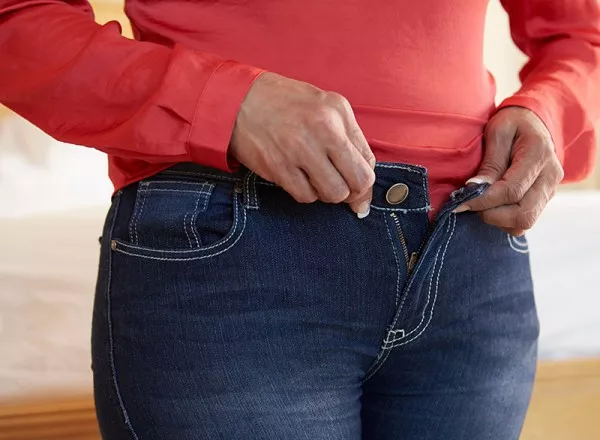 Laurie’s list is a classic one: tweezers, zippers, buttons and shoelaces all got harder. Carpal tunnel fine motor skills problems come from the median nerve, which carries feeling from the thumb, index, middle and part of the ring finger and powers the thenar muscles at the base of the thumb. Numb fingertips cannot feel a needle or a button, and weak thumb muscles cannot pinch firmly, so you drop pins and fumble with small tasks. For a seamstress, that is a threat to the job itself. Read more about why you keep dropping things and muscle atrophy and carpal tunnel.
When Physical Therapy Is Not Working
Laurie went to the clinic a couple of times a week for months without results. Physical therapy and daytime stretching are helpful additions, but a few sessions a week cannot match what happens overnight. The Carpal Solution delivers over 220 hours of targeted passive stretching in the six-week protocol while you sleep, with no extra appointments and no discipline required. Physical therapy not working for carpal tunnel is a common complaint, and adding nighttime stretching is often the missing piece, and therapy then helps speed things along. See our doctors’ recommendations for persistent carpal tunnel symptoms.
What About Her Neck Pain?
 Laurie noticed her neck pain was almost gone in the first week and was not sure how the two were related. Neck problems and carpal tunnel often travel together. Doctors call it “double crush” when a nerve is squeezed at two places, such as the neck and the wrist, and the two can add up to stronger symptoms (Kane and colleagues, Journal of the American Academy of Orthopaedic Surgeons, 2015). A large 2024 study found people with carpal tunnel were more likely than matched controls to also have a pinched nerve in the neck (Global Spine Journal).
Long hours bent over a sewing machine strain both. Her experience is her own, but if you have neck and hand symptoms, tell your doctor about both, and read about shoulder and neck pain from carpal tunnel.
How the Carpal Solution Works for Seamstresses
 Worn at night, the Carpal Solution’s targeted passive stretching restores flexibility to the injured soft tissue, relieves pressure on the median nerve, relieves restrictions on blood circulation and lets lymph fluid flow freely to clear out the swelling. It is your body that does the healing; the Carpal Solution just jump-starts the natural healing preempted by excess pressure from inflammation and swelling. You keep sewing during the day.
Most people are better from their worst symptoms in two to three weeks, and over 90% resolve in six weeks; about 10%, with excess systemic inflammation, need 8 to 12 weeks and are usually 50 to 70% better at six weeks. The materials are Hypoallergenic (No Latex). Over 100,000 people have used the Carpal Solution over two decades, with 97% patient satisfaction over 21 years and 4.9 out of 5 stars on independent review sites like Google Reviews. It is backed by a 30-Day Patient Satisfaction Guarantee.
Neurologists, including Dr. James S. Zu, MD, PhD, of Edison, New Jersey, call the Carpal Solution a better first line of defense for carpal tunnel syndrome.
A few tips for sewing days: take short breaks to open and close your hands, keep your wrists as straight as you can at the machine, use sharp shears so you squeeze less, and skip squeeze balls and putty while you heal. Gentle daytime stretches are a bonus (up to 6 sets of 10, holding each for 15 seconds with 30 seconds of rest).
Remission usually lasts 5 to 7 years for most people, from as little as 1 year to as long as 17 depending on hand use and systemic inflammation, and prevention nights from once a week to once every six months help keep you sewing. Knitters and crocheters can read our knitting hobbyist’s experience and crochet carpal tunnel.
Setting Up Your Sewing Space
Small changes at the machine take pressure off the carpal tunnel while you heal and help keep seamstress carpal tunnel from coming back:
- Raise or lower your chair so your forearms rest level with the machine bed and your wrists stay straight, not bent up or down.
- Let the feed dogs pull the fabric; guide it lightly instead of gripping and pushing.
- Use sharp, spring-loaded shears or a rotary cutter so your hand squeezes less.
- Choose larger, cushioned handles on seam rippers and tools, and a pincushion or magnetic pin holder instead of pinching pins from a box.
- Set a timer to stand, roll your shoulders and open and close your hands every 30 to 45 minutes; that also helps your neck.
- Light the work well so you are not hunching forward to see the needle.
Severe Carpal Tunnel, Surgery and the Waiting
Laurie’s nerve tests showed severe carpal tunnel, and she still treated it at home. Our doctors encourage people with mild, moderate and even severe carpal tunnel to try the best conservative treatment first; improvement in 4 to 6 weeks shows it is working. If symptoms are constant or getting worse, see the warning signs below. Read another experience of severe carpal tunnel treated at home.
The woman Laurie met at work was left with scars and no relief, and that experience is not unusual. A splint holds the wrist in a neutral position, which can reduce pain from movement, but it does not promote healing; it leads to muscle atrophy over time and restricts blood circulation and lymphatic fluid exchange. Surgery is the last resort. Carpal tunnel surgery has a patient satisfaction rate lower than 69%, because about 31% of patients report lingering or recurring symptoms, and no patient is satisfied with lingering symptoms (Bland, Muscle & Nerve, 2001).
Even after a successful surgery, symptoms often return: 57% had at least some symptoms come back within 5.5 years in one study (Nancollas, 1995, reviewed by Louie, Earp and Blazar, HAND, 2012). Our doctors estimate 80 to 90% within 10 years from two decades of clinical experience; that has not been statistically researched and is their best estimate until long-term studies are done. Second surgeries have a patient satisfaction rate between 16% and 40%. See recurrence after carpal tunnel surgery and carpal tunnel surgery myths.
Then there is the waiting. The average wait for a new-patient physician appointment is 31 days (AMN Healthcare, 2025), and neurologists, nerve tests and surgeons add more. You do not have to wait doing nothing; you can start safe, natural treatment at home while you wait for your appointments. Read more about waiting for carpal tunnel treatment.
Carpal Tunnel From Sewing: Frequently Asked Questions
Can sewing cause carpal tunnel?
It can contribute. Long hours of pinching, gripping and guiding fabric with bent wrists load the finger tendons that share the carpal tunnel with the median nerve, and sewing-machine work is linked to higher odds of carpal tunnel surgery.
Can I keep sewing while I treat it?
Yes. The Carpal Solution is worn while you sleep, so there is no downtime. Pace yourself, take breaks and keep your wrists straight.
Can severe carpal tunnel be treated without surgery?
Laurie’s was severe on nerve tests, and she treated severe carpal tunnel without surgery. Try the best conservative treatment first and watch for improvement over 4 to 6 weeks, and see a doctor promptly for constant numbness, weakness or thinning of the thumb muscles.
How do I know it is carpal tunnel?
Our doctors’ experience over two decades is that people with three or more of the carpal tunnel symptoms listed on this site can be about 95% confident they have carpal tunnel (clinical experience, not a published statistic). Still get an in-person evaluation and formal diagnosis, and start natural treatment while you wait.
Laurie calls the Carpal Solution her natural “cure”. Carpal tunnel syndrome is chronic and recurring and cannot be cured, but the Carpal Solution is the next best thing, controlling symptoms at home without downtime, risks, scar tissue or complications.
Sources
- Mattioli S, et al. Risk factors for operated carpal tunnel syndrome: a multicenter population-based case-control study. BMC Public Health. 2009;9:343.
- Kane PM, et al. Double crush syndrome. Journal of the American Academy of Orthopaedic Surgeons. 2015;23:558-562 (doi:10.5435/JAAOS-D-14-00176).
- The incidence of double crush syndrome in surgically treated patients. Global Spine Journal. 2024;14(4):1220-1226.
- Bland JD. Muscle & Nerve. 2001: patient-reported outcomes of 1,268 carpal tunnel operations (PubMed 11410921).
- Louie D, Earp B, Blazar P. Long-term outcomes of carpal tunnel release: a critical review of the literature. HAND. 2012.
- AMN Healthcare. The growing challenges with physician appointment wait times. 2025.
- NINDS carpal tunnel syndrome fact sheet.
The Carpal Solution has 97% patient satisfaction over 21 years among people with Carpal Tunnel Symptoms. It will likely work for you too.
It is the only treatment for Carpal Tunnel that comes with a 30-Day Patient Satisfaction Guarantee and many people are reimbursed 70 to 80% by health insurance.
Not only are there no risks of complications with the Carpal Solution Therapy, as you find with carpal tunnel surgery, but First Hand Medical has also eliminated any financial risk of trying the Carpal Solution.
Learn more about health insurance reimbursement for The Carpal Solution
When Healing Needs a Doctor’s Help and Professional Medical Evaluation
- Constant numbness that does not improve or loss of feeling in the fingertips that does not improve in 4 to 8 weeks.
- Extreme loss of the muscle at the base of the thumb, with loss of grip strength that does not improve over 6 to 8 weeks.
- Worsening symptoms over 6 to 8 weeks while using the best conservative treatments
- Symptoms that begin suddenly after hand or wrist trauma, a fracture or severe sprain from a fall or auto accident.
- Odd Symptoms that are not consistent with the Carpal Tunnel Symptoms listed on this website, that might be indicative of other nerve issues. A nerve conductivity study can clear up the confusion with minimal costs and not too much pain and no risk.
These signs may mean more advanced nerve involvement or a different condition and deserve professional medical evaluation and in person consultation. Home treatment can be used alongside professional in-person medical care while you wait for the healthcare delivery system to fit you into their schedule. There is no reason to wait doing nothing. You can start proven natural conservative treatment with good patient reviews while you wait for your appointments. If your symptoms start improving over 6 to 8 weeks, then you know you are on the right track and surgery is not necessary.



