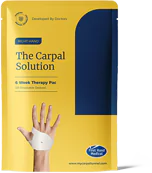
 Created by renowned Harvard health care professionals.


Muscle Atrophy and Loss of Grip Strength – Carpal Tunnel Symptom
It is common to experience muscle atrophy and loss of grip strength with chronic Carpal Tunnel Syndrome. There is no need to panic. However, it is important to do proactive home therapy to stem the progression and put CTS in complete remission for years naturally. Master Occupational Hand Therapist explains what you should do now to restore your grip and relieve your other carpal tunnel symptoms.

Authored by Medical Expert: Mr. Alan Ward, MOT, OTR, Vice President and Master Occupational Therapist, Precision Rehabilitation, Blanding, Utah, Expert in Splinting and Bracing of Hands and Forearms
Table of Contents
Carpal Tunnel Question:
“I have no strength in my four fingers and my hand muscles are wasting away, because of my carpal tunnel syndrome hand pain and wrist pain. Do you think the Carpal Solution can help me? Can I get my muscle back?”
Nelson
Brazil
Carpal Tunnel Answer:
Thank you for your question, it is common for people suffering from Carpal Tunnel Syndrome (CTS) to experience muscle atrophy in their hands, wrists and forearms. Sometimes CTS will also diminish the bicep and shoulder muscles. People are confused by symptoms and atrophy that occur a distance from where the nerve is being pinched. Presentation of symptoms that are distant from the pinch point can make this syndrome confusing and more difficult to diagnose.
Yes, You Can Reverse Muscle Atrophy From Carpal Tunnel
The short answer to your question is: Yes, you can get your hand and forearm muscles back and restore your grip strength.
So, don’t lose hope, we are going to tell you how to get your hands back to normal. First, it is important to understand the path that leads to this state of muscle melting away and loss of grip strength that is associated with CTS. If people know the cause of their muscle loss, they are in a better position to prevent it and avoid the treatment and actions that lead to chronic muscle atrophy.
Why Rigid Splints Can Make Muscle Atrophy Worse
 One of the first things recommended by the healthcare system when a patient is diagnosed with CTS, is to purchase and start wearing an immobilizing wrist splint or a rigid hand brace also known as a “Cock-up Splint”.
These devices sometimes provide some relief from discomfort in the beginning because they prevent movement that can aggravate the hand pain and wrist pain. However, in the long run, these rigid supports contribute to sustained muscle atrophy and can injure soft tissue on the hand and forearm worsening Carpal Tunnel symptoms. Use of these rigid hand splints complicates the patient’s recovery from this challenging syndrome.
The doctors at First Hand Medical recommend that you stay away from the rigid hand braces and wrist splints altogether because they do more harm than good.
There are three types of peripheral nerves in your hands and arms. These are:
- Sensory Nerves which connect to your skin and provide feedback to the brain with the sense of touch, feeling, and temperature.
- Motor Nerves which connect to your muscles and allow the brain to control the movement of the muscles to contract and function with a squeeze, twist, grip, grab, lift, scratch or stroke.
- Autonomic Nerves which connect to your internal organs and provide feedback and control signals back to the organs.
How a Pinched Median Nerve Causes Muscle Atrophy and a Weak Grip
 The fine motor skills required for buttoning a button or picking up a coin or putting on make-up, require both the Sensory Nerves and the Motor Nerves to work intimately together to perform such functions accurately and with precision.
When the Median Nerve is pinched in the Carpal Tunnel it often affects both the Sensory Nerves and the Motor Nerves. This chronic hand condition will interfere with the synchronicity of the nerve signals and mixes up the sequence of the fine motor skills making a person feel clumsy and weak. Sufferers find themselves regularly dropping objects and losing control of their muscles. This loss of control can also contribute to muscle atrophy and loss of grip strength.
The constant tingling and numbness in the hands will cause the muscles in the hand and forearm to malfunction and start to shut down. Many people inadvertently use their hands less in an attempt to rest their hands and avoid painful movement. Just resting from movement is not necessarily the right answer.
Why Squeeze Balls Do Not Reverse Muscle Atrophy
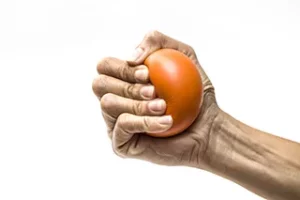
On the other hand, some people resort to using a squeeze ball, stress ball, or a spring loaded grip strengthening device to exercise the muscle in their hands, wrists and forearms intensely several times each day. It seems intuitive that exercise will eliminate the muscle atrophy. However, until the pressure is relieved on the Median Nerve, no amount of exercise is going to help. In fact, Overdoing hand exercises with a squeeze ball, is likely to make Carpal Tunnel Syndrome worse.
Normal use of the hand, wrist and forearm muscles are actually good for the hand when combined with restorative rest at night during sleep with full blood circulation and no pressure on the Median Nerve.
How to Reverse Muscle Atrophy: Take the Pressure Off the Median Nerve
 The key is to first take the pressure off the median nerve and return the tissue to an effective state of rest and restoration during sleep with normal blood circulation. The Carpal Solution Therapy was designed by doctors to achieve exactly this. The Carpal Solution disposable stretching devices gently stretch the soft tissue during sleep restoring full blood circulation. Flushing the injured soft tissue with nutrient rich blood helps accelerate natural healing and disperses swelling.
The consistent gentle stretching also restores flexibility to the soft tissue around the Carpal Tunnel and relieves the pressure on the Median Nerve. Once the pressure is gone your body’s natural healing takes over. Patients report a noticeable increase in grip strength and the return of muscle strength within three to four weeks with the Carpal Solution Treatment.
So, hang in there. You do not need to resort to extreme measures with risky outcomes and lots of potential complications and downtime, like Carpal Tunnel Surgery. The natural stretching therapy offered by the Doctors who developed the Carpal Solution is the best first line treatment option for eliminating Carpal Tunnel Syndrome and restoring muscle mass and hand function.
The Carpal Solution Treatment eliminates hand numbness, wrist pain, tingling and that pins and needles feeling. It also allows you to sleep through the night without interruptions associated with CTS.
People are able to return to regular activities within 3 to 6 weeks and even extreme activities like rock climbing and Karate or Golf and Gardening within a short time of treating their CTS with the Carpal Solution Treatment Regimen. We can help you. If you have lost significant muscle mass you should test your hand strength in a safe environment before you take on an extreme activity like rock climbing or a karate tournament.
Rebuilding Grip Strength After Muscle Atrophy
 A rhythmic pattern of restoration with the Carpal Solution Stretching Therapy at night followed by increasing levels of normal hand activity during the day; is the ideal way to rebuild your hand muscle and the muscles of the forearm.
Once you have regained your normal grip strength through normal hand use, it would be appropriate to do some hand exercises if you feel inclined to do this. However, it is not necessary.
Also, it is important to keep in mind that doing extreme hand exercises with specialized equipment can actually bring Carpal Tunnel back more quickly, so a gradual gentle approach is recommended if you do this at all. People prone to Carpal Tunnel should avoid extreme grip strength exercises. It might be counterintuitive to some, but extreme exercise of the hand can cause inflammation and over tightness which can aggravate Carpal Tunnel Syndrome.
We have distribution warehouses in Sao Paulo – Brazil for rapid delivery throughout Brazil. We also have a warehouse in Amsterdam – Netherlands for distribution through-out the European Community. These are in addition to the warehouses we have in Boston, Massachusetts and Salt Lake City, Utah and Tokyo, Japan. We ship the Carpal Solution Treatment worldwide from these locations. It does not matter where you might be, we can help you get rid of the hand pain and numbness within just a few weeks.
Early Signs of Muscle Atrophy From Carpal Tunnel
Muscle atrophy from carpal tunnel usually builds slowly, so it helps to know the early signs. Catching them early makes recovery faster and easier.
- Dropping things. Cups, keys and phones slip from your fingers more often than they used to.
- Trouble with fine tasks. Buttons, zippers, earrings, coins and writing feel clumsy.
- A weaker pinch. Opening jars, turning keys or holding a pen tires your hand quickly.
- A flatter thumb pad. The fleshy muscle at the base of the thumb looks or feels smaller than on the other hand.
- Tired forearms. Muscles in the forearm ache or fatigue with ordinary work.
“People with carpal tunnel syndrome a lot of times, as it gets a little more progressed, they’ll start dropping things. All of a sudden they think they’ve got their coffee mug in their hand and all of a sudden it’s not there, it’s on the floor, and they think wow, I thought I had a hold of that, not realizing that it’s that carpal tunnel syndrome that’s making that muscle release and they’re losing their grip on things.”
— Alan Ward, MOT, OTR, Master Occupational Therapist, in a video interview
These signs come from the pinched median nerve, not from weak muscles alone. That is why the answer is to relieve the pressure first, not to train harder.
Who Is Most at Risk for Muscle Atrophy and Loss of Grip Strength?
Anyone with long-standing carpal tunnel can lose muscle, but these groups see it most often:
- People who have had symptoms for months or years without treating the cause.
- Heavy hand users such as dentists, hairstylists, mechanics, construction workers, musicians and assembly workers.
- People who wear rigid splints for long periods, which can let muscles weaken from disuse.
- People with diabetes, thyroid disease or other inflammatory conditions, which add to swelling and slow nerve recovery.
- Older adults, whose nerves and muscles often recover more slowly.
The good news is that muscle atrophy from carpal tunnel is not a reason to panic. Proactive home therapy that takes the pressure off the median nerve can stop the progression and help the muscle come back. Read more about what happens if carpal tunnel is left untreated.
5 Proven Steps to Reverse Muscle Atrophy and Regain Grip Strength
Here is how Mr. Ward’s advice comes together into a simple plan to reverse muscle atrophy from carpal tunnel and get your grip back:
- Take the pressure off the nerve every night. Use the Carpal Solution with one device every night for two weeks, then every other night for four weeks. For persistent symptoms, continue for a total of 10 to 12 weeks, then taper.
- Keep using your hands normally. Resting your hands completely is not the answer. Everyday gripping of handles, rails, cups and tools rebuilds strength once the nerve is free.
- Skip rigid splints and grip trainers. Leave the cock-up splints, squeeze balls, stress balls and putty alone while you heal.
- Add gentle daytime therapy. Nerve and tendon glides, gentle finger stretches, deep diaphragm breathing and cold water plunges speed recovery. See Physical Therapy for Carpal Tunnel and Mr. Ward’s Occupational Therapy for Carpal Tunnel.
- Rebuild gradually after remission. If you choose to add hand exercises once your grip has returned, keep them gentle. Most people get more from aerobic exercise, and occasional preventive Carpal Solution nights keep carpal tunnel in remission.
“Even if we have to wear this for a month and a half, and even if we have to do that every so often, that still costs way, way less and is way, way less risky than one surgery.”
— Alan Ward, MOT, OTR, Master Occupational Therapist, in a video interview
Muscle atrophy from carpal tunnel often improves as soon as the nerve is no longer compressed, because the muscles start receiving a full signal again. For stubborn cases, follow our doctors’ recommendations for persistent carpal tunnel symptoms.
When Healing Needs a Doctor’s Help and Professional Medical Evaluation
- Constant numbness that does not improve or loss of feeling in the fingertips that does not improve in 4 to 8 weeks.
- Extreme loss of the muscle at the base of the thumb, with loss of grip strength that does not improve over 6 to 8 weeks.
- Worsening symptoms over 6 to 8 weeks while using the best conservative treatments
- Symptoms that begin suddenly after hand or wrist trauma, a fracture or severe sprain from a fall or auto accident.
- Odd Symptoms that are not consistent with the Carpal Tunnel Symptoms listed on this website, that might be indicative of other nerve issues. A nerve conductivity study can clear up the confusion with minimal costs and not too much pain and no risk.
These signs may mean more advanced nerve involvement or a different condition and deserve professional medical evaluation and in person consultation. Home treatment can be used alongside professional in-person medical care while you wait for the healthcare delivery system to fit you into their schedule. There is no reason to wait doing nothing. You can start proven natural conservative treatment with good patient reviews while you wait for your appointments. If your symptoms start improving over 6 to 8 weeks, then you know you are on the right track and surgery is not necessary.
Muscle Atrophy From Carpal Tunnel: FAQ
Can muscle atrophy from carpal tunnel be reversed?
Yes, in most cases. Once pressure on the median nerve is relieved, the hand muscles receive a full nerve signal again and grip strength returns with normal hand use.
How long does it take to regain grip strength after carpal tunnel?
It varies. First Hand Medical reports most Carpal Solution users feel relief of their worst symptoms in about 3 weeks and reach complete remission in about 6 weeks, and strength rebuilds with everyday use as the nerve recovers.
Should I use a squeeze ball to rebuild muscle?
No, not while you are healing. Until the pressure is relieved on the median nerve, grip exercises do not rebuild the muscle, and overdoing them can make carpal tunnel worse.
Does thumb muscle atrophy mean I need surgery?
Not necessarily. Many people with weakness improve with conservative care. Extreme loss of the muscle at the base of the thumb that does not improve over 6 to 8 weeks of the best conservative treatment deserves an in-person medical evaluation.
Disclosure: First Hand Medical makes the Carpal Solution. Mr. Ward uses the Carpal Solution with his occupational therapy patients and is featured on this website as a medical expert. This article is for education and is not a substitute for advice from your own doctor or therapist.