 Created by renowned Harvard health care professionals.


Written by Julie Sunberg, Director of Marketing and Customer Service, First Hand Medical · Medically reviewed by Dr. Michael E. Ruff, MD, orthopedic hand surgeon and associate clinical professor of orthopedic surgery, Ohio State University · Last reviewed: November 2026
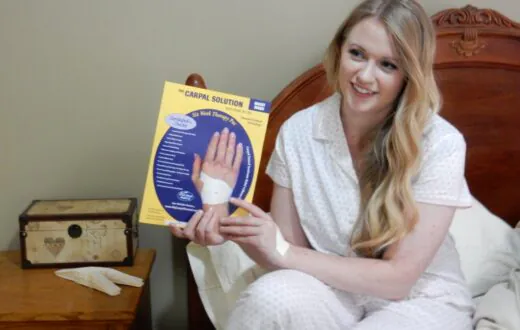
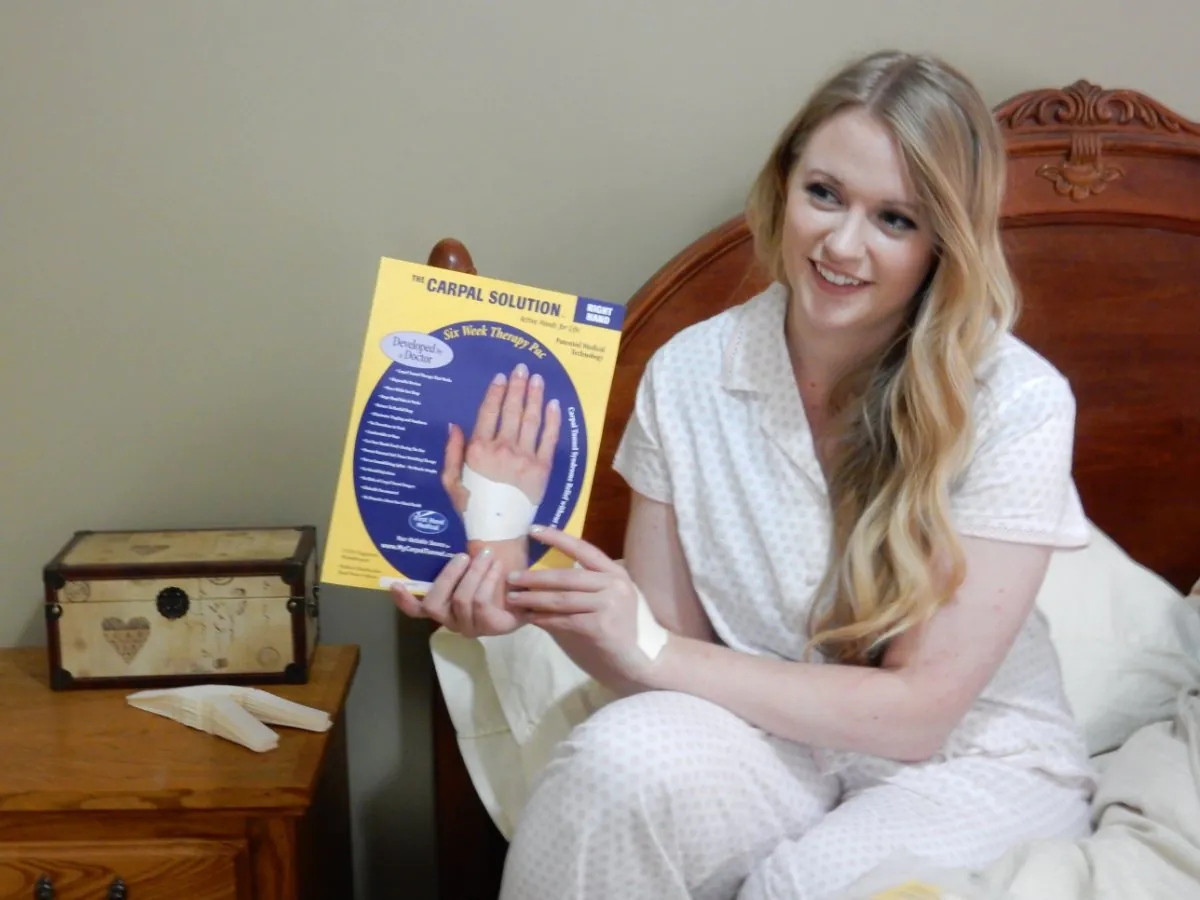
When to get carpal tunnel surgery? Our doctors’ answer is simple: not until you have tried a proven, doctor-developed conservative treatment first. Anyone who wants to avoid carpal tunnel surgery should try the Carpal Solution before they book an operation. It costs less than $100 per hand with shipping, it works while you sleep, it carries none of the risks of surgery, and it has 97% patient satisfaction over 21 years.
In this article:
- Does carpal tunnel require surgery?
- 5 reasons to try the Carpal Solution first
- Can carpal tunnel go away without surgery?
- How the Carpal Solution works
- What a 12-week conservative trial looks like
- When to have carpal tunnel surgery
- What patients who had surgery first say
- FAQ
Does Carpal Tunnel Require Surgery?
For most people, no. Carpal tunnel syndrome is caused by swelling and entrapped inflammation in the soft tissue in and around the carpal tunnel. That swelling squeezes the median nerve and restricts blood flow and lymphatic fluid transport, so the nerve becomes irritated, short of oxygen and compressed. Surgery cuts the transverse carpal ligament to make more room. It does not remove the inflammation that started the problem, which helps explain why so many people still have symptoms afterward.
Many doctors start with conservative care for mild to moderate carpal tunnel syndrome. Our doctors’ standard is stricter: everyone who has not tried a well-reviewed conservative treatment for at least 12 weeks should avoid carpal tunnel surgery for now. The exceptions are covered below under when to have carpal tunnel surgery.
5 Reasons Anyone Who Wants to Avoid Carpal Tunnel Surgery Should Try the Carpal Solution First

1. Carpal tunnel surgery has a patient satisfaction rate lower than 69%
Carpal tunnel surgery has a patient satisfaction rate lower than 69%, because about 31% of patients report lingering or recurring symptoms, and no patient is satisfied with lingering symptoms. In a study of 1,268 operations, patient-reported success was 69%, which the authors called a significant failure rate (Bland, Muscle & Nerve, 2001). About 8% of patients say their condition is worse after surgery (Bland, Muscle & Nerve, 2007). Read more in our carpal tunnel surgery patient satisfaction article.
2. A second surgery is even less satisfying
If the first operation does not work, the next option offered is usually another operation. Second carpal tunnel surgeries have a patient satisfaction rate between 16% and 40%, based on lingering symptoms reported in the published medical literature. Scar tissue from the first surgery makes each operation harder.
3. Symptoms often come back, even after a successful surgery
Few studies follow patients long enough to know how often carpal tunnel returns. The longest symptom follow-up found that 57% of patients had at least some symptoms return within five and a half years (Nancollas et al., 1995, reviewed in Louie, Earp & Blazar, Hand, 2012). Surgery opens the tunnel, but it does not stop the inflammation that caused the swelling. See recurrence after carpal tunnel surgery for the full picture.
4. The Carpal Solution has no surgical risks and no downtime
Surgery means anesthesia, an incision in the palm, weeks of limited hand use and the chance of complications. In our doctors’ clinical experience, some patients report a permanent loss of grip strength, lasting tenderness at the incision or a loss of dexterity after surgery.
The Carpal Solution is a doctor-developed stretch taping system that you apply in less than a minute at bedtime and wear while you sleep. There is nothing to recover from, and you keep working. It has been used by over 100,000 people over two decades and has 97% patient satisfaction over 21 years and 4.9 out of 5 stars on independent review sites like Google Reviews.
5. You lose nothing by trying it first
Trying the Carpal Solution first does not close the door on surgery. If you do not get relief from your worst symptoms, the 30-Day Patient Satisfaction Guarantee lets you send it back. Meanwhile you are likely waiting anyway: the average wait for a new-patient appointment with a physician is about a month, and seeing a hand surgeon or getting on a surgery schedule can take longer. Read more about the waiting in healthcare. Neurologists, including Dr. James S. Zu, MD, PhD, of Edison, New Jersey, call the Carpal Solution a better first line of defense for carpal tunnel syndrome.
Can Carpal Tunnel Go Away Without Surgery?
Yes, for most people the symptoms can be brought under control without surgery. Carpal tunnel syndrome is a chronic, recurring condition, so it cannot be “cured,” but it can be put into remission and kept there. In our doctors’ experience, most people are better from their worst symptoms in two to three weeks with the Carpal Solution, and over 90% resolve in 6 weeks.
About 10% of people, usually those with excess systemic inflammation, need 8 to 12 weeks and are usually 50 to 70% better at 6 weeks. Remission usually lasts 5 to 7 years for most people, but everyone is different; people have gone as long as 17 years and as little as 1 year between treatments, depending on how they use their hands and their personal inflammation profile.
How the Carpal Solution Works
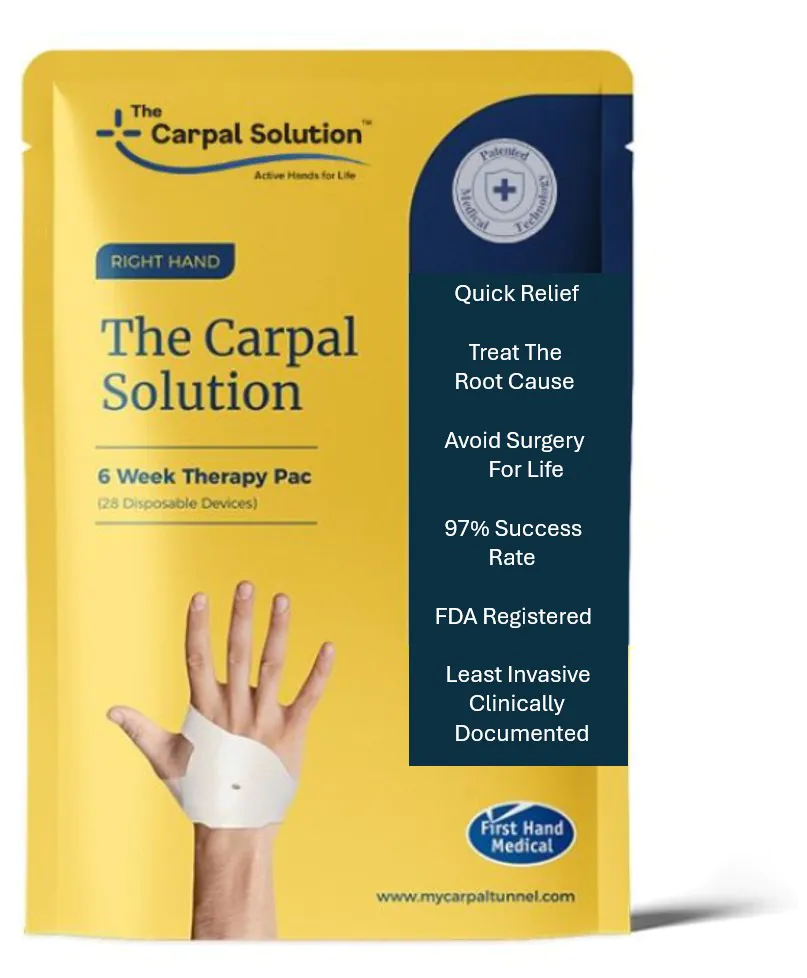
The Carpal Solution applies targeted passive stretching to the hand, wrist and forearm all night, adding up to over 220 hours of stretching over the six-week protocol. That stretching restores flexibility to the injured soft tissue, relieves pressure on the median nerve, relieves restrictions on blood circulation and lets lymph fluid flow freely to clear out the swelling. It is your body that does the healing; the Carpal Solution just jump-starts the natural healing that excess pressure from inflammation and swelling has held back.
The forearm matters too. The muscles that bend the fingers and thumb sit in the forearm, and their nine tendons pass through the carpal tunnel beside the median nerve. Stretching that whole system, instead of locking it in a splint, is why the Carpal Solution works differently from bracing. Learn more about stretch taping for carpal tunnel.
What a 12-Week Conservative Trial Looks Like
- Nights 1 to 7: Apply the Carpal Solution every night. Some people feel a brief soft tissue transition as the swelling starts to move.
- Weeks 2 to 3: Most people are better from their worst symptoms, sleeping through the night and dropping fewer things.
- Week 6: Over 90% resolve. Keep using your hands normally during the day; activity helps.
- Weeks 7 to 12: The roughly 10% with excess systemic inflammation continue the protocol and add daytime stretches, anti-inflammatory eating and other conservative therapies that accelerate it.
- After remission: Use the Carpal Solution for prevention, from one night a week to one night every six months.
What About Splints and Steroid Shots?
Splints and cortisone shots are often offered first, but they are not the same as giving your hand a real chance to heal. A splint holds the wrist in a neutral position, which can reduce pain from movement, but it does not promote healing from carpal tunnel syndrome. Splints cause muscle atrophy and stiffness, and a tight splint compresses the hand, wrist and forearm, restricting blood circulation and lymphatic fluid exchange, which slows the dispersion of the swelling that causes carpal tunnel.
After 14 days in a cast, healthy adults lost about 8% of muscle size and about 23% of strength (Wall et al., Acta Physiologica, 2014). Steroid injections can calm symptoms for a while, but relief is often temporary. Read about alternatives to a cortisone shot.
When to Have Carpal Tunnel Surgery
Our doctors are not against surgery. It is the last resort, and for a small group of people it is the right step. Talk with your doctor about when to get carpal tunnel surgery if:
- You have given a well-reviewed conservative treatment such as the Carpal Solution a fair trial of at least 12 weeks and still have significant symptoms.
- Numbness is constant rather than coming and going.
- The muscles at the base of your thumb are visibly thinning or your hand is getting weaker.
- Nerve testing shows severe or worsening compression.
- Symptoms started after an injury such as a wrist fracture.
Some people should be especially cautious. Recurrence is higher for people with conditions that generate excess systemic inflammation, such as autoimmune conditions, diabetes, arthritis and thyroid conditions, and surgery carries extra concerns for people on blood thinners. Read who should avoid carpal tunnel surgery and is carpal tunnel surgery necessary for more.
What Patients Who Had Surgery First Say
Linda, a retail merchandiser, was told she needed surgery right away. She had both hands operated on, and afterward her numbness, tingling and weakness got worse. About eight weeks after starting the Carpal Solution, her left hand was back to normal and her right hand was gaining strength. Her advice: “Don’t do the surgeries first like I did.” Read Linda’s Patient Experience.
Kathy, a surgical nurse with 20 years in nursing, had seen many patients struggle after wrist surgery. Instead of booking her own operation, she tried the Carpal Solution every night for six weeks. Her summary: “before hurrying off to surgery I do suggest that you try the carpal tunnel solution.” Read more nurse Patient Experiences.
When Healing Needs a Doctor’s Help and Professional Medical Evaluation
- Constant numbness that does not improve or loss of feeling in the fingertips that does not improve in 4 to 8 weeks.
- Extreme loss of the muscle at the base of the thumb, with loss of grip strength that does not improve over 6 to 8 weeks.
- Worsening symptoms over 6 to 8 weeks while using the best conservative treatments
- Symptoms that begin suddenly after hand or wrist trauma, a fracture or severe sprain from a fall or auto accident.
- Odd Symptoms that are not consistent with the Carpal Tunnel Symptoms listed on this website, that might be indicative of other nerve issues. A nerve conductivity study can clear up the confusion with minimal costs and not too much pain and no risk.
These signs may mean more advanced nerve involvement or a different condition and deserve professional medical evaluation and in person consultation. Home treatment can be used alongside professional in-person medical care while you wait for the healthcare delivery system to fit you into their schedule. There is no reason to wait doing nothing. You can start proven natural conservative treatment with good patient reviews while you wait for your appointments. If your symptoms start improving over 6 to 8 weeks, then you know you are on the right track and surgery is not necessary.
When to Get Carpal Tunnel Surgery: FAQ
Do you need surgery for carpal tunnel?
Most people do not. Our doctors recommend at least 12 weeks of a well-reviewed conservative treatment first. Over 90% of people who use the Carpal Solution resolve in 6 weeks.
Does carpal tunnel always require surgery?
No. Surgery is the last resort for cases that do not respond to conservative care or that show constant numbness, thumb muscle thinning or severe nerve compression.
When to have carpal tunnel surgery if the Carpal Solution doesn’t work?
If you still have significant symptoms after a 12-week trial, see a hand specialist. You will go into that appointment knowing you tried the safest option first.
Can carpal tunnel go away without surgery?
The symptoms can, and for most people they do. Carpal tunnel is chronic and recurring, so a few nights of the Carpal Solution from time to time help keep it in remission.
Is it too late to try the Carpal Solution if surgery is already scheduled?
Many people try it while they wait for their surgery date. Tell your surgeon what you are doing. If you have already had surgery, wait 3 months before starting the Carpal Solution.
References
- Bland JD. Do nerve conduction studies predict the outcome of carpal tunnel decompression? Muscle & Nerve. 2001. PubMed 11410921
- Bland JD. Treatment of carpal tunnel syndrome. Muscle & Nerve. 2007.
- Louie D, Earp B, Blazar P. Long-term outcomes of carpal tunnel release: a critical review of the literature. Hand. 2012. PMC3418353
- Wall BT, et al. Acta Physiologica. 2014 (muscle size and strength after 14 days of immobilization). doi:10.1111/apha.12190

Order Your Six Week Carpal Tunnel Treatment Now
The ONLY treatment for carpal tunnel that comes with a no questions asked 30-Day Patient Satisfaction Guarantee and in-house dedicated pain relief team.
Watch videos of people who “Cured” their Carpal Tunnel Naturally and Avoided the Risks of Carpal Tunnel Surgery!