 Created by renowned Harvard health care professionals.


How Dentists Heal Carpal Tunnel Without Any Downtime
Dentists and dental hygienists have a high rate of carpal tunnel syndrome: a 2023 review found it in about one in seven dental health care workers. Many dental professionals now use the Carpal Solution at home to relieve carpal tunnel naturally, without surgery or time away from patients, and keep symptoms from coming back with occasional prevention nights. The treatment was developed by doctors and has 97% patient satisfaction over 21 years.
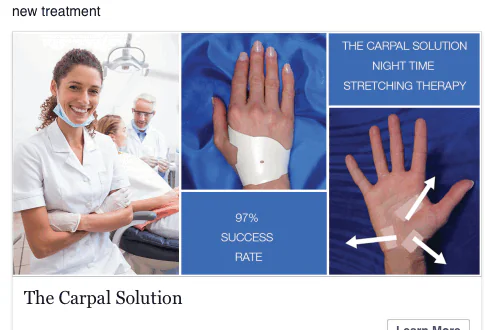

According to the accounts on this page, dentists heal carpal tunnel symptoms at home with a nighttime stretching therapy, without surgery or time away from patients. The stories come from a general dentist, a periodontist and other dental professionals, and they show why carpal tunnel in dentists is so common and what has worked for them.
On this page:
- Dr. Marielaina Perrone’s Story
- Why Carpal Tunnel in Dentists Is So Common
- Who in Dentistry Is at Risk
- More Dentists’ Stories
- How Dentists Heal Carpal Tunnel at Home
- Around a Busy Schedule
- Chairside Habits That Help
- When to See a Doctor
- FAQ
Table of Contents
“I worried that Carpal Tunnel Syndrome would end my dental career.”
“Life would be very different for me and my family without my income.”
“The Carpal Solution is my Solution! This natural stretching treatment seems simple and too good to be true, but it saved my dental practice.”
Dr. Marielaina Perrone practices dentistry in Henderson, Nevada, near Las Vegas.
“I Don’t Worry Anymore!”
“I feel like Carpal Tunnel Syndrome is in the rear view mirror, what a relief!”
In Her Own Words
In her video, Dr. Perrone describes pain that started in her fingers and worked its way up to her elbow, “especially after a long day with a lot of root canals or extractions.” After a day of assembling a play kitchen by hand with a screwdriver, the pain became excruciating. She bought a rigid brace that ran from her fingertips to her elbow and wore it at night, between patients and after work. “It wasn’t doing anything to help my carpal tunnel symptoms,” she says.
Surgery was not something she wanted: “I am not a surgery person anyway; as a trained medical professional, I know what can go wrong.” Her husband researched alternatives and ordered the Carpal Solution. “I put the Carpal Solution device on the first night and the next morning I felt a little bit better,” she recalls, “and before I knew it, probably a week, a week and a half, I was feeling a lot better.”
Today she uses it only when symptoms start: “I’ll wear it for a night or two and that takes care of it.” Her summary for other dentists: “The whole process has been easy and inexpensive and surgery free.”
Why Carpal Tunnel in Dentists Is So Common
Nothing is more frustrating for a dentist than to spend four years in dental school, years building a practice, and hundreds of thousands of dollars on education and equipment, only to have carpal tunnel syndrome threaten their career.
It is not surprising that carpal tunnel in dentists is so common, and that dentistry has one of the highest rates of carpal tunnel syndrome when you think about what dentists do all day with their hands. Using small instruments with force, patient after patient, day after day, creates a lot of repetitive stress in the hands, fingers, forearms and wrists.
The research on carpal tunnel in dentists backs this up. A 2023 systematic review of 37 studies and 17,152 dental health care workers found carpal tunnel syndrome in about 15% overall, roughly one in seven, and 20% among dentists (Chenna et al., F1000Research, 2023). By comparison, it affects an estimated 4% to 5% of middle-aged adults in the general population (Kostares et al., 2023).

Dentistry requires precise movement in a very tight space. One slip and a patient can be seriously injured by sharp instruments focused with such force in a tiny area of the mouth. There are more nerve endings in the mouth than in almost any other part of the body, so pain can be intense for the patient.
Loss of fine motor skills is a common symptom of carpal tunnel, and one reason dentists heal carpal tunnel early rather than wait. For a dentist, trying to perform precision work without fine motor skills can be devastating. That creates stress, and elevated stress can also aggravate a nerve disorder like carpal tunnel syndrome.
The anatomy of carpal tunnel in dentists explains why the forearms ache too. The muscles that bend the fingers and thumb sit in the forearm, and their nine tendons pass through the carpal tunnel beside the median nerve. Hours of holding a mirror, scaler or handpiece in a sustained pinch grip keep those muscles and tendons loaded, and the soft tissue around the tunnel can swell. Over time, carpal tunnel can lead to forearm and thumb muscle weakness and atrophy, which is exactly what a dentist cannot afford.
Once a dental professional has made the investment in their education and practice – downtime and long rehabilitation can create a financial crisis.

All specialties in the dental field experience high rates of CTS:
Carpal Tunnel in Dental Professionals: Who Is at Risk
Carpal tunnel in dentists is not limited to one specialty. The whole dental team uses their hands in the same demanding ways:
- Oral surgeons
- Periodontists
- General dentists
- Endodontists
- Orthodontists
- Prosthodontists
- Pediatric dentists
- Dental hygienists
- Dental assistants
- Dental technicians
Carpal tunnel in dental professionals is part of a wider pattern of musculoskeletal disorders in dentistry: neck, shoulder, back and hand problems from static postures and forceful, repetitive work. A 2023 meta-analysis of 37 studies and 17,152 dental health care workers found that about one in seven may be affected by carpal tunnel syndrome, with pooled estimates of about 20% among dentists and 10% among dental auxiliaries (F1000Research, 2023).
Dental assistant carpal tunnel is easy to overlook. Assistants hold suction and retractors in fixed positions, reach and twist toward trays, and grip instruments for hours. Hygienists face the highest pinch forces of all during scaling. Good ergonomics helps every member of the team: see our guides to dental ergonomics, including dental assistant ergonomics, and dental hygienist ergonomics.
There is no reason to wait and worry about carpal tunnel in dentists and their teams. Dentists and dental hygienists can now be proactive about their hand health and treat carpal tunnel at home when they first notice symptoms.
More Stories: How Dentists Heal Carpal Tunnel Without Time Away From Patients
Dr. Perrone says the Carpal Solution saved her dental practice, and Dr. Alice Moran, a periodontist in San Clemente, California, says she scheduled carpal tunnel surgery twice and cancelled it both times. Dr. James Blong, DDS, says he is not sure he could continue in dentistry without it. These are their experiences, and results vary.
“I am not sure if I could continue with my career in dentistry at this point without it. Everyone should know about this.”
Dr. James Blong, DDS
Read Dr. James Blong’s full carpal tunnel story here
Periodontal Surgeon Cancels Surgery Saves Career with Carpal Solution Treatment
“I scheduled Carpal Tunnel Surgery two different times and cancelled it due to doubts about how it might affect my profession as a surgeon.”
“With the Carpal Solution, I don’t worry about my career being ended prematurely any more due to Carpal Tunnel Symptoms. I can work all day with no hand pain, no hand numbness, and no loss of grip strength.”
“The Carpal Solution Treatment Saved my Periodontal Career!”
Dr. Alice Moran Periodontist – San Clemente, California
How Dentists Heal Carpal Tunnel at Home
Carpal tunnel syndrome is caused by entrapped inflammation and swelling that create pressure on the median nerve. The Carpal Solution is a soft, Hypoallergenic (No Latex) device worn during sleep. Its gentle, sustained stretch restores flexibility to the injured soft tissue, relieves pressure on the nerve, frees blood circulation and lets lymph fluid clear out the swelling. Your body does the healing; the Carpal Solution jump-starts it.
Because it works overnight, dentists heal carpal tunnel this way without canceling patients, without downtime and without risking the fine motor skills their careers depend on. Over the six-week protocol, it delivers over 220 hours of targeted passive stretching.
| Stage | Schedule | What most people notice |
|---|---|---|
| Weeks 1–2 | Every night | Most people are better from their worst symptoms in two to three weeks. |
| Weeks 3–6 | Every other night | Over 90% of people reach remission by 6 weeks. |
| Higher inflammation | 8 to 12 weeks | About 10% of people are 50–70% better at 6 weeks and need 8 to 12 weeks. |
| After remission | Once a week to once every six months | Prevention nights keep symptoms away between busy weeks. |
Neurologists, including Dr. James S. Zu, MD, PhD, of Edison, New Jersey, call the Carpal Solution a better first line of defense for carpal tunnel syndrome. It has 97% patient satisfaction over 21 years and 4.9 out of 5 stars on independent review sites like Google Reviews, and over 100,000 people have used it over two decades.
After remission, prevention nights from once a week to once every six months help keep symptoms away; heavy procedure weeks may call for more, as Dr. Perrone found. Remission usually lasts 5 to 7 years for most people, ranging from 1 to 17 years. See how the Carpal Solution works.
Why Rigid Braces Fall Short When Dentists Heal Carpal Tunnel
Dr. Perrone’s rigid brace did not help, and that matches our doctors’ position. A splint holds the wrist in a neutral position, which can reduce pain from movement, but it does not promote healing from carpal tunnel syndrome. It causes muscle atrophy and stiffness, and a tight splint restricts blood circulation and lymphatic fluid exchange, slowing the dispersion of swelling.
Our medical team has observed that splints give some relief at first but aggravate symptoms in the long run. In one study of healthy young men, 14 days in a cast cost about 8% of muscle size and 23% of strength (Wall et al., Acta Physiologica, 2014). For a dentist, losing grip and pinch strength is a career risk.

Why Many Dentists Avoid Surgery
As medical professionals, dentists know what can go wrong, which is why so many dentists heal carpal tunnel without surgery. Carpal tunnel surgery has a patient satisfaction rate lower than 69%: about 31% of patients report lingering or recurring symptoms, and no patient is satisfied with lingering symptoms. Second surgeries have a patient satisfaction rate between 16% and 40%.
Even after a successful surgery, symptoms often return: 57% had at least some symptoms come back within 5.5 years in one study (Nancollas, 1995, reviewed by Louie et al., 2012), and our doctors estimate 80 to 90% within 10 years from clinical experience (not a statistically researched figure). Recovery time away from patients is another cost few practices can absorb.
The waiting adds up too: the average new-patient appointment wait is 31 days (AMN Healthcare, 2025). Read about relief while waiting for carpal tunnel treatment. The Carpal Solution is billed under HCPCS code L3924, many plans reimburse 70 to 80%, and it comes with a 30-Day Patient Satisfaction Guarantee.
How Dentists Heal Carpal Tunnel Around a Busy Schedule
Most dentists cannot clear their calendar to deal with hand pain, and carpal tunnel in dentists tends to flare during the busiest weeks. Here is how dentists heal carpal tunnel while the practice keeps running:
- Start on a weekend night. Apply the Carpal Solution before bed and wear it 6 to 8 hours.
- Weeks one and two: wear it every night. Many dentists notice better sleep and less morning numbness early on.
- Weeks three to six: every other night, with an extra night after heavy days of root canals, extractions or scaling.
- Track your hands. Note morning numbness, night waking and any dropped instruments so you can see the trend.
- After remission: prevention nights once a week to once every six months, or a night or two whenever symptoms start, as Dr. Perrone does.
That simple routine is why carpal tunnel in dentists no longer has to mean cancelled patients or a career cut short.
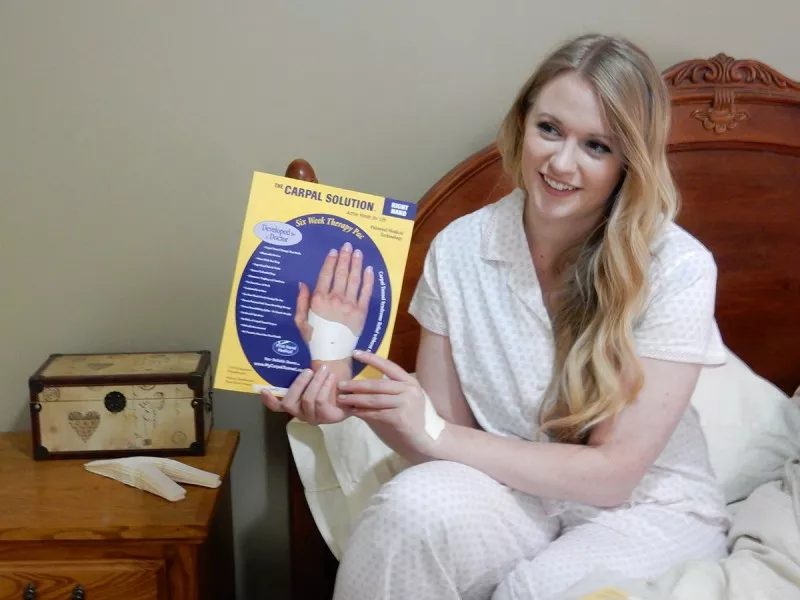

Chairside Habits That Help Prevent Carpal Tunnel in Dentists
Treatment works best alongside good habits. These are the chairside changes that help dentists heal carpal tunnel faster and keep it from returning:
- Use a lighter grip. Choose instruments with wider, textured handles so you can hold them with less force.
- Keep sharp instruments sharp. Dull scalers and curettes demand more pinch force.
- Keep your wrist neutral. Adjust patient chair height and position so your wrist is not bent for long stretches.
- Use magnification and good lighting. Loupes help you work upright instead of leaning and twisting.
- Alternate demanding procedures. Spread root canals, extractions and heavy scaling across the day.
- Take micro-breaks. Gentle daytime stretches are a bonus: up to 6 sets of 10, holding 15 seconds and resting 30 seconds.
- Skip grip trainers. Squeeze balls and putty add pressure inside the carpal tunnel while you are healing.
Compression gloves worn during the day can spur natural healing by increasing blood circulation and insulate the hand from everyday bumps and bruises; compression gloves by day with the Carpal Solution at night is one of the best combination therapies.
In our clinical experience, people with three or more classic symptoms, such as night numbness, tingling in the thumb, index and middle fingers, and dropping instruments, can be about 95% confident they have carpal tunnel syndrome, but they should still see a doctor for an evaluation. For general background, see the NINDS carpal tunnel syndrome fact sheet.
When Healing Needs a Doctor’s Help and Professional Medical Evaluation
- Constant numbness that does not improve or loss of feeling in the fingertips that does not improve in 4 to 8 weeks.
- Extreme loss of the muscle at the base of the thumb, with loss of grip strength that does not improve over 6 to 8 weeks.
- Worsening symptoms over 6 to 8 weeks while using the best conservative treatments
- Symptoms that begin suddenly after hand or wrist trauma, a fracture or severe sprain from a fall or auto accident.
- Odd Symptoms that are not consistent with the Carpal Tunnel Symptoms listed on this website, that might be indicative of other nerve issues. A nerve conductivity study can clear up the confusion with minimal costs and not too much pain and no risk.
These signs may mean more advanced nerve involvement or a different condition and deserve professional medical evaluation and in person consultation. Home treatment can be used alongside professional in-person medical care while you wait for the healthcare delivery system to fit you into their schedule. There is no reason to wait doing nothing. You can start proven natural conservative treatment with good patient reviews while you wait for your appointments. If your symptoms start improving over 6 to 8 weeks, then you know you are on the right track and surgery is not necessary.
Dentists Heal Carpal Tunnel: FAQ
How common is carpal tunnel in dentists?
A 2023 systematic review found carpal tunnel syndrome in about 15% of dental health care workers and 20% of dentists, compared with an estimated 4% to 5% of middle-aged adults generally.
Can dentists heal carpal tunnel and keep working?
Yes. Dentists heal carpal tunnel at night: the Carpal Solution is worn only during sleep, so there is no downtime and no time away from patients.
How quickly do dentists feel better?
Dr. Perrone felt a little better after the first night and a lot better within about a week and a half. In general, most people are better from their worst symptoms in two to three weeks, and over 90% reach remission by 6 weeks.
Is carpal tunnel in dentists different from hygienists?
Not much. Hygienists, assistants and technicians all use repetitive pinch grips, and the same home treatment and chairside habits apply.
Should a dentist wear a wrist splint?
A splint can reduce pain from movement but does not promote healing, and it causes muscle atrophy and stiffness over time. Dr. Perrone found her rigid brace did not help.
How do dentists keep carpal tunnel from coming back?
Prevention nights from once a week to once every six months, plus good chairside ergonomics. Many dentists, like Dr. Perrone, wear it for a night or two whenever symptoms start.

Order Your Six Week Carpal Tunnel Treatment Now
The ONLY treatment for carpal tunnel that comes with a no questions asked 30-Day Patient Satisfaction Guarantee and in-house dedicated pain relief team.


