 Created by renowned Harvard health care professionals.


Carpal Tunnel Syndrome Treatment: 7 Options Compared, From Least to Most Invasive
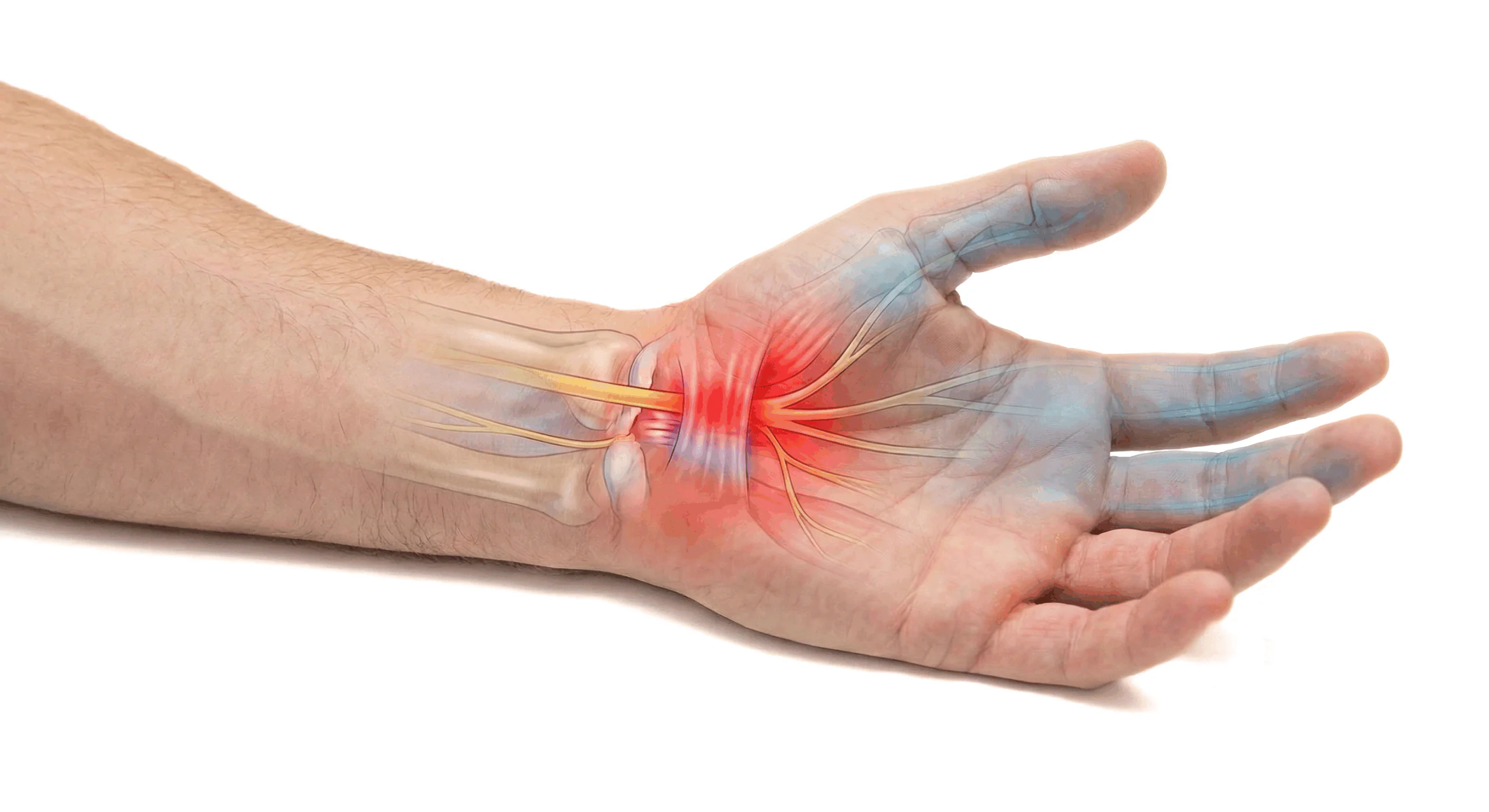
Carpal tunnel syndrome occurs when swelling trapped in the narrow carpal tunnel at the base of the hand presses on the median nerve and restricts blood flow around it.
This guide compares the main carpal tunnel syndrome treatment options, explains what each one can and cannot do, and shows why our doctors start with conservative care that treats the root cause.


Written by Julie Sunberg, Director of Marketing and Customer Service at First Hand Medical · Medically reviewed by Clyde E. Morgan, DC, musculoskeletal expert, co-founder of First Hand Medical and inventor of the Carpal Solution · Last reviewed: November 2026
Table of Contents
Carpal tunnel syndrome treatment ranges from simple changes in how you use your hands to stretching therapy, injections and surgery. Each option has different benefits, risks and recovery times. Medicine starts with the least invasive choice and moves to stronger steps only when needed, and that is the approach our doctors follow.
7 Carpal Tunnel Syndrome Treatment Options Compared
| Treatment | What it does | Downtime and risk | Our doctors’ view |
|---|---|---|---|
| The Carpal Solution | Gentle stretching of the soft tissue during sleep to help disperse trapped swelling | No downtime; drug-free | The first line of treatment: 97% patient satisfaction over 21 years |
| Activity changes and ergonomics | Reduces the strain that feeds the swelling | None | Always part of the plan |
| Daytime stretches | Keeps the tendons and forearm muscles moving | None | A bonus on top of nighttime treatment |
| Physical or occupational therapy | Manual therapy, nerve gliding, TENS, workplace advice | Clinic visits | Speeds healing alongside the Carpal Solution |
| Wrist splints | Holds the wrist still to reduce pain from movement | Muscle atrophy and stiffness | Temporary relief, not healing |
| Oral anti-inflammatory medicine and steroid injections | Calms symptoms | Medication side effects; injection relief is usually short-lived | Short-term help only |
| Surgery | Cuts the ligament over the tunnel | Weeks of limited hand use; surgical risks | The last resort: patient satisfaction lower than 69% |
For general medical background, see the NINDS fact sheet on carpal tunnel syndrome, and compare your choices in our guide to carpal tunnel treatment.
What to Look for in a Carpal Tunnel Syndrome Treatment
- It treats the cause. Relief that lasts comes from dispersing the swelling trapped in the carpal tunnel, not only from numbing pain.
- Low risk and no downtime. You should be able to keep working and caring for your family.
- Easy to use every day. A treatment you can stick with beats one you abandon.
- Clear instructions and support. Written and video instructions, and people you can call.
- Evidence you can review. Published data and real patient results.
Why Treating the Root Cause Matters
Nine tendons that bend the fingers and thumb pass through the carpal tunnel beside the median nerve: four flexor digitorum superficialis, four flexor digitorum profundus and one flexor pollicis longus. Their muscles sit in the forearm. Repeated use irritates the tendon linings, they swell, and the swelling gets trapped in the tight space. It presses on the nerve and restricts the blood circulation and lymphatic fluid exchange the body uses to clear it.
That trapped inflammation is the root cause of carpal tunnel syndrome. A carpal tunnel syndrome treatment that helps the body disperse it can bring relief that lasts; one that only holds the wrist still or quiets the pain tends to bring relief that fades.
Carpal Tunnel Clinical Study
Carpal tunnel syndrome treatment works best when it eases pressure on the median nerve without adding new risks.
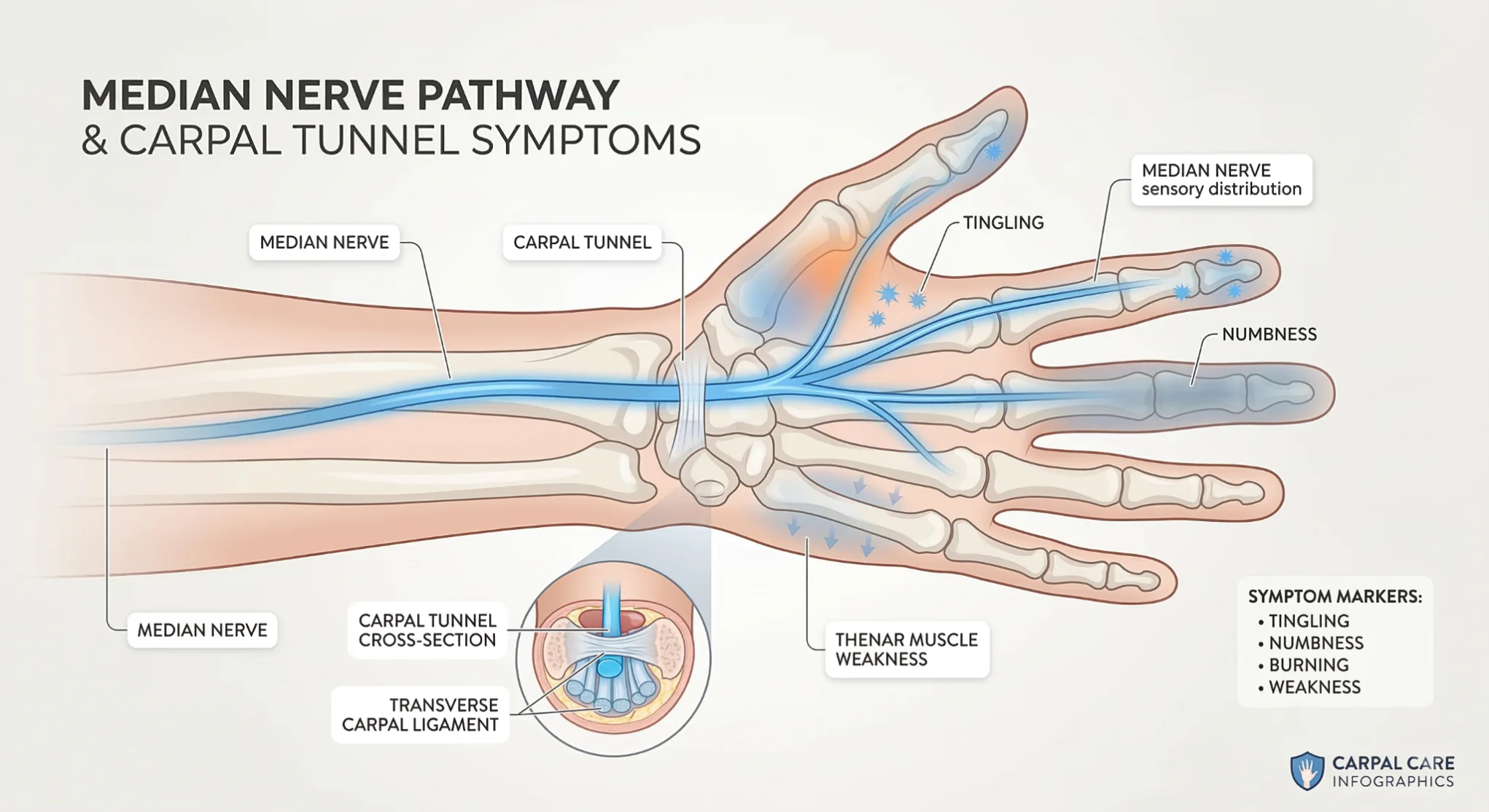
Carpal tunnel syndrome occurs when the median nerve is impinged and blood vessels are constricted in and around a narrow passage called the carpal tunnel at the base of the hand near the wrist. Symptoms result from swelling of irritated tendons and soft tissue which crowd the tunnel. Common symptoms are pain and numbness in the hand and forearm.
The illustration shows the median nerve and the parts of the hand it supplies. Symptoms are most intense at night when the hand is relaxed. Routine sleep interruption and chronic sleep loss are major concerns which have wide ranging health implications. Chronic pain also leads to loss of hand functionality and muscle atrophy which limits use of hands at home and work.
Bureau of Labor Statistics data have long ranked carpal tunnel syndrome among the workplace conditions with the longest time away from work, a median of about 28 days per case compared with about 8 days for all cases. Read more about carpal tunnel and lost time at work.
The Carpal Solution is intended to be used over a six week protocol. To determine the effectiveness of the Carpal Solution in treating the symptoms of Carpal Tunnel a trial was performed monitoring grip strength measurements over a two week period. This initial study documents the early success that many patients have experienced in taking control of their Carpal Tunnel Syndrome symptoms over two weeks.
While the author has extensive experience working with patients who have successfully treated their symptoms in six weeks with the Carpal Solution and followed them over several years, additional work and resources will be needed to formally document the long-term results of the Carpal Solution following the full six-week protocol and tracing the patients over several months.
That is why the results we report come from two sources: this early grip-strength study and two decades of patient experience. The Carpal Solution has 97% patient satisfaction over 21 years and a 4.9 out of 5 star rating on independent review sites like Google Reviews, from over 100,000 people over two decades.
How the Carpal Solution Works
The Carpal Solution gently tugs simultaneously at three key points surrounding the Carpal Tunnel during sleep
Consistent gentle pulling action applied for 6 to 8 hours per night, while the hand is completely relaxed, decompresses and reshapes the soft tissue around the carpal tunnel and relieves symptoms associated with Carpal Tunnel Syndrome
RIGHT HAND INSTRUCTIONS:
Apply the Carpal Solution before Retiring to Bed in 3 Easy Steps
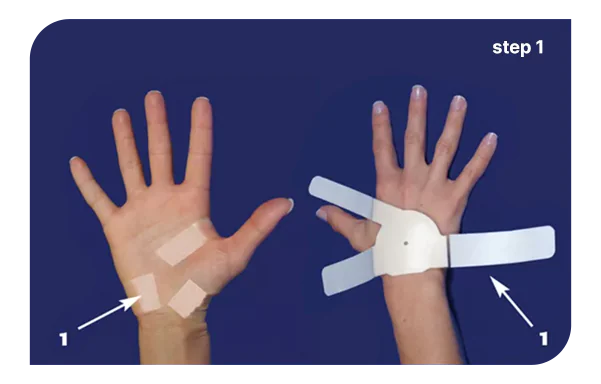
STEP 1: Place the Carpal Solution on the Back of the hand as shown with adhesive side down. Attach 1st strap below little finger securing it on the palm. Tear away excess tape to prevent overlap of straps on palm.
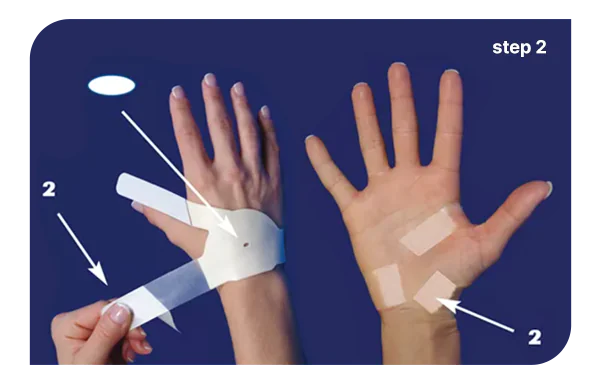
STEP 2: Self apply the appropriate tension to the Carpal Solution with 2nd strap below the thumb and attached on palm side of hand as shown. Adjust tension by stretching circular hole on back of hand in the elastic centerpiece to an oval shape. The diameter should be at least 1.5 times the original.
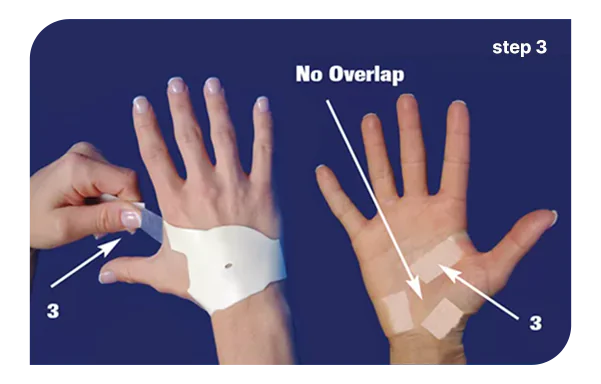
STEP 3: Self apply the appropriate tension to the Carpal Solution with 3rd strap above the thumb. Tear-away straps should be aligned so there is no overlap of straps on palm side of hand. The Carpal Solution begins to relieve symptoms usually within twenty minutes of placement.
The Six-Week Treatment Protocol
Relief is most often noticed within a week in mild cases and six weeks when CTS is chronic
Gentle decompression of soft tissue during sleep combined with active use during the day results in an ideal rhythmic therapy for relief from CTS symptoms with no muscle atrophy. Soft tissue therapy is a slow process. The optimum protocol for Carpal Tunnel Syndrome treatment that has been effective for the majority of patients suffering from chronic CTS symptoms is to wear the Carpal Solution every night for two weeks and then every other night for four weeks.
Results and Remission
Over the six-week protocol, the Carpal Solution provides over 220 hours of gentle, targeted stretching. Here is what most people can expect:
- 2 to 3 weeks: most people feel their worst symptoms ease.
- By 6 weeks: over 90% of people reach remission.
- 8 to 12 weeks: about 10% of people, often those with higher overall inflammation, need longer. They are usually 50 to 70% better at 6 weeks.
- Afterward: remission usually lasts 5 to 7 years for most people, ranging from 1 to 17 years. A prevention treatment, from once a week to once every six months, helps keep it there.
Carpal tunnel syndrome is a chronic, recurring condition. The Carpal Solution is the next best thing to a permanent solution: a home treatment you can repeat whenever symptoms return, with no downtime, virtually no risks, no scar tissue and no complications. Neurologists, including Dr. James S. Zu, MD, PhD, of Edison, New Jersey, call the Carpal Solution a better first line of defense for carpal tunnel syndrome. See how to apply the Carpal Solution and the six week carpal tunnel protocol.
Choosing a Carpal Tunnel Syndrome Treatment by Stage
The right plan depends on how long you have had symptoms and how strong they are. Here is how our doctors think about it.
Mild: Symptoms That Come and Go
Occasional tingling, numb fingers when you wake up, or symptoms after a long day of typing or gripping. This is the easiest stage to treat. Start the Carpal Solution at night, cut back on the activities that trigger symptoms and fix your workstation. Relief is often noticed within the first week or two at this stage.
Moderate: Symptoms Most Days and Nights
You wake up at night to shake out your hands, you drop things now and then, and daytime tasks bring on numbness. Follow the full six-week protocol without skipping nights, add gentle daytime stretches, and consider physical or occupational therapy to speed things up. Most people feel their worst symptoms ease in two to three weeks.
Persistent: Higher Inflammation or Long-Standing Symptoms
About 10% of people have higher overall inflammation and respond more slowly. They are usually 50 to 70% better at six weeks and need 8 to 12 weeks in total. Keep going, and work on overall inflammation through sleep, diet and, once you are in remission, aerobic activity.
Advanced: Constant Numbness or Muscle Loss
Constant numbness that does not improve, thinning of the muscle at the base of the thumb or real loss of grip strength mean the nerve is under more pressure. See your doctor promptly. The muscles that bend the fingers and thumb sit in the forearm, so weakness can show up in the forearm, thumb and fingers. Conservative treatment can still help, and your doctor can tell you whether more is needed.
A Note on Wrist Splints
A splint holds the wrist in a neutral position, which can reduce pain from movement, but it does not promote healing from carpal tunnel syndrome. It causes muscle atrophy and stiffness, and its tight compression restricts blood circulation and lymphatic fluid exchange, which slows the dispersion of entrapped swelling, the root cause of carpal tunnel syndrome. Our medical team has observed that splints give some relief at first but aggravate symptoms in the long run. Immobilization is great for fractures and sprains, but not for carpal tunnel syndrome.
Where Surgery Fits in Carpal Tunnel Syndrome Treatment
Surgery is the last resort, not the first step. Carpal tunnel surgery has a patient satisfaction rate lower than 69%: about 31% of patients report lingering or recurring symptoms, and no patient is satisfied with lingering symptoms (Bland, Muscle & Nerve, 2001). A surgery that leaves symptoms behind is not a successful surgery. Second surgeries are needed in 16% to 40% of cases. If you have already had surgery, wait 3 months before starting the Carpal Solution.
Carpal Tunnel Syndrome Treatment While You Wait
Getting care usually means waiting: for an appointment, a nerve test, a specialist and sometimes insurance approval. The average wait for a new-patient doctor appointment is 31 days (AMN Healthcare, 2025). Read about relief while waiting for carpal tunnel treatment.
Our medical team’s two decades of clinical experience is that people with three or more of the common carpal tunnel symptoms can be about 95% confident they have carpal tunnel syndrome. That figure comes from clinical experience, not from a published statistic. You should still get a formal diagnosis, but you can start a safe, non-invasive carpal tunnel syndrome treatment developed by doctors while you wait.
Insurance Reimbursement
With a diagnosis and a doctor’s prescription for a “Hand Finger Orthosis for Carpal Tunnel Syndrome,” the Carpal Solution can be reimbursed under HCPCS code L3924, typically at 70% to 80% depending on your plan. There is also a 30-Day Patient Satisfaction Guarantee.
When Healing Needs a Doctor’s Help and Professional Medical Evaluation
- Constant numbness that does not improve or loss of feeling in the fingertips that does not improve in 4 to 8 weeks.
- Extreme loss of the muscle at the base of the thumb, with loss of grip strength that does not improve over 6 to 8 weeks.
- Worsening symptoms over 6 to 8 weeks while using the best conservative treatments
- Symptoms that begin suddenly after hand or wrist trauma, a fracture or severe sprain from a fall or auto accident.
- Odd Symptoms that are not consistent with the Carpal Tunnel Symptoms listed on this website, that might be indicative of other nerve issues. A nerve conductivity study can clear up the confusion with minimal costs and not too much pain and no risk.
These signs may mean more advanced nerve involvement or a different condition and deserve professional medical evaluation and in person consultation. Home treatment can be used alongside professional in-person medical care while you wait for the healthcare delivery system to fit you into their schedule. There is no reason to wait doing nothing. You can start proven natural conservative treatment with good patient reviews while you wait for your appointments. If your symptoms start improving over 6 to 8 weeks, then you know you are on the right track and surgery is not necessary.
Frequently Asked Questions About Carpal Tunnel Syndrome Treatment
What is the best first carpal tunnel syndrome treatment?
Start conservative. Our doctors recommend the Carpal Solution at night, along with fewer aggravating activities, better ergonomics and gentle daytime stretches. Surgery is the last resort.
How long does carpal tunnel syndrome treatment take to work?
Most people feel their worst symptoms ease in two to three weeks, and over 90% reach remission by the end of the six-week protocol. About 10% need 8 to 12 weeks.
Can carpal tunnel syndrome be treated without surgery?
Yes. Most people respond to conservative treatment. The Carpal Solution has 97% patient satisfaction over 21 years and has been used by over 100,000 people.
Do wrist splints treat carpal tunnel syndrome?
A splint can reduce pain from movement, but it does not promote healing, and our medical team has observed that splints aggravate symptoms in the long run.
Will my symptoms come back?
Carpal tunnel syndrome is chronic and recurring. After treatment, remission usually lasts 5 to 7 years for most people, and a short prevention treatment helps keep it there.
Is the Carpal Solution covered by insurance?
It can be reimbursed under HCPCS code L3924 with a doctor’s prescription, typically at 70% to 80%.
What carpal tunnel syndrome treatment works best at night?
Night is when symptoms are often worst, because the wrists curl during sleep. The Carpal Solution is designed for night use: it gently stretches the soft tissue for six to eight hours while you sleep, so the carpal tunnel syndrome treatment happens without taking time out of your day.
Can I combine more than one carpal tunnel syndrome treatment?
Yes, and that usually works best. The Carpal Solution at night pairs well with ergonomic changes, gentle daytime stretches, compression gloves during the day and physical or occupational therapy. Avoid grip balls and putty while you are healing.
Sources
- Bland JD. Do nerve conduction studies predict the outcome of carpal tunnel decompression? Muscle & Nerve. 2001;24(7):935–940.
- U.S. Bureau of Labor Statistics. Survey of Occupational Injuries and Illnesses: median days away from work by nature of injury or illness.
- AMN Healthcare. Survey of physician appointment wait times, 2025.

Order Your Six Week Carpal Tunnel Treatment Now
The ONLY treatment for carpal tunnel that comes with a no questions asked 30-Day Patient Satisfaction Guarantee and in-house dedicated pain relief team.