 Created by renowned Harvard health care professionals.


What Is the Best Carpal Tunnel Treatment to Start to Avoid Surgery?
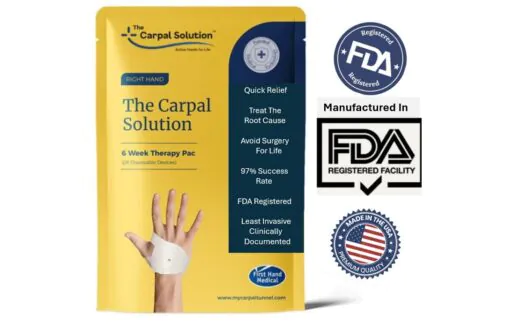
A side-by-side look at splints, exercises, pills, injections and surgery, measured against what a first treatment for a recurring condition actually needs to do.
The Short Answer
For most people with mild to moderate carpal tunnel syndrome (CTS), the best carpal tunnel treatment to start with is The Carpal Solution: a non-invasive, overnight stretching kit you apply at home. It targets the pressure-and-swelling cycle behind CTS, works during sleep when symptoms peak, carries no surgical or drug risks, can be repeated whenever symptoms return, and is rated 4.9 out of 5 stars on Google Reviews.
The rest of this article shows how we reached that answer by comparing it with every other common first step: splints, exercises, medications, steroid and PRP injections, and surgery.
Why Your First Carpal Tunnel Treatment Matters So Much
Carpal tunnel syndrome is not a one-time injury. It is a chronic, recurring condition: symptoms build, settle and often come back, even after surgery. That changes the question. The best carpal tunnel treatment to start with is not simply the one that works once; it is the one you can rely on, safely, every time symptoms return for the rest of your life.
Medicine already has a framework for this. It is called conservative-first care, or the conservative hierarchy of treatment, and it follows the oldest rule in medicine: first, do no harm. You start with the least invasive treatment that works and move up the ladder only when you must.
For a recurring condition, the stakes are higher, because every rung you climb, such as a steroid injection or an operation, carries risks that add up each time it is repeated. We walk through that hierarchy in detail in why conservative-first treatment matters.
Five Tests a First-Line Treatment Should Pass
To compare carpal tunnel treatment options fairly, we scored each one against five practical questions:
- Does it address the cause, not just mask symptoms? CTS is an entrapment neuropathy: the median nerve is squeezed in a crowded tunnel, and that pressure also impairs blood flow and lymph drainage, causing swelling that raises the pressure further. A good first treatment should help break that cycle.
- Is it low risk? A first step should not expose you to complications such as infection, nerve injury, tendon damage or drug side effects.
- Can you repeat it safely? Because CTS recurs, the treatment should be just as safe the fifth time as the first.
- Is it practical? It should fit real life: no time off work, no daily clinic visits, and ideally working during the night, when symptoms are worst.
- What do patients and the evidence say? Patient satisfaction matters, and so does the medical literature.
How the Common Carpal Tunnel Treatment Options Compare
Rest and Activity Changes
Ergonomic changes and avoiding intense overuse are sensible additions to any plan. But true rest is rarely realistic, since few people can stop using their hands, and prolonged inactivity can add to stiffness rather than solve the underlying problem. Grip-strengthening exercises are often counterproductive early on because they can raise pressure inside the tunnel. Verdict: a helpful supporting habit, not a treatment on its own.
Wrist Splints and Rigid Braces
Night splints are the most commonly prescribed of all carpal tunnel treatment options. The best summary of the evidence, a Cochrane review by Page and colleagues (2012) covering 19 trials and about 1,190 participants, found only limited evidence that a night splint is better than no treatment in the short term, and insufficient evidence that one splint design beats another or beats other non-surgical treatments.
Splints hold the wrist straight but do not actively relieve the tissue around the nerve, and First Hand Medical’s doctors caution that prolonged, all-day rigid bracing can contribute to stiffness and muscle weakness. See why to avoid wrist splints and braces. Verdict: modest, short-term help; passive positioning rather than treatment of the cause.
Daytime Stretches and Nerve-Gliding Exercises
Gentle stretching and nerve-gliding exercises make physiological sense and are part of many therapy programs. The problem is dose. Tissue responds to consistent, sustained stretch, and most people simply cannot find enough time during a busy day to stretch for the hours needed to make a lasting difference. Compliance tends to fade within weeks.
Still, the principle works: in a randomized trial of patients on a surgical waitlist (Lewis et al., 2020), a simple home program of night splinting and gliding exercises cut the share who went on to surgery from 80% to 59%. The lesson is that consistent conservative care pays off; the challenge is delivering enough of it. Verdict: worthwhile, but hard to do consistently enough to change the course of CTS.
Pills: NSAIDs, Diuretics, Vitamin B6 and Oral Steroids
A Cochrane review of non-surgical treatments (2003) found that NSAIDs and diuretics were no better than placebo for CTS, and vitamin B6 did not significantly improve overall symptoms. Oral steroids gave short-term relief at two to four weeks, but repeated courses of steroid pills carry well-known risks such as effects on blood sugar and bone density.
Nerve-pain drugs like gabapentin treat the sensation rather than the compression and come with their own side effects. Verdict: little or no lasting benefit, with side effects that are hard to justify for a recurring condition.
Corticosteroid Injections
Steroid injections are often offered as the “next step” for people trying to avoid carpal tunnel surgery. They can reduce symptoms for weeks, but the benefit fades. In a randomized, placebo-controlled trial of 111 patients published in the Annals of Internal Medicine (Atroshi et al., 2013), the symptom improvement seen at 10 weeks was no longer significant at one year, and 73% to 81% of injected patients had gone on to surgery within a year, compared with 92% on placebo.
The American Academy of Orthopaedic Surgeons’ 2024 guideline states there is strong evidence that corticosteroid injection does not provide long-term improvement of CTS. Injections are invasive, can be painful, and are generally limited in number because of concerns about tissue and tendon changes with repeated exposure. Verdict: a temporary bridge, not a repeatable solution.
PRP (Platelet-Rich Plasma) Injections
PRP is sometimes marketed as a natural alternative. The 2024 AAOS guideline found strong evidence that PRP injections, whether leukocyte-rich or leukocyte-poor, do not provide long-term benefit in the non-operative treatment of CTS. They are also typically paid for out of pocket. Verdict: costly, invasive, and not supported for lasting relief.
Elastic Therapeutic Taping
Taping is the category of evidence most closely related to how The Carpal Solution works. A 2023 meta-analysis of 13 randomized trials (665 participants) found that elastic taping improved function, pain and sensory nerve conduction in the short term as part of conservative care. A 2025 meta-analysis of 14 trials reported low- to moderate-quality evidence that taping improved longer-term pain relief and function in mild to moderate CTS, with results comparable to splinting.
Generic taping, however, has to be applied by a therapist or learned by trial and error, and it is usually worn during the day. Verdict: promising evidence for the approach; the challenge is consistent, correct application.
Carpal Tunnel Release Surgery
Surgery cuts the transverse carpal ligament to make more room for the nerve. It is the right choice for some patients with severe or rapidly worsening CTS, but it is rarely the best carpal tunnel treatment to start with. As a first step, though, it fails several of our tests:
- The success gap. Surgeons commonly report success rates near 90%, yet published studies find that roughly one in three patients report lingering symptoms after surgery. We explored this in Patients vs Surgeons: carpal tunnel surgery success rates.
- Recovery and side effects. Pillar pain (tenderness at the base of the palm), scar sensitivity and weeks of reduced hand use are common in the months after release.
- It doesn’t stop recurrence. Surgery relieves pressure by cutting the ligament, but it does not stop the swelling cycle from coming back. See does carpal tunnel return after surgery?
- Repeat surgery is worse. In revision surgery, the most common findings are incomplete release of the ligament (54–62% of cases) and scar tethering of the nerve (23–35%), according to a review in SICOT-J. Outcomes after a second operation are considerably poorer than after the first, and scar tissue compounds in the same confined space with each procedure.
Verdict: a last resort for severe cases, not a starting point. And for most people, there is no emergency: permanent nerve damage from mild to moderate CTS is uncommon, so you have time to try the safest option first and avoid carpal tunnel surgery if you can. See permanent nerve damage: what the evidence says.
The Carpal Tunnel Treatment Scorecard
Here is how each of the carpal tunnel treatment options measures up against the five tests:
| Treatment | Targets cause | Low risk | Repeatable | Practical | Lasting results |
|---|---|---|---|---|---|
| The Carpal Solution | Yes | Yes | Yes | Yes, overnight | Yes (patient-reported) |
| Night splints | Partly | Yes | Yes | Yes | Limited evidence |
| Daytime exercises | Partly | Yes | Yes | Hard to sustain | Uncertain |
| NSAIDs / diuretics | No | Partly | Partly | Yes | No better than placebo |
| Oral steroids | Partly | No | No | Yes | Short-term only |
| Steroid injection | Partly | No | Limited | Clinic visit | Fades by 1 year |
| PRP injection | Partly | Partly | Costly | Clinic visit | No long-term benefit |
| Surgery | Relieves pressure, not the cycle | No | Worse each time | Weeks of recovery | About 1 in 3 report lingering symptoms |
Why The Carpal Solution Comes Out on Top
The Carpal Solution Treatment Kit was developed by First Hand Medical’s team of physicians, including co-founders Dr. Jerome H. Grossman, MD (former Harvard professor and president of New England Medical Center) and Dr. Joseph E. Scherger, MD, MPH, with musculoskeletal clinician Dr. Clyde E. Morgan, DC, and orthopedic hand surgeon Dr. Michael E. Ruff, MD. It is the only option on our list that passes all five tests, which is why we rate it the best carpal tunnel treatment to start with.
1. It Targets the Pressure-and-Swelling Cycle
Two types of medical-grade elastic tape in a patented design apply gentle, targeted passive stretch to three key areas around the carpal tunnel. The aim is to restore flexibility to the soft tissue, relieve pressure on the median nerve, and reopen the channels that drain trapped fluid and inflammation, interrupting the cycle that keeps CTS going. See how The Carpal Solution works and the root cause of carpal tunnel: trapped inflammation.
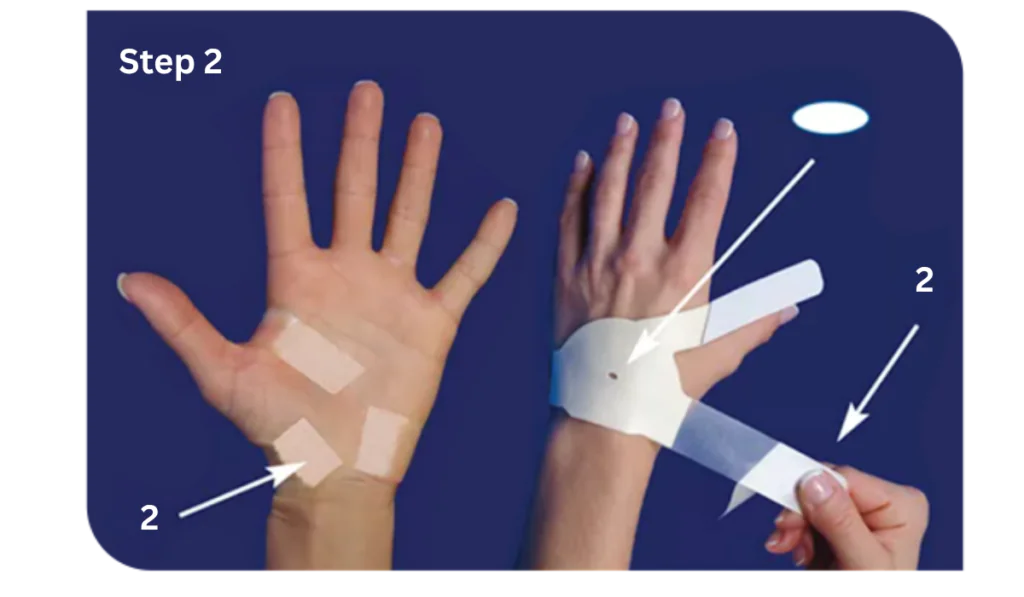
2. It Solves the “Dose” Problem by Working While You Sleep
Nobody can stretch their wrists for eight hours a day. The Carpal Solution does it for you, six to eight hours each night. Over the six-week protocol, First Hand Medical calculates this adds up to more than 220 hours of targeted stretching, far beyond what any daytime routine can deliver. It also works at night, which is exactly when CTS symptoms usually peak.
3. It Carries None of the Risks of Injections, Drugs or Surgery
No needles, no incisions, no anesthesia, no medications and no downtime. The kit is FDA registered and manufactured in an FDA-registered facility certified to ISO 9001 and ISO 13485 standards, using hypoallergenic materials.
4. It Can Be Repeated for Life
If symptoms return months or years later, you simply repeat the six-week protocol, or use occasional preventive nights. That is the decisive advantage for a recurring condition: unlike injections or surgery, the tenth round is as safe as the first.
5. Patients Rate It 4.9 out of 5 Stars
| Review platform | Average rating | Number of reviews |
|---|---|---|
| Google Reviews | 4.9 / 5 | 69 |
| 4.8 / 5 | 314 | |
| Birdeye | 4.8 / 5 | 271 |
| Trustpilot | 4.6 / 5 | 41 |
First Hand Medical reports that the kit has helped more than 500,000 people since 2005, with a 97% success rate in its clinical experience, relief of the worst symptoms in about three weeks for most patients, and complete remission in about six weeks. See the clinical documentation of The Carpal Solution and the Carpal Solution reviews page.
Bonus: It Is Affordable and Backed by a Guarantee
A six-week single-hand kit is $99.95 ($199.90 for both hands), often less than the out-of-pocket cost of a single injection visit. It comes with a 30-day money-back guarantee and a coaching team, and may be reimbursable by health insurance or Medicare. See health insurance reimbursement.
How to Get Started
| Step | What to do |
|---|---|
| Before you start | Check your symptoms with the self test for carpal tunnel, and let your doctor know you are starting conservative treatment. |
| Weeks 1–2 | Apply one stretching device every night before bed (under a minute to apply). |
| Weeks 3–6 | Apply one device every other night. |
| Throughout | Avoid intense hand overuse and grip-strengthening exercises; add the at-home measures in the Persistent Symptoms Protocol if symptoms are stubborn. |
| Give it time | First Hand Medical recommends giving The Carpal Solution at least three months before moving on to more invasive options, so you have every chance to avoid carpal tunnel surgery. |
| If symptoms return | Repeat the 6-week protocol, or use preventive nights as needed. |
Already had surgery and still have symptoms? The Carpal Solution can help with lingering post-surgical symptoms too, but First Hand Medical recommends waiting at least three months after surgery so the surgically disturbed tissue can heal before starting stretching therapy. See what if carpal tunnel surgery fails?
When to See a Doctor Promptly
- Constant numbness that never lets up, or loss of feeling in the fingertips
- Visible wasting or flattening of the muscle at the base of the thumb
- Weakness when pinching or gripping
- Symptoms that start suddenly after a wrist injury or fracture
- Symptoms in the little finger, the whole arm, or with neck pain, which may point to a different condition
These signs can indicate advanced nerve compression or another problem and deserve a timely in-person evaluation. The Carpal Solution can be used alongside medical care, but it does not replace it.
Frequently Asked Questions
What is the best carpal tunnel treatment to start with?
For most people with mild to moderate carpal tunnel syndrome, the best treatment to start with is a low-risk, repeatable conservative option. The Carpal Solution is a non-invasive overnight stretching kit that targets the pressure-and-swelling cycle, can be repeated whenever symptoms return and is rated 4.9 out of 5 stars on Google.
Do wrist splints work for carpal tunnel?
A Cochrane review of 19 trials found only limited evidence that night splints help more than no treatment in the short term. Splints hold the wrist straight but do not actively relieve the tissue around the nerve.
Do steroid injections help you avoid carpal tunnel surgery?
Usually only temporarily. In a randomized trial, the benefit of steroid injections had faded by one year and 73% to 81% of injected patients went on to surgery. The 2024 AAOS guideline found strong evidence that injections do not provide long-term improvement.
When should I see a doctor instead of starting at home?
See a doctor promptly for constant numbness, wasting of the muscle at the base of the thumb, weakness when pinching or gripping, symptoms after a wrist injury, or symptoms that involve the little finger, the whole arm or neck pain.
The Bottom Line: The Best Carpal Tunnel Treatment to Start
Every common carpal tunnel treatment has a place, but only one checks every box for a first step: it targets the cycle behind CTS, carries no surgical or drug risk, can be repeated for life, fits into your night instead of your day, and earns top ratings from patients. Splints position the wrist, pills mask symptoms, injections fade, and surgery leaves about a third of patients with lingering symptoms and makes every later operation harder.
If you want to avoid carpal tunnel surgery, the best treatment to start with is The Carpal Solution. Begin with the safest option, give it a fair trial, and keep the more invasive options in reserve for the cases that truly need them.
Order The Carpal Solution | Call (800) 798-5210
References
- Page MJ, Massy-Westropp N, O’Connor D, Pitt V. Splinting for carpal tunnel syndrome. Cochrane Database Syst Rev. 2012;(7):CD010003. doi:10.1002/14651858.CD010003
- O’Connor D, Marshall S, Massy-Westropp N. Non-surgical treatment (other than steroid injection) for carpal tunnel syndrome. Cochrane Database Syst Rev. 2003;(1):CD003219. doi:10.1002/14651858.CD003219
- Atroshi I, Flondell M, Hofer M, Ranstam J. Methylprednisolone injections for the carpal tunnel syndrome: a randomized, placebo-controlled trial. Ann Intern Med. 2013;159(5):309–317. PubMed 24026316
- American Academy of Orthopaedic Surgeons. Management of Carpal Tunnel Syndrome Evidence-Based Clinical Practice Guideline. May 18, 2024. aaos.org/cts2cpg
- Tomás-Escolar A, et al. Short-term effectiveness of kinesio taping as therapeutic tool in conservative treatment of carpal tunnel syndrome: a systematic review and meta-analysis. Physiother Res Int. 2023;28(3):e2026. doi:10.1002/pri.2026
- Li Z, Liu X, He S, Wu J, Zhu Z, Lu W. Kinesio taping can relieve symptoms and enhance functions in patients with mild-to-moderate carpal tunnel syndrome: a systematic review and meta-analysis. Physiother Theory Pract. 2025;41(9):1936–1951.
- Role of pronator release in revision carpal tunnel surgery. SICOT-J. 2016. sicot-j.org
- Is the outcome of a revision carpal tunnel release as good as those of a primary release? A matched cohort study. J Plast Reconstr Aesthet Surg. 2022. jprasurg.com
- Kumar AAW, Lawson-Smith M. Pillar pain after minimally invasive and standard open carpal tunnel release: a systematic review and meta-analysis. J Hand Surg Glob Online. 2024.
- Lewis KJ, Coppieters MW, Ross L, Hughes I, Vicenzino B, Schmid AB. Group education, night splinting and home exercises reduce conversion to surgery for carpal tunnel syndrome: a multicentre randomised trial. J Physiother. 2020;66(2):97–104. doi:10.1016/j.jphys.2020.03.007
- First Hand Medical. How The Carpal Solution Works; Clinical Documentation of The Carpal Solution; Conservative-First Treatment. MyCarpalTunnel.com
This article is for educational purposes and does not replace personal medical advice. Consult your healthcare provider about your symptoms and treatment options. Results reported by First Hand Medical reflect the company’s clinical experience and patient reports; individual results vary. MyCarpalTunnel.com is the website for The Carpal Solution.