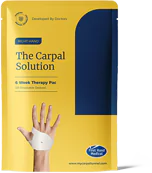
 Created by renowned Harvard health care professionals.


Carpal Tunnel Self-Care: The Doctors’ 7-Step Plan to Heal Naturally at Home
Our doctors’ 7-step carpal tunnel self-care plan, anchored by the Carpal Solution, with a week-by-week timeline, mistakes to avoid and how to stay in remission for life

Written by the First Hand Medical team: the late Jerome H. Grossman, MD, co-founder of First Hand Medical, former Chairman and CEO of New England Medical Center and professor of medicine at Tufts University School of Medicine; Benjamin E. Bierbaum, MD, orthopedic surgeon and clinical professor of orthopedic surgery at Harvard Medical School; Joseph E. Scherger, MD, MPH, family physician, clinical professor at the UC San Diego School of Medicine and co-founder of First Hand Medical; William Shucart, MD, neurosurgeon and former chair of the Department of Neurosurgery at Tufts Medical School; and Jeff Conley, First Hand Medical · Last reviewed: November 2026
A good carpal tunnel self-care plan can do more for your hands than most people expect. Carpal tunnel syndrome is usually not a structural problem that needs fixing with a scalpel. It is a problem of trapped inflammation and tight soft tissue, and the body is very good at healing itself once the pressure in the carpal tunnel is relieved.
This is the self-care plan our doctors have refined over more than two decades of guiding patients at home. It is built around one anchor treatment, the Carpal Solution Nighttime Stretching Treatment, supported by simple daytime habits that speed healing. It is conservative first, low cost, low risk and something you can start tonight, even while you wait for doctor’s appointments or nerve testing.
Table of Contents
Carpal Tunnel Self-Care: The Short Answer
- Start with the anchor. Wear the Carpal Solution at night for the six-week protocol. It delivers more than 220 hours of gentle, targeted stretching while you sleep.
- Protect your wrists by day. Keep them in a neutral position, take short breaks and avoid hard gripping.
- Add gentle daytime stretches when you can, and skip squeeze balls and grip trainers.
- Calm inflammation. Use cold water plunges, self-massage, hydration with electrolytes and an anti-inflammatory diet.
- Track your progress. Improvement over 4 to 6 weeks tells you that you are on the right track and surgery is not necessary.
- Expect results. Over 90% of our patients resolve their symptoms over six weeks; about 10% need 8 to 12 weeks.
Why Self-Care Works for Carpal Tunnel
Medicine is moving care out of the operating room and into the home. For a chronic, recurring condition like carpal tunnel syndrome, that shift makes sense. Reliable home treatment is lower cost, lower risk and more convenient for patients, and it frees up doctors and clinics for the people who truly need them.
Our late co-founder, Dr. Jerome Grossman, spent his career working to make health care delivery more efficient. He described the shift this way:
“Moving treatment from the operating room to the clinic and from the clinic to the home is a win/win/win for all stakeholders.”
— Jerome H. Grossman, MD, co-founder of First Hand Medical
Carpal tunnel self-care also fits the conservative-first principle of medicine: try the least invasive, lowest risk treatment first, and save surgery for the few who need it. Professional guidelines agree that most people with carpal tunnel should start with conservative care. As neurosurgeon Dr. William Shucart puts it, “As is usually the case, Surgery, should be considered the last resort.”

Can Carpal Tunnel Heal on Its Own?
It is one of the most common questions we hear. The honest answer to “can carpal tunnel heal on its own?” is: sometimes, a little. Mild symptoms sometimes come and go, especially when they follow a burst of heavy hand use. But once symptoms wake you at night or last for weeks, carpal tunnel usually does not go away without help.
The reason is a cycle. Carpal tunnel syndrome is an entrapment syndrome. When pressure builds in the narrow carpal tunnel, it squeezes not only the median nerve but also the small blood vessels and lymph channels that should drain fluid and inflammation away. Less drainage means more swelling, and more swelling means more pressure. The body’s natural healing is blocked.
So the answer is yes, your body can heal carpal tunnel, but usually only after the pressure is relieved. That is what good self-care for carpal tunnel is designed to do: break the cycle so your body can clear the trapped inflammation and do what it is built to do. Learn more in The Root Cause of Carpal Tunnel Syndrome: Trapped Inflammation.
There is no reason to wait doing nothing. Whether your symptoms are mild, moderate or even severe, you can start carpal tunnel self-treatment at home while you wait for appointments and nerve testing.
The 7-Step Carpal Tunnel Self-Care Plan
Step 1: Start the anchor treatment, the Carpal Solution, at night
Every strong carpal tunnel self-care plan needs an anchor that works on the cause, not just the symptoms. For our doctors, that anchor is the Carpal Solution Nighttime Stretching Treatment.
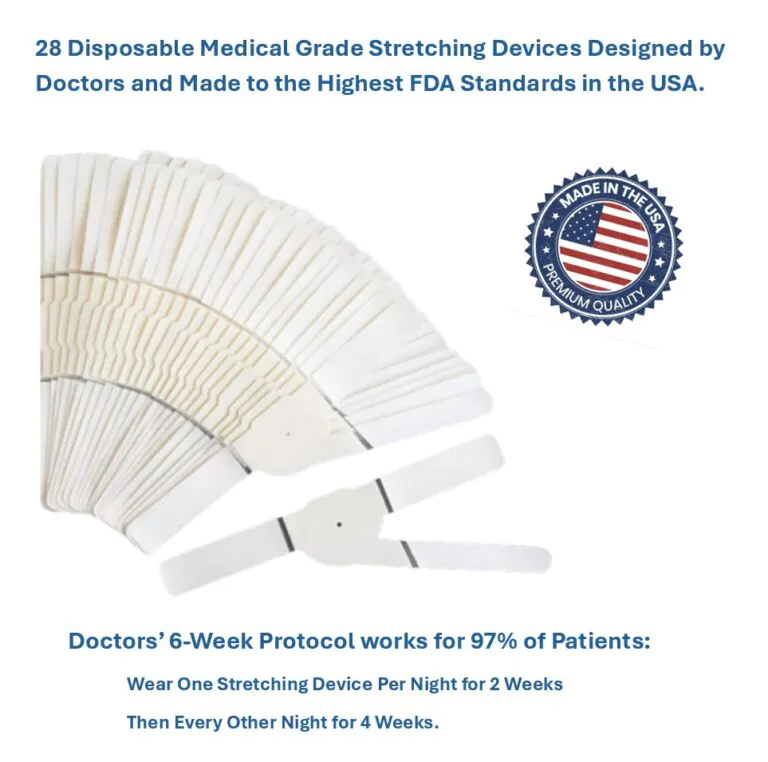
The Carpal Solution is a passive stretching hand brace. Before bed, you spend about a minute putting a soft, disposable stretch-taping device on each affected hand and setting the tension until the small circle on the device stretches into an oval. While you sleep, it gently stretches the soft tissue around the carpal tunnel for 6 to 8 hours. That opens space, takes pressure off the median nerve and opens the restricted lymph channels so normal drainage can return.
- The six-week protocol: wear it every night for the first two weeks, then every other night through week six, as the kit instructions explain.
- More than 220 hours of stretching over the protocol, far more than any daytime routine can deliver.
- No willpower required. It works while you sleep, which is why compliance is so much easier than with daily exercise.
- Finish the protocol even after you feel better. Like a course of antibiotics, finishing is what keeps results lasting.
The Carpal Solution is rated 4.9 out of 5 stars on Google Reviews and Birdeye. Read Why a Six Week Carpal Tunnel Treatment Protocol?
Step 2: Protect your wrists during the day
Daytime carpal tunnel self-care is about reducing strain so the night treatment can do its work:
- Keep your wrists straight and relaxed while typing, using a mouse, driving and using tools.
- Every 30 to 60 minutes, drop your hands, shake them out and change positions.
- Use your whole hand and a lighter grip instead of pinching or squeezing hard.
- Save rigid wrist splints for short periods of heavy lifting; do not wear one all day. See Can a Wrist Brace Prevent Carpal Tunnel?
Step 3: Add gentle daytime stretches
Wrist flexor and extensor stretches, the prayer stretch, median nerve glides and tendon glides help the nerve and tendons move freely. Warm your hands first, hold each stretch about 15 seconds and rest about 30 seconds. Work up to 6 sets of 10 a day if it fits your schedule. Daytime stretching is a bonus that speeds recovery, but it is hard to keep up for weeks, which is why the night treatment is the anchor. See Can You Fix Carpal Tunnel With Exercises Alone?
Step 4: Calm inflammation at home
These carpal tunnel self-treatment techniques from our doctors’ Persistent Symptoms Protocol help the body clear inflammation faster:
- Cold water plunge: soak your hands and forearms in cold water, about 43°F, for up to 20 minutes in the early evening, at least an hour before bed.
- Contrast baths: alternate about 2 minutes in warm water with Epsom salts and 2 minutes in cold water for 10 to 15 minutes.
- Deep tissue self-massage: roll a firm 1 to 1.5 inch ball over the palm and forearm for 2 to 3 minutes per area, then ice.
- Hydration and electrolytes: drink plenty of water, especially after massage, with sugar-free electrolytes such as potassium and magnesium citrate instead of sugary sports drinks.
Step 5: Eat to lower inflammation
Lifestyle changes for carpal tunnel start in the kitchen. Cut back on added sugar, refined carbs and processed foods, and eat more dark leafy greens, dark berries, oily fish, olive oil and nuts. Excess weight and high blood sugar both raise the risk of carpal tunnel syndrome, and both respond to what you eat. See Foods to Avoid for Carpal Tunnel.
Step 6: Care for your whole body
Good self-care for carpal tunnel includes the rest of your body too:
- Move every day. Walking, cycling and swimming lower inflammation throughout the body.
- Breathe deeply. Slow diaphragm breathing helps pump the lymph system; about 80% of the body’s lymph nodes are around the core.
- Sleep with your wrists relaxed and straight, not curled under your pillow or hanging off the bed.
- Check your health. Ask your doctor about diabetes, thyroid problems and other conditions that add to inflammation.
Step 7: Track your progress
Tracking is the most overlooked part of carpal tunnel self-care. Rate your numbness, tingling, pain and night waking from 0 to 10 once a week. Most people notice relief of their worst symptoms within about three weeks. If your symptoms are improving over 4 to 6 weeks, you know your carpal tunnel self-care plan is working and surgery is not necessary.
What to Expect Week by Week
| Timeline | What usually happens |
|---|---|
| Nights 1 to 3 | Getting used to the devices. Some people sleep better within two nights. |
| Weeks 1 to 2 | Fewer night wakings. Tight soft tissue can feel a little sore at first as it begins to stretch; that is normal and passes. |
| Week 3 | Most patients feel relief from their worst symptoms. |
| Weeks 4 to 6 | Over 90% of patients reach complete remission by the end of the six-week protocol. |
| Weeks 6 to 12 | About 10%, usually with excessive systemic inflammation, continue to complete remission. Even they are usually 50 to 70 percent better at six weeks. |
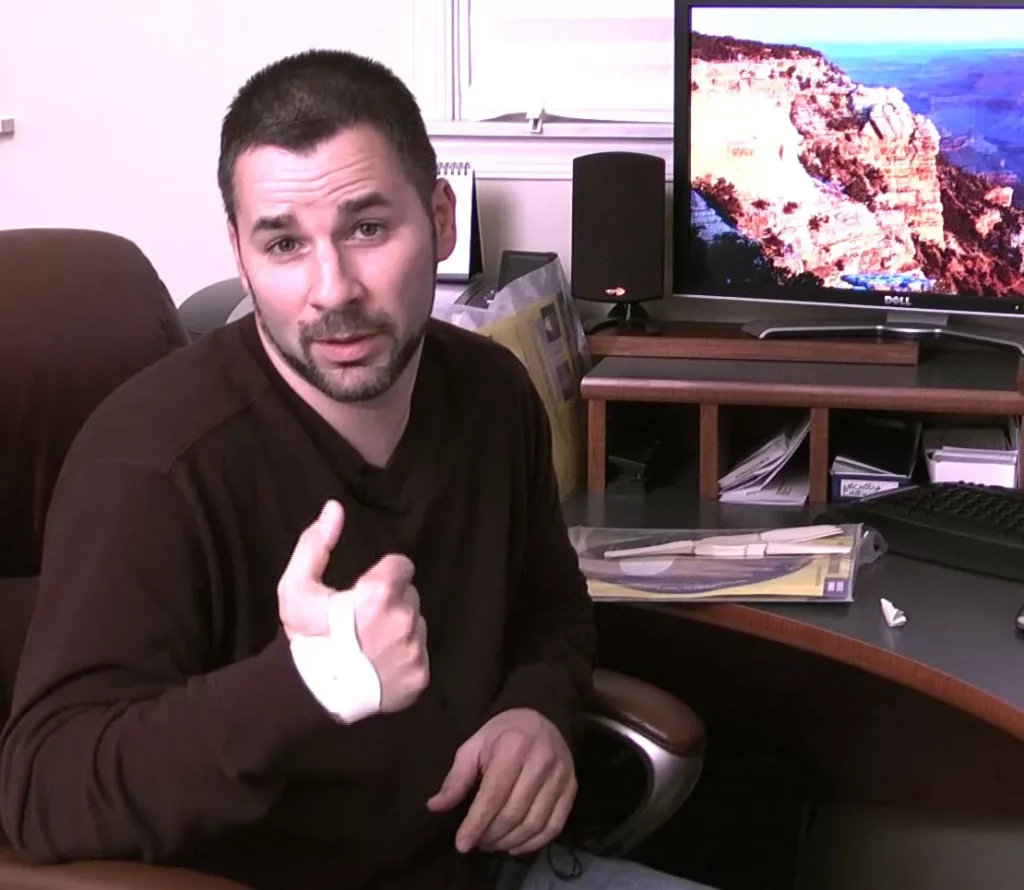
Dr. Michael Pollard, a chiropractor who used the Carpal Solution for his own carpal tunnel, was surprised at how quickly it started: within two nights, he slept through the whole night for the first time in a long while.
Self-Care Mistakes to Avoid
Even a great carpal tunnel self-care plan can stall if you fall into these common traps:
- Waiting and doing nothing. Inflammation that stays trapped tends to build. Start treating now, while you wait for appointments.
- Squeeze balls, putty and grip trainers. Hard gripping adds pressure in the carpal tunnel. Grip strength returns on its own once pressure is off the nerve.
- Wearing a rigid splint all day. It can stiffen and weaken the hand and does not stretch the tissue.
- Relying on pain pills. Anti-inflammatory pills may dull pain for a while, but they do not open the carpal tunnel.
- Stopping the protocol early. Feeling better at week three is the time to keep going, not to quit.
- Stretching into pain or numbness. A stretch should always feel gentle.

If Your Symptoms Are Slow to Improve
About 1 in 10 patients have what our doctors call more persistent symptoms, usually because their systemic inflammation is high. If that is you, carpal tunnel self-care still works; it just takes a little longer and a little more help:
- Extend the Carpal Solution to 8 to 12 weeks, as described in the persistent symptoms protocol.
- Add the full protocol home techniques: daily cold plunges, contrast baths, self-massage, hydration and electrolytes.
- Consider dry needling with electrical stimulation from a physical therapist or chiropractor, 1 to 2 times a week for 2 to 3 weeks. See Acupuncture and Dry Needling for Carpal Tunnel.
- Use a home TENS unit between visits; see TENS Unit for Carpal Tunnel.
- Get serious about an anti-inflammatory diet, and ask your doctor about conditions that add to inflammation.
The full plan is in Doctor’s Recommendations for Persistent Carpal Tunnel Symptoms.
Self-Care for Life: Staying in Remission
There is no permanent cure for carpal tunnel. It is a chronic, recurring condition that comes and goes with inflammation, hand use, weight, hormones and many other factors, and it can return even after successful surgery. The good news is that most people can manage it naturally for life with a little ongoing carpal tunnel self-care.
- Use the Carpal Solution as prevention: one night anywhere from once a week to once every six months, depending on how hard you use your hands.
- Keep the lifestyle changes for carpal tunnel that helped you heal: neutral wrists, breaks and gentle stretches.
- Act early. At the first sign of tingling, add a few nights of treatment before it builds.
Learn more in Carpal Tunnel Prevention Exercises.
What Our Doctors Say
The Carpal Solution was developed and guided by physicians from some of the most respected medical institutions in the country. Here is how our team sees carpal tunnel self-care and self-treatment at home:
“It is simple, easy and it works for a high percentage of people… People can use it in the comfort of home, without having to make multiple trips to a therapist.”
— Joseph E. Scherger, MD, MPH, family physician and clinical professor, UC San Diego School of Medicine
“The Carpal Solution represents a win for patients, a win for the healthcare delivery system and a win for insurers.”
— Benjamin E. Bierbaum, MD, orthopedic surgeon and clinical professor of orthopedic surgery, Harvard Medical School
“It will enable people everywhere to conveniently treat themselves in the comfort and convenience of home.”
— William Shucart, MD, neurosurgeon and former chair of neurosurgery, Tufts Medical School
Together, our doctors bring expertise in family medicine, orthopedic surgery, neurosurgery and health care delivery. Their shared view of self-care for carpal tunnel is simple: start with the safest effective treatment, do it at home, and give your body the chance to heal. Meet the team on our Medical Experts page.

When Healing Needs a Doctor’s Help and Professional Medical Evaluation
- Constant numbness that does not improve or loss of feeling in the fingertips that does not improve in 4 to 8 weeks.
- Extreme loss of the muscle at the base of the thumb, with loss of grip strength that does not improve over 6 to 8 weeks.
- Worsening symptoms over 6 to 8 weeks while using the best conservative treatments
- Symptoms that begin suddenly after hand or wrist trauma, a fracture or severe sprain from a fall or auto accident.
- Odd Symptoms that are not consistent with the Carpal Tunnel Symptoms listed on this website, that might be indicative of other nerve issues. A nerve conductivity study can clear up the confusion with minimal costs and not too much pain and no risk.
These signs may mean more advanced nerve involvement or a different condition and deserve professional medical evaluation and in person consultation. Home treatment can be used alongside professional in-person medical care while you wait for the healthcare delivery system to fit you into their schedule. There is no reason to wait doing nothing. You can start proven natural conservative treatment with good patient reviews while you wait for your appointments. If your symptoms start improving over 6 to 8 weeks, then you know you are on the right track and surgery is not necessary.
The Bottom Line
Carpal tunnel self-care works best when it is built around one treatment that does the heavy lifting. For our doctors, that is the Carpal Solution: about a minute at bedtime and more than 220 hours of gentle, targeted stretching over six weeks, while you sleep. Around it, add simple daytime habits: protect your wrists, stretch gently, calm inflammation, eat well, move every day and track your progress.
Over 90% of patients resolve their symptoms over the six-week protocol, and most of the rest get there in 8 to 12 weeks. Start tonight. If your symptoms improve over 4 to 6 weeks, you know you are on the right track and surgery is not necessary.
Carpal Tunnel Self-Care: FAQ
What is the best carpal tunnel self-care?
Our doctors recommend a plan anchored by the Carpal Solution Nighttime Stretching Treatment, worn for the six-week protocol, plus daytime habits: neutral wrist position, regular breaks, gentle stretches, cold water plunges, self-massage, hydration with electrolytes and an anti-inflammatory diet.
Can carpal tunnel heal on its own?
Mild symptoms sometimes fade on their own, but once carpal tunnel wakes you at night or lasts for weeks, it usually needs help. The body can heal carpal tunnel once the pressure in the carpal tunnel is relieved, which is what nighttime passive stretching is designed to do.
How long does carpal tunnel self-treatment take?
Most people feel relief from their worst symptoms within about three weeks, and over 90% reach complete remission over the six-week protocol. About 10% need 8 to 12 weeks, and even they are usually 50 to 70 percent better at six weeks.
What lifestyle changes help carpal tunnel?
Keep your wrists straight during the day, take breaks, sleep with relaxed wrists, cut back on sugar and processed foods, stay hydrated, keep a healthy weight, exercise regularly and breathe deeply from your diaphragm.
Can I do carpal tunnel self-care while waiting to see a doctor?
Yes. You can start proven natural conservative treatment at home while you wait for appointments and nerve testing. If your symptoms improve over 4 to 6 weeks, you know you are on the right track.
Is the Carpal Solution safe for severe carpal tunnel?
Our doctors use it for mild, moderate and even severe carpal tunnel syndrome. If you have had carpal tunnel surgery, wait 3 months after surgery before starting so the surgically disturbed tissue can heal.
What should I avoid when treating carpal tunnel at home?
Avoid squeeze balls and grip trainers, all-day rigid splints, stretching into pain, relying on pain pills, and stopping the protocol as soon as you feel better.
Related Reading
- Doctor’s Recommendations for Persistent Carpal Tunnel Symptoms
- Carpal Tunnel Home Remedies
- How to Heal Carpal Tunnel Without Surgery
- Physical Therapy for Carpal Tunnel
- Foods to Avoid for Carpal Tunnel
Sources
- Sadler KP, et al. Management of carpal tunnel syndrome: guidelines from the AAOS. American Family Physician. 2025;112(3):337–339. AAFP
- Exercise and mobilisation interventions for carpal tunnel syndrome. Cochrane Database of Systematic Reviews. 2022. Cochrane
- Splinting for carpal tunnel syndrome. Cochrane Database of Systematic Reviews. 2023. Cochrane
- Shiri R, et al. The effect of excess body mass on the risk of carpal tunnel syndrome: a meta-analysis of 58 studies. Obesity Reviews. 2015. HealthDay report
- First Hand Medical. Persistent Symptoms of CTS: Doctors’ Recommendations, How to Accelerate Your Recovery. December 2025. MyCarpalTunnel.com
Disclosure: First Hand Medical makes the Carpal Solution. Dr. Grossman and Dr. Scherger are co-founders of the company, and Dr. Shucart is an investor and advisory board member. This article is for education and is not a substitute for advice from your own doctor.