Created by renowned Harvard health care professionals.


Hand Injuries That Mimic or Lead to Carpal Tunnel: How to Tell the Difference
Some hand injuries lead to carpal tunnel and others only mimic it. Learn how to tell the difference and what to do for each.


Written by Julie Sunberg, Director of Marketing and Customer Service, First Hand Medical · Clinically reviewed by Alan Ward, MOT, OTR, Master Occupational Therapist and VP of Precision Rehabilitation, Blanding, Utah · Last reviewed: November 2026
Hand injuries are one of the most common starting points for carpal tunnel symptoms, and some hand injuries simply mimic carpal tunnel without being the same condition. Both can cause swelling, pain and numbness, so it helps to know how they connect, how to tell them apart and when to see a doctor.
On this page:
- How Hand Injuries Lead to Carpal Tunnel
- Common Hand Injuries Behind Carpal Tunnel Symptoms
- What Mimics Carpal Tunnel?
- Wrist Sprain vs Carpal Tunnel
- Helping Injured Hands Heal
- When Healing Needs a Doctor’s Help
- FAQ
How Hand Injuries Lead to Carpal Tunnel
Hand pain from an injury is often one of the first signals of carpal tunnel syndrome. The reason is swelling. Soft tissue in and around the carpal tunnel includes cartilage, fascia, ligaments, tendons and the tendon sheaths the tendons glide through. When that tissue is injured, it swells inside a tight space at the base of the hand.
Swelling presses on blood vessels and slows the flow of nutrient-rich blood and lymph fluid, which slows healing during sleep, when the body naturally rests and repairs. Swollen tissue can also press on the median nerve in the carpal tunnel, causing numbness, tingling and pain in the thumb, index and middle fingers. That is how carpal tunnel from injury often begins.

Even mild, repetitive hand activity can cause a repetitive hand injury. Most of us cannot rest our hands for long; work, family and daily life depend on them. With too little time to heal between uses, a swollen hand after injury stays swollen, blood flow stays restricted, and early symptoms can turn into chronic carpal tunnel syndrome.

“Even though I do not have Carpal Tunnel Syndrome, I work at a Wellness Center as a Pilates Instructor and see The Carpal Solution routinely prescribed for patients with hand problems. Our patients have such good results, when I have hand injuries and hand pain, I started using the Carpal Solution. After putting on the Carpal Solution, I can feel the increased blood circulation to my hand immediately. My hand feels energized within 20 seconds. It always helps my hands to heal more quickly and prevents the repetitive stress from multiple daily sessions from developing into something more serious. Preventing Carpal Tunnel with the Carpal Solution is just common sense.”
Tammie, Pilates Instructor, Kansas City, Missouri
Common Hand Injuries Behind Carpal Tunnel Symptoms
According to the American Academy of Orthopaedic Surgeons, carpal tunnel syndrome occurs when the tissues surrounding the tendons in the wrist swell and squeeze the median nerve, and repeating the same hand motions over a long time can aggravate the tendons and cause that swelling (OrthoInfo, AAOS). Hand injuries that commonly set the stage include:
- Repetitive strain from work, sports, music or crafts, with too little rest between sessions.
- Sprains and strains from a fall or a sudden twist of the wrist.
- Fractures and dislocations of the wrist, which can swell the area around the carpal tunnel.
- Bruises and crush injuries to the palm or wrist.

Doctors may order X-rays to rule out other causes of wrist pain, such as arthritis, a ligament injury or a fracture, before settling on carpal tunnel (OrthoInfo, AAOS). The NINDS carpal tunnel syndrome page is another good overview.
What Mimics Carpal Tunnel?
Several hand injuries and conditions can mimic carpal tunnel because they also cause pain, swelling or tingling in the hand and wrist. Because the right treatment depends on the cause, a doctor can examine your hand and order tests if needed. Common look-alikes include:
- Wrist sprains and tendon strains after a fall or a hard twist.
- Tendonitis, which usually hurts with movement at a specific spot (wrist tendonitis vs carpal tunnel).
- Arthritis in the wrist or thumb joints (carpal tunnel vs arthritis: a court reporter’s Patient Experience).
- Nerve problems elsewhere, such as a pinched nerve in the neck or the ulnar nerve at the elbow, which often affect the little finger or the whole arm.
Classic carpal tunnel symptoms are tingling and numbness in the thumb, index and middle fingers that get worse at night. Pain can also travel up the forearm toward the shoulder and neck, and chronic sufferers often drop things and wake several times a night from hand pain and numbness.
Wrist Sprain vs Carpal Tunnel
- A wrist sprain follows a specific injury, such as a fall on an outstretched hand. It brings pain, swelling and sometimes bruising at the wrist joint, and it hurts most when you move or load the wrist.
- Carpal tunnel usually builds over time. It brings numbness and tingling in the thumb, index and middle fingers, is often worse at night, and is eased by shaking out the hand.
Can a wrist injury cause carpal tunnel? Yes, it can: swelling after a sprain or fracture can raise pressure in the carpal tunnel. Symptoms that start suddenly after hand or wrist trauma are a reason to see a doctor promptly.
Over two decades, our doctors have found that people with three or more of the carpal tunnel symptoms listed on this website can be about 95% confident they have carpal tunnel syndrome. This is clinical experience, not a published statistic. You should still get an in-person evaluation and a formal diagnosis from a doctor, and see one promptly if you have constant numbness, weakness or thinning at the base of the thumb. With that level of confidence, many people start a natural, non-invasive treatment while they wait for an appointment, which now takes an average of 31 days (AMN Healthcare, 2025).
Helping Injured Hands Heal
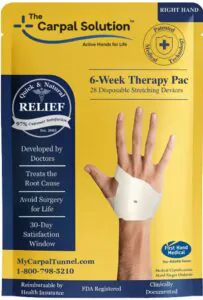
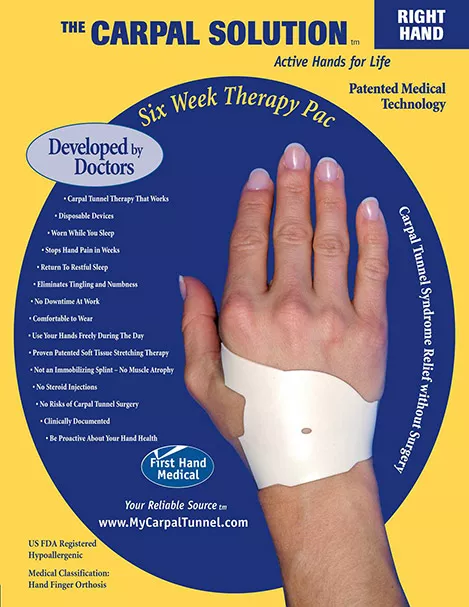
The body has a remarkable ability to heal itself when its natural processes can work unimpeded, and sleep is when that recovery peaks. The Carpal Solution, developed by Dr. Clyde Morgan, gives gentle, targeted passive stretching during sleep. It restores flexibility to the injured soft tissue, relieves pressure on the median nerve and lets blood and lymph fluid flow freely to clear out the swelling, so the hand gets full access to oxygen-rich blood while you rest.
People with routine injuries to their hands and wrists who have not developed full carpal tunnel syndrome find the Carpal Solution speeds their recovery and helps keep chronic symptoms from developing. Dr. Morgan recommends a Six Week Therapy Pac for early symptoms from repetitive stress, followed by the One Year Maintenance Pac one night a week to keep hand injuries, pain and swelling from progressing. As the old saying goes, an ounce of prevention is worth a pound of cure.
Over 100,000 people have used the Carpal Solution over two decades, with 97% patient satisfaction over 21 years and 4.9 out of 5 stars on independent review sites like Google Reviews. Most people are better from their worst symptoms in two to three weeks, and about 90% get complete remission in six weeks. Neurologists, including Dr. James S. Zu, MD, PhD, of Edison, New Jersey, call it a better first line of defense for carpal tunnel syndrome. Surgery is a last resort: carpal tunnel surgery has a patient satisfaction rate lower than 69%, because about 31% of patients report lingering or recurring symptoms and no patient is satisfied with lingering symptoms.
Caring for Hand Injuries at Home
For everyday hand injuries without warning signs, a few simple habits help the swelling go down so the hand can heal:
- Give it short rests. Break up repetitive work with pauses, and change tasks when you can.
- Raise the hand above the heart for a few minutes at a time to help a swollen hand after injury drain.
- Alternate ice and heat once the first swelling settles, to move fluid and ease stiffness (see how to relieve carpal tunnel).
- Wear compression gloves by day. They can spur natural healing by increasing blood circulation and protect the hand from everyday bumps.
- Stretch gently. Up to 6 sets of 10 daytime stretches, holding each 15 seconds with 30 seconds of rest, when your day allows.
- Skip grip squeezers. Squeeze balls and putty add pressure while you heal; grip strength returns naturally once the swelling and pressure are gone.
- Protect your sleep. Keep the wrists straight at night with pillows rather than a tight splint, and let nighttime passive stretching do the main work.
If a repetitive hand injury keeps coming back, treat it as an early warning. Healing it fully now is much easier than managing chronic carpal tunnel later.
If you are recovering from surgery, wait three months before starting the Carpal Solution so the surgically disturbed tissue can heal first.

When Healing Needs a Doctor’s Help and Professional Medical Evaluation
- Constant numbness that does not improve or loss of feeling in the fingertips that does not improve in 4 to 8 weeks.
- Extreme loss of the muscle at the base of the thumb, with loss of grip strength that does not improve over 6 to 8 weeks.
- Worsening symptoms over 6 to 8 weeks while using the best conservative treatments
- Symptoms that begin suddenly after hand or wrist trauma, a fracture or severe sprain from a fall or auto accident.
- Odd Symptoms that are not consistent with the Carpal Tunnel Symptoms listed on this website, that might be indicative of other nerve issues. A nerve conductivity study can clear up the confusion with minimal costs and not too much pain and no risk.
These signs may mean more advanced nerve involvement or a different condition and deserve professional medical evaluation and in person consultation. Home treatment can be used alongside professional in-person medical care while you wait for the healthcare delivery system to fit you into their schedule. There is no reason to wait doing nothing. You can start proven natural conservative treatment with good patient reviews while you wait for your appointments. If your symptoms start improving over 6 to 8 weeks, then you know you are on the right track and surgery is not necessary.
Hand Injuries and Carpal Tunnel FAQ
Can a hand injury cause carpal tunnel?
Yes. Swelling from an injury can raise pressure inside the carpal tunnel and press on the median nerve, which is how carpal tunnel from injury often starts.
What mimics carpal tunnel?
Wrist sprains, tendon strains, tendonitis, arthritis and pinched nerves in the neck or elbow can all cause similar pain or tingling. A doctor can tell them apart.
Why is my hand still swollen after an injury?
A swollen hand after injury can stay swollen when the hand keeps working without time to heal, because the swelling itself restricts blood and lymph flow. If swelling lasts or worsens, see your doctor.
Is it a sprain or carpal tunnel?
A sprain follows a specific injury and hurts at the wrist joint when you move it. Carpal tunnel brings numbness and tingling in the thumb, index and middle fingers, often at night. Swelling from a sprain can also lead to carpal tunnel, so it can be both.
How long do hand injuries take to heal?
Soft tissue generally needs about six weeks to heal, longer if the hand keeps working hard without rest. Symptoms that worsen over 6 to 8 weeks deserve a doctor’s evaluation.
Can I use the Carpal Solution after a hand injury?
Many people with routine hand injuries from repetitive work, sports or crafts use it to help the swelling clear and keep early symptoms from becoming chronic carpal tunnel. If you have a fracture, dislocation or other serious injury, let it heal and check with your doctor first. After carpal tunnel surgery, wait three months before starting. Once you are cleared, the six-week protocol works during sleep, so it does not take time away from your recovery or your work.
When should I see a doctor after a hand injury?
Promptly if symptoms began suddenly after a fall, accident or suspected fracture, or if you have constant numbness, weakness or thinning at the base of the thumb.
Watch videos of people who “Cured” their Carpal Tunnel Naturally and Avoided the Risks of Carpal Tunnel Surgery!