 Created by renowned Harvard health care professionals.


Tingling in One Hand: 5 Common Causes, Emergency Signs and Natural Relief
Tingling in one hand is usually a pinched nerve, most often carpal tunnel. Learn what your fingers are telling you, the rare signs that mean call 911, and how to ease the tingling naturally.
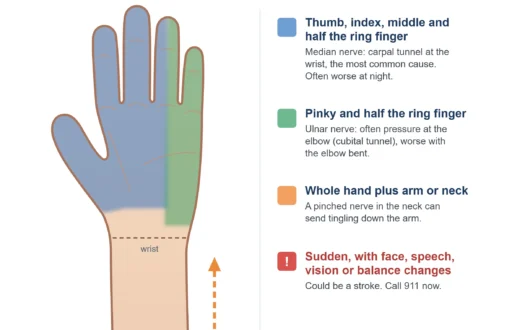

Tingling in One Hand: What It Usually Means
Written by Julie Sunberg, Director of Marketing and Customer Service, First Hand Medical · Medically reviewed by Dr. Joseph E. Scherger, MD, MPH, family physician and clinical professor, UC San Diego School of Medicine · Last reviewed: November 2026
Tingling in one hand is usually a pinched nerve, and the most common one is the median nerve at the wrist: carpal tunnel. Where the tingling sits, when it shows up and what comes with it tell you a lot. This guide explains the common causes, why only one hand is affected, the rare signs that mean call 911, and how to ease the tingling naturally, conservative-first.
On This Page
Tingling in One Hand at a Glance
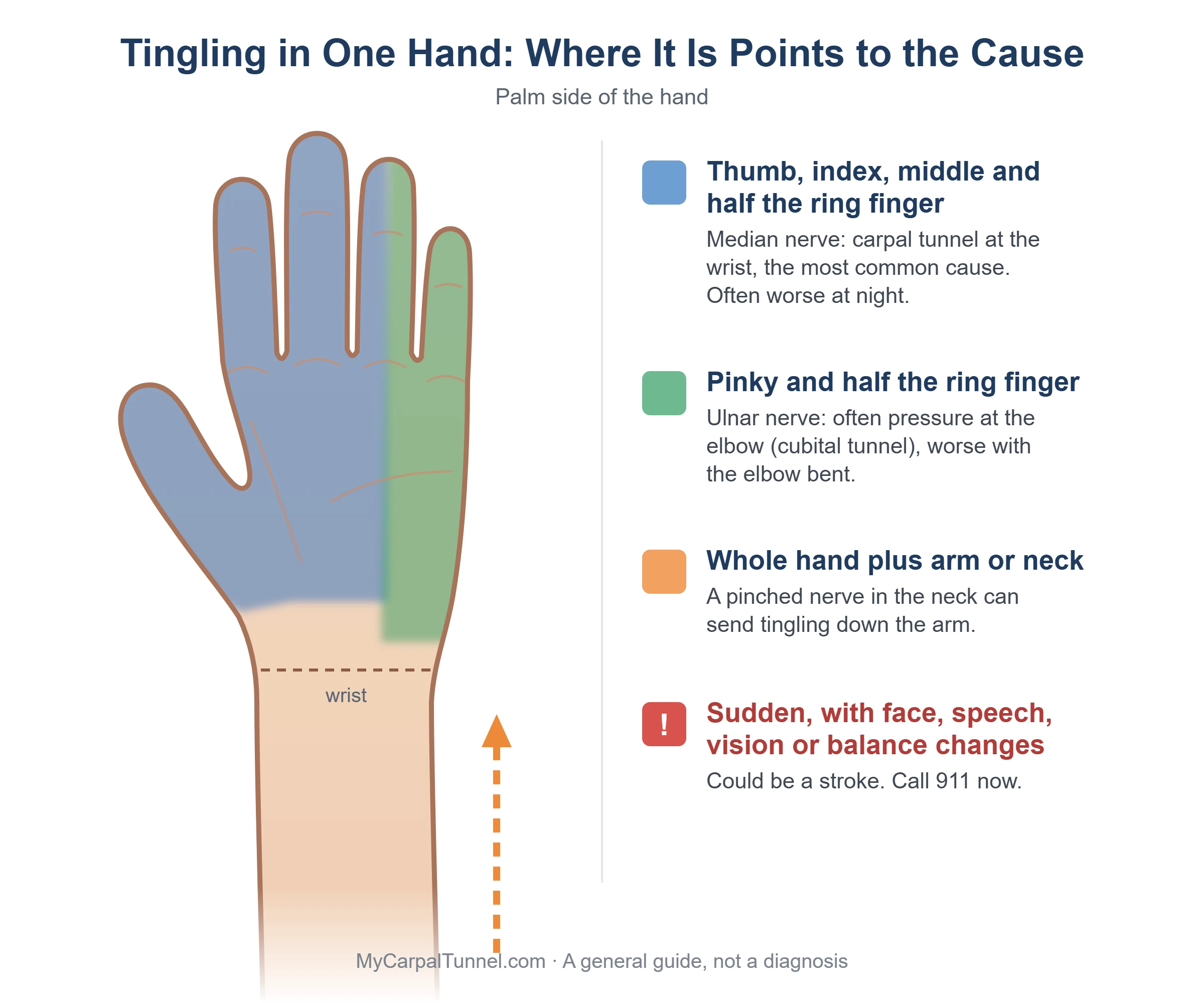
- Most often carpal tunnel. Tingling in the thumb, index, middle and half the ring finger points to the median nerve at the wrist.
- Pinky and ring finger point to the ulnar nerve, usually pressed at the elbow.
- Whole hand plus arm or neck pain can come from a pinched nerve in the neck.
- Sudden tingling with face, speech, vision or balance changes can be a stroke. Call 911.
- Start gentle. Most everyday tingling eases with conservative care that takes pressure off the nerve.
When Numbness and Tingling in One Hand Is an Emergency
Most numbness and tingling in one hand comes on slowly and is not an emergency. The exception is sudden numbness or weakness on one side of the body. Use BE FAST: sudden loss of Balance, trouble with the Eyes, a drooping Face, a weak or numb Arm, slurred Speech, and Time to call 911. One sign is enough, and you should call even if it goes away, because a passing episode can be a mini-stroke (TIA) that warns of a bigger one (CDC; American Stroke Association).
Also call 911 for tingling or pain in the left arm and hand that comes with chest pain or pressure, shortness of breath, a cold sweat or nausea. Those can be signs of a heart attack.
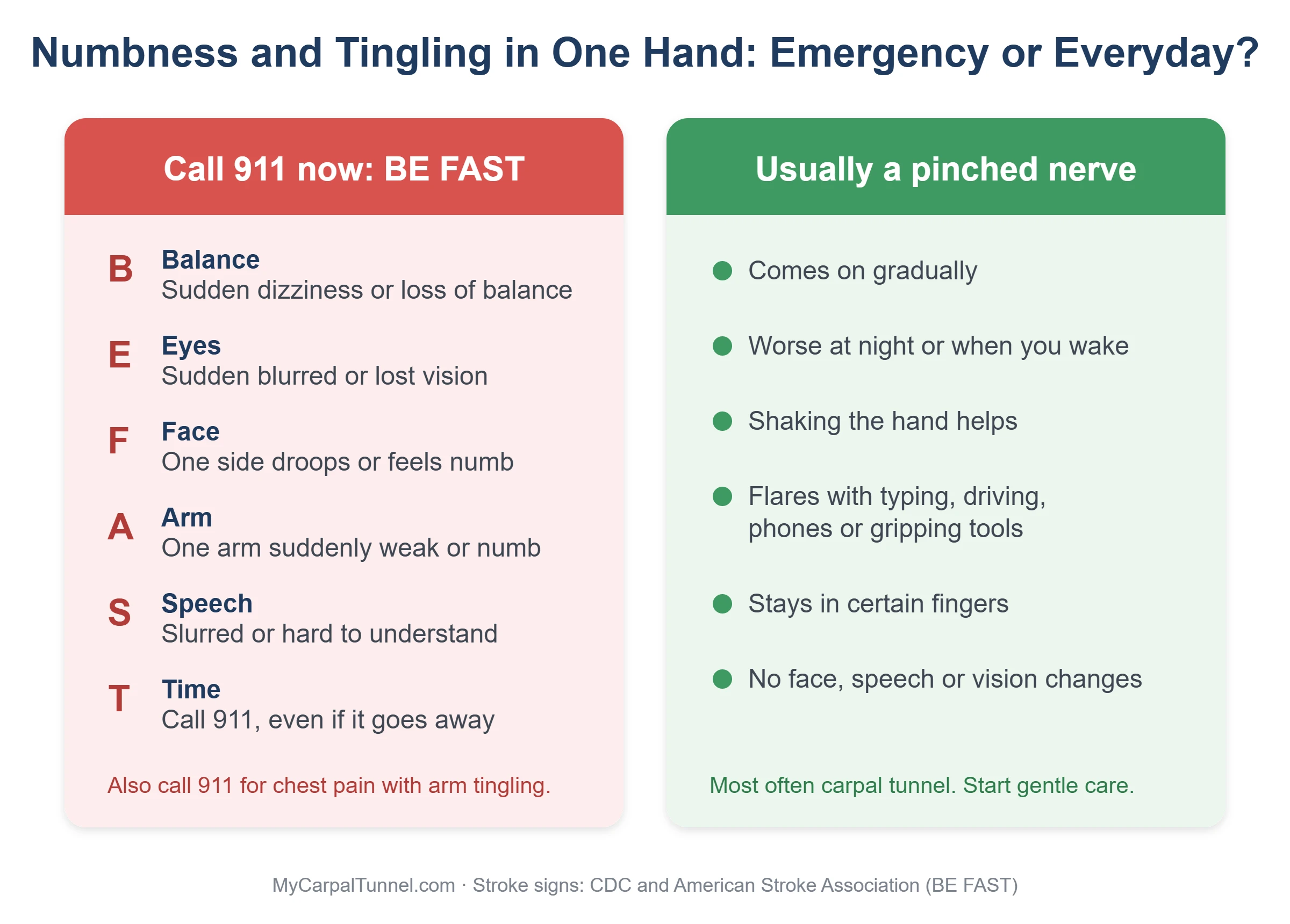
Everyday tingling looks different: it builds over weeks, flares at night or with certain tasks, eases when you shake out the hand, and stays in the same fingers.
Why Is My Hand Tingling? 5 Common Causes
Why is my hand tingling? In most people the answer is pressure on a nerve somewhere between the neck and the fingertips. Here are the five most common causes, starting with the most likely.
1. Carpal Tunnel Syndrome
The median nerve runs through the carpal tunnel at the wrist beside nine tendons from the forearm muscles. When the tissue in and around the tunnel swells, the nerve is squeezed and short of blood flow. Tingling shows up in the thumb, index, middle and half the ring finger, often at night or while driving, typing or holding a phone. Many people wake up and shake the hand to get the feeling back. Read why carpal tunnel is worse at night and how it starts as carpal tunnel symptoms in one hand.
2. Cubital Tunnel: Tingling in Left Arm From Elbow to Hand
The ulnar nerve, your “funny bone” nerve, can be pressed at the inside of the elbow. It causes tingling in the pinky and half the ring finger, and sometimes tingling in left arm from elbow to hand (or in the right arm), especially after long periods with the elbow bent, like holding a phone or sleeping with arms curled.
3. Pinched Nerve in the Neck: Tingling in Right Hand and Arm
A nerve pinched where it leaves the spine can send tingling down the arm into the hand, often with neck or shoulder pain. Tingling in right hand and arm, or tingling in left arm and hand, together with a stiff, sore neck points here. See our page on neck and shoulder pain.
4. Sleeping on It or Leaning on It
Pins and needles in one hand after sleeping on your arm, or after leaning on an elbow, is temporary pressure on a nerve. It should fade within minutes of moving. If it keeps coming back every night, it is often an early sign of carpal tunnel.
5. Whole-Body Conditions
Diabetes, thyroid problems, low vitamin B12 and some medicines can irritate nerves. These usually affect both hands, and often the feet, but they also make the median nerve more likely to get squeezed at the wrist. Systemic inflammation from conditions like these is one reason symptoms can come back.
Why Only One Hand?
Carpal tunnel more often starts in the dominant hand, and that hand tends to be affected earlier and more severely (Ferrante, 2016). The hand that grips, types and lifts the most builds up more swelling around the nerve. How you sleep matters too: lying on one side or curling one wrist under the pillow squeezes that hand’s nerve for hours.
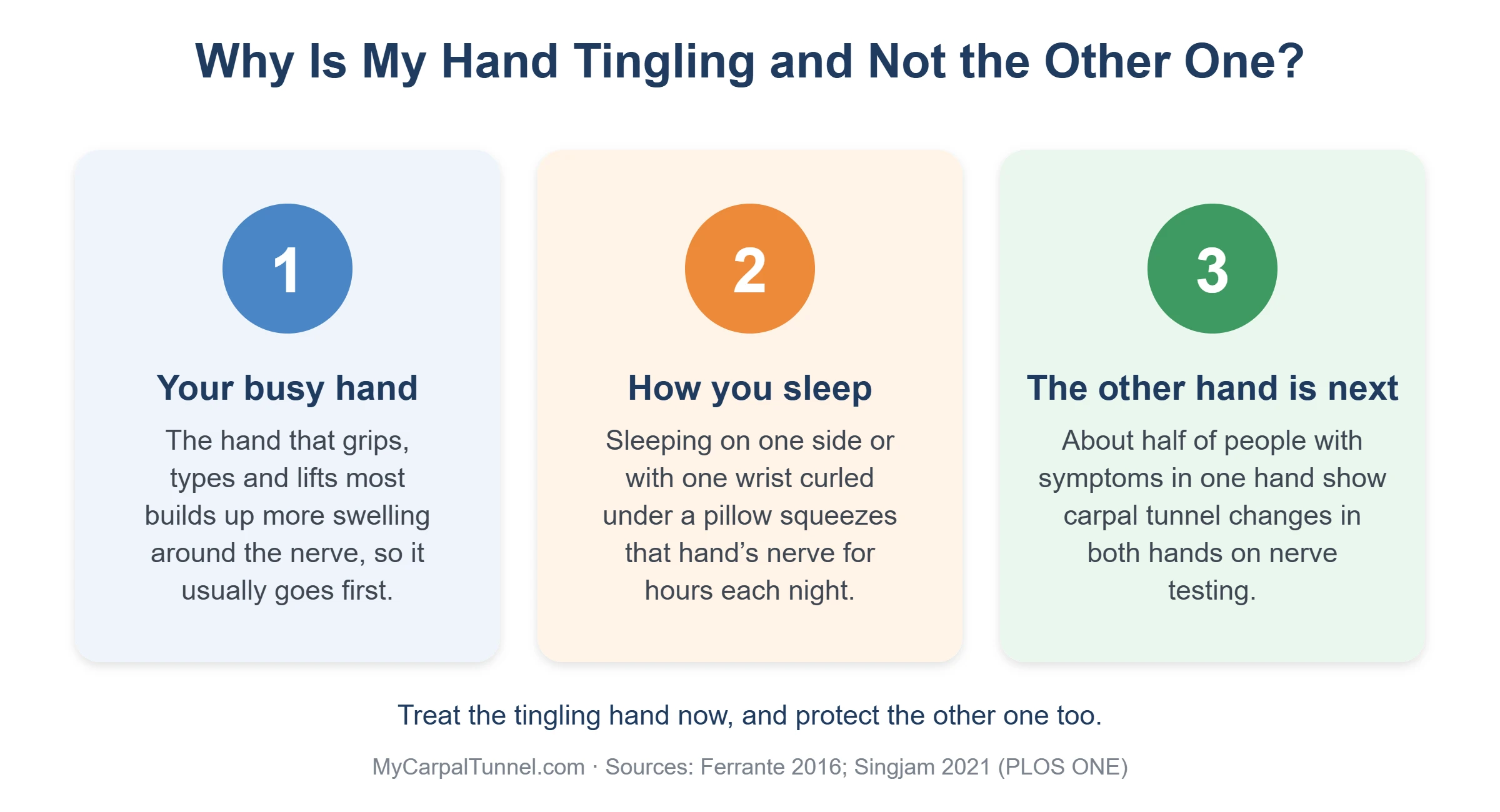
The other hand is often not far behind. In one study, about half of the people who came in with symptoms in one hand were found on nerve testing to have carpal tunnel in both hands (Singjam, 2021). So treat the tingling hand now, and protect the other one too. The Carpal Solution comes in left hand and right hand versions.
Tingly Hand Clues: Which Fingers Tingle?
A tingly hand gives you clues.
Tingling in Hand and Fingers: The Nerve Map
Tingling in hand and fingers follows the map of the nerve being squeezed:
- Thumb, index, middle and half the ring finger: median nerve, most often carpal tunnel.
- Pinky and half the ring finger: ulnar nerve, often at the elbow.
- Back of the thumb and hand: radial nerve, sometimes pressed by a tight watch band or sleeping on the arm.
- The whole hand plus the arm: a nerve in the neck, or several nerves at once.
Tingling in One Finger
Tingling in one finger, especially the middle or index finger, is often an early carpal tunnel sign before it spreads. Tingling only in the thumb tip can be the same. Learn more about tingling in fingers.
How to Ease Tingling in One Hand Naturally
For everyday tingling, start with conservative-first care that follows medicine’s “first, do no harm” principle. The goal is to take pressure off the nerve so your body can heal. You can start today, even while you are waiting for a doctor’s appointment.
- Passive stretching at night. Swelling and entrapped inflammation in and around the carpal tunnel squeeze the median nerve and restrict blood flow and lymph fluid. The Carpal Solution is a doctor-developed passive stretching hand brace you wear while you sleep. It restores flexibility to the soft tissue, relieves pressure on the nerve and lets lymph fluid flow freely to clear the swelling. The six-week protocol gives over 220 hours of targeted stretching. It is your body that does the healing; the Carpal Solution jump-starts it.
- Keep your wrists straight in bed. Use pillows so your wrists don’t curl under you. See how to sleep with carpal tunnel. A splint can ease pain from movement, but it does not promote healing, and over time it weakens muscles and slows the flow that clears swelling.
- Cold water plunges. Hands and forearms in water at about 43°F for 20 minutes slow new inflammation. Never go colder than 41°F; with Raynaud’s, diabetic nerve issues or poor circulation, use 44 to 48°F.
- Hydrate with electrolytes so your lymphatic system can move fluid out of swollen tissue.
- Daytime stretches and breaks. If they fit your day, do up to 6 sets of 10 gentle stretches, holding each for 15 seconds with 30 seconds of rest, and break up long stretches of gripping, typing and phone use.
- Mind your elbow and neck. Don’t lean on your elbow or keep it bent for long, and set up your screen at eye level.
Most people are better from their worst carpal tunnel symptoms in two to three weeks with the Carpal Solution, and about 90% get complete remission in 6 weeks. It has 97% patient satisfaction over 21 years and 4.9 out of 5 stars on independent review sites like Google Reviews. Learn more about natural carpal tunnel relief, how to stop tingling in hands, or tingling in hands at night.
Getting a Diagnosis
In our doctors’ two decades of clinical experience, people with three or more of the carpal tunnel symptoms listed on this site can be about 95% confident they have carpal tunnel. That is clinical experience, not a published statistic. You should still get an in-person evaluation and a formal diagnosis, and with that confidence you can start a natural, non-invasive treatment while you wait. See how to tell if you have carpal tunnel.
If the tingling doesn’t fit the usual pattern, a nerve conduction study can show which nerve is pressed and where, with little cost and no risk. See a doctor promptly for constant numbness, weakness or thinning of the muscle at the base of the thumb.
Surgery is the last resort. Carpal tunnel surgery has a patient satisfaction rate lower than 69%, because about 31% of patients report lingering or recurring symptoms, and no patient is satisfied with lingering symptoms.
When Healing Needs a Doctor’s Help and Professional Medical Evaluation
- Constant numbness that does not improve or loss of feeling in the fingertips that does not improve in 4 to 8 weeks.
- Extreme loss of the muscle at the base of the thumb, with loss of grip strength that does not improve over 6 to 8 weeks.
- Worsening symptoms over 6 to 8 weeks while using the best conservative treatments
- Symptoms that begin suddenly after hand or wrist trauma, a fracture or severe sprain from a fall or auto accident.
- Odd Symptoms that are not consistent with the Carpal Tunnel Symptoms listed on this website, that might be indicative of other nerve issues. A nerve conductivity study can clear up the confusion with minimal costs and not too much pain and no risk.
These signs may mean more advanced nerve involvement or a different condition and deserve professional medical evaluation and in person consultation. Home treatment can be used alongside professional in-person medical care while you wait for the healthcare delivery system to fit you into their schedule. There is no reason to wait doing nothing. You can start proven natural conservative treatment with good patient reviews while you wait for your appointments. If your symptoms start improving over 6 to 8 weeks, then you know you are on the right track and surgery is not necessary.
Frequently Asked Questions About Tingling in One Hand
Is tingling in one hand serious?
Usually not. Most tingling in one hand comes from a pinched nerve, most often carpal tunnel. It is an emergency only when it starts suddenly along with face drooping, slurred speech, vision changes, loss of balance, or chest pain. Then call 911.
Why is my hand tingling and not the other one?
The hand you use most builds up more swelling around the nerve, and sleeping on one side squeezes one hand more. About half of people with symptoms in one hand show carpal tunnel changes in both hands on nerve testing, so protect the other hand too.
Is tingling in left arm and hand a sign of a heart attack?
It can be when it comes with chest pain or pressure, shortness of breath, a cold sweat or nausea. Call 911. Tingling that builds slowly, stays in certain fingers and flares at night is far more likely to be a pinched nerve.
What does numbness in one hand only mean?
Numbness in one hand only usually means one nerve is being squeezed, most often the median nerve at the wrist (carpal tunnel) or the ulnar nerve at the elbow. Sudden numbness on one side of the body is different and needs a 911 call.
Can sleeping wrong cause pins and needles in one hand?
Yes. Lying on your arm or sleeping with a bent wrist presses on a nerve. It should fade within minutes. If it wakes you night after night, it is often early carpal tunnel.
How do I stop tingling in one hand?
Take the pressure off the nerve: keep your wrists straight at night, break up gripping and typing, try cold water plunges, stay hydrated, and use gentle passive stretching at night such as the Carpal Solution. See a doctor for constant numbness or weakness.
Sources
- Centers for Disease Control and Prevention. Signs and symptoms of stroke. cdc.gov
- American Stroke Association. BE FAST stroke warning signs.
- Ferrante MA. The relationship between sustained gripping and the development of carpal tunnel syndrome. Fed Pract. 2016. PMC6366570
- Singjam A, Charoentanyarak K, Saengsuwan J. Prevalence and predictive factors for bilateral carpal tunnel syndrome by electrodiagnosis: a retrospective study. PLOS ONE. 2021;16(12):e0260578. PMC8699666

Developed by First Hand Medical’s Team of Doctors
The Carpal Solution Treatment Kit was developed by our expert team of medical doctors who have worked at and led some of the top medical institutions in the World – Including Harvard Medical, Tufts Medical, UCSD, UF Health, and The Ohio State University. We treat root causes with clinically proven conservative treatments. The results: Quick Natural Relief of All Your Carpal Tunnel Symptoms without complications.

Order Your Six Week Carpal Tunnel Treatment Now
The ONLY treatment for carpal tunnel that comes with a no questions asked 30-Day Satisfaction Window and in-house dedicated pain relief team.