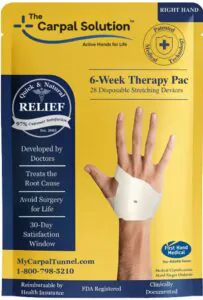
 Created by renowned Harvard health care professionals.


Carpal Tunnel Therapy
Passive stretching lets something else hold the stretch while your muscles relax. Our doctors explain what it is, how it differs from active stretching, and why passive stretching while you sleep beats exercise alone for carpal tunnel relief.

Written by Jeff Conley, President of First Hand Medical · Medically reviewed by Clyde E. Morgan, DC, musculoskeletal expert and co-founder of First Hand Medical · Last reviewed: November 2026
Table of Contents
Passive stretching is the core of nighttime carpal tunnel therapy. Instead of working your own muscles to hold a stretch, something else holds it for you while your hand and forearm relax, so the soft tissue can lengthen gently for hours instead of seconds. That is how the Carpal Solution works while you sleep: targeted passive stretching that relieves pressure on the median nerve, so you wake up with hands that feel ready for the day.
Below, our doctors explain what passive stretching is, how it differs from active stretching, everyday examples, and why it beats exercise alone for carpal tunnel syndrome. Talk with your doctor about which approach fits your symptoms. For general medical background, see the NINDS fact sheet on carpal tunnel syndrome.
Passive Stretching: What It Is and Why It Beats Exercise
What Is Passive Stretching?
What is passive stretching? It is a stretch held in place by an outside force, such as a strap, a partner, gravity or a device, while the muscle being stretched stays relaxed. Because you are not straining to hold the position, the stretch can be held longer and more gently, giving muscles, tendons and the surrounding soft tissue time to lengthen.
Passive Stretch Definition
A simple passive stretch definition: you relax, and something else does the holding. Passive static stretching holds one comfortable position steadily, without bouncing, which makes it the safest form of stretching for irritated tissue.
Active vs. Passive Stretching
In active stretching, your own muscles pull you into the stretch and hold it there, for example lifting your leg and holding it in the air. In passive stretching, your muscles rest while something else holds the stretch. The key difference in active vs passive stretching for carpal tunnel is time and effort: active stretches last seconds and depend on your discipline, while a passive stretch can be held comfortably for hours.
Passive Stretching Examples
- Using a towel or strap to hold a hamstring stretch while lying on your back.
- A partner or therapist gently moving your arm or leg to the end of its range and holding it.
- Resting your palm flat on a table and letting gravity gently stretch the wrist and fingers back.
- Using your other hand to hold your fingers gently back in a wrist stretch.
- The Carpal Solution, which holds a targeted passive stretch on the hand and wrist all night while you sleep.
Benefits of Passive Stretching for Carpal Tunnel
Rehabilitation research has long shown that a low-load, prolonged stretch lengthens tight soft tissue more effectively than a strong, brief stretch (Light et al., Physical Therapy, 1984). For carpal tunnel, that matters because the problem is pressure: swelling and entrapped inflammation in the soft tissue in and around the carpal tunnel squeeze the median nerve and restrict blood flow and lymphatic fluid transport. A gentle passive stretch held for hours restores flexibility to that tissue, relieves pressure on the nerve and lets lymph fluid flow freely to clear out the swelling. It is your body that does the healing; the stretching jump-starts it.
Passive stretching also beats exercise alone for a very human reason: long-term discipline is most people’s weak point. The Carpal Solution’s six-week protocol delivers over 220 hours of targeted stretching while you sleep, far more than anyone can do with daytime exercises. About 90% of people get complete remission in 6 weeks, and most people are better from their worst symptoms in two to three weeks. Gentle daytime stretches (up to 6 sets of 10, each held 15 seconds with 30 seconds’ rest) are a bonus, but avoid grip, squeeze-ball and putty exercises while you are healing.
A Natural Approach for Carpal Tunnel
 Escaping the ravages of this disorder, has historically been complicated and frustrating. After all there are so many possible contributing factors and conventional health care protocols have left so many CTS sufferers frustrated. So what can an informed, proactive patient do to speed up the recovery process?
At MyCarpalTunnel.com, you can learn more about one of the most effective and rapidly growing all natural therapies available for CTS, the Carpal Solution. Developed by an accomplished physician Dr. Clyde Morgan, the Carpal Solution is a comprehensive treatment that has earned 97% patient satisfaction over two decades and 4.9 out of 5 stars on independent review sites like Google Reviews.
The professionals at First Hand Medical urge you to educate yourself as much as possible about CTS symptoms, therapies, and causes. As a chronic condition, many carpal tunnel sufferers have had to consistently work to manage their symptoms and lifestyles to keep the syndrome in check. In the past they have had to put whole segments of their former lives on hold. Now there is a better answer: the Carpal Solution.
Dr. Morgan said, “Carpal Solution Therapy decompresses the soft tissue in a few days and reshapes it over the six week protocol. How quickly you will respond depends on the contributing conditions.”
This all natural therapeutic approach relieves pressure on the median nerve while enhancing nutrient rich blood circulation and fluid transport. In this way the Carpal Solution allows the body’s natural healing process to proceed unimpeded at the cellular level.”
Why Nighttime Carpal Tunnel Therapy Works
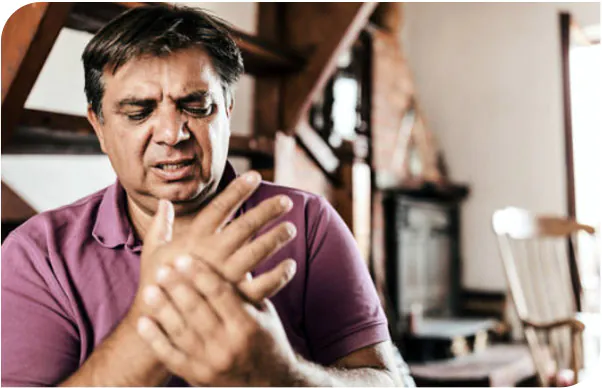
For most people, carpal tunnel symptoms are worst at night. While you sleep, your wrists tend to curl or bend, which narrows the carpal tunnel and squeezes the median nerve for hours at a time. That is why so many people wake up with numb, tingling hands.
“I find that most of my patients that are getting it, really the vast majority, it has to do with how they position their hands at night. Most of them are side sleepers.” — Alan Ward, MOT, OTR, occupational therapist
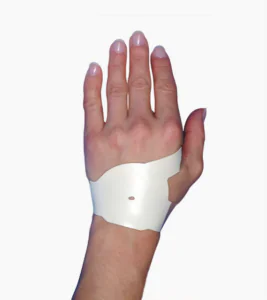
Nighttime carpal tunnel therapy turns that problem into an opportunity. Your hand is completely relaxed for six to eight hours, which is the ideal time for a gentle, steady stretch. Over the six-week protocol, the Carpal Solution delivers more than 220 hours of targeted stretching, far more than anyone could do by hand during the day.
What to Expect From Nighttime Carpal Tunnel Therapy
- Relief of the worst symptoms usually begins in two to three weeks.
- About 90% of people get complete remission in six weeks.
- About 10% of people, usually those with excess inflammation throughout the body, are 40 to 70% better at six weeks and reach full remission in 10 to 12 weeks.
Results build gradually, so give nighttime carpal tunnel therapy the full six weeks before you judge how well it is working for you.
Over two decades, more than 100,000 people have used the Carpal Solution for nighttime carpal tunnel therapy, with 97% patient satisfaction and 4.9 out of 5 stars on independent review sites like Google Reviews.
Nighttime Carpal Tunnel Therapy vs. Night Splints
A night splint holds the wrist straight so it cannot curl while you sleep. A splint holds the wrist in a neutral position, which can reduce pain from movement, but it does not promote healing from carpal tunnel syndrome. It causes muscle atrophy and stiffness, and its tight compression restricts blood circulation and lymphatic fluid exchange, which slows the dispersion of entrapped swelling, the root cause of carpal tunnel syndrome.
Our medical team has observed that splints give some relief at first but aggravate symptoms in the long run. Immobilization is great for fractures and sprains, but not for carpal tunnel syndrome. That can ease night tingling for some people: in a review of published studies, about 30% of patients treated with wrist splinting reported significant improvement in their symptoms (Bland, Muscle & Nerve, 2007).
But a splint only holds the wrist still. It does not stretch the tight, shortened tissue that crowds the nerve. The Carpal Solution does both: it keeps the hand in a comfortable position and applies a gentle stretch at three points on the palm around the carpal tunnel, all night long.
Daytime Habits That Support Nighttime Carpal Tunnel Therapy
- Gentle stretches as a bonus: up to 6 sets of 10, holding each stretch about 15 seconds with 30 seconds of rest between.
- Cold therapy after a long day of hand work to calm swelling.
- Compression gloves during the day to increase blood circulation and protect the hand from everyday bumps. Combined with the Carpal Solution at night, it is one of the best combination therapies.
- Microbreaks every 30 to 45 minutes of hand-intensive work.
- No grip strengtheners, squeeze balls or putty while you are healing.
- Prevention: once you are better, many people use the Carpal Solution from once a week to once every six months.
Sleep Habits That Make Nighttime Carpal Tunnel Therapy Work Better
How you sleep can either help or fight your nighttime carpal tunnel therapy. A few small changes make a big difference:
- Keep your wrists straight. Avoid curling your hands under your chin, against your chest, or under your pillow or head.
- Watch the side-sleeping position. If you sleep on your side, rest the top arm on a pillow so the wrist does not hang or bend.
- Do not let your hand dangle off the bed. A hanging hand bends at the wrist and adds pressure on the nerve.
- Cool the hands before bed if they are swollen. Our doctors recommend a 20-minute cold water plunge at about 43°F before bed during the first weeks of treatment (never colder than 41°F; 44 to 48°F if you have poor circulation).
- If you wake up numb, straighten your wrists and gently shake out your hands before going back to sleep.
Who Nighttime Carpal Tunnel Therapy Is For
Nighttime carpal tunnel therapy with the Carpal Solution suits most people with mild to moderate carpal tunnel syndrome once a doctor has confirmed the diagnosis. It is a good fit if you:
- Wake at night with numb, tingling or painful hands.
- Want a treatment that does not take time out of your day.
- Want to avoid or delay surgery, injections or long-term pain pills.
- Have tried a night splint and want something that stretches the tissue rather than only holding the wrist still.
- Have had symptoms come back after earlier treatment, including after surgery (wait three months after surgery before starting).
When to see a doctor first
Get checked before starting if your numbness is mainly in the little finger, if symptoms began after an injury, if both your hands and feet are affected, or if you notice weakness or thinning at the base of the thumb. These can point to other conditions or to more advanced nerve compression.
A Simple Nightly Routine for Nighttime Carpal Tunnel Therapy
Consistency matters more than anything else. This routine takes only a few minutes before bed:
- Calm the swelling. If your hands are puffy or sore after a long day, soak them in cold water at about 43°F for 20 minutes before bed.
- Loosen up gently. Do one easy round of nerve and tendon glides, slowly and without pain.
- Put on the Carpal Solution as shown in the instructions, so the stretch is gentle and comfortable.
- Settle into a wrist-friendly position. Keep your wrists straight, and rest the top arm on a pillow if you sleep on your side.
- In the morning, remove it, move your hands gently, and note how many times your hands woke you during the night.
Tracking night awakenings is the simplest way to see your nighttime carpal tunnel therapy working. Most people see them drop steadily over the first few weeks.
Nighttime Carpal Tunnel Therapy vs. Surgery
Conservative care comes first, and surgery should be the last resort. That is what the published numbers on patient experience support:
- Carpal tunnel surgery has a patient satisfaction rate lower than 69%. In a study of 1,268 operations, patient-reported success was 69% (Bland, Muscle & Nerve, 2001), and about 31% of patients report lingering or recurring symptoms. No patient is satisfied with lingering symptoms.
- About 8% of patients say their condition is worse after surgery (Bland, Muscle & Nerve, 2007, a review of 209 studies and 32,936 operations).
- How often carpal tunnel symptoms come back after a “successful surgery” has rarely been studied beyond a few years. The highest published rate is 57% of patients with at least some symptoms returning within five and a half years (Nancollas et al., 1995, reviewed in Louie, Earp and Blazar, Hand, 2012). Based on two decades of clinical experience with patients, our doctors estimate that symptoms return for 80 to 90% of patients within 10 years of surgery.
This is not a statistically researched figure. It is their best estimate until the work is done to follow carpal tunnel patients for 10 years or more, as other orthopedic fields do for hip and knee replacements. Why so little certainty? Published recurrence rates range from about 4% to 57%, a spread that shows how poorly this question has been studied. Studies define recurrence differently, follow patients for only a few years and lose many of them along the way. The lowest figures count only repeat operations, a biased approach that ignores patient satisfaction and the patient’s perspective, so they are not credible. Read more about carpal tunnel recurrence after surgery. Getting to surgery also means waiting: for appointments, a nerve test, insurance approval and an opening in a busy surgeon’s schedule. A safe, non-invasive treatment can relieve the sleep loss, numbness and pain while you wait.
Nighttime carpal tunnel therapy has no downtime, no needles and no scar tissue, and if symptoms return years later, you can simply repeat it at home.
How Long Relief From Nighttime Carpal Tunnel Therapy Lasts
Carpal tunnel syndrome is chronic and recurring, so it is fair to ask how long relief lasts. Our doctors’ experience is that relief usually lasts between two and seven years, sometimes longer and sometimes shorter. Many people use the Carpal Solution from once a week to once every six months to keep symptoms away.
If symptoms do come back, you are not starting over. You can repeat the six-week protocol at home, with no downtime and no added risk.
“Even if we have to wear this for a month and a half, and even if we have to do that every so often, that still costs way, way less and is way, way less risky than one surgery.” — Alan Ward, MOT, OTR
Finally there is a better Carpal Tunnel Therapy
In addition to alleviating wrist pain, finger numbness, and sore hands with the Carpal Solution, patients may wish to implement a variety of complementary therapeutic and ergonomic strategies. Some patients have found that regular hand and wrist massage works wonders. Others find improvements in their diet and nutrient intake can help with metabolic contributing factors. Some sufferers enjoy soaking their hands and wrists in alternating warm paraffin wax and cold ice water when symptoms flare up at peak levels.
 Most certified hand therapists and medical professionals who treat carpal tunnel syndrome also recommend gentle stretching exercises together with appropriate ergonomics. Our doctors advise leaving grip and strengthening exercises until your symptoms are in remission. Since there are so many contributing factors, a multi-faceted approach based on the Carpal Solution Therapy can work remarkable results.
Of course, each case of CTS is unique and different. First Hand Medical encourages CTS sufferers to speak with their doctors to get precise diagnosis and identify all contributing factors.
Over 100,000 people have used the Carpal Solution over two decades to jump-start their body’s natural healing, with 97% patient satisfaction and 4.9 out of 5 stars from patients on independent review sites like Google Reviews. Neurologists, including Dr. James S. Zu, MD, PhD, of Edison, New Jersey, call the Carpal Solution a better first line of defense for Carpal Tunnel Syndrome. Patients simply call it: “My Carpal Tunnel “Cure”!”

Order Your Six Week Carpal Tunnel Treatment Now
The ONLY treatment for carpal tunnel that comes with a no questions asked 30-Day Satisfaction Window and in-house dedicated pain relief team.
How Does The Carpal Solution Work?
RIGHT HAND INSTRUCTIONS:
Apply the Carpal Solution before Retiring to Bed in 3 Easy Steps
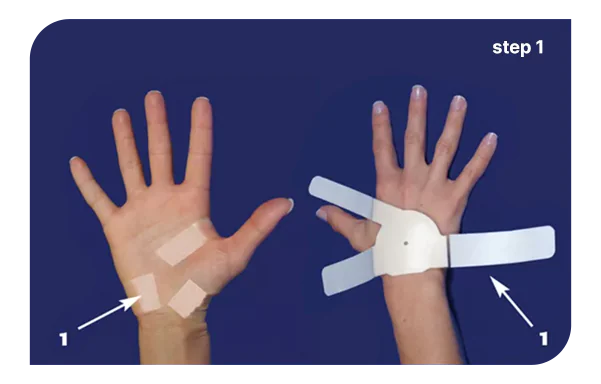
STEP 1: Place the Carpal Solution on the Back of the hand as shown with adhesive side down. Attach 1st strap below little finger securing it on the palm. Tear away excess tape to prevent overlap of straps on palm.
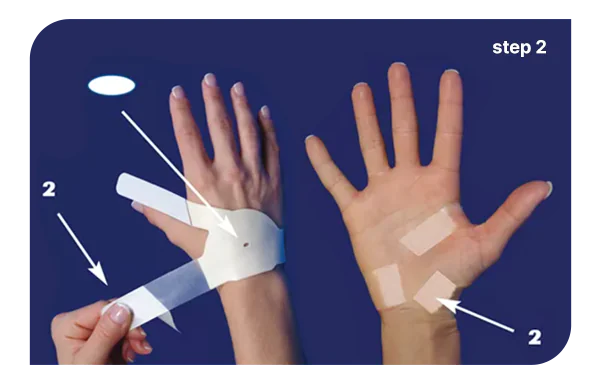
STEP 2: Self apply the appropriate tension to the Carpal Solution with 2nd strap below the thumb and attached on palm side of hand as shown. Adjust tension by stretching circular hole on back of hand in the elastic centerpiece to an oval shape. The diameter should be at least 1.5 times the original.
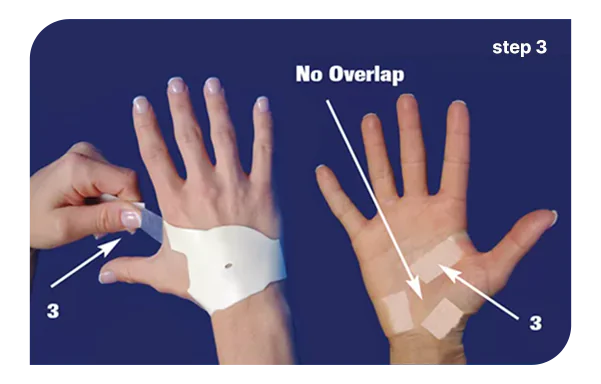
STEP 3: Self apply the appropriate tension to the Carpal Solution with 3rd strap above the thumb. Tear-away straps should be aligned so there is no overlap of straps on palm side of hand. The Carpal Solution begins to relieve symptoms usually within twenty minutes of placement.
The Carpal Solution is the Next Best Thing to a Carpal Tunnel “Cure”!
Order Your Six Week Carpal Tunnel Treatment Now
The ONLY treatment for carpal tunnel that comes with a no questions asked 30-Day Satisfaction Window and in-house dedicated pain relief team.
When Healing Needs a Doctor’s Help and Professional Medical Evaluation
- Constant numbness that does not improve or loss of feeling in the fingertips that does not improve in 4 to 8 weeks.
- Extreme loss of the muscle at the base of the thumb, with loss of grip strength that does not improve over 6 to 8 weeks.
- Worsening symptoms over 6 to 8 weeks while using the best conservative treatments
- Symptoms that begin suddenly after hand or wrist trauma, a fracture or severe sprain from a fall or auto accident.
- Odd Symptoms that are not consistent with the Carpal Tunnel Symptoms listed on this website, that might be indicative of other nerve issues. A nerve conductivity study can clear up the confusion with minimal costs and not too much pain and no risk.
These signs may mean more advanced nerve involvement or a different condition and deserve professional medical evaluation and in person consultation. Home treatment can be used alongside professional in-person medical care while you wait for the healthcare delivery system to fit you into their schedule. There is no reason to wait doing nothing. You can start proven natural conservative treatment with good patient reviews while you wait for your appointments. If your symptoms start improving over 6 to 8 weeks, then you know you are on the right track and surgery is not necessary.
Nighttime Carpal Tunnel Therapy: Frequently Asked Questions
Why is carpal tunnel worse at night?
Most people bend or curl their wrists while they sleep, which narrows the carpal tunnel and puts pressure on the median nerve for hours. Fluid also shifts into the hands when you lie down.
Is nighttime carpal tunnel therapy comfortable?
Yes. The Carpal Solution is designed to stretch gently, and most people stop noticing it soon after they fall asleep.
How many nights does nighttime carpal tunnel therapy take?
The protocol is every night for six weeks. Most people feel their worst symptoms ease in two to three weeks, but finishing the full six weeks gives the best results.
Can I use nighttime carpal tunnel therapy on both hands?
Yes. Many people have symptoms in both hands, and the Carpal Solution can be worn on both hands at the same time. Because it works while you sleep, treating both hands does not add any downtime or time off work, unlike having surgery on both wrists.
Can nighttime carpal tunnel therapy cure carpal tunnel?
No. Carpal tunnel syndrome is chronic and recurring and cannot be cured, by surgery or anything else. The Carpal Solution is the next best thing, controlling symptoms at home without downtime, risks, scar tissue or complications.