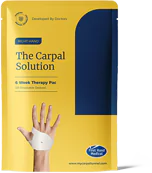
Created by renowned Harvard health care professionals.


Carpal Solution Patient Satisfaction: What Helps Carpal Tunnel and How Fast
Carpal Solution patient satisfaction is 97% over 21 years, with more than 100,000 people treated. Here is what that number means, what helps carpal tunnel heal, how fast most people feel relief, and how it compares with surgery.

Written by Jeff Conley, President, First Hand Medical · Medically reviewed by William Shucart, MD, neurosurgeon, clinical professor of neurosurgery at New England Medical Center and former chair of neurosurgery at Tufts · Last reviewed: November 2026
Carpal Solution Patient Satisfaction: What the 97% Means
Carpal Solution patient satisfaction is 97% over 21 years. More than 100,000 people have used the Carpal Solution over two decades, and the therapy holds a 4.9 out of 5 star rating on independent review sites like Google Reviews. The 97% figure is reported by First Hand Medical, so this page explains what it measures, why it has stayed high, and what helps carpal tunnel heal in the first place.
Patient satisfaction is a different measure than a “success rate.” A surgeon may count an operation as a success once the ligament is cut, even if the patient still wakes up with numb fingers. Patient satisfaction asks the person who lives with the hand. That is why we report Carpal Solution patient satisfaction, and why we use the same yardstick when we compare it with surgery further down this page.
Each person responds differently, because nerve problems are like that. Talk with your doctor about what to expect in your case. For general medical background on the condition, see the NINDS carpal tunnel syndrome fact sheet.
What Helps Carpal Tunnel: Start With the Pressure
To understand what helps carpal tunnel, start with pressure. Swelling and entrapped inflammation inside the carpal tunnel squeeze the median nerve and restrict blood flow and lymph transport. With less circulation, the swelling cannot drain, the nerve gets less oxygen, and the numbness, tingling and pain that wake people at night set in.
The tunnel is crowded. Along with the median nerve, it holds nine tendons: four flexor digitorum superficialis tendons, four flexor digitorum profundus tendons and the flexor pollicis longus. Those tendons run back to the forearm muscles. When the tendons and muscles tighten and swell from repetitive use, there is even less room for the nerve.
So what helps carpal tunnel is whatever takes that pressure off. The Carpal Solution’s gentle stretch restores flexibility, relieves nerve pressure, frees circulation and lets lymph clear the swelling. The body does the healing. The Carpal Solution just jump-starts the natural healing that excess inflammation and swelling had shut down. You can read more about how the Carpal Solution works.
How Fast the Carpal Solution Helps Carpal Tunnel
Most people are better from their worst symptoms in two to three weeks. The numbers below are our doctors’ estimates from working with patients. They are clinical experience, not a published study, but they are what we tell people to expect when they start.
| When relief starts | About how many people |
|---|---|
| Within the first day or two | About 15 to 20% |
| Within two to three weeks | About 60 to 70% |
| Not until the fifth week | About 10 to 15% |
By the end of the six week protocol, over 90% of people reach remission. About 10% need 8 to 12 weeks, and they are usually 50 to 70% better at the six week mark. The full protocol adds up to over 220 hours of stretching, which is a big reason Carpal Solution patient satisfaction stays high: the hand gets enough time under gentle stretch for the swelling to clear.
Once you start feeling relief, it means you are breaking the cycle, and continuing the therapy lets the healing finish. If you have not started feeling relief by the fourth week, call First Hand Medical and we will extend your guarantee. Nobody knows on day one how long it will take for a given hand, so follow the full protocol with patience.
Why Carpal Solution Patient Satisfaction Stays High
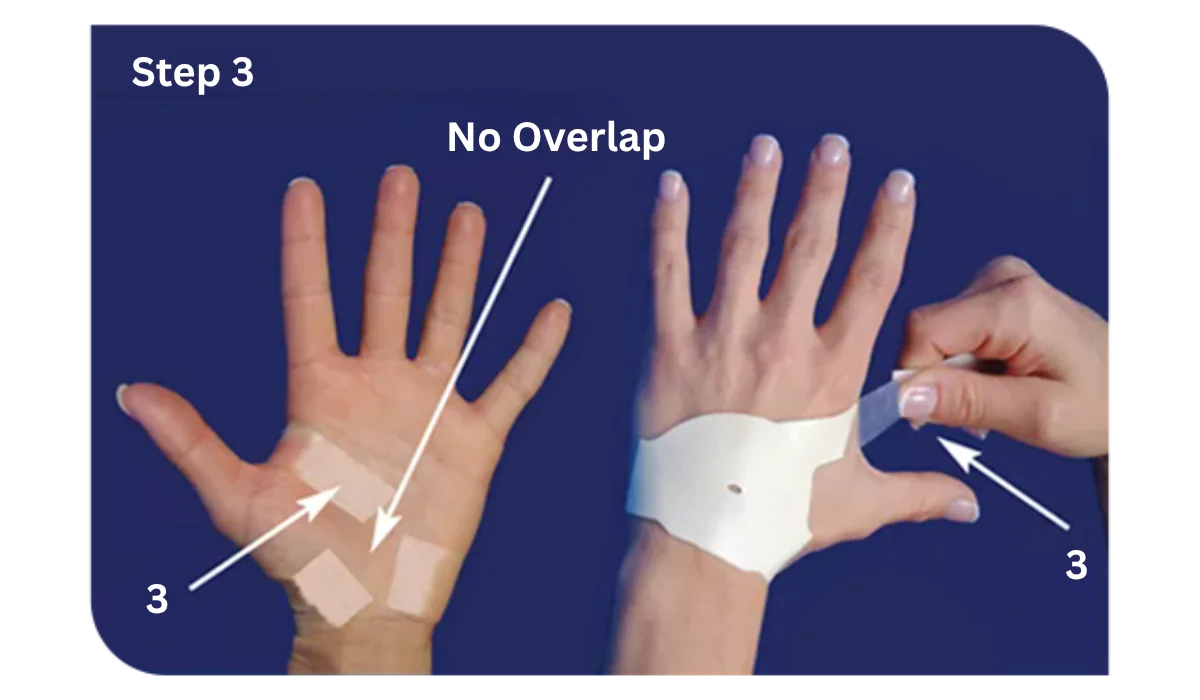
One reason is simple: the therapy is easy to do, so people actually finish it. You wear the Carpal Solution while you sleep. There is no downtime, no incision, no injection and no rigid brace holding your wrist still all day. The material is hypoallergenic (no latex), so most people wear it comfortably night after night.
Daytime stretches are a bonus, not a requirement. If you want to add them, do up to six sets of ten, holding each stretch for 15 seconds and resting 30 seconds between. While you are healing, skip grip exercises, squeeze balls and therapy putty. Squeezing works the same tight, swollen tendons you are trying to relax, and it can slow down what helps carpal tunnel most, which is taking the pressure off.
When a treatment fits into a normal night’s sleep, people stay with it for the full six weeks. Staying with it is what turns early relief into remission, and remission is what people are rating when they rate their satisfaction.
Getting the Most From the Six Weeks
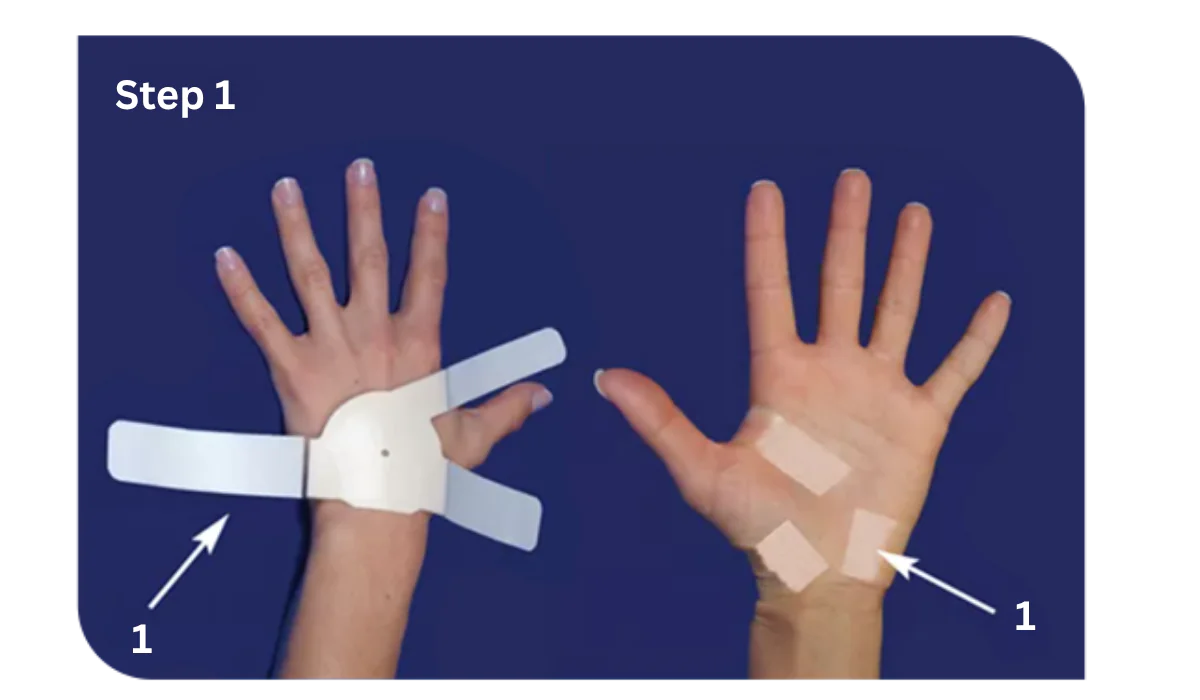
Carpal Solution patient satisfaction depends on finishing the protocol, so here is how people who do well tend to use it. They put it on every night, not just on bad nights. Symptoms often ease before the swelling has fully cleared, and stopping early lets the pressure build back up.
If both hands bother you, treat both. There are left and right hand versions, and many people find the hand they use most needs the most attention. Fit is rarely an issue, because the Carpal Solution is one size and adjusts to the hand.
Keep a simple note of how your hands feel each morning: how often you woke up, how numb your fingers were, how stiff your grip felt. Progress in the first weeks can be gradual, and a written record makes it easier to see that what helps carpal tunnel is working, even before the last symptoms fade.
Finally, give the hand a break during the day when you can. Change positions, pause repetitive tasks, and keep your wrists straight rather than bent for long periods. Compression gloves are another part of what helps carpal tunnel during the day: they can increase circulation and cushion the hand from everyday bumps, and gloves by day with the Carpal Solution at night is one of the best combinations we know. Those habits do not replace the nightly stretch, but they keep you from adding new swelling while the old swelling clears.
Who Reports Satisfaction: Real Situations
People come to the Carpal Solution from many directions. Some are early in their symptoms and want to avoid a referral to a surgeon. Some are waiting for an appointment. Others already had surgery and still have numbness; our page on symptoms after carpal tunnel surgery covers that situation, and the three-month waiting period still applies.
Work that loads the hands all day is a common thread. Dentists, for example, hold small instruments in fixed grips for hours, and you can read how one dentist approached carpal tunnel without time off. Pregnancy is another: fluid retention can bring on symptoms, and medication choices are limited, which is why this pregnant woman’s story is worth reading.
What these situations share is that the person wanted something that works with the body rather than against it. When people ask what helps carpal tunnel without downtime, that is the gap the Carpal Solution was designed to fill. Across all of these groups, Carpal Solution patient satisfaction comes back to the same thing: relief that lets people keep working, sleeping and living normally while the hand heals. For a broader look at natural approaches, see how to treat carpal tunnel naturally.
Does a Wrist Splint Help Carpal Tunnel?
A splint holds the wrist in a neutral position, which can reduce pain from movement, but it does not promote healing from carpal tunnel syndrome. It causes muscle atrophy and stiffness, and its tight compression restricts blood circulation and lymphatic fluid exchange, which slows the dispersion of entrapped swelling, the root cause of carpal tunnel syndrome. Our medical team has observed that splints give some relief at first but aggravate symptoms in the long run. Immobilization is great for fractures and sprains, but not for carpal tunnel syndrome.
Research on immobilization backs up the concern about atrophy. In Wall et al., 2014, healthy adults lost about 8% of muscle size and 23% of strength after just 14 days with a limb immobilized. When people ask us what helps carpal tunnel, a splint that keeps the wrist still and squeezed is not our answer. Gentle stretching that moves fluid out of the tunnel is.
Patient Satisfaction: Carpal Solution vs. Carpal Tunnel Surgery
Because we use patient satisfaction for the Carpal Solution, we use it for surgery too. About 31% of surgery patients report lingering or recurring symptoms, and no patient is satisfied with lingering symptoms, so the patient satisfaction rate for carpal tunnel surgery is lower than 69%. Our article on why surgeons and patients report different surgery results goes deeper.
| Measure | Carpal Solution | Carpal tunnel surgery |
|---|---|---|
| Patient satisfaction | 97% over 21 years | Lower than 69% |
| Need to repeat | Repeat the protocol if symptoms return; prevention use once a week to once every 6 months | 16 to 40% have a second surgery |
| How long relief lasts | Remission usually 5 to 7 years (range 1 to 17) | 57% recurrence within 5.5 years |
| Downtime | Worn during sleep | Incision and recovery |
The 57% recurrence figure comes from Nancollas, 1995, reviewed by Louie et al., 2012. Our doctors estimate that 80 to 90% of surgery patients see symptoms return within 10 years; that is their best estimate from two decades of clinical experience, not a statistically researched figure. Our surgery page explains why the recurrence numbers are so poorly studied. If you have already had surgery, wait three months before starting the Carpal Solution.
Many people also face a wait before they can see a specialist. The average new-patient wait is 31 days (AMN Healthcare, 2025). Here is what helps carpal tunnel while you wait for carpal tunnel treatment.
A Better First Line of Defense
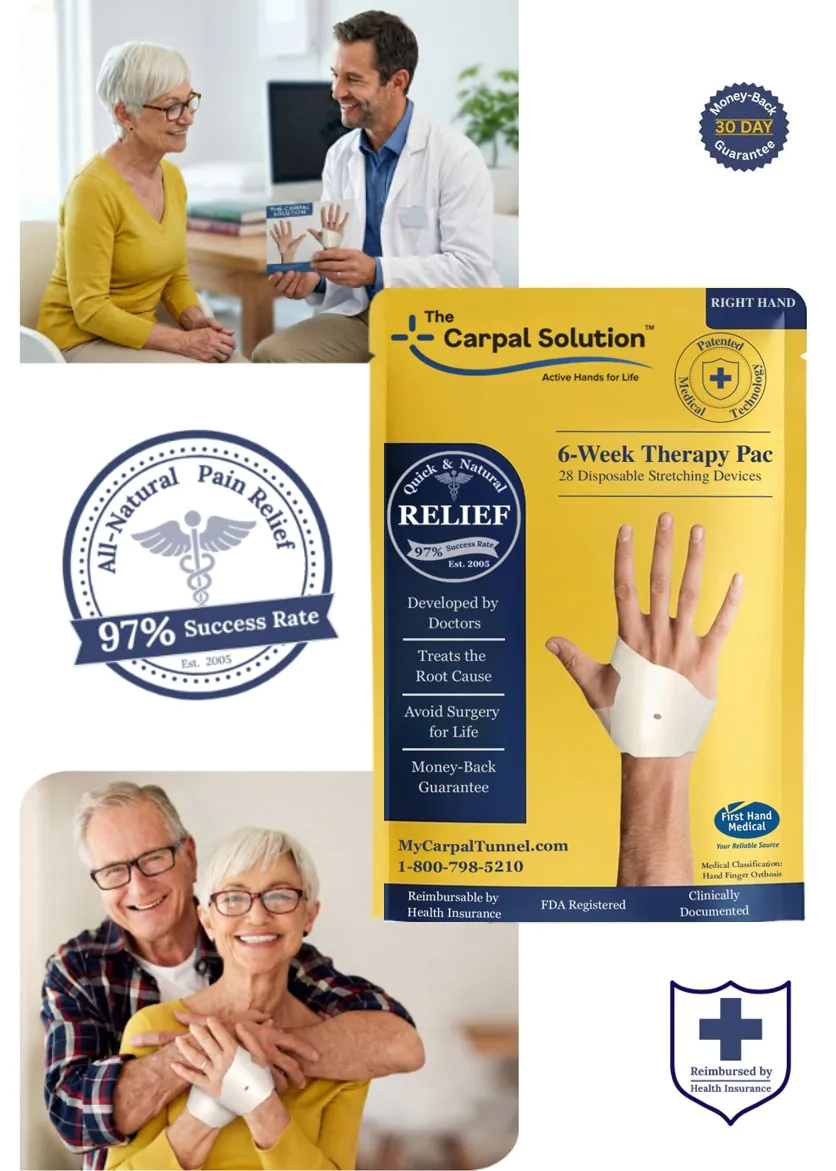
Neurologists, including Dr. James S. Zu, MD, PhD, of Edison, New Jersey, call the Carpal Solution “a better first line of defense” for carpal tunnel syndrome. The reasoning is straightforward: start with the option that has no downtime and no surgical risk, and save surgery for the cases that truly need it.
Most patients are surprised when they start feeling better. Once their symptoms are in complete remission, many call the Carpal Solution their carpal tunnel “cure.” That is their word, not ours. Carpal tunnel syndrome is chronic and recurring and cannot be cured, but the Carpal Solution is the next best thing: it controls symptoms at home without downtime, risks, scar tissue or complications. Remission usually lasts five to seven years, and prevention use, from once a week to once every six months, helps keep symptoms from returning.
Not sure the problem is carpal tunnel? In our clinical experience, if you have three or more of the classic symptoms, such as numbness, tingling, night pain or weakness in the thumb, index, middle and ring fingers, there is about a 95% chance it is carpal tunnel syndrome. That is clinical experience, not a published statistic, so still get an in-person evaluation from a doctor, and see one promptly for constant numbness, weakness or thinning of the thumb muscles. Our carpal tunnel symptoms page lists the signs.
30-Day Patient Satisfaction Guarantee and Insurance

Because Carpal Solution patient satisfaction is so high, First Hand Medical offers a 30-Day Patient Satisfaction Guarantee. A guarantee like that would not be economically viable for a therapy that did not work for most people. If you have not started feeling relief by week four, call us to extend it. The guarantee is how we stand behind Carpal Solution patient satisfaction with our own money.
The Carpal Solution is billed under HCPCS code L3924, and many insurance plans reimburse 70 to 80% of the cost. You can read what real patients say on our Carpal Solution reviews page.
When Healing Needs a Doctor’s Help and Professional Medical Evaluation
- Constant numbness that does not improve or loss of feeling in the fingertips that does not improve in 4 to 8 weeks.
- Extreme loss of the muscle at the base of the thumb, with loss of grip strength that does not improve over 6 to 8 weeks.
- Worsening symptoms over 6 to 8 weeks while using the best conservative treatments
- Symptoms that begin suddenly after hand or wrist trauma, a fracture or severe sprain from a fall or auto accident.
- Odd Symptoms that are not consistent with the Carpal Tunnel Symptoms listed on this website, that might be indicative of other nerve issues. A nerve conductivity study can clear up the confusion with minimal costs and not too much pain and no risk.
These signs may mean more advanced nerve involvement or a different condition and deserve professional medical evaluation and in person consultation. Home treatment can be used alongside professional in-person medical care while you wait for the healthcare delivery system to fit you into their schedule. There is no reason to wait doing nothing. You can start proven natural conservative treatment with good patient reviews while you wait for your appointments. If your symptoms start improving over 6 to 8 weeks, then you know you are on the right track and surgery is not necessary.
Carpal Solution Patient Satisfaction FAQ
Is 97% a success rate?
No. It is Carpal Solution patient satisfaction over 21 years, which reflects how people feel about their own results. We avoid “success rate” because it often measures what the provider did rather than how the patient feels.
What helps carpal tunnel at night?
Night is when symptoms usually peak, because many people sleep with their wrists bent, which raises pressure inside the tunnel. Gentle passive stretching during sleep, like the Carpal Solution, keeps pressure off the nerve while you rest.
How soon will I feel better?
Most people are better from their worst symptoms in two to three weeks, and over 90% reach remission by six weeks. About 10% need 8 to 12 weeks.
Does high patient satisfaction mean it will work for me?
Not automatically. Every hand is different, which is why we ask people to finish the full protocol and why the 30-Day Patient Satisfaction Guarantee exists. Check with your doctor if you have any of the warning signs listed above.
What helps carpal tunnel if I cannot stop working?
Most people keep working through the six weeks, because the therapy happens while you sleep, and that convenience is a big part of Carpal Solution patient satisfaction. During the day, take short breaks from repetitive tasks, keep your wrists straight when you can, and avoid squeezing exercises while you heal. The nightly stretch does the main work.
Can I use the Carpal Solution after carpal tunnel surgery?
Yes, once three months have passed since the operation. People who still have lingering numbness or tingling after surgery often use it to take pressure off the nerve and tendons that surgery did not address.
What happens if my symptoms come back years later?
Remission usually lasts five to seven years, and the range we see runs from one to seventeen. If symptoms return, repeat the protocol. Using the Carpal Solution for prevention, anywhere from once a week to once every six months, helps many people stay ahead of a flare.
Does insurance cover it?
Many plans do. The Carpal Solution is billed under HCPCS code L3924, and many insurance plans reimburse 70 to 80% of the cost. Coverage depends on your plan, so check with your insurer.