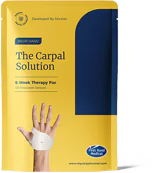
 Created by renowned Harvard health care professionals.

How to Sleep with Carpal Tunnel
Waking up with a numb, tingling hand isn't just annoying — it's your median nerve telling you something needs to change about how you sleep. If you're wondering how to sleep with carpal tunnel without jolting awake at 3am shaking out your fingers, the answer usually comes down to wrist position: keeping it straight instead of bent or curled underneath you. A few adjustments — a nighttime splint, a better sleeping posture, some pillow support — can go a long way toward calmer nights and fewer interruptions. Here's what actually works.


Quick Answer
If you have carpal tunnel syndrome, the best way to sleep is with your wrists in a neutral position, avoiding bending or curling your hands under your body. Wearing a wrist splint at night, adjusting your sleeping position, and reducing wrist strain during the day can help relieve nighttime numbness, tingling, and pain associated with carpal tunnel syndrome.
Table of Contents
Introduction

How do you sleep with carpal tunnel syndrome without waking up in pain? The goal is to keep your wrists straight and avoid positions that increase pressure on the median nerve. For many people, a nighttime wrist splint and better sleeping posture can significantly reduce symptoms that disrupt sleep.
Nighttime symptoms are one of the most common complaints among people with carpal tunnel syndrome. Many individuals wake up with numb fingers, tingling sensations, hand pain, or the urge to shake their hands for relief. Fortunately, small adjustments to your sleeping habits can make a meaningful difference.
This guide explains why carpal tunnel symptoms worsen at night, the best sleeping positions, practical strategies for relief, and when it may be time to seek professional treatment.
Why Carpal Tunnel Symptoms Get Worse at Night
Carpal tunnel syndrome occurs when the median nerve becomes compressed within the carpal tunnel of the wrist.
According to the National Institute of Neurological Disorders and Stroke, carpal tunnel syndrome develops when swelling or pressure buildup inside the wrist narrows the tunnel that houses the median nerve, which can make nighttime positioning especially important for symptom control.
Nighttime symptoms often occur because people unknowingly sleep with their wrists bent. Wrist flexion or extension can increase pressure within the carpal tunnel and aggravate nerve compression. Fluid shifts during sleep may also contribute to increased pressure around the nerve, making symptoms more noticeable at night.
Common nighttime symptoms include:
Why Relief Matters
Without appropriate treatment, ongoing nerve compression may lead to worsening symptoms, decreased grip strength, muscle weakness, and difficulty performing daily activities.
Nighttime symptoms often occur because people unknowingly sleep with their wrists bent. Wrist flexion or extension can increase pressure within the carpal tunnel and aggravate nerve compression. Fluid shifts during sleep may also contribute to increased pressure around the nerve, making symptoms more noticeable at night.
Common nighttime symptoms include:
- Tingling in the thumb, index finger, and middle finger
- Hand numbness
- Burning sensations
- Wrist pain
- Hand weakness upon waking
- Frequent sleep interruptions
Many people instinctively shake their hands when they wake up because it temporarily relieves nerve pressure.
Carpal tunnel syndrome does not always have a single cause. Contributing factors may include:
- Repetitive hand and wrist motions
- Wrist injuries
- Diabetes
- Rheumatoid arthritis
- Pregnancy-related swelling
- Thyroid disorders
- Anatomical variations that reduce tunnel space
Many people instinctively shake their hands when they wake up because it temporarily relieves nerve pressure.
The Best Sleeping Positions for Carpal Tunnel
1. Sleep on Your Back
Sleeping on your back is often the most wrist-friendly position because it reduces the likelihood of bending your wrists underneath your body.
Tips:
- Keep arms relaxed at your sides.
- Place a pillow beneath your forearms if needed.
- Avoid curling your wrists toward your chest.
2. Sleep on Your Side With Wrist Support
Side sleeping can work well if your wrists remain neutral.
Tips:
- Keep hands in front of your body rather than underneath it.
- Use a pillow to support your arms.
- Avoid sleeping directly on your hands or wrists.
3. Avoid Sleeping on Your Hands
One of the most common causes of nighttime flare-ups is sleeping with your hands tucked beneath your head, pillow, or torso.
This position increases compression and often leads to numbness and tingling upon waking.
Positions to Avoid
- Hands tucked under a pillow
- Wrists curled inward
- Sleeping directly on the affected wrist
- Arms tightly folded against the chest
- Fetal positions that force wrist flexion
Step-by-Step: How to Sleep With Carpal Tunnel
Step 1: Wear a Nighttime Wrist Splint
Expected Outcome: Reduced nighttime numbness and tingling.
Medical experts frequently recommend nighttime wrist splinting because it helps keep the wrist in a neutral position while sleeping.
Common Pitfall: Wearing the splint too loosely or removing it halfway through the night.
Step 2: Adjust Your Sleeping Position
Expected Outcome: Less pressure on the median nerve.
Choose positions that prevent your hands from becoming trapped beneath your body or pillow.
Common Pitfall: Returning to old sleeping habits unconsciously.
Step 3: Support Your Arms With Pillows
Expected Outcome: Better wrist alignment.
Strategic pillow placement can reduce strain and discourage wrist bending.
Common Pitfall: Using pillows that are too high or too firm.
Step 4: Reduce Daytime Wrist Stress
Expected Outcome: Fewer nighttime flare-ups.
Excessive repetitive activity during the day may contribute to irritation that becomes more noticeable overnight.
Common Pitfall: Focusing only on nighttime solutions while ignoring daytime habits.
Step 5: Evaluate Persistent Symptoms
Expected Outcome: Earlier diagnosis and treatment.
If symptoms continue to disrupt sleep despite self-care measures, professional evaluation is recommended.
Common Pitfall: Assuming symptoms will eventually disappear on their own.
The SLEEP Framework for Nighttime Relief
A simple way to remember effective nighttime strategies is the SLEEP Framework.
S: Stabilize the Wrist
Use a properly fitted nighttime wrist splint.
L: Limit Wrist Bending
Avoid positions that flex or extend the wrist.
E: Elevate and Support
Use pillows to support your forearms and hands.
E: Evaluate Daily Activities
Address repetitive motions that may worsen symptoms.
P: Pursue Medical Care if Symptoms Persist
Seek professional evaluation if sleep disruption continues.
When to Use This Framework
The SLEEP Framework works best for mild to moderate symptoms and individuals seeking conservative symptom management.
When It Is Not Enough
Consult a healthcare provider if you experience:
- Constant numbness
- Progressive weakness
- Difficulty gripping objects
- Muscle loss near the thumb
- Symptoms that interfere with daily function
Explore our carpal tunnel treatment options.
Tools and Options for Better Sleep
| Option | Best For | Key Features | Limitations |
| Night Wrist Splint | Mild to moderate symptoms | Maintains neutral wrist position | Requires consistent use |
| Body Pillow | Side sleepers | Helps maintain arm positioning | May not prevent wrist flexion completely |
| Ergonomic Daytime Adjustments | Frequent computer users | Reduces cumulative strain | Requires habit changes |
| Physical Therapy | Ongoing symptoms | Guided exercises and education | Requires professional involvement |
| Corticosteroid Injection | Persistent symptoms | May provide temporary relief | Effects may diminish over time |
| Carpal Tunnel Release Surgery | Severe compression | Addresses nerve pressure directly | Surgical recovery required |
Common Sleeping Mistakes and Fixes
- Sleeping with hands under your pillow → Keep hands beside your body.
- Curling wrists while sleeping → Wear a neutral-position splint.
- Ignoring daytime wrist strain → Improve ergonomics and take breaks.
- Using ineffective wrist braces → Choose a splint designed for nighttime use.
- Delaying evaluation despite worsening symptoms → Consult a healthcare professional.
- Assuming exercises alone will solve the problem → Combine exercises with splinting and activity modification.
Measuring Improvement
Tracking symptoms can help determine whether your sleep strategies are working.
Metrics to Monitor
- Number of nighttime awakenings
- Morning numbness severity
- Pain level upon waking
- Grip strength
- Hours of uninterrupted sleep
Formula 1: Sleep Improvement Percentage
Sleep Improvement % = ((Current Sleep Hours – Baseline Sleep Hours) ÷ Baseline Sleep Hours) × 100
Example:
- Baseline sleep = 5 hours
- Current sleep = 7 hours
Result:
((7 − 5) ÷ 5) × 100 = 40%
Formula 2: Nighttime Awakening Reduction
Reduction % = ((Baseline Awakenings – Current Awakenings) ÷ Baseline Awakenings) × 100
Example:
- Baseline awakenings = 4
- Current awakenings = 1
Result:
((4 − 1) ÷ 4) × 100 = 75%
Real-World Example
Example Scenario
A software developer begins waking up several times per night with numbness in the thumb and first two fingers.
After starting a nighttime wrist splint, adjusting sleeping posture, and using a body pillow to prevent wrist bending, nighttime awakenings become less frequent over several weeks.
Because symptoms improve but do not completely resolve, the individual schedules an evaluation with a hand specialist to discuss additional treatment options.
Key Takeaways
- Carpal tunnel symptoms often worsen at night because wrists bend during sleep.
- Nighttime wrist splints help keep the wrist in a neutral position.
- Sleeping on your back or side with proper support is usually best.
- Avoid sleeping on your hands or tucking them under pillows.
- Reducing daytime wrist strain can improve nighttime comfort.
- Persistent numbness or weakness should be evaluated by a healthcare professional.
- Early treatment may help prevent long-term nerve damage.
Check our work on carpal tunnel relief.
FAQ

Why does carpal tunnel hurt more at night?
Many people sleep with their wrists bent, which can increase pressure on the median nerve. Fluid shifts during sleep may also contribute to increased nerve compression and symptom awareness.
Is sleeping with a wrist brace safe?
Yes. Nighttime wrist splints are commonly recommended because they help maintain a neutral wrist position while sleeping.
What is the best sleeping position for carpal tunnel syndrome?
Back sleeping is often ideal because it reduces pressure on the wrists. Side sleeping can also work when the wrists are properly supported.
Should I wear a wrist brace every night?
Many healthcare providers recommend nightly use for mild to moderate symptoms, especially when symptoms primarily occur during sleep.
Can sleeping on my side make carpal tunnel worse?
It can if your wrist becomes trapped beneath your body or pillow. Proper arm support can help reduce this risk.
Does elevating my hand help carpal tunnel?
Elevation may reduce swelling and improve comfort for some individuals, although maintaining neutral wrist positioning is usually more important.
Can exercises help me sleep better with carpal tunnel?
Exercises may help when combined with splinting, activity modification, and other treatments. They are generally not considered a standalone solution.
When should I see a doctor about nighttime symptoms?
Seek medical evaluation if symptoms are frequent, worsening, causing weakness, or disrupting sleep despite self-care measures.
Can carpal tunnel wake you up every night?
Yes. Nighttime numbness and tingling are among the most common symptoms of carpal tunnel syndrome.
Will surgery stop nighttime symptoms?
For individuals with significant nerve compression, surgery often relieves symptoms by reducing pressure on the median nerve, though outcomes vary.
Glossary
Carpal Tunnel: A narrow passageway in the wrist through which the median nerve travels.
Median Nerve: The nerve responsible for sensation in parts of the hand and movement of some thumb muscles.
Neutral Wrist Position: A straight wrist alignment that minimizes nerve compression.
Night Splint: A brace worn while sleeping to stabilize the wrist.
Numbness: Loss or reduction of sensation.
Tingling: A pins-and-needles sensation commonly associated with nerve irritation.
Nerve Compression: Pressure applied to a nerve that interferes with normal function.
Ergonomics: The practice of designing environments and activities to reduce physical strain.
Carpal Tunnel Release: Surgery performed to relieve pressure on the median nerve.
Activity Modification: Adjusting daily tasks to reduce symptom triggers.
Conclusion: Better Sleep Starts With Better Wrist Positioning
Learning how to sleep with carpal tunnel often comes down to one simple principle: keep your wrists in a neutral position throughout the night. Combining a nighttime wrist splint, supportive sleeping positions, and reduced daytime strain can significantly improve sleep quality and reduce nighttime symptoms. If numbness, tingling, or weakness continues despite these measures, professional evaluation can help identify the most effective treatment path.