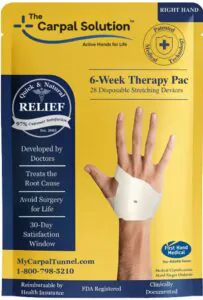
Created by renowned Harvard health care professionals.


Carpal Tunnel Brace for Typing: Can You Wear the Carpal Solution During the Day?
Can you wear the Carpal Solution as a carpal tunnel brace for typing during the day? Our doctors explain why it is designed for nighttime wear and how to look after your hands at work.


Written by Julie Sunberg, Director of Marketing and Customer Service, First Hand Medical · Clinically reviewed by Mr. Alan Ward, MOT, OTR, Master Occupational Therapist and VP of Precision Rehabilitation, Blanding, Utah · Last reviewed: November 2026
Can you wear a carpal tunnel brace for typing and other daytime work? People ask us this all the time about the Carpal Solution. The short answer: you do not need to, because the Carpal Solution was designed to be worn at night while you sleep. But you can wear it during the day if you like, within a few simple limits from Dr. Clyde E. Morgan, who developed it. Here is how long to wear it, how the Carpal Solution works as a carpal tunnel brace for typing, and why a rigid wrist brace worn all day is a different story.
The Carpal Solution Was Designed for Nighttime
The Carpal Solution was designed to be worn at night while you are asleep, when the hand is in a relaxed position. Combining active hand use during the day with gentle decompression of the soft tissue at night, it gives your hands an ideal rhythm of therapy with no muscle atrophy and no downtime. It is not necessary to wear the Carpal Solution during the day, and most people get excellent results wearing it only at night.
Many people search for a wrist support for typing or a wrist support brace for typing. Rigid braces limit how your fingers move on the keys, which is why our doctors recommend treating the wrist at night and keeping your hands free during the day.
The six-week protocol is simple: wear it every night for the first two weeks, then every other night for the next four weeks. That gives you over 220 hours of targeted passive stretching while you sleep. Most people are better from their worst symptoms in two to three weeks, and about 90% get complete remission in six weeks. About 10%, usually people with extra systemic inflammation, are 40 to 70% better at six weeks and reach full remission in 10 to 12 weeks.
Over 100,000 people have used the Carpal Solution over two decades, with 97% patient satisfaction over 21 years and 4.9 out of 5 stars on independent review sites like Google Reviews. See how to apply the Carpal Solution.
How Long to Wear a Carpal Tunnel Brace Like the Carpal Solution
Many people tell us the Carpal Solution feels so good during the first week or two of therapy that they want to wear it during the day as well as at night. Dr. Morgan tells these patients it is fine to wear the Carpal Solution for up to 16 hours in a 24-hour period. The soft tissue in the hand and the skin both need at least an eight-hour rest from the therapy each day.
- Nighttime only: the standard protocol, and all most people ever need.
- Night plus part of the day: fine during the first week or two, up to 16 hours in total.
- Daily break: at least 8 hours off every day so your skin and soft tissue can rest. Then take it off until bedtime the next night.
More gentle stretching of the soft tissue in the carpal tunnel area is better, up to that 16-hour limit. It is also important to remember that a key part of the hand’s recovery is rebuilding strength through normal use once the pain is relieved. That is why the daytime is mainly for using your hands, not for holding them still.
Can You Type While Wearing the Carpal Solution?
Yes. The Carpal Solution does not lock your wrist, so you can type, use a mouse and do light desk work while you wear it. Some computer users tell us they can type and enter data faster with it on, because their fingers feel more sensitive while the soft tissue is being stretched. That makes the Carpal Solution a practical carpal tunnel brace for typing during those first weeks when your hands hurt the most.

Typing in a brace is only part of the answer. A good wrist brace for typing should never replace a good workstation. Keep your wrists straight and floating over the keys, your elbows close to your sides at about 90 degrees and the top of your screen at eye level. An ergonomic keyboard can help keep your wrists in a neutral position. For more, see our guides to carpal tunnel from typing, the best keyboard for carpal tunnel and the carpal tunnel ergonomic checklist.
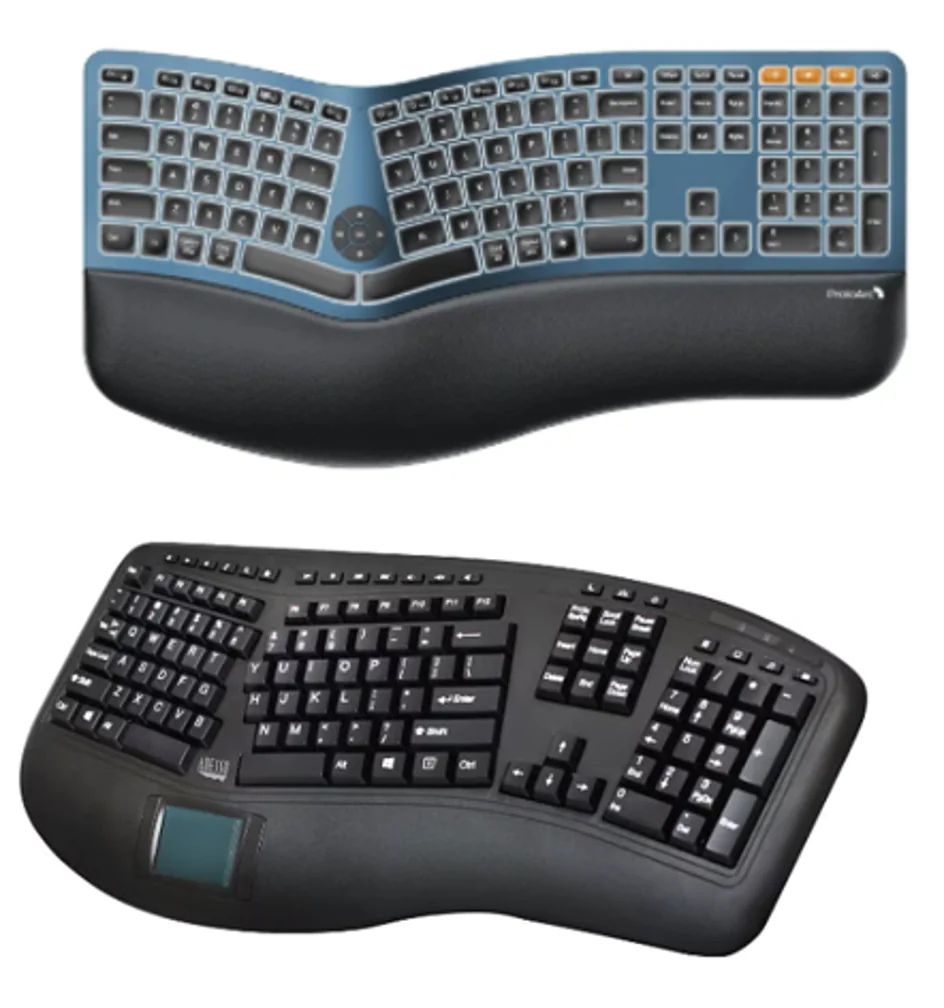
5 Proven Tips for Using a Carpal Tunnel Brace for Typing
- Make nighttime the foundation. Wear the Carpal Solution every night as directed. Daytime wear is optional, never more than 16 hours in a 24-hour period, with at least 8 hours off.
- Keep your wrists straight and floating. Whether or not you wear a carpal tunnel brace for typing, avoid resting the heel of your hand on the desk edge or bending your wrists up toward the keys. Lower the keyboard or raise your chair until your forearms are level.
- Type with a lighter touch. Hammering the keys loads the finger tendons that run through the carpal tunnel. A keyboard with light key travel, keyboard shortcuts and voice dictation for long documents all reduce the workload on your hands.
- Take short breaks. Every 30 to 60 minutes, let your hands drop to your sides, shake them out and do a few gentle finger and wrist stretches. Short, frequent breaks help more than one long break at lunch.
- Do not let a brace hide a problem. If numbness becomes constant, your grip keeps weakening or the muscle at the base of your thumb looks thinner, see a doctor promptly. A brace for typing is a comfort tool, not a reason to ignore warning signs.
Used this way, the Carpal Solution is the kind of carpal tunnel brace for typing that works with your body instead of against it: it relieves pressure at night, lets you keep using your hands by day, and never weakens the forearm muscles the way an all-day splint can.
Who Needs a Carpal Tunnel Brace for Typing?
Anyone who types for hours a day can develop carpal tunnel symptoms: numb or tingling fingers, hands that fall asleep at night, aching wrists and a weaker grip. People often look for a carpal tunnel brace for typing when those symptoms start to get in the way of work. We hear most often from:
- Software engineers and web developers who code all day. Read the software engineer’s and web developer’s Patient Experiences.
- Medical transcriptionists, court reporters and writers, whose income depends on fast, accurate typing. See the medical transcriptionist’s Patient Experience.
- Accountants, bookkeepers and data entry staff who live on the number pad. See the accountant’s Patient Experience.
- Gamers who combine long work days at a keyboard with long nights on a controller or mouse. See esports and carpal tunnel and the best treatment for gamers.
For all of these people, the goal is the same: keep working while the hands heal. A rigid splint makes typing awkward and weakens the forearm muscles over time. A carpal tunnel brace for typing that does not lock the wrist, combined with nighttime passive stretching, lets you keep your job and your hobbies while your body does the healing.
The waiting is real, too. The average wait for a new-patient appointment with a physician in the U.S. is about 31 days (AMN Healthcare survey, 2025), and specialists and nerve tests can take longer. There is no reason to spend that time doing nothing. Read The Waiting in Healthcare.
Should I Wear a Wrist Brace All Day? Why Rigid Splints Are Different
A rigid wrist splint or cock-up brace is not the same thing as the Carpal Solution.
Splints are the right tool for fractures and sprains, where holding a joint still lets it heal. For carpal tunnel, a splint mostly shields the wrist from painful movement, at two separate costs: unused muscles weaken (muscle atrophy), and restricted blood circulation and lymph flow reduce the nutrients needed for healing and slow the clearing of inflammation, so soft tissue heals more slowly. Use one only for temporary relief, not long term.
After just 14 days in a cast, healthy adults lost about 8% of their muscle size and about 23% of their strength (Wall, Acta Physiologica, 2014). A tight splint also compresses the hand, wrist and forearm, restricting blood circulation and the lymphatic fluid exchange your body needs to clear out swelling.
That matters because the muscles that bend your fingers and thumb are in your forearm, and their tendons pass through the carpal tunnel beside the median nerve. Keeping those forearm muscles working is part of getting better. Our medical team has seen splints give some relief at the start but aggravate symptoms over the long run. Read our doctors’ position on wrist splints.
Occupational therapist Alan Ward, MOT, OTR, explains the difference: “We are doing more than just trying to hold that wrist in a static position.” The Carpal Solution’s passive stretching relieves pressure on the median nerve, frees up blood circulation and lets lymph fluid flow to clear the swelling, so your body can do the healing.
Daytime Stretching: A Bonus That Speeds Recovery
Hand and finger stretching during the day complements the Carpal Solution. The finger tendons all run through the carpal tunnel on their way to the forearm muscles, so gentle stretching helps the same tissue. If it fits your day, do up to 6 sets of 10 stretches, holding each one about 15 seconds and resting 30 seconds in between. You can stretch your fingers back gently against the edge of a desk or table. See stretches to prevent carpal tunnel.

Daytime discipline is hard for busy people to keep up, and that is exactly why the Carpal Solution works so well: it is applied consistently every night while you sleep, without relying on willpower. Skip squeeze balls, grip trainers and putty while you are healing; your grip comes back on its own with normal hand use once the pressure is off the nerve.
How Long to Wear Wrist Brace Support, and How Long to Wear Carpal Tunnel Brace Therapy at Night
People often ask how long to wear wrist brace support during the workday.
Splints are the right tool for fractures and sprains, where holding a joint still lets it heal. For carpal tunnel, a splint mostly shields the wrist from painful movement, at two separate costs: unused muscles weaken (muscle atrophy), and restricted blood circulation and lymph flow reduce the nutrients needed for healing and slow the clearing of inflammation, so soft tissue heals more slowly. Use one only for temporary relief, not long term.
Worn for weeks at a time, it also weakens the forearm and hand muscles and squeezes the wrist, slowing the circulation and lymph flow your body needs to clear the swelling. That is why our doctors do not recommend wearing a rigid wrist brace all day while you type.
How long to wear carpal tunnel brace therapy like the Carpal Solution
The answer to how long to wear carpal tunnel brace therapy like the Carpal Solution is simple: you wear it while you sleep, not while you work. Apply one each night for the first two weeks, then every other night for the next four weeks. That six-week protocol adds up to over 220 hours of gentle, targeted stretching, and most people are better from their worst symptoms in two to three weeks. During the day, take short breaks from the keyboard, keep your wrists straight and let your hands rest.
Carpal Tunnel Brace for Typing vs. a Rigid Wrist Splint
When people shop for a carpal tunnel brace for typing, they usually find rigid splints first. Here is how the two compare for someone who works at a keyboard:
| Question | Rigid wrist splint | The Carpal Solution |
|---|---|---|
| Does it lock the wrist? | Yes, it holds the wrist still | No, the wrist and fingers stay free to move |
| Can you type in it? | Awkwardly, and the splint often catches on the desk | Yes, many people type and use a mouse while wearing it |
| Does it promote healing? | No, it only reduces pain from movement | Its passive stretching relieves pressure on the median nerve so the body can heal |
| Effect on forearm muscles | Atrophy and stiffness with long-term wear | No atrophy; normal daytime hand use continues |
| Circulation and lymph flow | A tight splint can restrict them | Stretching helps restore blood flow and lymph drainage |
| How long to wear it | Our doctors do not recommend long-term splinting | Every night for 2 weeks, then every other night for 4 weeks; optional daytime wear up to 16 hours a day |
The bottom line: the best carpal tunnel brace for typing is one that lets you keep typing. A splint that immobilizes your hand may feel helpful for a few days, but it does nothing about the swelling and entrapped inflammation pressing on the nerve. The Carpal Solution treats that pressure while you sleep, and you can wear it as a carpal tunnel brace for typing during the day if it feels good, within Dr. Morgan’s 16-hour limit.
One more practical point: a brace for typing does not need to be worn forever. As your symptoms settle over two to three weeks, most people find they no longer want anything on their hands during the workday. That is a good sign. Keep up the nighttime protocol for the full six weeks, even after you feel better, so the soft tissue has time to heal completely.
A Brace for Typing Today, Prevention Tomorrow
Once your symptoms are in remission, you do not need to wear a carpal tunnel brace for typing during the day. To keep carpal tunnel from coming back, our doctors recommend wearing the Carpal Solution as a preventive treatment anywhere from one night a week to once every six months, depending on how hard you use your hands. Many customers reorder for exactly this reason. Pair it with good ergonomics and regular breaks from the keyboard. Learn more about preventative maintenance.
If your hands are slow to improve, our Persistent Symptoms Protocol adds home techniques such as cold water plunges, deep tissue massage, hydration, electrolytes and deep diaphragm breathing. Surgery should be the last resort: carpal tunnel surgery has a patient satisfaction rate lower than 69%, because about 31% of patients report lingering or recurring symptoms, and no patient is satisfied with lingering symptoms. Read 6 Carpal Tunnel Surgery Myths.
When Healing Needs a Doctor’s Help and Professional Medical Evaluation
- Constant numbness that does not improve or loss of feeling in the fingertips that does not improve in 4 to 8 weeks.
- Extreme loss of the muscle at the base of the thumb, with loss of grip strength that does not improve over 6 to 8 weeks.
- Worsening symptoms over 6 to 8 weeks while using the best conservative treatments
- Symptoms that begin suddenly after hand or wrist trauma, a fracture or severe sprain from a fall or auto accident.
- Odd Symptoms that are not consistent with the Carpal Tunnel Symptoms listed on this website, that might be indicative of other nerve issues. A nerve conductivity study can clear up the confusion with minimal costs and not too much pain and no risk.
These signs may mean more advanced nerve involvement or a different condition and deserve professional medical evaluation and in person consultation. Home treatment can be used alongside professional in-person medical care while you wait for the healthcare delivery system to fit you into their schedule. There is no reason to wait doing nothing. You can start proven natural conservative treatment with good patient reviews while you wait for your appointments. If your symptoms start improving over 6 to 8 weeks, then you know you are on the right track and surgery is not necessary.
Carpal Tunnel Brace for Typing: FAQ
Can I wear the Carpal Solution during the day?
Yes. It is designed for nighttime, but you can wear it during the day too, for up to 16 hours in any 24-hour period. Give your skin and soft tissue at least 8 hours off each day.
Is the Carpal Solution a good carpal tunnel brace for typing?
It does not lock your wrist, so you can type and use a mouse while you wear it, and some computer users say their fingers feel more sensitive with it on. Most people only need to wear it at night.
How long should I wear a carpal tunnel brace?
With the Carpal Solution, wear it every night for two weeks, then every other night for four weeks. Most people are better from their worst symptoms in two to three weeks. After that, use it from one night a week to once every six months for prevention.
How long should you wear a wrist brace?
A rigid splint gives short-term relief from movement only. Wearing one for long stretches leads to muscle atrophy and stiffness, so our doctors do not recommend splints as a long-term treatment for carpal tunnel syndrome.
Should I wear a wrist brace all day?
Not a rigid one. Your hands need normal daytime use to keep their strength. A passive stretching brace like the Carpal Solution can be worn for part of the day if it feels good, within the 16-hour limit.
Should I still stretch during the day?
If it fits your schedule, yes. Up to 6 sets of 10 gentle stretches, held about 15 seconds with 30 seconds of rest, speeds recovery alongside the nighttime therapy.
References
- Wall BT, et al. Acta Physiologica. 2014. doi:10.1111/apha.12190 (muscle size and strength loss after 14 days of immobilization).
- Bland JDP. Treatment of carpal tunnel syndrome. Muscle & Nerve. 2007.
- National Institute of Neurological Disorders and Stroke. Carpal Tunnel Syndrome.