 Created by renowned Harvard health care professionals.


Can Carpal Tunnel Be Reversed Without Surgery?
Can carpal tunnel be reversed without surgery? For most people with mild to moderate symptoms, yes. Learn how the median nerve heals at each stage, what the research shows, and a simple 6-week plan our doctors recommend to reverse carpal tunnel symptoms at home.


Written by Jeff Conley, First Hand Medical · Medically reviewed by William Shucart, MD, neurosurgeon and former chair of the Department of Neurosurgery at Tufts Medical School · Last reviewed: November 2026
Can carpal tunnel be reversed without surgery? For most people with mild to moderate carpal tunnel syndrome, yes. When pressure inside the carpal tunnel comes down, the median nerve can recover, and numbness, tingling and night pain can fade completely.
Whether it fully reverses depends on one thing above all: how much the nerve has been damaged. This article explains how nerve recovery works, what research shows about treating carpal tunnel without surgery, and a practical 6-week plan to reverse carpal tunnel symptoms at home.
Table of Contents
Can Carpal Tunnel Be Reversed Without Surgery? The Short Answer
| Severity | Typical symptoms | Can it be reversed without surgery? |
|---|---|---|
| Mild | Night tingling; shaking the hands brings relief | Usually yes, often within weeks |
| Moderate | Frequent symptoms day and night, some clumsiness | Often yes, over weeks to a few months |
| Severe | Constant numbness, thumb-muscle wasting | Partly at best; start conservative treatment while you wait to see your doctor, who may advise surgery |
In other words, the earlier you start, the better your chance to reverse carpal tunnel completely. Not sure which stage you are in? Read What Happens If Carpal Tunnel Is Left Untreated? If yours is mild, start with Mild Carpal Tunnel Treatment: What to Do First
How Carpal Tunnel Damages the Nerve, and How It Heals
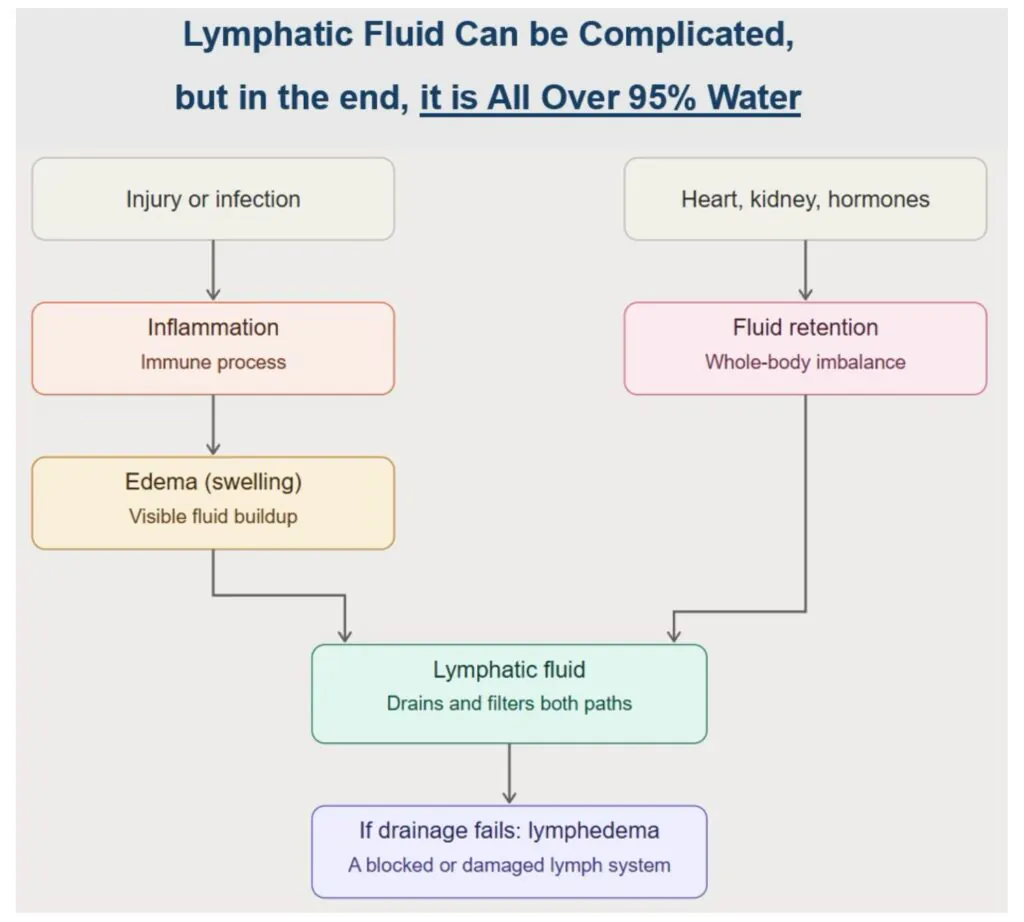
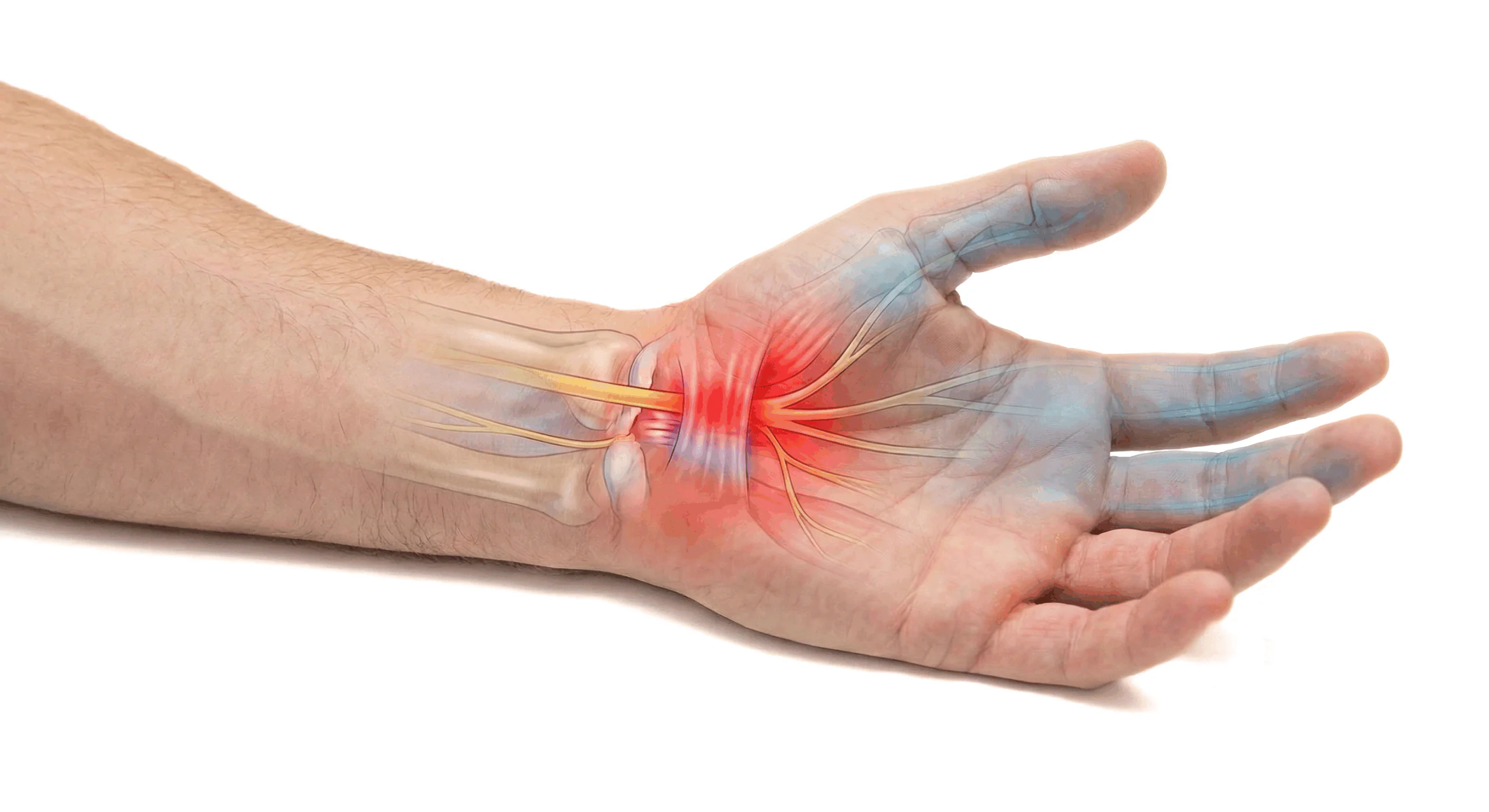
Carpal tunnel syndrome is an entrapment syndrome. Inflammation and swelling get trapped in the narrow tunnel at the wrist, squeezing the median nerve along with the small blood vessels and lymph channels around it. Restricted blood flow and lymph drainage let fluid build up, which raises the pressure even more.
The nerve responds to this pressure in three layers, and each layer heals at a different speed:
- Reduced blood flow (fastest to reverse). The tingling you shake out at night comes from the nerve being briefly starved of blood. It recovers in minutes once pressure eases.
- Damage to the nerve’s insulation, the myelin (weeks to months). With ongoing pressure, the myelin coating thins and signals slow. Myelin can rebuild once pressure stays down, typically over weeks to a few months.
- Damage to the nerve fibers themselves, the axons (slow, sometimes incomplete). In severe, long-standing carpal tunnel, nerve fibers are lost. They can regrow, but slowly, and recovery may be partial, especially if the thumb muscles have wasted.
This is why the British Society for Surgery of the Hand explains that tingling often gets better quickly, while strength and grip can take longer to come back (BSSH). It is also why you can reverse carpal tunnel most easily in the first two layers, before nerve fibers are lost.
What Research Says About Reversing Carpal Tunnel Without Surgery
Spontaneous improvement happens. In 196 untreated patients followed for 10 to 15 months, many improved on their own, and a short duration of symptoms was the strongest predictor of improvement (Neurology, 2001).
Manual therapy matched surgery at one year. In a randomized trial of 120 women with carpal tunnel, manual physical therapy gave pain relief and function similar to surgery at 6 and 12 months, with faster improvement in the first 3 months (The Journal of Pain, 2015).
Simple night treatment helps many. In a 176-patient trial, 54% of patients given only night splints reported success at 3 months (JAMA, 2002). Splints hold the wrist straight; treatments that also stretch the tight tissue around the tunnel aim to go further.
Patients report it, too. More than 70 patients have shared experiences on our site of treating carpal tunnel without surgery at home, from a surgical nurse whose symptoms were gone by week 6 to a dentist, a chiropractor and a bootmaker. Read How I “Cured” My Carpal Tunnel Without Surgery.
Put together, the evidence says carpal tunnel can be reversed without surgery for many people, especially when treatment starts early and targets the pressure in the tunnel rather than just the symptoms.
Signs Your Carpal Tunnel Is Reversing
Recovery usually follows the same order as the three layers above. Watch for these signs, roughly in this order:
- Better sleep. Fewer night wake-ups and less need to shake out your hands, often in the first 1 to 3 weeks.
- Less tingling during the day. Driving, phone use and typing bother you less.
- Feeling returns to your fingertips. Buttons, coins and small objects become easier to handle.
- Grip and pinch strength improve. You drop things less often. This sign usually comes last.
Keep a simple weekly log of night wake-ups, tingling and dropped objects. It turns a slow, gradual recovery into progress you can see, and it gives your doctor useful information if you need one.
Who Has the Best Odds of Reversing Carpal Tunnel?
Some people can reverse carpal tunnel quickly; others need more time and patience. Your odds are best if:
- Your symptoms are recent. Months, not years, is the strongest predictor of recovery.
- Symptoms come and go. Numbness that clears when you shake your hands means the nerve is still mostly intact.
- Your grip is still strong and the muscle at the base of your thumb looks normal.
- You can change what triggers it. Adjusting your workstation, tools or sleeping position removes pressure every day.
- Your symptoms started in pregnancy. Pregnancy-related carpal tunnel often eases after delivery, and gentle, drug-free care helps in the meantime.
If you have had symptoms for years, or numbness that rarely lets up, you can still try to correct carpal tunnel without surgery, but expect a slower recovery and keep your doctor involved. Diabetes, thyroid problems and inflammatory arthritis also slow nerve healing, so managing them is part of the plan. See who is at risk for carpal tunnel.
How to Reverse Carpal Tunnel Without Surgery: A 6-Week Plan
Our doctors recommend a conservative-first plan that works on the cause, trapped inflammation, rather than only masking symptoms. Here is how to reverse carpal tunnel without surgery, step by step.
Week 0: Confirm What You Have
Take our self-test for carpal tunnel. If you have constant numbness or thumb-muscle wasting, see a doctor promptly; you can begin the plan while you wait for that appointment. Symptoms after an injury or fracture need urgent care first. Rule out look-alikes such as wrist tendonitis or a pinched nerve in the neck.
Weeks 1–6: Passive Stretching Every Night
Wear the Carpal Solution while you sleep. Its gentle straps apply constant light tension to the tissue around the carpal tunnel for 6 to 8 hours, loosening the tight tissue so trapped inflammation can disperse and blood and lymph can flow again. Over 6 weeks that adds up to more than 250 hours of gentle stretching, done while you rest.
Some people feel more discomfort for the first night or two as tight tissue begins to stretch; that usually settles quickly. See what to do if discomfort increases.
Weeks 1–6: Daytime Stretching, If Your Day Allows
Add up to 6 sets of 10 reps per day, holding each stretch 15 seconds with 30 seconds’ rest. Daytime discipline is hard to keep up, but combined with night stretching it speeds recovery. Follow the day-and-night exercise program.
Throughout: Remove What Keeps Re-Inflaming the Tunnel
- Keep wrists straight at the keyboard, mouse, steering wheel and phone.
- Take short breaks from gripping every 30 to 60 minutes.
- Work on weight, blood sugar and thyroid health, which all feed inflammation.
- Try the evidence-rated natural remedies for carpal tunnel as add-ons.
Week 6: Check Your Progress
Most people who respond notice better sleep within the first 1 to 3 weeks and clear improvement by week 6. Improvement within 4 to 6 weeks tells you the treatment is working; if you have not improved, see your doctor about next steps. See the full 6-week healing timeline.
After Week 6: Keep It Reversed
Carpal tunnel is a chronic, recurring condition; it can come back even after surgery. Most people stay in control with a maintenance night every few weeks or months, and a return to nightly treatment if symptoms flare.
Mistakes That Slow Recovery
- Stopping too soon. Many people feel better in two or three weeks and stop treatment. Pressure in the tunnel builds back up, and symptoms return. Finish the full 6 weeks.
- Only treating the daytime. Most people bend their wrists for hours while asleep, which is why symptoms are often worst at night. Night treatment covers the hours that matter most.
- Relying on pills and creams. Pain relievers, numbing creams and vitamin B6 may mask symptoms, but they do not lower pressure in the tunnel.
- Bracing all day. Rigid daytime braces can weaken the hand and get in the way of work. A splint holds the wrist in a neutral position, which can reduce pain from movement, but it does not promote healing from carpal tunnel syndrome. It causes muscle atrophy and stiffness, and its tight compression restricts blood circulation and lymphatic fluid exchange, which slows the dispersion of entrapped swelling, the root cause of carpal tunnel syndrome. Our medical team has observed that splints give some relief at first but aggravate symptoms in the long run. Immobilization is great for fractures and sprains, but not for carpal tunnel syndrome. See splints vs. the Carpal Solution.
- Ignoring warning signs. Constant numbness, thumb-muscle wasting or steadily worsening weakness need a doctor’s evaluation, not more waiting.
Avoiding these mistakes is often the difference between a partial improvement and the chance to fully reverse carpal tunnel without surgery.
What Recovery Really Looks Like: A Nurse’s Experience
Kathy, a surgical nurse on California’s Central Coast, was referred to a surgeon. Six weeks to three months off work was not an option for a single mother working 12-hour shifts, so she started the Carpal Solution instead and wore it every night.
Her recovery was not instant. For the first three to four weeks she felt little change. Around week five it started working, and by week six, in her words, “it was gone.” Her experience is a good reminder that reversing carpal tunnel without surgery is often gradual, and that the first few weeks are about consistency, not quick results. Each experience is personal, and results vary.
Read Kathy’s experience and six more in How I “Cured” My Carpal Tunnel Without Surgery, including a hairstylist who waited 14 years in Hair Stylist Saves Career.
Why Start Now Instead of Waiting
The single strongest factor in whether carpal tunnel can be corrected without surgery is time. Short symptom duration predicts recovery; long-standing pressure predicts nerve fiber loss. Every month of waiting means more nights of lost sleep, more numbness and more dropped objects, and it moves you closer to the stage that is hard to reverse.
There is no reason to suffer needlessly while you wait for an appointment, a nerve conduction study or a surgery date. Natural treatment options like the Carpal Solution involve no surgery, no drugs and no downtime, carry very low risk, and do not close any doors. If you improve, you may never need surgery. If you don’t, your doctor still has every option. The only exception: after a carpal tunnel release, wait 3 months before starting so the surgical tissue can heal.
Can Carpal Tunnel Be Corrected Without Surgery If It’s Severe?

Sometimes partly, but severe carpal tunnel needs medical supervision. Even so, there is no reason to wait idle: start conservative treatment while you wait for appointments and nerve testing, and see whether you improve in 4 to 6 weeks. When the nerve has lost fibers and the thumb muscle has wasted, conservative treatment may ease pain and tingling without restoring full strength. Surgery may be recommended to stop further damage, though even after surgery normal feeling and strength may not fully return.
Severe, permanent damage is uncommon, and most people get months or years of warning first. Read Carpal Tunnel Rarely Causes Permanent Nerve Damage and What Happens If Carpal Tunnel Is Left Untreated?
Does Surgery Guarantee a Reversal?
No. Carpal tunnel release cuts the ligament over the tunnel to relieve pressure, but the nerve still has to heal through the same three layers described above. Tingling often improves quickly after surgery; numbness and weakness can take months, and in severe cases may not fully recover.
Some patients also have lingering or returning symptoms after surgery, and scar tissue can form in the same tight space. That is why our doctors recommend conservative treatment first for mild, moderate and even severe carpal tunnel while you wait for care, with surgery kept as a last resort. Before you decide, read carpal tunnel surgery success rates and carpal tunnel surgery myths. To decide whether you need it, read Is Carpal Tunnel Surgery Necessary?
Reversing Carpal Tunnel Without Surgery: FAQ
How long does it take to reverse carpal tunnel without surgery?
Mild symptoms often improve within 1 to 3 weeks, and a full program takes about 6 weeks. Moderate cases can take a few months for the nerve’s insulation to rebuild.
Can nerve damage from carpal tunnel heal on its own?
Damage to the nerve’s insulation usually heals once pressure stays down. Loss of nerve fibers in severe carpal tunnel heals slowly and sometimes incompletely.
Is there a way to reverse carpal tunnel without surgery if I’ve had it for years?
Often, yes, if symptoms still come and go. Long duration lowers the odds, so start treatment now and see a doctor if numbness is constant.
Can carpal tunnel come back after it’s reversed?
Yes. Carpal tunnel can recur, even after surgery. A maintenance routine of occasional night stretching helps keep inflammation from building up again.
What is the best way to reverse carpal tunnel without surgery?
Whatever your severity, our doctors recommend starting with nightly passive stretching for 6 weeks, daytime stretches if your schedule allows, and removing triggers such as bent wrists and repetitive gripping.
Can carpal tunnel be corrected without surgery at home?
For most mild to moderate cases, yes. A home program of nightly passive stretching, daytime stretches and fewer triggers lowers pressure in the tunnel so the nerve can recover. Your doctor should still evaluate constant numbness, thumb-muscle wasting or symptoms after an injury.
Will I need surgery later if I try natural treatment first?
Many people never do. Starting with gentle, natural treatment does not make surgery harder later, and if symptoms do not improve after about 6 weeks, your doctor still has every option. Short symptom duration is the best predictor of success, so starting early helps most.
Sources
- Padua L, et al. (Italian CTS Study Group). Multiperspective follow-up of untreated carpal tunnel syndrome. Neurology. 2001;56(11):1459–1466. doi.org/10.1212/wnl.56.11.1459
- Fernández-de-las-Peñas C, et al. Manual physical therapy versus surgery for carpal tunnel syndrome: a randomized trial. The Journal of Pain. 2015. Summary
- Gerritsen AA, et al. Splinting vs surgery in the treatment of carpal tunnel syndrome. JAMA. 2002;288(10):1245–1251. PEDro
- British Society for Surgery of the Hand. Carpal tunnel syndrome patient information. BSSH
Disclosure: First Hand Medical makes the Carpal Solution, and Dr. Shucart is an investor and advisory board member of the company. This article is for education and is not a substitute for advice from your own doctor.