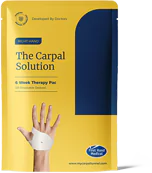
 Created by renowned Harvard health care professionals.

Tips For Musicians To Treat Carpal Tunnel At Home
Most musicians and other artists do not want to risk losing the sensitive feeling and control of their hands and fingers with invasive expensive surgery that has a questionable record regarding full recovery.
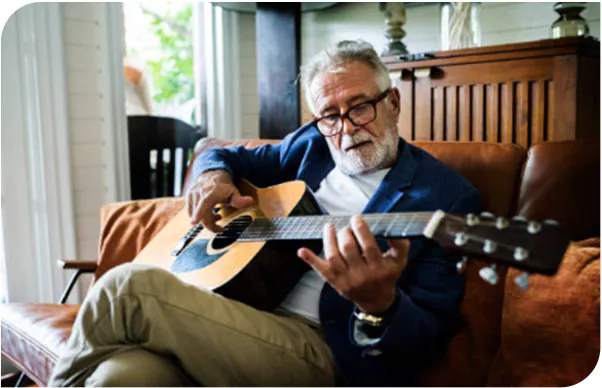

10 tips For Musicians with Carpal Tunnel
Written by Julie Sunberg, Director of Marketing and Customer Service at First Hand Medical · Clinically reviewed by Alan Ward, MOT, OTR, Master Occupational Therapist and Vice President of Precision Rehabilitation · Last reviewed: November 2026
Table of Contents
Why Carpal Tunnel in Musicians Is So Common
Carpal tunnel in musicians grows out of the very things that make great playing possible: thousands of precise, repeated finger movements, wrists held in bent positions for long stretches, and steady grip on an instrument, a bow or sticks. Long rehearsals before a performance, a new piece with demanding passages, or a change of instrument can all push the tissue in the carpal tunnel past what it can recover from overnight. Swelling in that narrow space presses on the median nerve, causing numbness, tingling and lost dexterity in the thumb and first fingers, exactly where musicians can least afford it.
Instrument-by-Instrument Tips
Small setup changes make a big difference for carpal tunnel in musicians, because the same position is repeated thousands of times a day.
- Piano and keyboard: Sit so your forearms are level with the keys and your wrists stay level, not dropped or raised. Play from the arm and shoulder, not only the fingers.
- Guitar and bass: The fretting wrist often bends sharply. Raise the neck angle with a strap or footstool, and keep your thumb relaxed behind the neck rather than clamping.
- Violin, viola and cello: Check the left wrist; it should not collapse inward. Keep bow grip light.
- Drums and percussion: Use a looser grip, let the stick rebound, and consider thicker sticks or grip tape so you squeeze less.
- Wind instruments: Use a neck strap or thumb rest support to take weight off the right thumb.
A Practice-Day Routine for Musicians With Carpal Tunnel
Musicians with carpal tunnel do best with a simple routine they can repeat every day:
- Warm up for 5 minutes. Shake out your hands, roll your shoulders and do gentle wrist stretches before you touch your instrument.
- Practice in blocks. Play for 20 to 30 minutes, then rest for a few minutes. Use the break for tendon glides and a quick posture check.
- Work smart on hard passages. Practice demanding sections slowly and with a light touch before bringing them up to tempo.
- Cool down. Finish with gentle stretches and, if it helps, a contrast bath in the evening.
- Treat at night. Wear the Carpal Solution while you sleep so your hands recover between practice days.
Carpal tunnel in musicians tends to flare before concerts, recordings and auditions, when practice time jumps. Plan for those weeks: increase practice gradually, add extra breaks and start a few nights of the Carpal Solution ahead of time.
10 Tips for Musicians With Carpal Tunnel
These 10 tips come from our doctors’ two decades of experience treating carpal tunnel in musicians.
1) Before Practice do some stretching exercises to limber up your hands. There are specific stretches on YouTube that musicians find helpful.
Here are some useful links:
https://www.youtube.com/watch?v=TSrfB7JIzxY
https://www.youtube.com/watch?v=cwdsKXY8jz8
This is not a complete list, but it will get you started with some basic stretching
2) Take breaks every 20 – 30 minutes of playing or practicing your instrument to rest and stretch your hands and fingers.
3) Avoid exercises of the hand like the so called “stress ball” squeeze that work the Flexor Muscles in the forearm. Ironically, this is recommended as a good hand exercise by many, but squeezing adds pressure inside the carpal tunnel, so it is one of the worst things you can do while you are healing from Carpal Tunnel Syndrome.
Also, stay away from the hand grippers. These work the forearm muscles for grabbing things, which already get plenty of work in most people’s daily routine of grabbing objects and holding the object. With Carpal Tunnel there is often an imbalance between the forearm muscles. The Flexor Muscles are usually too strong and the Extensor Muscles in the forearm are too weak.

4) Exercise doing a reverse flex of the fingers and thumb with a #32 elastic band around your finger tips and thumb nail. It is an action that is “opposite of a squeeze” and is one of the best gentle stretching exercises for Carpal Tunnel prevention.
Your hand should go from a “rosebud poise”, to a “claw poise” with the elastic band providing resistance. You do this 10 to 15 times then rest and repeat 3 sets of this exercise. This will build up the Extensor Muscles and help you achieve better muscle balance in the forearm. This can help Musicians overcome Carpal Tunnel Syndrome.

5) There are a lot of good stretching exercises on YouTube. Stick to those recommended by Medical Professionals, Yoga Experts or experienced musicians. There are a lot recommendations on the web that are not well thought out and can actually make CTS worse. Make sure the person sharing the information is credible. One caution, stay away from Yoga Poses that put a lot of weight on your hands and wrists. These are another “watch-out” for those trying to minimize Carpal Tunnel Symptoms.
6) The best way to perform any stretch is gently. Our doctors recommend holding each gentle stretch for about 15 seconds, resting for 30 seconds, and doing up to 6 sets of 10 repetitions a day. Long intense stretching can do more damage than good for injured soft tissue.
7) If you have the need to do heavy lifting invite a strong friend to come with you to do the heavy lifting and save your hands and wrist for the intelligent and artistic work that you are so good at doing.
8) Do alternate Ice and Heat Therapy at night before retiring to bed. You need to prepare two pitchers of water. One with warm to hot water and the second with ice water. You submerge your hand half way up the forearm in warm water for 2 minutes, then submerge the hand in ice water pitcher and leave it there for 2 minutes.
Alternate back and forth every two minutes for 20 to 30 minutes. The ice water should feel cold, never painful; skip the ice if you have diabetes with numb hands, Raynaud’s or poor circulation, and check with your doctor first.
9) If you do not have Carpal Tunnel yet, but you think you might be susceptible to it, or you are starting to feel some telltale signs of Carpal Tunnel. Order The Carpal Solution Night Time Stretching regimen that was developed by Doctors and have it on hand to use as a preventative treatment before you get full on Carpal Tunnel Syndrome, with all the debilitating symptoms.
You can preempt the condition with a proactive purchase. Start using The Carpal Solution Treatment a few nights before a big performance to prevent carpal tunnel syndrome symptoms from flaring up at the worst possible time. Then wear the Carpal Solution one night per week to keep CTS under control.
There is no other way to achieve 8 hours of gentle targeted palm stretching per day. You simply put on the Carpal Solution Stretching Device before bed and settle in for a long comfortable rest without interruption due to numb painful hands. Take the Carpal Solution Stretching Device off in the morning and get about your busy day without worry. With a sound night of sleep, your body’s natural healing works more efficiently to minimize any aches and pains you might have anywhere in your body.
It is always better to nip Carpal Tunnel in the bud, before it starts raging, interrupting sleep and causing you to lose the musical talent you have worked so hard to develop. With Carpal Tunnel “an ounce of prevention is worth a pound of cure”, because you can avoid the unproductive downtime. You can also prevent the perception of being “out of commission” when you are needed by your team.
10) If you already have Carpal Tunnel Syndrome, then Order the Carpal Solution Home Stretching Treatment and follow the Six Week Protocol developed by the Doctors. In our doctors’ two decades of experience, about 90% of people get complete remission in six weeks, so you can keep playing your brand of music. There is no reason to let Carpal Tunnel derail your music career. Keep the dream alive while you achieve elite status with the Carpal Solution Treatment.
Experiences of Carpal Tunnel in Musicians
“My Doctor told me to rest and wear this wrist splint. First rest is impractical for a musician that has spent all those years striving for elite performance and honing our art to a high level. The Rigid Brace was annoying to wear and I was losing grip strength. I could see my hand muscles were receding. I felt desperate and depressed. Surgery was not an option due to the downtime and the permanent loss of grip strength my friend reported with surgery. I was determined to find the light at the end of the “Tunnel”.
 Finally, I found the Carpal Solution Treatment. It seemed too good to be true and like the saying goes: “If it seems too good to be true, it usually is.”
Well, I can tell you the Carpal Solution is the real deal. Within 2 weeks my hand strength was returning, the hand numbness was gone. No more wrist pain within 4 weeks. I was sleeping through the night for the first time in months. My life was coming back to me. All because of these simple little stretching devices that you put on your hands at night. The Carpal Solution saved my music career. I am so happy!”
Landry Plays Lead Guitar in a Rock Band
Bethesda, Maryland
Watch Diane a professional musician in Los Angeles, California tell her ordeal with Carpal Tunnel Syndrome.
She tells how she avoided Carpal Tunnel Surgery and got her Carpal Tunnel Symptoms under control. She saved her music career with the Carpal Solution Treatment. You can too!
Learn more about treating Carpal Tunnel at home without risk, without downtime, and at minimal expense guided by Doctors committed to helping you avoid the risks of surgery, steroid injections and rigid wrist splints. A splint holds the wrist in a neutral position, which can reduce pain from movement, but it does not promote healing from carpal tunnel syndrome. It causes muscle atrophy and stiffness, and its tight compression restricts blood circulation and lymphatic fluid exchange, which slows the dispersion of entrapped swelling, the root cause of carpal tunnel syndrome. Our medical team has observed that splints give some relief at first but aggravate symptoms in the long run. Immobilization is great for fractures and sprains, but not for carpal tunnel syndrome.
Click here to learn more about: Carpal Tunnel Treatment
Two musicians, Los Angeles music director Diane and pastor-guitarist Brett Golson, share their experiences on video in how seven patients treated carpal tunnel at home without surgery.
Why Musicians Should Avoid Rushing Into Surgery
For a musician, fine motor control is everything. Carpal tunnel surgery has a patient satisfaction rate lower than 69%: about 31% of patients report lingering or recurring symptoms, and no patient is satisfied with lingering symptoms (Bland, Muscle & Nerve, 2001). Grip and pinch strength usually take 2 to 3 months to return after surgery, according to the American Academy of Orthopaedic Surgeons, which can mean missed gigs and lost students. For carpal tunnel in musicians, that lost time is a real cost. Rigid splints are not ideal either, because immobilization causes muscle atrophy over time.
Everyone waits in healthcare, too: the average new-patient appointment wait is 31 days (AMN Healthcare, 2025). Start a safe treatment while you wait, and keep your appointment. Treating carpal tunnel in musicians early protects both your hands and your career.
Frequently Asked Questions About Carpal Tunnel in Musicians
Can I keep playing with carpal tunnel?
Most musicians can keep playing with shorter practice blocks, frequent breaks and a lighter touch while they treat the problem. Stop and rest if tingling gets worse while you play.
What is the best carpal tunnel treatment for musicians?
For carpal tunnel in musicians, our doctors recommend the Carpal Solution because it works at night, so it never interferes with practice. It earns 97% patient satisfaction over 21 years and 4.9 out of 5 stars on independent review sites like Google Reviews.
How long until I can play pain-free?
In our doctors’ experience, most people feel their worst symptoms ease in two to three weeks, and about 90% get complete remission in six weeks. Remission usually lasts 5 to 7 years for most people.
Is carpal tunnel in musicians different from other cases?
The cause is the same: pressure on the median nerve inside the carpal tunnel. What differs is the stakes. Small losses of feeling or speed that another person might ignore can affect a musician’s tone, accuracy and confidence, so carpal tunnel in musicians deserves early attention.
Can I prevent carpal tunnel from coming back before a tour or recording?
Yes. Build up practice time gradually, keep taking breaks, and use the Carpal Solution for maintenance nights, anywhere from once a week to once every six months, with extra nights in the week before big performances.
Do I need to stop playing my instrument completely?
Usually not. Most musicians do better by shortening sessions and fixing posture than by stopping entirely. Complete rest can leave the hands stiff, while gentle, regular use keeps the tissue moving. If symptoms are severe or constant, take a short break and see your doctor.
Should musicians with carpal tunnel use grip strengtheners?
No. Squeeze balls and grippers add pressure in the carpal tunnel. Gentle extensor exercises, like the elastic band exercise above, are a better choice.
When Healing Needs a Doctor’s Help and Professional Medical Evaluation
- Constant numbness that does not improve or loss of feeling in the fingertips that does not improve in 4 to 8 weeks.
- Extreme loss of the muscle at the base of the thumb, with loss of grip strength that does not improve over 6 to 8 weeks.
- Worsening symptoms over 6 to 8 weeks while using the best conservative treatments
- Symptoms that begin suddenly after hand or wrist trauma, a fracture or severe sprain from a fall or auto accident.
- Odd Symptoms that are not consistent with the Carpal Tunnel Symptoms listed on this website, that might be indicative of other nerve issues. A nerve conductivity study can clear up the confusion with minimal costs and not too much pain and no risk.
These signs may mean more advanced nerve involvement or a different condition and deserve professional medical evaluation and in person consultation. Home treatment can be used alongside professional in-person medical care while you wait for the healthcare delivery system to fit you into their schedule. There is no reason to wait doing nothing. You can start proven natural conservative treatment with good patient reviews while you wait for your appointments. If your symptoms start improving over 6 to 8 weeks, then you know you are on the right track and surgery is not necessary.

RISK FREE 30-Day Patient Satisfaction Guarantee
The ONLY treatment for carpal tunnel that comes with a no questions asked 30-Day Patient Satisfaction Guarantee and in-house dedicated pain relief team.