 Created by renowned Harvard health care professionals.



Written by Julie Sunberg, Director of Marketing and Customer Service, First Hand Medical · Medically reviewed by Dr. William Shucart, MD, neurosurgeon and clinical professor of neurosurgery, New England Medical Center · Last reviewed: November 2026
Table of Contents
Carpal Tunnel Explained: What the Videos Cover
On this page you can hear carpal tunnel explained in plain language and see people who found natural relief with the Carpal Solution. Below, a chiropractor and a dentist explain carpal tunnel on video from both sides of the exam table, and three more patients share their stories. The reviews above add a surgical nurse and others. Hearing the condition explained clearly can make it easier to understand before you choose a treatment. The videos are a starting point, and the sections below summarize the questions most people ask.
What Is Carpal Tunnel Syndrome?
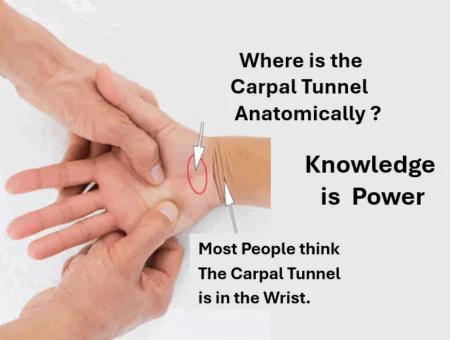
Carpal tunnel syndrome happens when the median nerve is squeezed as it passes through a narrow passageway of ligament and bones at the base of the hand. Symptoms usually start gradually, with numbness, tingling, weakness and sometimes pain in the hand and wrist. If you want the basics in writing, read what carpal tunnel syndrome is and where the carpal tunnel sits in the hand.
Common Symptoms and Causes
People often notice tingling or numbness in the thumb and fingers, especially at night, along with a weaker grip and a habit of dropping things. Contributing factors can include repetitive hand use, wrist injury, thyroid disease, arthritis and fluid retention during pregnancy. For general medical background, see the NINDS fact sheet on carpal tunnel syndrome, and review the carpal tunnel symptoms and causes on our site.
Watch videos of people who “Cured” their Carpal Tunnel Naturally and Avoided the Risks of Carpal Tunnel Surgery!






Call Toll Free: 1-800-798-5210 to speak to a knowledgeable representative now.
Carpal Tunnel Explained: What Happens Inside the Wrist
The carpal tunnel is a narrow passage at the base of the hand, with the wrist bones on three sides and a tough ligament across the top. Ten structures share that small space: the median nerve and the nine tendons of the muscles that bend the fingers and thumb. Those muscles are in the forearm, which is why carpal tunnel so often aches up into the forearm and weakens the grip.
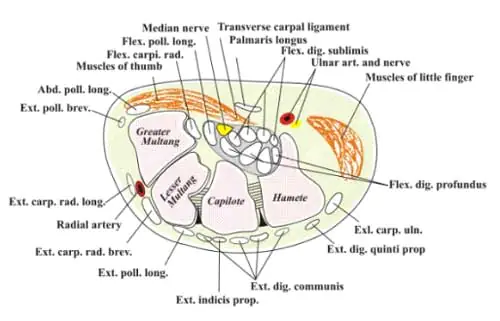
Carpal tunnel explained simply comes down to pressure. Swelling and entrapped inflammation in the soft tissue in and around the carpal tunnel squeeze the median nerve and restrict blood flow and lymphatic fluid transport. The nerve becomes irritated, short of oxygen and compressed. That is when the tingling, numbness, night waking and dropped objects begin.
Pressure inside the tunnel also rises when the wrist bends. In people with carpal tunnel syndrome, one classic study measured it at 32 mmHg with the wrist straight and about 110 mmHg with the wrist bent fully back (Gelberman and colleagues, 1981). That is why symptoms often wake people at night, when the wrists curl under a pillow, and why sleep posture matters.
Doctors Explain Carpal Tunnel on Video
Here two health professionals who treat patients with their hands every day explain carpal tunnel from the inside. This is carpal tunnel explained by people who have lived with it: what it felt like, what they tried and why they chose a natural treatment.
Dr. Michael Pollard, Chiropractor, East Brunswick, New Jersey
Dr. Pollard’s carpal tunnel began with occasional numbness and grew into nights of waking with numb hands. He tried forearm and wrist work, adjustments, nutrition and night splints, which he found bulky and hard to sleep in.
In this video he demonstrates how the Carpal Solution is applied and, for anyone who wants carpal tunnel explained from a chiropractor’s point of view, describes the anatomy in plain terms: “The eight carpal bones of the wrist form a tunnel that the median nerve comes through, and with a lot of use, repetitive motion type injuries, you get a lot of inflammation in there.”
He compares the treatment to a long, gentle stretch: “If you could imagine holding a stretch in your hamstring for 8 hours, you’d probably have a pretty loose hamstring come the next morning.”
Dr. Marielaina Perrone, Dentist, Henderson, Nevada
Dr. Perrone’s pain started in her fingers and worked its way up to her elbow after long days of root canals and extractions. A rigid brace from her fingertips to her elbow did not help, and she began to worry about selling her dental practice.
As she puts it: “I am not a surgery person anyway; as a trained medical professional, I know what can go wrong.” Within about a week and a half of using the Carpal Solution she was feeling a lot better, and now she uses it for a night or two whenever symptoms start to return.
Stages of Carpal Tunnel, Explained
Carpal tunnel usually develops gradually. Doctors often describe the stages of carpal tunnel in three broad steps:
- Mild: tingling or numbness that comes and goes, mostly at night or first thing in the morning, and eases when you shake out your hands.
- Moderate: symptoms during the day too, especially while driving, typing, holding a phone or reading. Grip starts to weaken and people begin dropping things.
- Severe: numbness that stays, a weak pinch between thumb and fingers, and thinning of the muscles at the base of the thumb. This stage needs a doctor’s evaluation promptly.
Not everyone moves through the stages of carpal tunnel in order or at the same speed. People with diabetes, thyroid disease or other sources of systemic inflammation may progress faster, while some people stay in the mild stage for years. The earlier you treat it, the easier it is to turn around. That is a theme in all three patient videos on this page: each person waited longer than they wished they had.
Treatment at Each Stage of Carpal Tunnel
- Mild: straighten your wrists at night with pillows, take short breaks from repetitive tasks, and use the Carpal Solution for a few nights or a full six weeks to calm the swelling before it builds.
- Moderate: the full six-week Carpal Solution protocol, with gentle daytime stretches as a bonus (up to 6 sets of 10, 15-second holds, 30 seconds of rest). Skip grip balls and putty while you heal.
- Severe: see a doctor promptly for an evaluation. Many people at this stage still choose conservative care first while they wait for an appointment, and people with excess systemic inflammation may need 8 to 12 weeks.
Whatever your stage, the goal is the same: relieve the pressure on the median nerve so the body can heal. Once symptoms are gone, preventive nights from once a week to once every six months help keep them away.
When Hand Numbness Is Not Carpal Tunnel
Part of having carpal tunnel explained well is knowing what it is not. A few other conditions can feel similar:
Carpal Tunnel vs Pinched Nerve in the Neck
A pinched nerve in the neck can cause numbness and tingling in the hand, so the two are easy to confuse. Clues that point to the neck include neck pain or stiffness, pain that shoots from the neck or shoulder down the arm, and symptoms that change when you turn or tilt your head. Carpal tunnel symptoms are usually worse at night and with wrist bending, and they ease when you shake out your hands. Some people have both, which is why a doctor’s exam matters.
Carpal Tunnel vs Cubital Tunnel
Cubital tunnel syndrome is pressure on the ulnar nerve at the elbow, the “funny bone” nerve. It usually causes numbness in the little finger and the little-finger side of the ring finger, the fingers carpal tunnel spares, and it is often worse when the elbow stays bent, such as while holding a phone or sleeping with the arms folded. Carpal tunnel affects the thumb, index and middle fingers instead.
Other Look-Alikes
- Peripheral neuropathy, often linked to diabetes, tends to affect both hands and both feet.
- Arthritis in the thumb or wrist causes joint pain and stiffness more than numbness.
Carpal tunnel numbness typically involves the thumb, index finger, middle finger and the thumb side of the ring finger. If your symptoms do not fit that pattern, or you have numbness in other places, ask your doctor to check for these other causes.
Who Gets Carpal Tunnel?
Women are about three times more likely than men to develop carpal tunnel syndrome, according to the National Institute of Neurological Disorders and Stroke. Pregnancy, diabetes, thyroid disease, rheumatoid arthritis and work or hobbies that keep the hands gripping or the wrists bent all raise the risk. The three people in these carpal tunnel videos show the range: a musician and athlete, a teacher and a personal trainer. See our full list of who is at risk for carpal tunnel, with real stories from dozens of professions.
Carpal Tunnel Videos: Three Patients Tell Their Stories
These carpal tunnel videos show three patients, all very different, who used the same treatment. Each one is a short, unscripted account in their own words.
Dr. Joanne, Sports Psychologist, Musician and Triathlete
Carpal tunnel caused Dr. Joanne severe hand and wrist pain that affected her music and her triathlon training. She tried injections and physical therapy without lasting relief before finding the Carpal Solution, which let her keep working as a musician and athlete.
Lori Hicks, Elementary School Teacher
Lori’s carpal tunnel began with tingling fingertips and broken sleep, and she was eventually diagnosed with carpal tunnel in both hands. She was scheduled for surgery, but a cold delayed it, and in the meantime she tried the Carpal Solution on her left hand. It let her sleep through the night. Read more about carpal tunnel in both hands.
Kelly Rabbitt, Personal Trainer and Nutritionist
Kelly is a certified personal trainer and nutritionist in South Florida. Carpal tunnel pain disrupted her active lifestyle, and she looked for a natural solution before finding the Carpal Solution. She describes her six-week protocol and complete relief within six to seven weeks.
What Doctors Say About Treatment
Our medical team’s approach is conservative first, with surgery as the last resort. The Carpal Solution is a natural, non-invasive treatment developed by doctors. Its targeted passive stretching restores flexibility to the injured soft tissue, relieves pressure on the median nerve, relieves restrictions on blood circulation and lets lymph fluid flow freely to clear out the swelling. It is your body that does the healing. Read the Carpal Solution mechanism of action.
- Over 220 hours of targeted stretching in the six-week protocol, while you sleep.
- Most people are better from their worst symptoms in two to three weeks; over 90% resolve in six weeks. About 10% with excess systemic inflammation need 8 to 12 weeks (see the Persistent Symptoms Protocol).
- 97% patient satisfaction over 21 years and 4.9 out of 5 stars on independent review sites like Google Reviews, with over 100,000 people helped over two decades.
Neurologists, including Dr. James S. Zu, MD, PhD, of Edison, New Jersey, call the Carpal Solution a better first line of defense.
A splint holds the wrist in a neutral position, which can reduce pain from movement, but it does not promote healing from carpal tunnel syndrome. It causes muscle atrophy and stiffness, and its tight compression restricts blood circulation and lymphatic fluid exchange. Read our doctors’ position on wrist splints.
Carpal tunnel surgery has a patient satisfaction rate lower than 69%, because about 31% of patients report lingering or recurring symptoms, and no patient is satisfied with lingering symptoms. Even after a successful operation, 57% had at least some symptoms return within 5.5 years (see the research). Learn more in 6 carpal tunnel surgery myths.
Our doctors’ two decades of experience is that people with three or more of the carpal tunnel symptoms listed on this site can be about 95% confident they have carpal tunnel syndrome. That is clinical experience, not a published statistic, so still see a doctor for a formal diagnosis. The average wait for a new-patient appointment is 31 days (AMN Healthcare, 2025), and you can start a safe, natural treatment while you wait for carpal tunnel treatment, just as Lori did.
Carpal Tunnel Explained in One Minute
- What it is: pressure on the median nerve inside the narrow carpal tunnel at the base of the hand.
- What causes the pressure: swelling and entrapped inflammation in the soft tissue around the nerve and the nine forearm tendons that share the tunnel.
- What you feel: numbness and tingling in the thumb and first fingers, night waking, a weaker grip and dropped objects.
- How it progresses: through the stages of carpal tunnel, from mild to moderate to severe, usually over months or years.
- What helps most: treating early, keeping the wrists straight, and relieving the swelling with targeted passive stretching at night.
- When to see a doctor: constant numbness, weakness or thumb muscle thinning, or symptoms that do not fit the carpal tunnel pattern.
Having carpal tunnel explained clearly is the first step. The carpal tunnel videos on this page are the second: they show what recovery looks like for real people with busy lives.
Carpal Tunnel Explained: FAQs
What are the stages of carpal tunnel?
Mild, with symptoms that come and go, mostly at night; moderate, with daytime symptoms and a weaker grip; and severe, with constant numbness and thinning of the thumb muscles. Treating carpal tunnel at the mild or moderate stage is usually easier and faster.
How can I tell carpal tunnel vs cubital tunnel?
Look at which fingers go numb. Carpal tunnel affects the thumb, index, middle and part of the ring finger. Cubital tunnel affects the little finger and the little-finger side of the ring finger, and it is often worse with the elbow bent. A doctor can confirm which nerve is involved.
What is carpal tunnel syndrome, in simple terms?
It is pressure on the median nerve at the wrist. Swelling in the narrow carpal tunnel squeezes the nerve, causing numbness, tingling, pain and weakness in the thumb, index, middle and part of the ring finger.
Are these carpal tunnel videos from real patients?
Yes. Each carpal tunnel video on this page is an unscripted account from a real Carpal Solution user, recorded in their own words. More videos from doctors, nurses and patients appear in the reviews above and in 7 real carpal tunnel success stories.
Is there a carpal tunnel syndrome video that shows how to use the Carpal Solution?
Yes. See how to apply the Carpal Solution, where Anthony, a network engineer, demonstrates it step by step.
Can carpal tunnel go away without surgery?
For most people, yes. Over 90% resolve their symptoms in the six-week Carpal Solution protocol. Carpal tunnel is chronic and can come back, so many people use preventive nights from once a week to once every six months.
Why does carpal tunnel get worse at night?
Many people sleep with their wrists bent, which raises the pressure inside the carpal tunnel for hours. Keeping the wrists straight with pillows helps, and the Carpal Solution treats the swelling while you sleep.
Order The Best Carpal Tunnel Treatment Today and Say Goodbye To Carpal Tunnel Pain
When Healing Needs a Doctor’s Help and Professional Medical Evaluation
- Constant numbness that does not improve or loss of feeling in the fingertips that does not improve in 4 to 8 weeks.
- Extreme loss of the muscle at the base of the thumb, with loss of grip strength that does not improve over 6 to 8 weeks.
- Worsening symptoms over 6 to 8 weeks while using the best conservative treatments
- Symptoms that begin suddenly after hand or wrist trauma, a fracture or severe sprain from a fall or auto accident.
- Odd Symptoms that are not consistent with the Carpal Tunnel Symptoms listed on this website, that might be indicative of other nerve issues. A nerve conductivity study can clear up the confusion with minimal costs and not too much pain and no risk.
These signs may mean more advanced nerve involvement or a different condition and deserve professional medical evaluation and in person consultation. Home treatment can be used alongside professional in-person medical care while you wait for the healthcare delivery system to fit you into their schedule. There is no reason to wait doing nothing. You can start proven natural conservative treatment with good patient reviews while you wait for your appointments. If your symptoms start improving over 6 to 8 weeks, then you know you are on the right track and surgery is not necessary.


Order Your Six Week Carpal Tunnel Treatment Now
The ONLY treatment for carpal tunnel that comes with a no questions asked 30-Day Patient Satisfaction Guarantee and in-house dedicated pain relief team.


