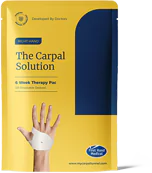
 Created by renowned Harvard health care professionals.


Piano Wrist Pain: A Music Director’s Carpal Tunnel Patient Experience

Piano wrist pain ended Diane’s ability to play for a while. A music director, accompanist and touring bass player in Los Angeles for 30 years, with three albums of her own compositions, she spent 20 years with carpal tunnel symptoms. She could not button her clothes, and the notes “came out mushed.” A top hand specialist wanted to operate. Instead she found the Carpal Solution, and today she plays 12-hour days. This is our most-watched Patient Experience. Watch her video and read the full transcript below.
Table of Contents
Diane’s Experience at a Glance
- Profession: Music director, accompanist, concert pianist and touring electric bass player in Los Angeles for 30 years; blues, classical, opera, chamber music and music theater
- Symptoms: 20 years of hand pain, dropping things, trouble buttoning clothes, too much pain to use her car’s turn signal, and poor articulation at the keyboard
- Tried first: Every brace on the market, every cream, dozens of doctors, physical therapy, a full-arm “mummy” brace, acupuncture and chiropractic care
- Offered: An ulnar nerve transposition for cubital tunnel plus carpal tunnel releases on both wrists, all at the same time
- Result with the Carpal Solution: A definite improvement in six weeks, steady gains after that, and a return to 12-hour playing days
- Today: A night or two of maintenance after a heavy day of playing
Piano Wrist Pain: Why Pianists and Bass Players Are at Risk

Every note a pianist plays is driven by the forearm muscles that bend the fingers and thumb. Their nine tendons pass through the carpal tunnel beside the median nerve. Hours of fast, precise finger work keep those muscles and tendons tight and inflamed, and the swelling squeezes the nerve and restricts blood flow. The result is piano wrist pain, numbness, weakness and the loss of fine control that Diane describes: “I didn’t have the articulation, the facility or the control.”
Diane also played electric bass on tour, drove and worked at the computer, and each one made her symptoms worse. Read how other pianists overcome carpal tunnel, a bass and guitar player’s experience, a violinist’s experience, and our 10 tips for musicians.
Every Brace on the Market
Diane made a list of what she tried because she could not remember it all: every brace, every cream, dozens of doctors, physical therapy, acupuncture and chiropractic care. One therapist built her a mummy-type brace from her hand to her shoulder to sleep in every night. “I found that with all the braces my muscles just atrophied, and things got worse,” she says. One hand specialist even re-injured her with inappropriate exercises.
Her experience matches our doctors’ position. A splint holds the wrist in a neutral position, which can reduce pain from movement, but it does not promote healing from carpal tunnel syndrome. Splints compress the wrist and restrict circulation and lymphatic flow, which slows the clearing of swelling, and immobilization causes muscle atrophy over time.
The Surgery She Turned Down
At USC, a leading hand specialist looked at Diane’s nerve conduction studies and recommended surgery within five minutes: reroute the ulnar nerve at her elbow and release both carpal tunnels at the same time. Diane said no, because she had watched her father’s results. He had carpal tunnel surgery on both wrists, and when she asked about improvement at six weeks, six months, six years and 16 years, his answer was always no. He still had pain and had lost function in his hands.
Carpal tunnel surgery has a patient satisfaction rate lower than 69%: about 31% of patients report lingering or recurring symptoms, and no patient is satisfied with lingering symptoms. See recurrence after carpal tunnel surgery. For a musician, the hands are the career, so a conservative treatment first is the safer choice.
Carpal Tunnel and Cubital Tunnel: What Diane Was Told
Diane’s nerve conduction studies showed trouble with more than one nerve. Carpal tunnel syndrome is pressure on the median nerve at the wrist. Cubital tunnel syndrome is pressure on the ulnar nerve where it runs behind the elbow, and it typically causes numbness and tingling in the ring and little fingers. A person can have carpal tunnel and cubital tunnel at the same time, and many musicians do, because playing keeps the elbows bent and the fingers working for hours.
The hand specialist Diane saw recommended an ulnar nerve transposition, a surgery that moves the ulnar nerve from behind the elbow to a new position, plus carpal tunnel releases on both wrists, all at once. In Diane’s words, “we’re just going to reroute your ulnar nerve” and “we’ll just get those carpal tunnels out of the way at the same time.” Facing carpal tunnel and cubital tunnel surgery at the same time, with her father’s poor results in mind, she said no.
Diane chose a conservative treatment first. After six weeks of nightly treatment with the Carpal Solution she noticed a definite improvement, and she went on to play 12-hour days again. Her experience with carpal tunnel and ulnar nerve entrapment is her own; if you have symptoms in your ring and little fingers or at the elbow, talk with your doctor about a full evaluation.
Back to 12-Hour Days at the Piano
Diane found MyCarpalTunnel.com by chance. The idea of a “tapey thing” worn during sleep looked strange to her, until she saw it was developed by a physician. She wore it every night for six weeks and noticed a definite improvement. After 20 years of symptoms, her case took a little longer, so she kept using it at least three nights a week for the next six months.
As her hands improved, she played more. She completed a chamber music workshop she could not have done before, and she now takes on more challenging material than ever. After a heavy 12-hour day of playing, she still wears it at night so she has no pain in the morning. “It’s been literally the difference between me working and me not working,” she says.
Easing Piano Wrist Pain While You Heal
The Carpal Solution does its work while you sleep. These daytime habits help pianists, organists, accompanists and keyboard players protect their hands while the tissue recovers:
- Break up long sessions. Rest your hands for a few minutes every 30 to 45 minutes of practice or rehearsal, and shake out tension between pieces.
- Watch your wrist height. Adjust the bench so your forearms are level with the keys and your wrists are neither dropped nor raised.
- Warm up gently. Start with slow, easy passages before fast or heavy repertoire.
- Add gentle daytime stretches. Our doctors suggest up to 6 sets of 10 gentle wrist and finger stretches, holding each for 15 seconds with 30 seconds of rest. They are a bonus, not a replacement for the nightly stretching.
- Skip grip exercises while healing. Squeeze balls, putty and grip trainers add strain to inflamed tissue. Save strength work for after remission.
- Sleep with neutral wrists. Use pillows to keep your wrists from curling under you at night instead of a rigid splint.
- Plan for heavy days. Like Diane, wear the Carpal Solution the night after a long rehearsal, recording session or performance.
If piano wrist pain keeps returning despite these habits, it is a sign the inflammation needs treating at its source, not just managing during the day.
What Our Doctors Recommend

The Carpal Solution is worn at night during sleep. Its six-week protocol gives over 220 hours of targeted passive stretching that restores flexibility to the injured soft tissue, relieves pressure on the median nerve and lets blood and lymph fluid flow freely to clear out the swelling. Unlike a brace, it leaves the hand free and does not immobilize the wrist.
Most people are better from their worst symptoms in two to three weeks, and over 90% reach remission in six weeks. About 10% with excess systemic inflammation or long-standing symptoms, like Diane after 20 years, need 8 to 12 weeks.
To stay in remission, many people use it anywhere from once a week to once every six months. Musicians often wear it after a heavy rehearsal or performance day, as Diane does. The Carpal Solution is billed as HCPCS code L3924 (Hand Finger Orthosis), and many insurance plans reimburse 70 to 80% of the cost.
The Carpal Solution has 97% patient satisfaction over 21 years and 4.9 out of 5 stars on independent review sites like Google Reviews.
Read more Patient Experiences on our Patient Experience with Carpal Tunnel page. For background on the condition, see the NINDS carpal tunnel syndrome fact sheet.
When Healing Needs a Doctor’s Help and Professional Medical Evaluation
- Constant numbness that does not improve or loss of feeling in the fingertips that does not improve in 4 to 8 weeks.
- Extreme loss of the muscle at the base of the thumb, with loss of grip strength that does not improve over 6 to 8 weeks.
- Worsening symptoms over 6 to 8 weeks while using the best conservative treatments
- Symptoms that begin suddenly after hand or wrist trauma, a fracture or severe sprain from a fall or auto accident.
- Odd Symptoms that are not consistent with the Carpal Tunnel Symptoms listed on this website, that might be indicative of other nerve issues. A nerve conductivity study can clear up the confusion with minimal costs and not too much pain and no risk.
These signs may mean more advanced nerve involvement or a different condition and deserve professional medical evaluation and in person consultation. Home treatment can be used alongside professional in-person medical care while you wait for the healthcare delivery system to fit you into their schedule. There is no reason to wait doing nothing. You can start proven natural conservative treatment with good patient reviews while you wait for your appointments.
If your symptoms start improving over 6 to 8 weeks, then you know you are on the right track and surgery is not necessary.
Piano Wrist Pain FAQ
Is piano wrist pain a sign of carpal tunnel?
It can be. Piano wrist pain with numbness or tingling in the thumb, index and middle fingers, night symptoms, clumsiness or dropping things points to carpal tunnel syndrome. See a doctor for a diagnosis, and start a conservative treatment while you wait.
Can a pianist keep playing while treating carpal tunnel?
Yes. The Carpal Solution is worn during sleep, so there is no downtime. Diane kept working and playing more as her hands improved.
Do music director and accompanist jobs cause carpal tunnel?
Music director carpal tunnel and accompanist carpal tunnel come from long rehearsal and performance days of repetitive, precise finger work, often combined with computer work and driving between jobs, as in Diane’s case.
Can a bass player get carpal tunnel?
Yes. Carpal tunnel in bass players comes from fretting-hand pressure and plucking for hours at a time. Diane toured on electric bass, and it made her piano wrist pain and hand symptoms worse.
Should I have carpal tunnel and cubital tunnel surgery at the same time?
That decision belongs to you and your doctor, and a second opinion is wise. Diane was offered an ulnar nerve transposition plus both carpal tunnel releases at once. She chose conservative treatment first and returned to full-time playing.
Full Video Transcript: Diane, Music Director and Pianist
In her video, Diane talks about piano wrist pain, the braces and treatments she tried, the surgery she turned down and her return to 12-hour playing days. This transcript has been lightly edited for readability. Diane’s words are her own.
My name is Diane, and I’m a very, very happy user of my Carpal Solution, the rubber thingies. I’m a music director and accompanist in Los Angeles. I’ve worked here for 30 years. I do everything from blues to classical to opera, chamber music, music theater, as well as my own compositions. I have three albums out of my own, and I wouldn’t be able to continue working as a musician without the Carpal Solution. It’s completely changed my life.
I tried everything out there. I made myself a list because I can’t remember all of what I tried: every brace on the market, every cream, dozens of doctors, physical therapy a few times, once with a hand specialist who actually re-injured me giving me inappropriate exercises. I had a physical therapist make a mummy-type brace for me from the hand all the way up the shoulder that I had to sleep with every night so that I wouldn’t bend my wrist or my elbow.
I found that with all the braces my muscles just atrophied, and things got worse, and the pain got worse, and the function got worse. I did tons of acupuncture. I even ended up with chiropractic. I went every route.
I ended up at USC with a hand specialist, one of the top hand specialists in the country, who said within five minutes of looking at my nerve conduction studies, you have to have hand surgery, and by the way, I do this all the time, concert pianists, here, I have their phone numbers, call them. We’re just going to reroute your ulnar nerve. You’re going to take the nerve out and put it on the outside of the elbow where it’s not at all protected, and by the way, we’ll just get those carpal tunnels out of the way, like that, at the same time.
So I knew better. My father had had carpal tunnel surgery on both wrists, and I would ask him repeatedly at different intervals after his surgery, well, are you feeling any improvement? And he said no. That was after six weeks, six months, six years, 16 years. He might as well not have done it, and he had reduced function in his hands as well, and he still had pain.
So I was kind of out of options, and I kept from time to time looking around on the internet. Things had gotten so bad that I was dropping things. I couldn’t button my clothes. I was very clumsy. I was telling you guys earlier, like, I couldn’t play something like this. [Music] I didn’t have the articulation, the facility or the control. My fingers were just, I felt clumsy all the time, so it would come out mushed. I couldn’t articulate.
And of course this affected my work, needless to say. I couldn’t work for a while. I couldn’t even turn on the turn signal on my car; it was just too painful. Driving made it worse, working on the computer made it worse, playing piano or electric bass, which I also used to tour extensively doing, made it worse. So I was kind of between a rock and a hard place.
And about that time, surfing the internet, I came across, totally by fluky chance, MyCarpalTunnel.com, because I was hoping, well, maybe there are more treatments that have come out. And it looked pretty strange to me. I mean, there’s this tapey thing you put on, you just wear it in your sleep, and the claims were like “cured,” and I’m going, yeah. But then I saw that it was developed by a physician, so I started taking a closer look at it, and I looked at the price, and it was pretty impressive how cheap it was relative to the thousands of dollars I’d spent to get worse.
And so I tried it out, and for six weeks I wore it every single night like they recommend, and I noticed a definite improvement. My case was a little intractable. I mean, I’d spent 20 years with this problem, so I think I probably took a little longer than the average bear, but my improvement was steady. So after six weeks I was able to taper off and not use it every night, but I used it for the next six months at least three nights a week.
And all this time, remember, I’m resuming function and I’m working harder, so I’m playing more and more and more. When you sit 12 hours a day, you don’t realize, wow, I couldn’t do that last year, you know what I mean? So at this point, I’ve been using them three years now, plus the insurance pays for it, so it’s virtually free.
It’s been literally the difference between me working and me not working, and for a musician that’s more than just money. That’s your life, that’s who you are, and that’s what you’ve invested everything in. So now I’m at the point, I did a chamber music workshop last summer I couldn’t have done without this, because I just wouldn’t have had the facility or the stamina. With the pain, I couldn’t sleep when I had that pain.
And so if I have a heavy day of playing, like a 12-hour day, I will still use them at night just to make sure I don’t have pain in the morning. But the fact that it’s not only helped the symptoms but it’s allowed me to go beyond where I was, because now I can approach more challenging material, it’s been a miracle to me. It really has. So I’m very, very grateful. Thank you.