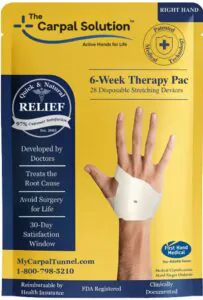
 Created by renowned Harvard health care professionals.


Ice or Heat for Carpal Tunnel??
Should you use ice or heat for carpal tunnel? Learn why cold is the preferred choice, what the research shows and how to use it safely.


ICE
Written by Jeff Conley, President of First Hand Medical · Medically reviewed by Michelle Robin, DC, chiropractor and wellness expert, founder of Your Wellness Connection in Kansas City · Last reviewed: November 2026
 Ice is the preferred method for alleviating the symptoms of Carpal Tunnel. A study entitled, “Effect of Heat, Cold, and Pressure on the Transverse Carpal Ligament and Median Nerve: A Pilot Study” in 2015, concluded that “Application of cold to the hand may reduce compression of the carpal ligament and nerve.”
It was a small pilot study in 10 healthy volunteers without carpal tunnel syndrome, so it points in a direction rather than proving a treatment. The same study found that heat made the nerve, ligaments and tendons more elastic (Laymon et al., Medical Science Monitor, 2015).
Here’s a deeper dive into why that is the case.
Table of Contents
PROS OF USING ICE TO TREAT CARPAL TUNNEL
- Ice therapy is typically used to reduce swelling. As Carpal Tunnel Syndrome is caused by the inflammation of the Carpal Tunnel, putting pressure on the Median Nerve (the pain you feel from CTS), icing the area may temporarily reduce this inflammation, thus relieving pain.
- If the cause of your CTS is tissue inflammation, ice will reduce this inflammation.
- Ice therapy reduces blood flow to a particular area, which can significantly reduce inflammation and swelling especially around a joint or a tendon.
- It can temporarily reduce nerve activity, which can also relieve pain.
- Ice therapy can temporarily numb pain by causing blood vessels to constrict.
CONS OF USING ICE TO TREAT CARPAL TUNNEL
You should not use ice therapy if you have another condition, such as cold intolerance or Raynaud’s disease where use of ice is not recommended.
HEAT
 Heat therapy, generally speaking, is used to relax muscles. Heat helps loosen tense muscles, which contributes to pain relief.
Heat also increases blood flow which can help promote healing. This can, in some cases, be helpful to relieve CTS pain. Here’s why:
PROS OF USING HEAT TO TREAT CARPAL TUNNEL
- Heat can bring in fresh oxygen and help improve blood flow to your median nerve.
- Heat can also soothe sore muscles around your wrist and hand.
- Increases nerve circulation.
- Increases blood flow transiently to make the carpal tunnel symptoms lessen.
- The increased blood flow from heat therapy is known to promote the body’s natural healing process.
CONS OF USING HEAT TO TREAT CARPAL TUNNEL
Too much heat can increase swelling within the carpal canal and lead to increased pressure on the median nerve worsening your symptoms. For creams and gels, see carpal tunnel relief cream: what actually helps.
Too much heat and the nerve may engorge or get swollen and the pressure in the canal rises.
With either temperature treatment for Carpal Tunnel, it is important to avoid extreme temperatures. It’s normal for your skin to look a little pinker after using cold or heat. Before resuming temperature treatment, let your skin return to its normal color and temperature.
If you see any of the following signs after treatment, call your doctor. The following are signs that the temperature was too extreme:
- Purple, dark red, spotty red or white color on skin
- Swelling
- Blisters
Ice or Heat for Carpal Tunnel: Which to Use When
For most people with carpal tunnel syndrome, cold does more good than heat, because the main problem is swelling and pressure inside the tunnel. Heat still has a place, used briefly and at the right time.
- After a long day of hand work or a flare-up: use cold. It calms swelling and eases pain.
- Morning stiffness before gentle stretches: a few minutes of warmth can loosen tight tissue before easy nerve and tendon glides.
- At bedtime: use cold, not heat. Heat at night can add swelling while you sleep, and you should never fall asleep on a heating pad because of the risk of burns.
- To get circulation moving: alternating warm and cold baths, as in the protocol below, combines the benefits of both.
5 quick rules for ice or heat
- Never put ice directly on the skin.
- Keep a cold water plunge at about 43°F (6°C) for 20 minutes, never colder than 41°F, or 44 to 48°F if you have Raynaud’s, diabetic nerve issues or poor circulation. Keep heat warm, never hot.
- Stop if tingling or pain sharply increases.
- Let your skin return to its normal color and temperature between sessions.
- If you have diabetes, poor circulation, Raynaud’s or reduced feeling in your hands, ask your doctor before using cold or heat, because you may not feel damage happening.
Ice Packs, Heating Pads and Where to Apply Them
Ice or heat for carpal tunnel comes down to three practical questions: which one, where to put it, and how to use it safely.
Is Heat or Ice Better for Carpal Tunnel?
Is heat or ice better for carpal tunnel? For most people, cold, because carpal tunnel is driven by swelling and pressure inside the tunnel, and cold calms swelling. Is heat good for carpal tunnel? Briefly, yes: a few minutes of warmth before gentle stretches can loosen stiff tissue, but heat does not reduce the swelling itself.
Ice Pack for Carpal Tunnel: Use It Safely
An ice pack for carpal tunnel works best wrapped in a thin towel for 10 to 15 minutes, never directly on the skin. Ice packs are where frostbite risk comes from. Our doctors prefer a cold water plunge for the hands and forearms at about 43°F for 20 minutes, because water above freezing cools evenly and cannot cause frostbite.
Where to Ice for Carpal Tunnel
Where to ice for carpal tunnel: the palm side of the wrist and the base of the palm, over the carpal tunnel itself, plus the lower forearm, where the muscles whose tendons run through the tunnel sit. A cold plunge covers all of it at once.
Heating Pad for Carpal Tunnel
A heating pad for carpal tunnel can ease morning stiffness. Keep it warm, not hot, use it for 10 to 15 minutes, and never fall asleep on it. Heat at bedtime can add swelling overnight and risks burns, especially if your fingers are numb.
Where to Apply Heat for Carpal Tunnel
Where to apply heat for carpal tunnel: the forearm and the back of the hand, where muscles and tendons feel tight, rather than directly over a swollen wrist. Follow it with gentle nerve and tendon glides.
Cold and heat ease symptoms; they do not remove the pressure on the median nerve. Before considering surgery, remember it has a patient satisfaction rate lower than 69%, because about 31% of patients report lingering or recurring symptoms. The Carpal Solution treats the pressure at night, with 97% patient satisfaction over two decades.
So, how should I use ICE OR HEAT to treat my Carpal Tunnel pain?
So, it is concluded that both have benefits for relieving pain, restoring blood circulation and dispersing inflammation and lymphatic fluid that builds up around injured tissue.
However, as you saw above, Ice has more of the pain-relieving benefits associated with minimizing the pain and enabling your body’s natural healing process directly associated with Carpal Tunnel.
While most people do not need to do more than the Carpal Solution Treatment to jump start their body’s natural healing process, there are people who want to accelerate their body’s natural healing and get better faster. In such cases we recommend an alternating Ice and Heat therapy and straight icing therapy when you begin your treatment with The Carpal Solution Nighttime Stretching Treatment. Here’s what we recommend:

After work follow this icing protocol: 2 minutes in a warm water bath (not hot just warm, then 2 minutes in ice water bath), then 2 minutes in the warm water bath again. Continue this cycle of warm water for 2 minutes then ice water for 2 minutes for a total icing regimen of 25 to 30 minutes.
The hand should be completely submerged in the ice bath up to 4 inches up the forearm.
This icing protocol can be performed once or twice per day or even up to three times in one day. If you would like to do three times it would be best to do early morning, afternoon and late evening (before bed time).
It is helpful to have two different pitchers of water. One pitcher filled with warm water and the second pitcher filled with ice water.
Before bed do a straight cold water plunge for 20 minutes at about 43°F (no alternating with warm water). The muscles should feel numb when you finish these 20 minutes of straight icing. If you only have time for one icing session, it is best to do the 20 minute straight icing once a day.
It helps to watch TV, listen to the radio or a podcast you enjoy to distract yourself during icing therapy. Icing helps calm down the injured tissue so your body can disperse the inflammation. This icing is recommended for 4 weeks using The Carpal Solution or until your symptoms subside.
Target 20 Minutes for Cold Therapy at About 43 Degrees F
When doing Cold Therapy alone it is important to keep the hand submerged in the cold water for 20 minutes at about 43 degrees F (6 degrees C). There is little benefit of icing if you do it in warmer water or for less time. Never go colder than 41 degrees F. If you have Raynaud’s, diabetic nerve issues or poor circulation, be more careful and use 44 to 48 degrees F.
Icing Therapy – Technique Matters
There are better ways to do cold therapy for your hand and wrist. Here are some common examples of what not to do.
Direct Ice on the skin is never a good idea. It does not apply the cold therapy uniformly and it can lead to skin damage and ice burns.

Simply putting a cold pack on your hand or wrist does not provide enough cooling action on the full surface area and it can also lead to ice burns and skin damage.

Full submersion of the hand wrist and part of the forearm in an ice bath for 20 to 25 minutes is best. It achieves the maximum benefit of Cold Therapy. Most people err on the side of making the ice bath too cold. It is best to achieve a consistent target temperature for cold therapy of around 45 to 51 degrees Fahrenheit for the full 20 – 25 minutes.
Alternating Hot and Cold Therapy
It can also be helpful to apply alternating Ice and heat therapy. In this case you place your hand up to the forearm in a pitcher of warm water and hold it there for two minutes. Then you place your hand in chilled or ice Water (about 43 degrees F) (6 degrees C) and hold it for 2 minutes. You keep alternating between warm and cold, 2 minutes in each bath, for the 25 to 30 minutes described in the protocol above. This alternating hot and cold therapy can help to jump start circulation to hand which disperses inflammation and infuses the hand with full nutrient rich blood circulation.
It is important to do deep breathing during any icing or heat therapy to maximize the benefit with amply oxygenation of the blood. Some people do shallow breathing when they are coping with discomfort or tenseness. Make sure you practice deep diaphragm breathing as often as you can, but especially when doing cold or hot therapy or alternating hot or cold therapy. Ice and heat ease symptoms; see which natural remedies for carpal tunnel treat the cause.
WHAT IS THE CARPAL SOLUTION?
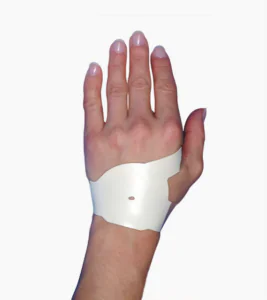 The Carpal Solution is a unique therapy developed by a physician specializing in CTS treatment. The Carpal Solution offers relief from your worst CTS pain, hand tingling and numbness, usually around three weeks, with treatment in the privacy of your own home, and about 90% of people get complete remission in six weeks. It is different from other over-the-counter CTS treatments.
Worn during sleep, the Carpal Solution gently reshapes soft tissue in and around the Carpal Tunnel and relieves hand pain, finger numbness and sleep interruption.
The Carpal Solution gently tugs simultaneously at three key points on the palm surrounding the carpal tunnel during sleep. Consistent gentle stretching action applied for 6 to 8 hours while the hand is relaxed, decompresses and reshapes the soft tissue around the carpal tunnel relieving pressure on the Median Nerve.
Why Ice or Heat Only Eases Carpal Tunnel Symptoms
Ice or heat can calm a flare, but neither one changes the tight, shortened tissue that crowds the median nerve. That is why our doctors treat cold therapy as an accelerator, not the treatment itself.
The anchor treatment is the Carpal Solution, a medically prescribed passive stretching device worn at night. Over the six-week protocol, it delivers more than 220 hours of targeted stretching while you sleep. Most people feel their worst symptoms ease in two to three weeks, and about 90% get complete remission in six weeks. About 10% of people, usually those with excess inflammation throughout the body, are 40 to 70% better at six weeks and reach full remission in 10 to 12 weeks.
Over two decades, more than 100,000 people have used the Carpal Solution, with 97% patient satisfaction and 4.9 out of 5 stars on independent review sites like Google Reviews. Adding the icing protocol above during the first four weeks can help some people get better faster.
When Healing Needs a Doctor’s Help and Professional Medical Evaluation
- Constant numbness that does not improve or loss of feeling in the fingertips that does not improve in 4 to 8 weeks.
- Extreme loss of the muscle at the base of the thumb, with loss of grip strength that does not improve over 6 to 8 weeks.
- Worsening symptoms over 6 to 8 weeks while using the best conservative treatments
- Symptoms that begin suddenly after hand or wrist trauma, a fracture or severe sprain from a fall or auto accident.
- Odd Symptoms that are not consistent with the Carpal Tunnel Symptoms listed on this website, that might be indicative of other nerve issues. A nerve conductivity study can clear up the confusion with minimal costs and not too much pain and no risk.
These signs may mean more advanced nerve involvement or a different condition and deserve professional medical evaluation and in person consultation. Home treatment can be used alongside professional in-person medical care while you wait for the healthcare delivery system to fit you into their schedule. There is no reason to wait doing nothing. You can start proven natural conservative treatment with good patient reviews while you wait for your appointments. If your symptoms start improving over 6 to 8 weeks, then you know you are on the right track and surgery is not necessary.
Ice or Heat for Carpal Tunnel: Frequently Asked Questions
Is ice or heat better for carpal tunnel?
For most people, ice is better, because carpal tunnel symptoms come from swelling and pressure on the median nerve. Brief, gentle heat can help with stiffness before stretching.
How long should I ice my wrist for carpal tunnel?
Our doctors recommend submerging the hand and lower forearm in cold water at about 43°F (6°C) for about 20 minutes, or alternating warm and cold baths for 25 to 30 minutes.
Does ice help carpal tunnel?
Ice can calm a flare by cooling irritated tissue and dulling pain for a short time. Does icing help carpal tunnel for good? No. It eases symptoms for an hour or two but does not relieve the pressure on the median nerve, so the numbness and pain come back.
Does heat help carpal tunnel?
Gentle warmth can loosen stiff hands and improve circulation, especially in the morning or before stretching. Avoid strong heat on a swollen, flaring wrist. Like ice, heat is comfort care that works best alongside nightly passive stretching.
Can heat make carpal tunnel worse?
Yes. Too much heat can increase swelling inside the carpal tunnel and raise pressure on the nerve. Keep heat warm, not hot, and brief.
Can ice or heat cure carpal tunnel?
No. Ice or heat only eases symptoms. Carpal tunnel syndrome is chronic and recurring and cannot be cured, but the Carpal Solution is the next best thing, controlling symptoms at home without downtime, risks, scar tissue or complications.