Created by renowned Harvard health care professionals.


Drummer Carpal Tunnel: How a Jazz Drummer Saved His Career and His Band
Numb hands and wrist pain nearly ended a jazz band in Phoenix. Read how Jake, the drummer, saved his career and his band.


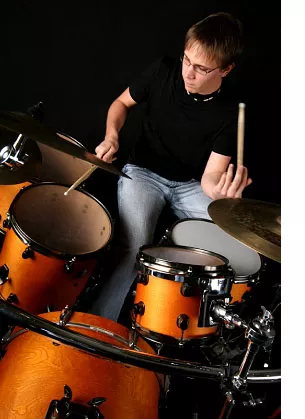
Drummer carpal tunnel nearly ended a band in Phoenix, Arizona. Jake, the drummer, and his bass player were both thinking about quitting music because numbness and drummer wrist pain left them unable to practice enough to keep their skills. Here is how they kept playing.
Table of Contents
 Repetitive Stress Injuries like Carpal Tunnel Syndrome often strike musicians with unfair frequency. It is ironic that people that work so hard to develop their art and are so willing to share the joy of their talent with others — find they are restricted due to conditions like CTS. In fact, there is a well documented high incidence of Carpal Tunnel disorders with musicians.
The conventional treatments offered by our healthcare delivery system leave most musicians cold. Surgery can end a promising career. In our doctors’ clinical experience, patients report complications such as permanent loss of grip strength, reduced range of motion, long stints of downtime and extended rehabilitation periods.
Jake, a drummer in a jazz band faced this dilemma and found a unique method to conquer his repetitive stress induced carpal tunnel syndrome. After many years of trying to stave off his CTS condition, through rest and hand stretching, he found the time he had to play was slowly being squeezed out of his life from the RSI disorder. He and his friend the bass player in their jazz band were considering quitting the band and finding another profession because their condition had progressed to a point that they could not practice sufficiently to maintain their talent and still have the hand and wrist stamina to perform.
It was hard to imagine that after decades of playing that their life as musicians might be coming to a premature end. It would also mean that the other members of the band would be in a fix without a drummer and a bass player.
Jake found Carpal Solution Therapy on the website www.MyCarpalTunnel.com. He was amazed at how quickly the Carpal Solution worked to relieve his disorder.
He shared his finding with his band mate, the Bass player and he too was surprised to find the gentle stretching of the Carpal Solution was so effective. It just seemed too easy after all the struggling for so many years. Yet after following the Six week therapy protocol, they both put their Carpal Tunnel Symptoms in remission.
Even though their symptoms come back, they realize that there is no “cure” for CTS when you use your hands intensely. Both admit how relieved they are to find a non-invasive treatment that they can rely upon for relief whenever they have carpal tunnel flare-ups. Jake said, “The Carpal Solution saved my career and saved our band.” “I feel like I can now play on forever!” “The Carpal Solution rocks!” “It is great to have an all natural treatment with no downtime!”
Jake – Jazz Drummer – Phoenix, Arizona, USA
Drummer Carpal Tunnel: What Jake’s Experience Shows
Jake plays drums in a jazz band in Phoenix, Arizona. After many years of trying to hold off his carpal tunnel symptoms with rest and hand stretching, he found that the time he had to play was slowly being squeezed out of his life. He and the band’s bass player were both considering other professions because they could no longer practice enough to keep up their talent and still have the hand and wrist stamina to perform.
Why Drummers Get Carpal Tunnel

The muscles that bend the fingers and thumb sit in the forearm, and their nine tendons pass through the carpal tunnel beside the median nerve. Hours of gripping sticks and absorbing rebounds add swelling in that tight space, which squeezes the nerve and restricts blood and lymph flow. That is why carpal tunnel drumming problems usually start as drumming wrist pain, tingling after a set, or numb fingers at night.
Drumming involves gripping sticks, repeated rebounds, pedal work and long sets, so the hands, wrists and forearms get little rest. Repetitive hand use and sustained wrist positions are commonly discussed as possible contributors to carpal tunnel syndrome, along with other factors. If you play for hours at a time, it is worth reading about carpal tunnel symptoms and what causes carpal tunnel syndrome. For general background on the condition, see the NINDS carpal tunnel syndrome fact sheet.
What the Bass Player’s Experience Adds
Jake shared what he found with his band mate, and the bass player responded too. According to the review, both of them put their symptoms into remission after following the Six Week Protocol. They also say the symptoms can come back, and that it helps to have a non-invasive option they can repeat when flare-ups happen. These are personal accounts, and results vary.
Pacing Practice and Gigs With Drumming Carpal Tunnel
Every musician is different, but a few habits are often suggested: schedule breaks during long rehearsals, warm up before you play, and pay attention to numbness or tingling that returns after a set. Gentle carpal tunnel stretching exercises may help some players, and you can learn more about how the Carpal Solution works before deciding on a therapy.
Loosen your grip on the sticks, let the rebound do more of the work, and keep your wrists as straight as you can. Skip squeeze balls and grip strengtheners while your hands heal. When a drummer gets relief, the benefit reaches the whole band. Experiences like this are personal accounts, not guarantees, so talk with your doctor if your hands are numb, weak or waking you at night.
Drummer Carpal Tunnel Symptoms to Watch For
Drummer carpal tunnel usually builds slowly, so it is easy to dismiss the early signs as normal fatigue after a long gig. Watch for:
- Numbness or tingling in the thumb, index, middle and ring fingers, especially after a set or at night.
- Drummer wrist pain that lingers into the next day instead of fading after you pack up.
- Dropping sticks, losing feel on the rebound, or needing to grip harder to stay in control.
- Waking at night and shaking out your hands to get the feeling back.
- An ache that travels up the forearm, where the muscles that move your fingers are working hardest.
Three or more of these, along with the symptoms on our carpal tunnel symptoms page, is a strong sign that drummer carpal tunnel is the cause. In our doctors’ two decades of clinical experience (not a published statistic), that means you can be about 95% confident. Still get an in-person diagnosis, and start treating while you wait.
A Gig-Week Routine for Drummer Carpal Tunnel
- Before the gig: warm up your hands and forearms for five minutes, and play a few soft grooves before you hit hard.
- During the set: keep a relaxed grip, let the stick bounce, and shake out your hands between songs.
- After the gig: do a few gentle wrist and forearm stretches instead of squeezing a ball or putty.
- That night: wear the Carpal Solution while you sleep, so the swelling from a hard night of drumming can clear by morning.
- Between gigs: keep up a maintenance night or two a week during busy stretches.
That is how Jake handles drumming carpal tunnel today: he plays as much as he wants and treats it at home whenever a flare-up starts.
If you teach lessons, record in the studio or play several nights in a row, plan your maintenance nights around your busiest weeks. Drummer carpal tunnel is far easier to keep quiet with a night or two of treatment early than to calm down after weeks of ignoring the warning signs.
Drummer Carpal Tunnel and Surgery
Carpal tunnel surgery has a patient satisfaction rate lower than 69%: about 31% of patients report lingering or recurring symptoms, and no patient is satisfied with lingering symptoms. For a drummer, lingering numbness or a weak grip on the sticks can end a career. Even after a successful surgery, 57% of patients had at least some symptoms return within five and a half years (Nancollas et al., 1995), and our doctors estimate 80 to 90% within 10 years, based on two decades of clinical experience rather than published research. Second surgeries have a patient satisfaction rate between 16% and 40%. See recurrence after carpal tunnel surgery.
Splints are the right tool for fractures and sprains, where holding a joint still lets it heal. For carpal tunnel, a splint mostly shields the wrist from painful movement, at two separate costs: unused muscles weaken (muscle atrophy), and restricted blood circulation and lymph flow reduce the nutrients needed for healing and slow the clearing of inflammation, so soft tissue heals more slowly. Use one only for temporary relief, not long term.
The Carpal Solution has 97% patient satisfaction over 21 years and 4.9 out of 5 stars on independent review sites like Google Reviews, and over 100,000 people have used it over two decades. Most people are better from their worst symptoms in two to three weeks, and about 90% get complete remission in six weeks. Waiting for an appointment? The average new-patient wait is 31 days (AMN Healthcare, 2025); see waiting for carpal tunnel treatment. Other musicians’ experiences: musician carpal tunnel and carpal tunnel relief for guitarists.
When Healing Needs a Doctor’s Help and Professional Medical Evaluation
- Constant numbness that does not improve or loss of feeling in the fingertips that does not improve in 4 to 8 weeks.
- Extreme loss of the muscle at the base of the thumb, with loss of grip strength that does not improve over 6 to 8 weeks.
- Worsening symptoms over 6 to 8 weeks while using the best conservative treatments
- Symptoms that begin suddenly after hand or wrist trauma, a fracture or severe sprain from a fall or auto accident.
- Odd Symptoms that are not consistent with the Carpal Tunnel Symptoms listed on this website, that might be indicative of other nerve issues. A nerve conductivity study can clear up the confusion with minimal costs and not too much pain and no risk.
These signs may mean more advanced nerve involvement or a different condition and deserve professional medical evaluation and in person consultation. Home treatment can be used alongside professional in-person medical care while you wait for the healthcare delivery system to fit you into their schedule. There is no reason to wait doing nothing. You can start proven natural conservative treatment with good patient reviews while you wait for your appointments.
If your symptoms start improving over 6 to 8 weeks, then you know you are on the right track and surgery is not necessary.
Drummer Carpal Tunnel: FAQ
Can drumming cause carpal tunnel?
Drumming is a common contributor. Gripping sticks, repeated rebounds and long sets with bent wrists add swelling around the median nerve.
Can I keep drumming with carpal tunnel?
Most drummers keep playing while they treat it. The Carpal Solution is worn while you sleep, so it does not interfere with rehearsals or gigs.
Should drummers wear a wrist brace while playing?
Our doctors do not recommend it. A rigid brace or splint holds the wrist still, which can ease pain from movement for a while, but it does not help carpal tunnel heal and it fights your natural motion on the kit. Used long term, it weakens unused muscles (muscle atrophy) and restricts the circulation and lymph flow that soft tissue needs to heal. Treat at night instead, and play with a relaxed grip during the day.
Does the bass player’s carpal tunnel work the same way?
Yes. Bass players press heavy strings with the fretting hand and pluck hundreds of times a song with the other, so the same swelling builds in the carpal tunnel. Jake’s bandmate followed the same six-week protocol and also reached remission. For more experiences from players, see musician carpal tunnel.
How fast does drummer wrist pain improve?
Most people are better from their worst symptoms in two to three weeks. If symptoms improve over 6 to 8 weeks with conservative treatment, surgery is not necessary.
Watch videos of people who “Cured” their Carpal Tunnel Naturally and Avoided the Risks of Carpal Tunnel Surgery!