Created by renowned Harvard health care professionals.


Ultrasound Therapy, Myofascial Release and Trigger Point Therapy for Carpal Tunnel: What Works
What ultrasound therapy, myofascial release and trigger point therapy can do for carpal tunnel, what the research shows, and why an occupational therapist pairs them with nightly passive stretching

Written by Alan Ward, MOT, OTR, Vice President and Master Occupational Therapist, Precision Rehabilitation, Blanding, Utah, and Jeff Conley, First Hand Medical · Last reviewed: November 2026
Ultrasound therapy, myofascial release and trigger point therapy are three of the most common hands-on treatments physical and occupational therapists use for carpal tunnel. Ultrasound therapy carpal tunnel treatment uses sound waves to warm and loosen tissue, myofascial release stretches tight fascia, and trigger point therapy releases knots in the forearm and shoulder muscles. Each one can help, ultrasound therapy for carpal tunnel included, and each one works best when it is paired with a treatment that keeps working between visits.
Alan Ward, MOT, OTR, is the Vice President and Master Occupational Therapist of Precision Rehabilitation in Blanding, Utah, and has treated carpal tunnel patients across southeastern Utah since 2005. He specializes in therapy, splinting and bracing of the hands and forearms, and he depends on the Carpal Solution nighttime stretching program as the cornerstone treatment in his clinics. Here is what each of these therapies does, what the research shows, and how to get the most from them.
Table of Contents
Ultrasound, Myofascial Release and Trigger Point Therapy: The Short Answer
- Ultrasound therapy for carpal tunnel showed lasting benefit in one well-known trial, but a Cochrane review rates the overall evidence as poor quality.
- Myofascial release, including self-stretching of the carpal ligament, improved numbness, tingling and pinch strength in a 2020 randomized trial.
- Trigger point therapy reduced disability in a 2010 randomized trial, and dry needling of trigger points has shown fewer surgeries.
- All three are short sessions. The Carpal Solution keeps the tissue stretching for 6 to 8 hours every night, which is why it is the cornerstone and these therapies are the helpers.
Ultrasound Therapy for Carpal Tunnel
Therapeutic ultrasound is not the imaging ultrasound used to see inside the body. A therapist glides a small wand with gel over the palm side of the wrist, sending high-frequency sound waves into the tissue. Depending on the settings, ultrasound therapy for carpal tunnel can gently warm the tissue, improve local circulation and may calm inflammation. A typical session lasts 5 to 15 minutes, and you usually feel little more than mild warmth.
Ultrasound therapy for carpal tunnel is one of the most studied physical therapy modalities. Ultrasound therapy carpal tunnel sessions are painless and low-risk when done by a trained therapist, but it is not recommended over metal implants, over a pregnant abdomen, over areas of cancer, or over skin with poor sensation without your doctor’s approval.
What the Research Shows on Ultrasound Therapy
| Study | What it found |
|---|---|
| Ebenbichler et al., BMJ, 1998 (45 patients, sham-controlled) | 20 sessions of ultrasound over the wrist improved symptoms and nerve tests more than sham, with effects sustained at 6 months. |
| Page et al., Cochrane review, 2012 (11 studies, 443 patients) | Only poor quality evidence from very limited data suggests ultrasound may be more effective than placebo; no clear advantage over splints, exercises or oral drugs. |
| Jiménez del Barrio et al., Neurología, 2018 (32 trials) | Ultrasound seemed more effective than laser therapy among conservative treatments. |
The honest reading: ultrasound therapy carpal tunnel treatment is safe and may help some people, especially as part of a larger program, but the evidence is not strong enough to rely on it alone. A course of ultrasound therapy for carpal tunnel takes many clinic visits, often 15 to 20, and its effect depends on the tissue staying loose between sessions.
Myofascial Release for Carpal Tunnel
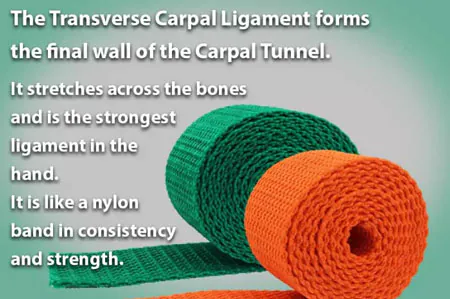
Fascia is the thin, tough connective tissue that wraps every muscle and tendon. Over the carpal tunnel it thickens into the transverse carpal ligament, the roof of the tunnel. When fascia and the ligament tighten, the tunnel narrows and the median nerve gets squeezed. Myofascial release for carpal tunnel uses slow, sustained pressure and stretching to lengthen that tight tissue.
The research on myofascial release for carpal tunnel is encouraging. In a 2020 double-blinded randomized trial in the Journal of Hand Therapy, people with nerve-test-confirmed carpal tunnel did a self-stretch of the carpal ligament four times a day for six weeks or a sham stretch. Overall results were inconclusive, but exploratory analyses found significant improvements in numbness, tingling, pinch strength and symptom severity only in the stretching group. The authors called for larger studies.
That finding matters, because it supports the same principle behind the Carpal Solution: gently stretching the tissue over the carpal tunnel gives the nerve more room. The difference is time. A self-stretch lasts a minute or two; the Carpal Solution holds a gentle, constant stretch for 6 to 8 hours while you sleep.
Trigger Point Therapy for Carpal Tunnel
Trigger points are tight, tender knots in a muscle that can refer pain, tingling or tightness to other areas. In carpal tunnel, they are often found in the thumb muscles, the forearm, the biceps area and the shoulder. Trigger point therapy for carpal tunnel releases these knots with sustained pressure (also called ischemic compression), massage or dry needling.
In a 2010 randomized trial of 55 people with chronic carpal tunnel, 15 sessions of ischemic compression on trigger points in the shoulder, upper arm and forearm reduced disability scores and produced more perceived improvement than compression at other points, with benefits lasting 6 months. Dry needling of trigger points has also shown promise: in a 2025 randomized trial, weekly dry needling for six weeks cut the risk of still needing surgery at 12 weeks by 62%. Learn more in Acupuncture and Dry Needling for Carpal Tunnel.
How These Therapies Compare
| Therapy | What it does | Evidence | Where |
|---|---|---|---|
| Ultrasound therapy | Warms and loosens tissue with sound waves | One positive sham-controlled trial; overall evidence poor quality | Clinic |
| Myofascial release | Stretches tight fascia and the carpal ligament | 2020 randomized trial: better numbness, tingling and pinch strength in exploratory analyses | Clinic or self-stretch |
| Trigger point therapy | Releases muscle knots with sustained pressure | 2010 randomized trial: less disability, lasting 6 months | Clinic or self-massage |
| Dry needling | Needles release trigger points and fascia | 2025 randomized trial: 62% lower risk of still needing surgery | Clinic |
| The Carpal Solution | Gentle passive stretch of the tissue around the tunnel for 6 to 8 hours a night | 97% patient satisfaction over 21 years and 4.9 out of 5 stars on independent review sites like Google Reviews; most reach remission in about 6 weeks, per First Hand Medical | Home, while you sleep |
An Occupational Therapist’s View
Occupational and physical therapists use ultrasound therapy for carpal tunnel, myofascial release and trigger point work because they can loosen tissue and ease pain during a visit. The challenge is what happens after the patient goes home. Visits last minutes, they happen once or twice a week, and every night the wrists curl during sleep and the tissue tightens again.
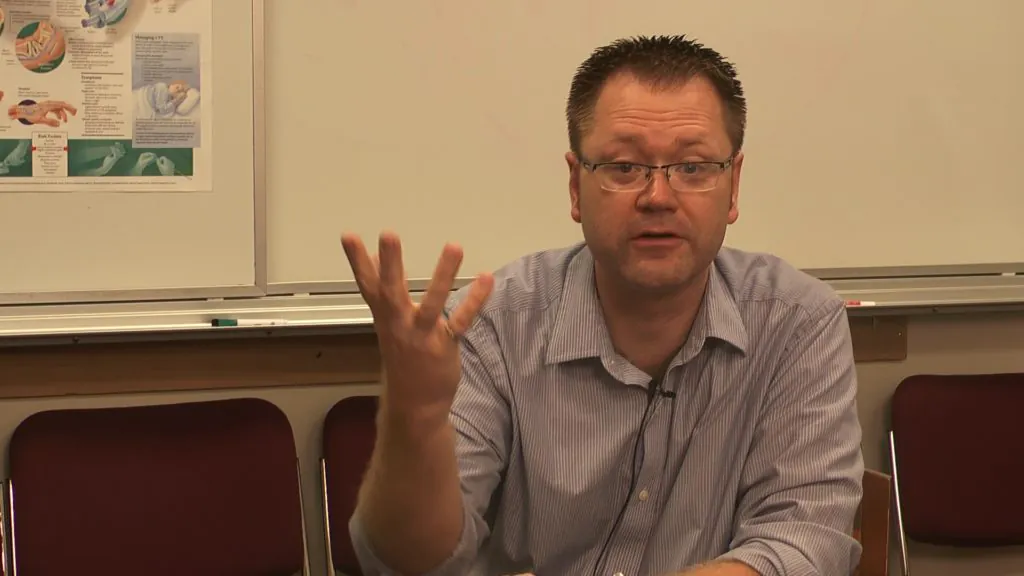
“I find this more successful than just traditional splinting, more successful when I combine this along with doing nerve glide exercises and tendon glide exercises and maybe some other modalities that we would use in the clinic. Teaching patients how to use this and sending them home to use this every night, I have a very, very high success rate.”
— Alan Ward, MOT, OTR, Master Occupational Therapist, in a video interview
That is why Mr. Ward makes the Carpal Solution the cornerstone treatment in his clinics, and why his first recommendation for most patients is to begin with the Carpal Solution nighttime stretching program, with the intent to avoid carpal tunnel surgery altogether. Clinic therapies then speed things up instead of having to carry the whole load. He also steers patients away from rigid splints and squeeze balls while they heal.
Splints are the right tool for fractures and sprains, where holding a joint still lets it heal. For carpal tunnel, a splint mostly shields the wrist from painful movement, at two separate costs: unused muscles weaken (muscle atrophy), and restricted blood circulation and lymph flow reduce the nutrients needed for healing and slow the clearing of inflammation, so soft tissue heals more slowly. Use one only for temporary relief, not long term.
Our medical team has observed that splints give some relief at first but aggravate symptoms in the long run. Read his guide, Occupational Therapy for Carpal Tunnel, and his advice on muscle atrophy and loss of grip strength.
Why These Therapies Work Best With the Carpal Solution
Carpal tunnel syndrome is an entrapment syndrome: inflammation and swelling get trapped in the narrow carpal tunnel, squeezing the median nerve along with the blood vessels and lymph channels that should drain the area. Ultrasound therapy for carpal tunnel, myofascial release and trigger point therapy all work on the tight tissue and muscles around that tunnel, for a few minutes at a time.
“The reason that I like the Carpal Solution is that we are doing more than just trying to hold that wrist in a static position. We’re actually trying to create a biological change in the body, change the anatomy. We’re trying to get this ligament to stretch and open that tunnel just a little bit more, without any invasive measures, no needles, no scalpels.”
— Alan Ward, MOT, OTR, Master Occupational Therapist, in a video interview
The Carpal Solution does the same kind of work for hours. Its soft straps apply gentle, constant tension to three areas around the carpal tunnel for 6 to 8 hours while you sleep, lengthening the tissue over the tunnel, helping trapped inflammation disperse and letting blood and lymph flow return. Think of it as myofascial release that keeps going all night, every night.

Paired together, ultrasound therapy for carpal tunnel or other clinic therapy and nightly passive stretching are a strong combination. The clinic session loosens tissue and releases trigger points; the Carpal Solution holds those gains and keeps clearing trapped inflammation while you rest.
At-Home Versions You Can Do Yourself
You do not need a clinic for every part of this. These simple self-care versions come from our doctors’ recommendations for persistent carpal tunnel symptoms and common therapy home programs:
- Self-myofascial palm stretch: with your palm up, gently press your thumb into the center of the palm near the wrist and slide it outward toward the thumb and little finger, as if spreading the palm open. Hold each stretch about 15 to 20 seconds, within comfort.
- Ball self-massage: roll a 1 to 1.5 inch bouncy ball over the palm and forearm for 2 to 3 minutes per area each day, avoiding bones. Ice for 20 to 30 minutes within an hour afterward and drink plenty of water.
- Trigger point self-pressure: find a tender knot in the forearm or the thumb pad and press it gently with a thumb for 30 to 60 seconds until it eases. Never press hard enough to cause tingling.
- Deep diaphragm breathing during each technique helps move lymph fluid out of the hands.
- Home ultrasound therapy carpal tunnel devices are sold for personal use, but settings matter. Ask your therapist before using one, and follow the safety warnings.
See all of our doctors’ at-home techniques in Physical Therapy for Carpal Tunnel, and add a home TENS unit if you want daytime pain relief between visits.
A Day-and-Night Plan
- Nights, the cornerstone: the Carpal Solution with one device every night for two weeks, then every other night for four weeks. For persistent symptoms, continue for a total of 10 to 12 weeks, then taper.
- Clinic visits, if you choose: ultrasound therapy for carpal tunnel, myofascial release, trigger point work or dry needling once or twice a week.
- Daily at home: self-myofascial palm stretches, ball self-massage, gentle finger stretches and nerve glides, and an evening cold water plunge.
- Skip: rigid splints, squeeze balls and grip trainers while you heal.
- After remission: occasional preventive Carpal Solution nights, anywhere from once a week to once every six months.
If you have had carpal tunnel surgery, wait 3 months after the operation before starting passive stretching so the surgically disturbed tissue can heal first.
When Healing Needs a Doctor’s Help and Professional Medical Evaluation
- Constant numbness that does not improve or loss of feeling in the fingertips that does not improve in 4 to 8 weeks.
- Extreme loss of the muscle at the base of the thumb, with loss of grip strength that does not improve over 6 to 8 weeks.
- Worsening symptoms over 6 to 8 weeks while using the best conservative treatments
- Symptoms that begin suddenly after hand or wrist trauma, a fracture or severe sprain from a fall or auto accident.
- Odd Symptoms that are not consistent with the Carpal Tunnel Symptoms listed on this website, that might be indicative of other nerve issues. A nerve conductivity study can clear up the confusion with minimal costs and not too much pain and no risk.
These signs may mean more advanced nerve involvement or a different condition and deserve professional medical evaluation and in person consultation. Home treatment can be used alongside professional in-person medical care while you wait for the healthcare delivery system to fit you into their schedule. There is no reason to wait doing nothing. You can start proven natural conservative treatment with good patient reviews while you wait for your appointments. If your symptoms start improving over 6 to 8 weeks, then you know you are on the right track and surgery is not necessary.
The Bottom Line
Ultrasound therapy for carpal tunnel, myofascial release and trigger point therapy can all help, and the research supports using them as part of a larger program rather than alone. In Mr. Ward’s clinics, the cornerstone is the Carpal Solution nighttime stretching program, which keeps the tissue over the carpal tunnel gently stretched for hours every night. Use clinic therapies and at-home self-care to speed things up, skip rigid splints and grip trainers, and give the plan 6 weeks. Learn more in Carpal Tunnel Treatment Without Surgery and Alternatives to Carpal Tunnel Surgery.
Ultrasound Therapy for Carpal Tunnel: FAQ
Does ultrasound therapy help carpal tunnel?
It may. A sham-controlled trial found 20 sessions improved symptoms and nerve tests for 6 months, but a Cochrane review rates the overall evidence as poor quality. Ultrasound therapy for carpal tunnel works best as part of a program that includes nightly passive stretching.
How many ultrasound sessions does carpal tunnel need?
Trials of ultrasound therapy for carpal tunnel have used about 15 to 20 sessions over several weeks. If you see no change after several sessions, focus on treatments with a stronger effect on the tight tissue.
What is myofascial release for carpal tunnel?
Slow, sustained pressure and stretching that lengthens tight fascia, including the transverse carpal ligament over the tunnel. A 2020 trial of self-stretching the carpal ligament found improvements in numbness, tingling and pinch strength in exploratory analyses.
Does trigger point therapy help carpal tunnel?
It can. In a 2010 randomized trial of trigger point therapy for carpal tunnel, trigger point compression on the shoulder, upper arm and forearm reduced disability, with benefits lasting 6 months. Dry needling of trigger points has also shown promise.
Can I do myofascial release at home?
Yes. Gentle self-myofascial palm stretches and ball self-massage are easy to do at home. The Carpal Solution provides hours of gentle stretching of the same tissue every night while you sleep.
Is ultrasound therapy safe?
Ultrasound therapy for carpal tunnel is low-risk when done by a trained therapist. It should not be used over metal implants, a pregnant abdomen, cancer or skin with poor sensation without your doctor’s approval.
Sources
- Ebenbichler GR, et al. Ultrasound treatment for treating the carpal tunnel syndrome: randomised “sham” controlled trial. BMJ. 1998;316(7133):731–735. PEDro
- Page MJ, O’Connor D, Pitt V, Massy-Westropp N. Therapeutic ultrasound for carpal tunnel syndrome. Cochrane Database of Systematic Reviews. 2012;(1):CD009601. PubMed
- Jiménez del Barrio S, et al. Conservative treatment in patients with mild to moderate carpal tunnel syndrome: a systematic review. Neurología. 2018;33:590–601. Elsevier
- Shem K, Wong J, Dirlikov B. Effective self-stretching of carpal ligament for the treatment of carpal tunnel syndrome: a double-blinded randomized controlled study. Journal of Hand Therapy. 2020;33(3):272–280. PubMed
- Hains G, Descarreaux M, Lamy AM, Hains F. A randomized controlled (intervention) trial of ischemic compression therapy for chronic carpal tunnel syndrome. Journal of the Canadian Chiropractic Association. 2010;54(3):155–163. PEDro
- Gascon-Garcia J, et al. Efficacy of dry needling with the fascial winding technique in reducing the percentage of surgery in carpal tunnel syndrome: a randomized clinical trial. Journal of Bodywork and Movement Therapies. 2025;42:408–416. PubMed
Disclosure: First Hand Medical makes the Carpal Solution. Mr. Ward uses the Carpal Solution with his occupational therapy patients and is featured on this website as a medical expert. This article is for education and is not a substitute for advice from your own doctor or therapist.