 Created by renowned Harvard health care professionals.


When Numbness Persists: Why You Shouldn’t Wait to Get Care
Persistent hand numbness that keeps waking you up isn't something to just shake off. It’s easy to hope persistent tingling will just vanish, but recurring numbness is a clear warning sign of trapped inflammation. Waiting only allows the cycle to worsen, often pushing you toward restrictive splints, risky meds, or surgery. Learn why you shouldn't ignore these symptoms and how to take action early with a smarter, non-invasive approach.


Written by Jeff Conley, President, First Hand Medical · Medically reviewed by Dr. William Shucart, MD, neurosurgeon, clinical professor of neurosurgery, New England Medical Center, and former chair of neurosurgery, Tufts · Last reviewed: November 2026
If your hand keeps going numb, especially at night, during work, or while doing everyday tasks, it is easy to tell yourself it is probably nothing serious.
A lot of people do exactly that.
They wait, adjust how they sleep, shake out their hand, ignore the tingling, and hope it goes away on its own. But when numbness keeps coming back, that is usually a sign that the problem is not resolving, and waiting too long can mean more frustration, more disruption, and more pressure to move toward treatments you may not want. Our doctors believe people deserve to understand their symptoms, diagnosis and underlying causes, and to start treatment before they are funneled into invasive options.
This article explains why persistent numbness matters, why waiting is rarely the best plan, and why The Carpal Solution is positioned as the smarter non-invasive option compared to conservative treatments.
On This Page
Persistent Hand Numbness Is Not Something To Brush Off
Occasional hand discomfort after overuse is one thing.
Recurring numbness is different.
When numbness keeps happening, your body is telling you that something is interfering with normal function. Carpal tunnel syndrome is not just a simple pinched-nerve problem. It is a trapped inflammation problem, where inflammation causes symptoms and also blocks the body’s ability to relieve that inflammation on its own by pinching the nerve, blood flow, and lymphatic channels.
That means persistent numbness is not just an inconvenience. It can be a sign that the cycle is continuing rather than healing.
According to the Cleveland Clinic, numbness that persists or worsens over time is one of the clearest signs that nerve compression needs medical evaluation rather than continued self-management.
Why Is My Hand Numb? Common Hand Numbness Causes
If you keep asking yourself “why is my hand numb?”, the pattern of the numbness is the best clue. The most common hand numbness causes include:
- Carpal tunnel syndrome: numbness in the thumb, index, middle and part of the ring finger, often worse at night or when driving, typing or holding a phone. This is the most common cause of persistent hand numbness.
- Ulnar nerve irritation at the elbow: numbness in the ring and little fingers, often after leaning on the elbow or sleeping with it bent.
- A pinched nerve in the neck: numbness that runs down the arm and often comes with neck or shoulder pain.
- Circulation problems: cold, pale or color-changing fingers. See our page on improving blood circulation in the hands.
- Health conditions: diabetes, thyroid conditions, vitamin deficiencies and other causes of nerve irritation, which a doctor can check.
Numbness in Left Hand or Numbness in Right Hand: Does the Side Matter?
Carpal tunnel often starts in the dominant hand, so numbness in right hand symptoms are common for right-handed people, and numbness in left hand symptoms for left-handed people. Many people eventually notice it in both hands.
The side matters most in an emergency: sudden numbness in the left arm or hand with chest pain, shortness of breath, sweating or nausea, or sudden numbness on one side of the body with weakness, facial drooping or trouble speaking, needs emergency care right away. Call 911. Persistent hand numbness that builds over weeks or months, especially at night, is far more likely to be carpal tunnel.
Why People Wait Too Long
Persistent hand numbness tends to creep up slowly, which makes it easy to put off.
Most people do not delay care because they are careless. They delay because the symptoms are confusing.
Our doctors note that even after speaking with a doctor, many people still do not really understand what is going on. It also points out that there are many physiological conditions connected to carpal tunnel syndrome that people do not realize are involved.
So people often think:
- Maybe I just slept on it wrong
- Maybe it is from typing too much
- Maybe it will calm down next week
- Maybe I only need a brace now and then
- Maybe it is not serious unless I have severe pain
But persistent numbness is one of the clearest signs that the issue is not simply disappearing on its own.
What Persistent Numbness Can Lead To
Left alone, persistent hand numbness can turn into weakness and lost dexterity.

When numbness becomes a pattern, it often starts to affect more than just comfort.
It can interfere with:
- Sleep
- Grip strength
- Confidence using your hand
- Repetitive work
- Driving
- Lifting
- Exercise
- Simple daily tasks
That is why waiting is such a problem. What starts as “just nighttime numbness” can slowly turn into an issue that affects how you work, rest, and function day to day.
Why “Wait and See” Often Does Not Make Sense
Waiting rarely makes persistent hand numbness go away on its own, because the swelling that causes it stays put.
The logic is simple.
If the condition involves trapped inflammation that is also blocking the body’s ability to resolve the problem, then continuing to wait without doing anything meaningful often just allows that cycle to continue.
Waiting may feel passive and harmless, but for many people, it just means the symptoms become more established while they lose time.
Why Common Next Steps Can Feel Disappointing
One reason people delay seeking care is that they dislike the treatment options they think are available to them.
That concern makes sense, and our doctors address it directly.
Oral Pain Medication
Our doctors say that these medications are risky, can be dangerous or addictive, and should not be used for a chronic recurring condition like carpal tunnel syndrome. It also says they mainly just take the edge off.
Splints
Our doctors say that splints may help a bit at first, but can make carpal tunnel worse in the long run, should mainly be used for heavy lifting, and may lead to muscle atrophy. A splint holds the wrist in a neutral position, which can reduce pain from movement, but it does not promote healing from carpal tunnel syndrome. It causes muscle atrophy and stiffness, and its tight compression restricts blood circulation and lymphatic fluid exchange, which slows the dispersion of entrapped swelling, the root cause of carpal tunnel syndrome.
Our medical team has observed that splints give some relief at first but aggravate symptoms in the long run. Immobilization is great for fractures and sprains, but not for carpal tunnel syndrome.
Steroid Injections
Steroid injections help about 70% of patients for a while, but about half of them relapse within a year (Bland, Muscle & Nerve, 2007). Relief often fades after 2 to 3 months, and doctors limit how many injections you can have.
Surgery
Many physicians move toward surgery because the other options they offer often don’t last, but carpal tunnel surgery has a patient satisfaction rate lower than 69%, and symptoms can come back for up to 57% of people within about five and a half years.
This is an important message for the blog. People should not wait, but they should also not feel that “getting care” automatically means they must accept invasive, risky, or ineffective options.
What Getting Care Should Really Mean
Real care for persistent hand numbness means treating the cause, not just the feeling.
Getting care should mean understanding what is happening, recognizing that persistent numbness is a sign worth acting on, and choosing a treatment path that actually makes sense for a chronic recurring condition.
Our doctors say that the goal is to educate customers, help diagnose and get treatment, and position The Carpal Solution as the superior option compared to conservative treatments.
That changes the tone of the message.
Instead of saying, “Ignore it until it gets bad enough for surgery,” the better message is:
Pay attention early, identify what is driving the symptoms, and choose a non-invasive option before the condition takes over more of your life.
Why the Carpal Solution Is the Better Next Step
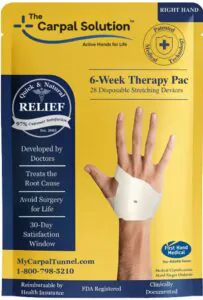
The Carpal Solution was designed for exactly this kind of persistent hand numbness: it works at night, when symptoms are usually worst.
The Carpal Solution is the smarter answer for people who do not want to keep waiting, but also do not want to jump into medications, restrictive splints, steroid injections or surgery.
This matters because persistent numbness is often the moment when people realize they need to do something, but they still want that “something” to be logical, safe, and non-invasive.
That is where The Carpal Solution fits best.
Who Should Stop Waiting

This message is especially relevant for people who:
- Wake up with numbness regularly
- Notice tingling during repetitive work
- Feel hand weakness more often
- Keep shaking out their hand for relief
- Have symptoms that come and go, but never fully leave
- Have already tried to ignore the issue and seen no real improvement
These are the people most likely to benefit from taking action sooner rather than later.
Who the Carpal Solution Helps
The Carpal Solution may be a strong fit for people who:
- Want to act before symptoms get worse
- Want a non-invasive option
- Want to avoid risky medications
- Do not want to rely on restrictive splints
- Do not want temporary injections
- Want to avoid surgery if possible
- Want a more logical path for a recurring condition
Who It May Not Be For
It may not be the best fit for people who:
- Only want temporary symptom masking
- We are committed to surgery as the first step
- Want a quick fix without using a product consistently
- Prefer invasive treatment despite the tradeoffs
A Simple Usage Mindset
If numbness keeps happening, the right response is not panic, but action.
A good approach looks like this:
Notice the Pattern
Pay attention to when numbness happens, at night, during work, after lifting, while driving, or during repetitive motion.
Stop Normalizing It
Recurring numbness is not something to just live with, and hope disappears.
Choose a Better Treatment Path
Look for a non-invasive option that addresses the underlying issue, rather than defaulting to short-term or invasive treatment routes.
Use the Carpal Solution Consistently
This is not about doing nothing until things get worse; it is about addressing the problem earlier and more intelligently.
The Importance of Early Intervention and Proactive Care
Final Thoughts
Persistent hand numbness rarely resolves on its own — waiting rarely helps.
It gives the problem more time to interfere with sleep, work, and daily life. Our message is simple: Educate people early, explain the underlying cause simply, and help them move toward treatment before they get pushed into risky medications, restrictive splints, injections or surgery.
That makes The Carpal Solution the strongest answer for this topic. It gives readers a reason not to wait, but without scaring them into invasive treatment. It offers a smarter, more logical next step. Need guidance on starting your non-invasive treatment journey? Contact us Today to find out how we can help.
Persistent hand numbness is your body asking for help. Carpal tunnel surgery has a patient satisfaction rate lower than 69%, because about 31% of patients report lingering or recurring symptoms, and no patient is satisfied with lingering symptoms (Bland, Muscle & Nerve, 2001), and second surgeries have a patient satisfaction rate between 16% and 40%. The Carpal Solution has 97% patient satisfaction over 21 years and 4.9 out of 5 stars on independent review sites like Google Reviews. Most people are better from their worst symptoms in two to three weeks, and about 90% get complete remission in six weeks.
When Healing Needs a Doctor’s Help and Professional Medical Evaluation
- Constant numbness that does not improve or loss of feeling in the fingertips that does not improve in 4 to 8 weeks.
- Extreme loss of the muscle at the base of the thumb, with loss of grip strength that does not improve over 6 to 8 weeks.
- Worsening symptoms over 6 to 8 weeks while using the best conservative treatments
- Symptoms that begin suddenly after hand or wrist trauma, a fracture or severe sprain from a fall or auto accident.
- Odd Symptoms that are not consistent with the Carpal Tunnel Symptoms listed on this website, that might be indicative of other nerve issues. A nerve conductivity study can clear up the confusion with minimal costs and not too much pain and no risk.
These signs may mean more advanced nerve involvement or a different condition and deserve professional medical evaluation and in person consultation. Home treatment can be used alongside professional in-person medical care while you wait for the healthcare delivery system to fit you into their schedule. There is no reason to wait doing nothing. You can start proven natural conservative treatment with good patient reviews while you wait for your appointments. If your symptoms start improving over 6 to 8 weeks, then you know you are on the right track and surgery is not necessary.