 Created by renowned Harvard health care professionals.


Carpal Tunnel Flare Up: Clinical Observations From Carpal Solution Patients
Our clinical notes on carpal tunnel flare-ups: why the first nights of treatment can bring a short flare-up, what causes symptoms to come back and how to handle a flare-up at home.


Written by Jeff Conley, President of First Hand Medical · Medically reviewed by Clyde E. Morgan, DC, musculoskeletal expert and co-founder of First Hand Medical · Last reviewed: November 2026
Table of Contents
The First Nights: A Short Carpal Tunnel Flare Up
These clinical observations come from patients who followed the nightly Carpal Solution protocol. Some reported a slight increase in discomfort on the palm side, where the wrist and hand join, after two to five nights of use. It is thought to be related to decompression of the soft tissue around the tendons, blood vessels and nerve in the carpal tunnel. In these reports, the increase lasted only one or two nights, followed by consistent relief of CTS symptoms.
Long-Term Maintenance: When Symptoms Come Back
Another observation is that people who return to the regular duties that first brought on their symptoms may notice them coming back after several months, even after a successful protocol. In those cases, patients have been able to stop a carpal tunnel flare up and check the progression of their symptoms by using the Carpal Solution for two to three nights per month. This allows them to keep their routines without losing sleep or time at work.
If you are like most carpal tunnel syndrome sufferers, chances are that you have encountered difficulties in your treatment protocol. Unlike other disorders of the skeletal muscular system, carpal tunnel syndrome is often complicated by multiple contributing factors and hence is a complex problem.
So-called “conventional health care methods,” like heavy doses of non-steroidal anti-inflammatory drugs, high risk wrist surgery with lots of down time and long rehabs, and rigid hand splints, often fail to work and often even make the underlying condition worse.
A splint holds the wrist in a neutral position, which can reduce pain from movement, but it does not promote healing from carpal tunnel syndrome. It causes muscle atrophy and stiffness, and its tight compression restricts blood circulation and lymphatic fluid exchange, which slows the dispersion of entrapped swelling, the root cause of carpal tunnel syndrome. Our medical team has observed that splints give some relief at first but aggravate symptoms in the long run. Immobilization is great for fractures and sprains, but not for carpal tunnel syndrome.
Moreover, just resting or reducing repetitive hand and wrist activities usually are not enough to relieve the irritated tissue and pinching of the median nerve of severe sufferers.
To top things off, “quack cures” for carpal tunnel syndrome abound, and it’s often incredibly difficult to sift through the misinformation for reliable medical information about carpal tunnel syndrome and clinically documented treatments. Here on this website you can rely on content reviewed by medically trained doctors who pursue and are committed to a least invasive approach to treatment of any ailment. This approach minimizes downtime, risks to patients, and expense and maximizes benefit at the least cost.
Click on the arrow of the picture below to watch a Doctor, the founder of Your Wellness Connection, Dr Michelle Robin speak on Carpal Tunnel Syndrome and the best treatment options.
Thankfully, perennial CTS sufferers can now rely on a proven Carpal Tunnel Treatment that works.
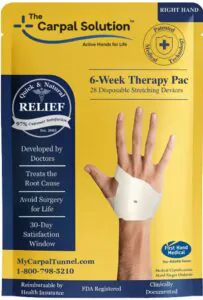
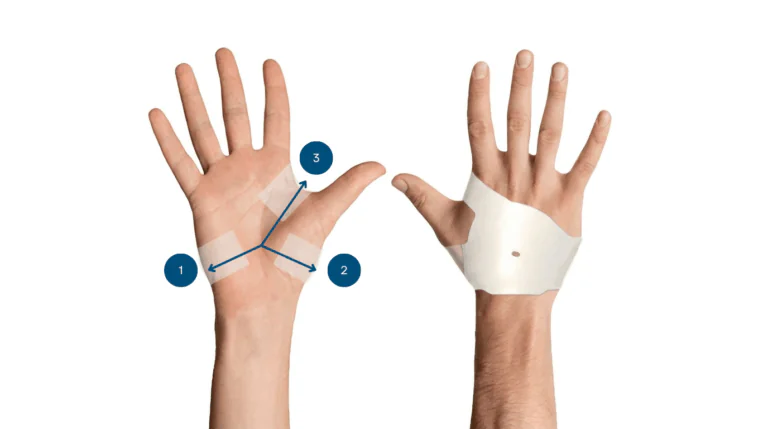
MyCarpalTunnel.com provides a logical and thorough, grounded medical thought process to guide sufferers throughout the confusion associated with the CTS disorder. First Hand Medical, working in conjunction with Dr. Clyde Morgan, has developed this unique soft wrist brace engineered to massage inflamed tissue while patients sleep.
Known as the Carpal Solution, this revolutionary brace has brought relief to over 100,000 people over two decades, many of them long-time CTS patients.
Proactive health care consumers will want to browse first hand experiences and testimonials of CTS sufferers and read the conclusions of the clinical study on Carpal Solution Therapy. With 97% patient satisfaction over 21 years and 4.9 out of 5 stars on independent review sites like Google Reviews, the Carpal Solution is unique in its class of treatments.
You may also dial 1-800-798-5210 to talk with a friendly First Hand Representative, or email us at [email protected] at any time to get reliable information about this compelling new therapy.
The Carpal Solution has been used by over 100,000 people in over 30 different countries over two decades and continues to earn 97% patient satisfaction over 21 years. Neurologists, including Dr. James S. Zu, MD, PhD, of Edison, New Jersey, call the Carpal Solution a better first line of defense for Carpal Tunnel Syndrome. Patients simply call it: “My Carpal Tunnel “Cure”!”
You can view more detailed video user reviews of The Carpal Solution in 7 different languages on our YouTube video channel called: MyCarpalTunnelSolution
Learn More about Carpal Tunnel Treatment
What Causes a Carpal Tunnel Flare Up?
A carpal tunnel flare up is a stretch of days or weeks when numbness, tingling, aching or night waking return or get worse. In the patients our doctors follow, the usual triggers are:
- Going back to the same hand work. The repetitive gripping, typing or tool use that brought on symptoms in the first place.
- A sudden spike in hand use. A weekend project, moving house or a busy season at work. One of our patients, a UPS driver, had a setback after a big basement project two weeks into treatment.
- Cold weather. Cold narrows circulation in the hands. Read does cold weather make carpal tunnel worse.
- Sleeping with bent wrists. Curling the wrists under a pillow or the chin squeezes the carpal tunnel for hours.
- Systemic inflammation. Conditions such as diabetes, thyroid disease, gum disease or rheumatoid arthritis make flares more frequent and more persistent. See how systemic inflammation fuels carpal tunnel.
Every one of these triggers works the same way. Swelling and entrapped inflammation build up again in the soft tissue in and around the carpal tunnel, squeezing the median nerve and restricting blood flow and lymphatic fluid transport. The muscles that bend the fingers and thumb are in the forearm, and their nine tendons pass through the carpal tunnel beside the median nerve, so a flare often aches into the forearm too.

How Long Does a Carpal Tunnel Flare Up Last?
How long does a carpal tunnel flare up last? It depends on what kind of carpal tunnel flare it is and how quickly you act:
- The first-nights flare: a slight increase in discomfort on the palm side of the wrist after two to five nights of use usually lasts one or two nights, followed by consistent relief.
- A flare after remission: patients who restart the Carpal Solution for two to three nights usually bring symptoms back under control quickly.
- A full return of symptoms: a complete six-week protocol gives over 220 hours of targeted stretching. Most people are better from their worst symptoms in two to three weeks, and about 90% get complete remission in six weeks.
Waiting it out tends to make a carpal tunnel flare up last longer, because the swelling keeps building while you keep using your hands.

Carpal Tunnel Flare Up Treatment at Home
When a carpal tunnel flare up starts, act early. These steps are what our doctors recommend:
- Restart the Carpal Solution at night. Two to three nights is often enough for a mild flare; use the full six-week protocol if symptoms have fully returned. Its targeted passive stretching restores flexibility to the injured soft tissue, relieves pressure on the median nerve, relieves restrictions on blood circulation and lets lymph fluid flow freely to clear out the swelling.
- Pace your hand work for a week or two, and spread heavy tasks out instead of doing them all at once.
- Keep your wrists straight at night, using pillows to support your arms.
- Add gentle daytime stretches as a bonus, up to 6 sets of 10, holding each stretch 15 seconds with 30 seconds of rest. See our carpal tunnel stretches. Skip grip balls, putty and squeezing exercises during a flare.
- Work on inflammation if flares keep coming back. The doctors’ Persistent Symptoms Protocol explains how.
A splint is not a good answer to a flare. A splint holds the wrist in a neutral position, which can reduce pain from movement, but it does not promote healing from carpal tunnel syndrome, and over time it causes muscle atrophy and stiffness. Read our doctors’ position on wrist splints.
Daily Habits That Prevent a Carpal Tunnel Flare Up
The best carpal tunnel flare up treatment is prevention: the best flare is the one that never starts. Patients who stay in remission longest tend to share a few habits:
- Plan for busy seasons. If you know a heavy stretch of work or a big project is coming, use the Carpal Solution for a few nights before and during it.
- Break up repetitive tasks. Switch between tasks every 30 to 60 minutes and open and close your hands between them.
- Keep your hands warm in cold weather and in air-conditioned offices.
- Sleep with straight wrists, using pillows to support your arms.
- Stay active. Once you are in remission, regular aerobic exercise helps keep inflammation down.
- Use preventive nights. Depending on how hard your hands work, that may be once a week or once every six months.
If you notice the early signs, such as tingling fingers in the morning or a hand that falls asleep while driving or reading, treat it then. A carpal tunnel flare up caught in the first few days is much easier to settle than one that has had weeks to build. Keeping a short note of what you were doing before each flare can also help you and your doctor spot your personal triggers.
Carpal Tunnel Recurrence: The Carpal Solution vs. Surgery
Carpal tunnel syndrome is chronic and recurring, so some return of symptoms over the years is normal. After the Carpal Solution, remission usually lasts 5 to 7 years for most people. Everyone is different, depending on how hard they use their hands and their level of systemic inflammation; people have gone as long as 17 years and as little as 1 year between treatments. Many keep symptoms away with preventive nights anywhere from once a week to once every six months. Read more about why carpal tunnel symptoms keep coming back and preventive maintenance.
Surgery does not prevent a carpal tunnel flare up either, and carpal tunnel recurrence after surgery is common. Carpal tunnel surgery has a patient satisfaction rate lower than 69%, because about 31% of patients report lingering or recurring symptoms, and no patient is satisfied with lingering symptoms. Even after a successful operation, 57% of patients had at least some symptoms return within 5.5 years in the longest published follow-up (see the research on recurrence). Learn more in 6 carpal tunnel surgery myths.
Carpal Tunnel Flare Up FAQs
Is it normal for carpal tunnel to flare up in the first few nights of treatment?
Some people notice a slight increase in discomfort on the palm side of the wrist after two to five nights. It usually lasts one or two nights and is followed by consistent relief. See what to do if discomfort increases during the first few nights.
What is the best carpal tunnel flare up treatment?
Restart the Carpal Solution at night as soon as symptoms return, pace your hand work, keep your wrists straight while you sleep and skip squeezing exercises. Most mild flares settle within a few nights.
How long does a carpal tunnel flare up last?
A flare treated early often settles in a few nights. If symptoms have fully returned, most people are better from their worst symptoms in two to three weeks on the full protocol.
Does a carpal tunnel flare up mean the treatment stopped working?
No. Carpal tunnel syndrome is chronic and recurring, so symptoms can return when the same hand work, cold weather or inflammation builds up swelling again. The Carpal Solution works the same way the second time: a few nights of targeted passive stretching usually bring symptoms back under control. Many patients keep a pack on hand for exactly this reason.
Can stress or poor sleep trigger a carpal tunnel flare?
Our doctors have observed that worry, stress and broken sleep make carpal tunnel symptoms feel worse and harder to cope with. Poor sleep also leaves less time for the soft tissue to recover overnight. Treating your hands at night helps on both counts, because better sleep is usually the first change people notice.
Should I go back to wearing a splint during a flare?
Our doctors do not recommend it. A splint may ease pain from movement for a few days, but it does not promote healing, and it can weaken the forearm muscles over time. Restarting the Carpal Solution and keeping your wrists straight with pillows at night is a better approach.
When should I see a doctor about a carpal tunnel flare up?
See a doctor promptly for constant numbness, weakness, thinning of the muscles at the base of the thumb, or symptoms after an injury. Our doctors’ two decades of experience is that people with three or more of the carpal tunnel symptoms listed on this site can be about 95% confident they have carpal tunnel syndrome; that is clinical experience, not a published statistic, so still get a formal diagnosis. You can treat the flare at home while you wait for an appointment.
When Healing Needs a Doctor’s Help and Professional Medical Evaluation
- Constant numbness that does not improve or loss of feeling in the fingertips that does not improve in 4 to 8 weeks.
- Extreme loss of the muscle at the base of the thumb, with loss of grip strength that does not improve over 6 to 8 weeks.
- Worsening symptoms over 6 to 8 weeks while using the best conservative treatments
- Symptoms that begin suddenly after hand or wrist trauma, a fracture or severe sprain from a fall or auto accident.
- Odd Symptoms that are not consistent with the Carpal Tunnel Symptoms listed on this website, that might be indicative of other nerve issues. A nerve conductivity study can clear up the confusion with minimal costs and not too much pain and no risk.
These signs may mean more advanced nerve involvement or a different condition and deserve professional medical evaluation and in person consultation. Home treatment can be used alongside professional in-person medical care while you wait for the healthcare delivery system to fit you into their schedule. There is no reason to wait doing nothing. You can start proven natural conservative treatment with good patient reviews while you wait for your appointments. If your symptoms start improving over 6 to 8 weeks, then you know you are on the right track and surgery is not necessary.


Order Your Six Week Carpal Tunnel Treatment Now
The ONLY treatment for carpal tunnel that comes with a no questions asked 30-Day Satisfaction Window and in-house dedicated pain relief team.