 Created by renowned Harvard health care professionals.


Dental Hygienist Ergonomics: Grip, Positioning and Stretches That Protect Your Hands

Written by Jeff Conley, President of First Hand Medical · Clinically reviewed by Alan Ward, MOT, OTR, Master Occupational Therapist and VP of Precision Rehabilitation · Last reviewed: November 2026
Dental hygienist ergonomics deserves its own guide. Hygienists spend most of the day scaling, which means forceful pinching, repeated wrist motion and vibration, often for eight hours with little rest between patients. Researchers report that dental hygiene ranks first among all U.S. occupations for the prevalence of carpal tunnel syndrome (Dentistry Journal, 2023). Good ergonomics for dental hygienists protects your hands, your career and your sleep.
Table of Contents
Why Hygienists Are at Such High Risk
Scaling and root planing require precise control of a small instrument under high force. One clinical study found dental practitioners applied repeated peak pinch forces of about 24.5 newtons during scaling, and the authors list forceful pinching as a key risk factor for carpal tunnel syndrome (UCSF Dental Study, report to NIOSH). Add bent wrists, the vibration of ultrasonic scalers and back-to-back appointments, and the soft tissue around the carpal tunnel has little time to recover.
The muscles that bend your fingers and thumb are in your forearm, and their nine tendons pass through the carpal tunnel beside the median nerve. When that tissue swells, the nerve is squeezed, and hygienists notice numb fingers, dropped instruments and thumb weakness first. Read how one hygienist dealt with this in dental hygienist carpal tunnel: Aishah’s story.
Grip, Fulcrum and Wrist Position
- Use a relaxed modified pen grasp. Hold the instrument only as tightly as you need; white knuckles mean too much pinch force.
- Keep a close fulcrum. A finger rest near the tooth you are working on shortens the lever on your wrist.
- Keep the wrist neutral. Move the patient, the light and your chair before you bend your wrist up, down or to the side.
- Use arm motion, not just finger rolling, for longer strokes, so the small forearm muscles are not doing all the work.
- Alternate your clock positions so your hand and wrist change angles through the day.
Instruments, Ultrasonic Scalers and Gloves
Instrument design makes a measurable difference. In a Journal of the American Dental Association study, a scaler handle about 10 mm wide and 15 grams in weight required the least muscle load and pinch force (Dong et al., 2006). A randomized trial among dentists and hygienists then found that lighter, wider instruments reduced arm pain over four months (UCSF Dental Study, report to NIOSH).
- Choose light, wide, textured handles for scalers, curettes, mirrors and explorers.
- Sharpen often. Dull instruments need more force on every stroke.
- Use ultrasonic scalers with a light touch and let the tip do the work, and take breaks from the vibration.
- Pick gloves that fit. Gloves that are too tight squeeze the hand and add resistance to every movement; ambidextrous gloves can pull the thumb across the palm.
- Choose lightweight, cordless polishers where you can, since a heavy cord adds pinch force.
Dental Hygiene Positioning
Dental hygiene positioning protects the wrist as much as the back. Sit with feet flat and thighs close to level, lower the patient until your forearms are near horizontal, and keep your elbows close to your sides. Use the patient’s head position and indirect vision instead of twisting your wrist. Magnification can help you stay upright if the working distance fits you.
Schedule heavy-calculus patients between lighter appointments when you can, and give yourself even one or two minutes between patients to rest your hands.
Stretches for Dental Hygienists
Dental hygienist stretches work best as short, frequent breaks during the day. Our doctors recommend up to 6 sets of 10, holding each stretch for 15 seconds with 30 seconds of rest. Stretch gently and never into pain.
- Forearm flexor stretch: arm straight, palm up, gently draw the fingers back with the other hand.
- Overhead forearm stretch: raise the arm overhead and draw the fingers back for a deeper stretch.
- Finger spread: open the hand wide, hold, then relax.
- Thumb stretch: gently draw the thumb back and away from the palm to ease dental hygienist thumb pain from long instrument holds.
- Shoulder rolls and neck turns to release the static posture that travels down the arm.

For more stretches you can do between patients, see carpal tunnel stretches at your desk, and read about dental ergonomics for the whole dental team.
Hand Exercises for Dental Hygienists: What to Do and What to Skip
Hand exercises for dental hygienists should loosen tissue, not add more force. Gentle tendon glides and nerve glides, moving the fingers slowly through a series of positions, help the tendons and median nerve slide freely. Occupational therapist Alan Ward, MOT, OTR, combines nerve glide and tendon glide exercises with the Carpal Solution in his clinic.
Skip grip, squeeze-ball and putty exercises while your hands are healing. Scaling already strengthens the grip all day; what your hands need is recovery. Save aerobic and strength exercise for after your symptoms are in remission.
When You Already Have Symptoms
Ergonomics for dental hygienists lowers the strain, but it cannot clear swelling that is already pressing on the median nerve. Swelling and entrapped inflammation in the soft tissue in and around the carpal tunnel squeeze the nerve and restrict blood flow and lymphatic fluid transport. The Carpal Solution, worn at night, gently stretches that tissue, relieves pressure on the median nerve and lets lymph fluid flow freely to clear the swelling, so you can keep seeing patients during the day.
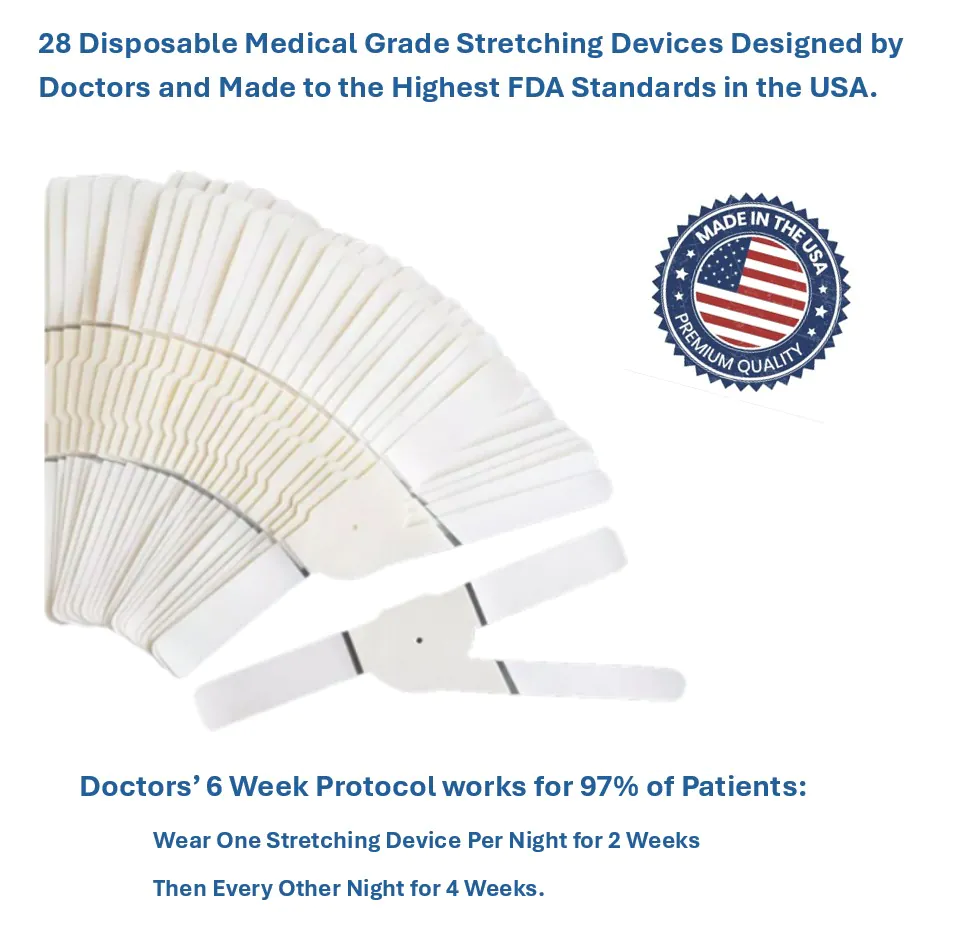
Most people are better from their worst symptoms in two to three weeks, and over 90% resolve in 6 weeks. The Carpal Solution has 97% patient satisfaction over 21 years and 4.9 out of 5 stars on independent review sites. A wrist brace or splint holds the wrist in a neutral position, which can reduce pain from movement, but it does not promote healing from carpal tunnel syndrome and causes muscle atrophy and stiffness over time.
Carpal tunnel surgery has a patient satisfaction rate lower than 69%, because about 31% of patients report lingering or recurring symptoms, and the recovery time is hard on a hygiene schedule. If you are waiting for a doctor’s appointment, the average new-patient wait is 31 days (AMN Healthcare, 2025), so you can start relief at home while you wait for carpal tunnel treatment. More stories: dental professionals heal carpal tunnel and dentist carpal tunnel.
A Daily Dental Hygienist Ergonomics Checklist
Ergonomics for dental hygienists works best as a habit, not a one-time setup. Use this checklist at the start of each day and between patients.
- Before the first patient: adjust your stool height so your thighs are close to level, check that your loupes or light let you sit upright, and lay out sharp, light, wide-handled instruments.
- Seating the patient: lower the chair until your forearms are near horizontal and bring the patient’s mouth to you, not you to it.
- During scaling: relax your grasp, keep a close fulcrum, and keep your wrist straight. If your knuckles whiten, you are pinching too hard.
- Using the ultrasonic scaler: hold it lightly, let the tip do the work and switch to hand instruments only where needed.
- Between patients: take one to two minutes for dental hygienist stretches: forearm flexor stretch, overhead stretch, finger spreads and thumb stretch.
- Heavy-calculus days: space difficult appointments between lighter ones when your schedule allows.
- At the end of the day: notice any numbness, tingling or thumb weakness. Early symptoms are the easiest to treat.
- At night: keep your wrists straight while you sleep, using pillows rather than a rigid splint, and use the Carpal Solution if symptoms have started.
Small changes add up. Over a career of tens of thousands of scaling strokes, each reduction in pinch force and wrist bend lowers the load on the carpal tunnel. That is the heart of dental hygienist ergonomics: protect the hands that protect your patients’ smiles.
Dental Hygienist Ergonomics for Students and New Graduates
The habits you form in school follow you through your career. Hygiene students often grip instruments tightly while they learn, and many new graduates work long days to build a schedule. Practice a relaxed grasp from the start, ask your instructors to check your wrist angle and fulcrum, and build stretches for dental hygienists into every clinic session. If numbness or tingling appears early, take it seriously: carpal tunnel symptoms are easiest to settle before they become constant.
Dental Hygienist Ergonomics FAQs
What is dental hygienist ergonomics?
Dental hygienist ergonomics is setting up your grip, instruments, chair and patient position so scaling puts the least strain on your hands, wrists, neck and back.
What are the best stretches for dental hygienists?
Gentle forearm flexor stretches, overhead forearm stretches, finger spreads and thumb stretches, held for 15 seconds, done in short sets between patients.
Are hand exercises good for dental hygienists with carpal tunnel?
Gentle tendon and nerve glides are helpful. Grip, squeeze-ball and putty exercises are not, while your hands are healing, because they add pinch force.
Why do dental hygienists get thumb pain?
Long holds of a pinched instrument load the thumb, and the median nerve supplies the muscles at the base of the thumb, so carpal tunnel syndrome can show up as thumb weakness and pain.
Should a dental hygienist wear a wrist brace at work?
A rigid brace limits the wrist motion scaling needs and does not heal carpal tunnel syndrome. Our doctors prefer neutral positioning by day and the Carpal Solution at night.
References: Dong H, et al. The effects of periodontal instrument handle design on hand muscle load and pinch force. J Am Dent Assoc. 2006;137(8):1123–1130. · Rempel D, et al. UCSF Dental Study: Final Report to NIOSH. · Dentistry Journal. 2023;11:272 (adaptive curette handle design and hygienist muscle load). · AMN Healthcare physician appointment wait time survey, 2025.
When Healing Needs a Doctor’s Help and Professional Medical Evaluation
- Constant numbness that does not improve or loss of feeling in the fingertips that does not improve in 4 to 8 weeks.
- Extreme loss of the muscle at the base of the thumb, with loss of grip strength that does not improve over 6 to 8 weeks.
- Worsening symptoms over 6 to 8 weeks while using the best conservative treatments
- Symptoms that begin suddenly after hand or wrist trauma, a fracture or severe sprain from a fall or auto accident.
- Odd Symptoms that are not consistent with the Carpal Tunnel Symptoms listed on this website, that might be indicative of other nerve issues. A nerve conductivity study can clear up the confusion with minimal costs and not too much pain and no risk.
These signs may mean more advanced nerve involvement or a different condition and deserve professional medical evaluation and in person consultation. Home treatment can be used alongside professional in-person medical care while you wait for the healthcare delivery system to fit you into their schedule. There is no reason to wait doing nothing. You can start proven natural conservative treatment with good patient reviews while you wait for your appointments. If your symptoms start improving over 6 to 8 weeks, then you know you are on the right track and surgery is not necessary.

Watch videos of people who “Cured” their Carpal Tunnel Naturally and Avoided the Risks of Carpal Tunnel Surgery!





Order Your Six Week Carpal Tunnel Treatment Now
The ONLY treatment for carpal tunnel that comes with a no questions asked 30-Day Patient Satisfaction Guarantee and in-house dedicated pain relief team.