 Created by renowned Harvard health care professionals.


Foods to Avoid for Carpal Tunnel: 7 Proven Diet Rules From Our Doctors
The 7 foods to avoid for carpal tunnel, the best foods to eat instead, the books behind our doctors’ diet advice, and how an anti-inflammatory diet pairs with the Carpal Solution

Written by Jeff Conley, First Hand Medical · Medically reviewed by Joseph E. Scherger, MD, MPH, family physician, clinical professor at the UC San Diego School of Medicine and co-founder of First Hand Medical · Last reviewed: November 2026
Knowing the foods to avoid for carpal tunnel can make a real difference in how fast you heal. Carpal tunnel syndrome is driven by inflammation that gets trapped in the narrow carpal tunnel and presses on the median nerve. What you eat every day can either feed that inflammation or help calm it, which is why a carpal tunnel diet matters.
Most people control carpal tunnel with gentle nighttime stretching alone. But about 1 in 10 patients have what our doctors call more persistent symptoms, usually because their overall (systemic) inflammation is high. For these patients, an anti-inflammatory diet for carpal tunnel is one of the most powerful tools in the Doctor’s Recommendations for Persistent Carpal Tunnel Symptoms.
This guide covers the 7 groups of foods to avoid for carpal tunnel, the foods to eat instead, the books and research our doctors rely on, and a simple plan to get through the first few weeks.
Table of Contents
Foods to Avoid for Carpal Tunnel: The Short Answer
- Cut added sugar first. Our doctors call sugar the number one enemy in managing inflammation.
- Limit refined carbs and processed foods. White bread, pasta, white rice, pastries and packaged snacks raise blood sugar quickly and feed inflammation.
- Skip sugary sports drinks, fried foods and excess alcohol.
- Eat more dark leafy greens, dark berries, oily fish, olive oil, nuts, ginger and turmeric.
- Drink plenty of water with sugar-free electrolytes to help your body clear trapped fluid and inflammation.
- Pair diet with nightly treatment. Food lowers inflammation throughout the body; the Carpal Solution works on the tight tissue and trapped inflammation in the wrist while you sleep.
Why Food Matters for Carpal Tunnel
Carpal tunnel syndrome is an entrapment syndrome. Swelling and inflammation build up inside the tight carpal tunnel and squeeze the median nerve, along with the small blood vessels and lymph channels that should drain the area. Less drainage means more swelling, and more swelling means more pressure on the nerve.
Everyone carries some level of systemic inflammation, the low-grade inflammation that runs throughout the body. When it is high, it is hard to get ahead of the inflammation curve and clear the trapped inflammation out of the carpal tunnel. That is why some people get better within weeks while others have to work harder to keep symptoms under control.
Diet is one of the biggest drivers of systemic inflammation, and the foods that cause inflammation are often the ones we eat most. Researchers writing in the European Heart Journal linked a Western-style diet high in refined starches, sugar and processed fats to higher inflammatory markers, and a diet rich in fruits, vegetables, whole grains and fish to lower ones. The same inflammation is tied to heart disease, diabetes, arthritis and other chronic conditions, including carpal tunnel syndrome.
The research on carpal tunnel itself points the same way:
- Body weight: a review of 58 studies covering more than 1.3 million people found obesity roughly doubled the odds of carpal tunnel syndrome, and risk rose about 7% for each one-point rise in body mass index (BMI).
- Blood sugar: a separate review found people with diabetes had about 1.7 times the odds of carpal tunnel syndrome after adjusting for other factors.
The good news is that both weight and blood sugar respond to an anti-inflammatory diet for carpal tunnel. Avoiding the foods that cause inflammation will not replace treatment at the wrist, but it lowers the tide of inflammation your hands have to fight against. Learn more in How Systemic Inflammation Fuels CTS and Carpal Tunnel Inflammation: The Key to Managing Carpal Tunnel for Life.

7 Foods to Avoid for Carpal Tunnel
These are the foods to avoid for carpal tunnel that our doctors see cause the most trouble. You do not have to be perfect. Start with the first two and you will cover most of the foods that cause inflammation.

1. Added sugar and sweets
Sugar is the first of the foods to avoid for carpal tunnel. Candy, soda, sweet coffee drinks, desserts, syrups and sweetened cereals cause fast spikes in blood sugar that drive inflammation. Over time, a high-sugar diet also adds weight and raises the risk of diabetes, two known risk factors for carpal tunnel syndrome.
2. Refined carbohydrates
White bread, white rice, regular pasta, crackers, bagels and pastries break down into sugar quickly. Our Carpal Solution Diet asks you to minimize both sugar and carbs, because both fuel inflammation.
3. Processed foods with hidden sugar
Food companies put sugar in almost everything. Ketchup, salad dressing, protein bars, flavored yogurt, pizza sauce and many “healthy” snacks hide a surprising amount. Read labels, and look for added sugar, corn syrup, dextrose and other names ending in “-ose.”
4. Sugary sports and electrolyte drinks
Many people reach for Gatorade or Powerade to stay hydrated. Most versions are high in sugar or high-fructose corn syrup, and the “zero” versions use artificial sweeteners our doctors prefer to avoid. Sugar-free electrolyte capsules with a large glass of water are a better choice (see Hydration and Electrolytes below).
5. Fried foods, refined oils and trans fats
Fried foods are classic foods to avoid for carpal tunnel. Deep-fried foods, fast food, margarine and packaged baked goods made with partially hydrogenated oils are among the foods that cause inflammation. Cook with olive oil instead, and bake, roast or grill rather than fry.
6. Alcohol
Alcohol belongs on the list of foods to avoid for carpal tunnel too. It is high in sugar calories, disturbs sleep and adds to inflammation. Sleep matters because night is when the Carpal Solution does its work. If you drink, keep it light while you are healing.
7. Very salty, highly processed meals
Too much sodium makes the body hold on to water, and extra fluid adds pressure in an already crowded carpal tunnel. Fluid retention is also why carpal tunnel is common in pregnancy; see Pregnancy, Water Retention and Carpal Tunnel. Cutting back on chips, canned soups, deli meats and frozen dinners helps on two fronts: less salt and less processed food.
A simple rule of thumb: if it comes in a bright package with a long ingredient list, it probably belongs on your list of foods to avoid for carpal tunnel.
Best Foods for Carpal Tunnel: What to Eat Instead
Avoiding the foods to avoid for carpal tunnel is only half the plan. The other half is filling your plate with foods that calm inflammation. These are the best foods for carpal tunnel that our doctors recommend in the Persistent Symptoms Protocol:
- Dark leafy greens: kale, spinach, cabbage, chard, broccoli and romaine lettuce.
- Dark-colored berries: blueberries, blackberries, acai, cherries, huckleberries, black elderberries, gooseberries, mulberries, chokeberries and saskatoons.
- Oily fish: salmon, sardines, mackerel and trout, which are rich in omega-3 fats. Many of our doctors also suggest a fish oil supplement; ask your doctor what amount is right for you.
- Bone broth and collagen: a cup of bone broth each morning, or collagen powder stirred into coffee, smoothies or soup. Carpal tunnel is a soft tissue disorder, and the body makes less collagen after about age 25.
- Ginger and turmeric: as spices, teas or supplements taken with a meal. Turmeric is absorbed better with black pepper. Read the evidence in Essential Oils for Carpal Tunnel, Plus Turmeric and Ginger.
- Healthy fats: olive oil, avocados, almonds and walnuts.
- Garlic, onions and colorful vegetables: easy flavor without sugar.
Many patients ask whether vitamin B6 belongs on this list. Our doctors explain why B6 alone is not enough, and when a multivitamin with B-complex may help, in Vitamin B6 and Supplements for Carpal Tunnel.
Simple Food Swaps
An anti-inflammatory diet for carpal tunnel works best when it still tastes good. These swaps make your carpal tunnel diet easier to follow:
| Instead of | Try |
|---|---|
| Sweetened cereal or pastry | Eggs with spinach, or plain Greek yogurt with blueberries and walnuts |
| Sandwich on white bread | A big salad with salmon or chicken, olive oil and lemon |
| Pasta or white rice | Roasted vegetables, cauliflower rice or a smaller portion of beans or lentils |
| Soda or sports drink | Water with a sugar-free electrolyte capsule, sparkling water or herbal tea |
| Candy or dessert | Dark berries, or sugar-free dark chocolate sweetened with monk fruit or stevia |
| Chips and packaged snacks | A handful of almonds, olives or vegetables with hummus |
For dozens more low-carb ideas, see our Carpal Solution Diet.
Hydration and Electrolytes
Water is how your body carries inflammation and waste away to be cleared. Our doctors ask patients with persistent symptoms to drink plenty of water every day, especially after deep tissue self-massage, which loosens trapped fluid in the hand and forearm.
Plain water is good. Water with electrolytes is better. The protocol recommends a sugar-free electrolyte capsule, such as potassium citrate combined with magnesium citrate, taken with a large glass of water a few times a day instead of sugary sports drinks. If you have kidney disease or heart disease, or take blood-pressure medicine, ask your doctor before taking potassium or magnesium supplements.
The Books Behind Our Doctors’ Diet Advice
The carpal tunnel diet in our doctors’ Persistent Symptoms Protocol is built on sources worth reading, and these three books are a good place to start if you want to go deeper into the foods to avoid for carpal tunnel and why.
The Longevity Diet by Valter Longo, PhD
Dr. Valter Longo is a leading anti-aging biochemist and director of the Longevity Institute at the University of Southern California. The protocol recommends following his dietary recommendations to minimize inflammation. His book, The Longevity Diet (Avery/Penguin Random House, 2018), lays out an eating plan meant to slow aging, fight disease and manage weight. Its main ideas include:
- A mostly plant-based diet with fish, rich in vegetables, beans, nuts and olive oil.
- Little added sugar and few refined carbs.
- Eating within an 11- to 12-hour window each day, for example breakfast at 8 a.m. and dinner done by 8 p.m.
- A periodic “fasting-mimicking” diet, a few days of lower-calorie, plant-based eating a couple of times a year.
Talk with your doctor before trying any fasting plan, especially if you have diabetes, take medicine that lowers blood sugar or blood pressure, are pregnant or nursing, or have a history of an eating disorder.
Why Diets Fail (Because You’re Addicted to Sugar) by Nicole Avena, PhD
Our Carpal Solution Diet cites research by Dr. Nicole Avena, a neuroscientist at the Icahn School of Medicine at Mount Sinai. In a study published in PLOS ONE, Dr. Avena and her colleagues found that highly processed foods with added sugar, refined carbs and fat were the foods most linked to addictive-like eating. Her book with John R. Talbott, Why Diets Fail (Because You’re Addicted to Sugar), explains why sugar cravings are so hard to beat and how to break the cycle.
That research helps explain why the first few weeks of cutting sugar feel hard, and why having a plan matters.
Genius Foods by Max Lugavere
Science journalist Max Lugavere wrote Genius Foods: Become Smarter, Happier, and More Productive While Protecting Your Brain for Life (Harper Wave, 2018) with Paul Grewal, MD, after his mother developed dementia. The book is about brain health, but its advice lines up closely with the foods to avoid for carpal tunnel, because the same low-grade inflammation affects the whole body. Its main ideas include:
- Cut added sugar and refined grains to keep blood sugar and insulin steady.
- Avoid highly processed foods and refined industrial oils, and cook with extra-virgin olive oil instead.
- Eat whole “genius foods” such as extra-virgin olive oil, avocados, blueberries, dark chocolate, eggs, wild salmon, dark leafy greens, broccoli, almonds and grass-fed beef.
- Choose healthy fats and enough protein so you stay full without reaching for sugar.
Many of these genius foods are already on our list of the best foods for carpal tunnel, which makes the book an easy, practical companion to the Carpal Solution Diet.
How to Get Through the First 3 to 6 Weeks
When you start cutting out the foods to avoid for carpal tunnel, especially sugar and carbs, your body takes about 3 to 6 weeks to switch from burning sugar to burning fat for fuel. Cravings, low energy and irritability are normal during the switch, and they pass. Our doctors suggest these steps to make an anti-inflammatory diet for carpal tunnel stick:
- Clear out the pantry. Read labels, and remove high-sugar, high-carb foods from your cupboards and refrigerator. If it is not there, you cannot eat it.
- Stop buying your old favorites. Once you feel better without them, they become much easier to pass up.
- Keep good-tasting substitutes on hand. Sugar-free dark chocolate sweetened with monk fruit or stevia helps with cravings.
- Use MCT oil for steady energy. The protocol suggests a teaspoon of pure MCT oil in your morning coffee or breakfast drink, and again at lunch, for the first 4 to 8 weeks, to ease the low-carb energy dip.
- Add collagen and electrolytes daily, as described above.
- Track how your hands feel each week so you can see the progress.
A Sample Anti-Inflammatory Day
Here is what one day of a carpal tunnel diet can look like, built from the best foods for carpal tunnel:
- Morning: a cup of warm bone broth, or coffee with collagen and MCT oil; eggs with spinach and mushrooms.
- Midmorning: a large glass of water with an electrolyte capsule; a handful of walnuts.
- Lunch: a big salad of kale and romaine with salmon, avocado, olive oil and lemon.
- Afternoon: a bowl of blueberries or blackberries; ginger or turmeric tea.
- Dinner: chicken or fish with roasted broccoli and cabbage, finished at least 2 to 3 hours before bed.
- Evening: daytime hand stretches, a cold water plunge at least an hour before bed, then the Carpal Solution at night.
Diet Plus the Carpal Solution: The Combination That Works
Changing what you eat lowers inflammation throughout the body. But it does not loosen the tight soft tissue over the carpal tunnel or move the inflammation already trapped there. That is the job of the Carpal Solution Nighttime Stretching Treatment.
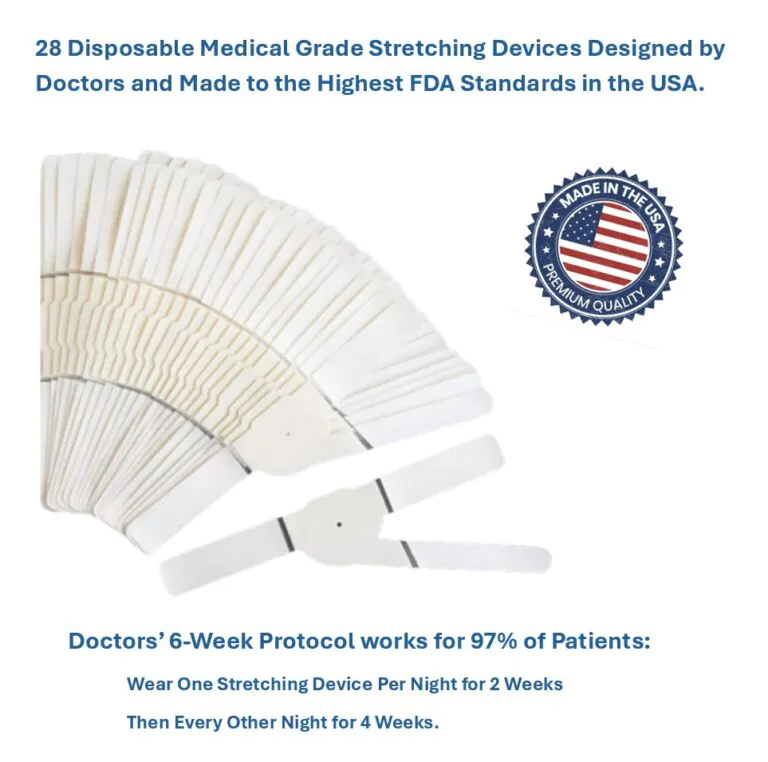
The Carpal Solution uses gentle, disposable stretch-taping devices worn for 6 to 8 hours a night to passively stretch the soft tissue around the carpal tunnel while you sleep. That stretch opens space, eases pressure on the median nerve and lets the blood vessels and lymph channels drain trapped inflammation. Most patients feel relief within weeks, and the treatment is rated 4.9 out of 5 stars on independent review sites like Google Reviews and Birdeye. Over more than two decades, the Carpal Solution has earned 97% patient satisfaction, and many patients come back to reorder.
For people with persistent symptoms, our doctors recommend using both together: avoid the foods to avoid for carpal tunnel during the day, and wear the Carpal Solution at night. The diet lowers the tide of systemic inflammation, and the Carpal Solution clears the trapped inflammation at the wrist every night. Add the home techniques in the protocol, such as cold water plunges, deep tissue self-massage, daytime stretches and deep diaphragm breathing, and you have a complete natural plan. Read more in Physical Therapy for Carpal Tunnel. For a complete home plan, see Carpal Tunnel Self-Care: The Doctors’ 7-Step Plan.
Mary Jo, one of our patients, put it this way: she felt about 70% better in the first six weeks of the treatment and diet program, reached full recovery in about six months, and said she felt “10 years younger.”

Once you are in remission, keep healthy eating habits and use the Carpal Solution now and then as prevention, as explained in Carpal Tunnel Prevention Exercises.
When Healing Needs a Doctor’s Help and Professional Medical Evaluation
- Constant numbness that does not improve or loss of feeling in the fingertips that does not improve in 4 to 8 weeks.
- Extreme loss of the muscle at the base of the thumb, with loss of grip strength that does not improve over 6 to 8 weeks.
- Worsening symptoms over 6 to 8 weeks while using the best conservative treatments
- Symptoms that begin suddenly after hand or wrist trauma, a fracture or severe sprain from a fall or auto accident.
- Odd Symptoms that are not consistent with the Carpal Tunnel Symptoms listed on this website, that might be indicative of other nerve issues. A nerve conductivity study can clear up the confusion with minimal costs and not too much pain and no risk.
These signs may mean more advanced nerve involvement or a different condition and deserve professional medical evaluation and in person consultation. Home treatment can be used alongside professional in-person medical care while you wait for the healthcare delivery system to fit you into their schedule. There is no reason to wait doing nothing. You can start proven natural conservative treatment with good patient reviews while you wait for your appointments. If your symptoms start improving over 6 to 8 weeks, then you know you are on the right track and surgery is not necessary.
The Bottom Line
The most important foods to avoid for carpal tunnel are added sugar, refined carbs, processed foods with hidden sugar, sugary sports drinks, fried foods, excess alcohol and very salty meals. Replace them with dark leafy greens, dark berries, oily fish, olive oil, nuts, ginger, turmeric, bone broth and plenty of water with electrolytes.
Give your body 3 to 6 weeks to adjust. Pair your new diet with the Carpal Solution every night, and you treat carpal tunnel from both sides: lower inflammation throughout the body and less trapped inflammation in the wrist. Most determined people can manage carpal tunnel naturally and avoid surgery.
Foods to Avoid for Carpal Tunnel: FAQ
What foods should you avoid with carpal tunnel?
The main foods to avoid for carpal tunnel are added sugar and sweets, refined carbs such as white bread, pasta and white rice, processed foods with hidden sugar, sugary sports drinks, fried foods and trans fats, excess alcohol and very salty processed meals.
Can diet really help carpal tunnel?
Diet does not loosen the tight tissue in the wrist, but it can lower the systemic inflammation that keeps carpal tunnel coming back. Obesity and diabetes are both linked to higher risk of carpal tunnel syndrome, and both respond to what you eat. Our doctors recommend diet alongside nightly treatment with the Carpal Solution.
What is the best diet for carpal tunnel?
An anti-inflammatory diet that is low in sugar and refined carbs and rich in vegetables, dark berries, fish, olive oil and nuts. Our doctors point patients to Dr. Valter Longo’s The Longevity Diet, Max Lugavere’s Genius Foods and our own Carpal Solution Diet.
Is sugar bad for carpal tunnel?
Yes. Our doctors call sugar the number one enemy in managing inflammation. High sugar intake drives inflammation and adds to weight gain and diabetes risk, which are both linked to carpal tunnel syndrome.
How long does it take for diet changes to help carpal tunnel?
Most people need about 3 to 6 weeks to adjust to eating less sugar and fewer carbs. Combined with the Carpal Solution, many patients notice clear improvement within that time.
Does drinking water help carpal tunnel?
Staying well hydrated helps your body carry away inflammation and waste. Our doctors recommend plenty of water with sugar-free electrolytes, especially after deep tissue self-massage, instead of sugary sports drinks.
Should I fast to reduce carpal tunnel inflammation?
Some people follow the time-restricted eating and fasting-mimicking approach in Dr. Longo’s book. Talk with your doctor first, especially if you have diabetes, take medicine for blood sugar or blood pressure, or are pregnant.
Related Reading
- Doctor’s Recommendations for Persistent Carpal Tunnel Symptoms
- The Carpal Solution Diet
- The Root Cause of Carpal Tunnel Syndrome: Trapped Inflammation
- Causes of Carpal Tunnel Syndrome
- Persistent Symptoms of Carpal Tunnel
Sources
- Esposito K, Giugliano D. Diet and inflammation: a link to metabolic and cardiovascular diseases. European Heart Journal. 2006;27(1):15–20. doi.org/10.1093/eurheartj/ehi605
- Shiri R, et al. The effect of excess body mass on the risk of carpal tunnel syndrome: a meta-analysis of 58 studies. Obesity Reviews. 2015. HealthDay report
- Pourmemari MH, Shiri R. Diabetes as a risk factor for carpal tunnel syndrome: a systematic review and meta-analysis. Diabetic Medicine. 2016. PubMed
- Schulte EM, Avena NM, Gearhardt AN. Which foods may be addictive? The roles of processing, fat content, and glycemic load. PLOS ONE. 2015;10(2):e0117959. doi.org/10.1371/journal.pone.0117959
- Longo V. The Longevity Diet. Avery/Penguin Random House; 2018. Penguin Random House
- Avena NM, Talbott JR. Why Diets Fail (Because You’re Addicted to Sugar). Ten Speed Press; 2014.
- Lugavere M, Grewal P. Genius Foods: Become Smarter, Happier, and More Productive While Protecting Your Brain for Life. Harper Wave; 2018.
- First Hand Medical. Persistent Symptoms of CTS: Doctors’ Recommendations, How to Accelerate Your Recovery. December 2025. MyCarpalTunnel.com
Disclosure: First Hand Medical makes the Carpal Solution, and Dr. Scherger is a co-founder of the company. This article is for education and is not a substitute for advice from your own doctor.