 Created by renowned Harvard health care professionals.


Can a Wrist Brace Prevent Carpal Tunnel? 5 Honest Facts About the Carpal Tunnel Prevention Brace
A Master Occupational Therapist explains what a carpal tunnel prevention brace can and cannot do, why night matters most, and the day-and-night plan that keeps carpal tunnel away
Written by Alan Ward, MOT, OTR, Vice President and Master Occupational Therapist, Precision Rehabilitation, Blanding, Utah, and Jeff Conley, First Hand Medical · Last reviewed: November 2026
Can a wrist brace prevent carpal tunnel? It is one of the most common questions people ask when their hands start tingling at night or when they work long hours at a keyboard, a steering wheel or a workbench. A carpal tunnel prevention brace sounds like a simple answer: put it on, keep the wrist straight, and keep carpal tunnel away.
The honest answer is more interesting. A brace can help ease night symptoms for some people, but there is little evidence that a standard wrist brace prevents carpal tunnel syndrome, and wearing a rigid brace all day can create new problems. What prevents carpal tunnel best is keeping the soft tissue around the carpal tunnel loose and keeping inflammation from getting trapped there, especially at night.
In this guide, Master Occupational Therapist Alan Ward, who has fit braces and treated hands for most of his career, explains what a carpal tunnel prevention brace can and cannot do, and the day-and-night plan he recommends instead.
Table of Contents
Carpal Tunnel Prevention Brace: The Short Answer
- A brace is not proven to prevent carpal tunnel. Studies show a night splint may help some people who already have symptoms, but there is little evidence that a wrist brace keeps carpal tunnel from starting.
- Night is what matters most. Many people curl their wrists while they sleep, which squeezes the median nerve for hours.
- All-day bracing can backfire. A rigid brace worn during the day can stiffen and weaken the hand and wrist.
- Holding is not healing. A brace holds the wrist still; it does not loosen the tight tissue over the carpal tunnel.
- The better prevention tool works while you sleep. The Carpal Solution gently stretches the soft tissue at night, and it can be used from once a week to once every six months to keep carpal tunnel away.
1. Can a Wrist Brace Prevent Carpal Tunnel? What the Evidence Says
Most research on wrist braces studies people who already have carpal tunnel syndrome, not people trying to prevent it. Here is what the strongest evidence shows:
- Cochrane review, 2023 (29 trials, 1,937 adults): splinting may provide little or no benefit for symptoms in the short term, and probably does not improve hand function. Night-time splinting may increase the chance of overall improvement compared with no treatment, but the certainty of that evidence is low. Long-term benefit is uncertain.
- Workplace prevention: ergonomics researchers have long concluded that commercial wrist splints are not an ergonomic control for the job stresses linked to carpal tunnel syndrome. In other words, wearing a brace at work does not remove the cause.
So, can a wrist brace prevent carpal tunnel? There is no good evidence that it does. A carpal tunnel prevention brace may make your wrist feel supported, and a night splint can ease symptoms for some people, but neither one treats the reason carpal tunnel develops.
That does not mean braces are useless. It means you should use them for the right job, for the right length of time, and pair them with something that actually keeps the tissue loose.
2. How a Wrist Brace Is Supposed to Work
The carpal tunnel is a narrow passage at the base of the palm. Pressure inside it is lowest when the wrist is straight and rises when the wrist bends forward or backward. A wrist brace for carpal tunnel, often called a cock-up splint, holds the wrist close to neutral so the tunnel stays as open as possible.
Mr. Ward explains the traditional approach this way:
“The traditional conservative approach for a long time is just to put a cock-up splint on it, which will hold that wrist in a neutral position… If we keep that straight, the idea is that we’re able to keep the carpal tunnel open larger and keep some of the pressure off of that nerve… and certainly there’s some validity to that argument.”
— Alan Ward, MOT, OTR, Master Occupational Therapist, in a video interview
The key word is hold. A prevention wrist brace limits bad positions while you wear it. It does not change the tight tissue or the trapped inflammation that make the tunnel crowded in the first place. Take the brace off, and nothing has changed.
3. Why Wearing a Brace All Day Can Backfire
Some people wear a carpal tunnel prevention brace all day, every day, hoping more is better. Hand therapists usually advise against that. Common problems with long daytime bracing include:
- Stiffness: joints and tendons that are not moved lose flexibility, and tight tissue is part of what crowds the carpal tunnel.
- Weakness: muscles that are braced and not used get weaker over time. Learn more in Muscle Atrophy and Loss of Grip Strength.
- Strain moves elsewhere: when the wrist cannot move, people often push harder with the fingers, elbow and shoulder.
- Less circulation: a tight strap can restrict the movement that helps blood and lymph fluid drain away from the hand.
- A false sense of security: people keep doing the same strained work, longer, because the brace feels protective.
Our doctors’ Persistent Symptoms Protocol recommends limiting rigid splints to short periods of heavy lifting. For everyday prevention, movement, breaks and gentle stretching do more good.
For a side-by-side look at the braces people buy, see Best Wrist Brace for Carpal Tunnel and Carpal Tunnel Splints vs. the Carpal Solution.
4. Night Is When Carpal Tunnel Builds
If you only remember one thing about prevention, remember this: the hours you sleep matter most. During the day, you move your hands, change positions and take breaks. At night, you may hold the same curled position for hours.
“I find that most of my patients that are getting it, really the vast majority, it has to do with how they position their hands at night. Most of them are side sleepers. They’ll go on their side and curl their hands up this way, or they go to hand dangling off the edge of the bed this way. They’re putting it in that kinked position and they’re stressing that nerve out repeatedly.”
— Alan Ward, MOT, OTR, Master Occupational Therapist, in a video interview
That is why a carpal tunnel night splint is the one type of brace with some evidence behind it, and why the most effective prevention happens while you sleep. Read more in Carpal Tunnel Night Splint.
Inflammation also builds overnight. When the median nerve is squeezed, so are the small blood vessels and lymph channels that should drain the area. Less drainage means more swelling, and more swelling means more pressure. That is the cycle prevention is meant to stop.
5. Holding the Wrist vs. Stretching the Tissue
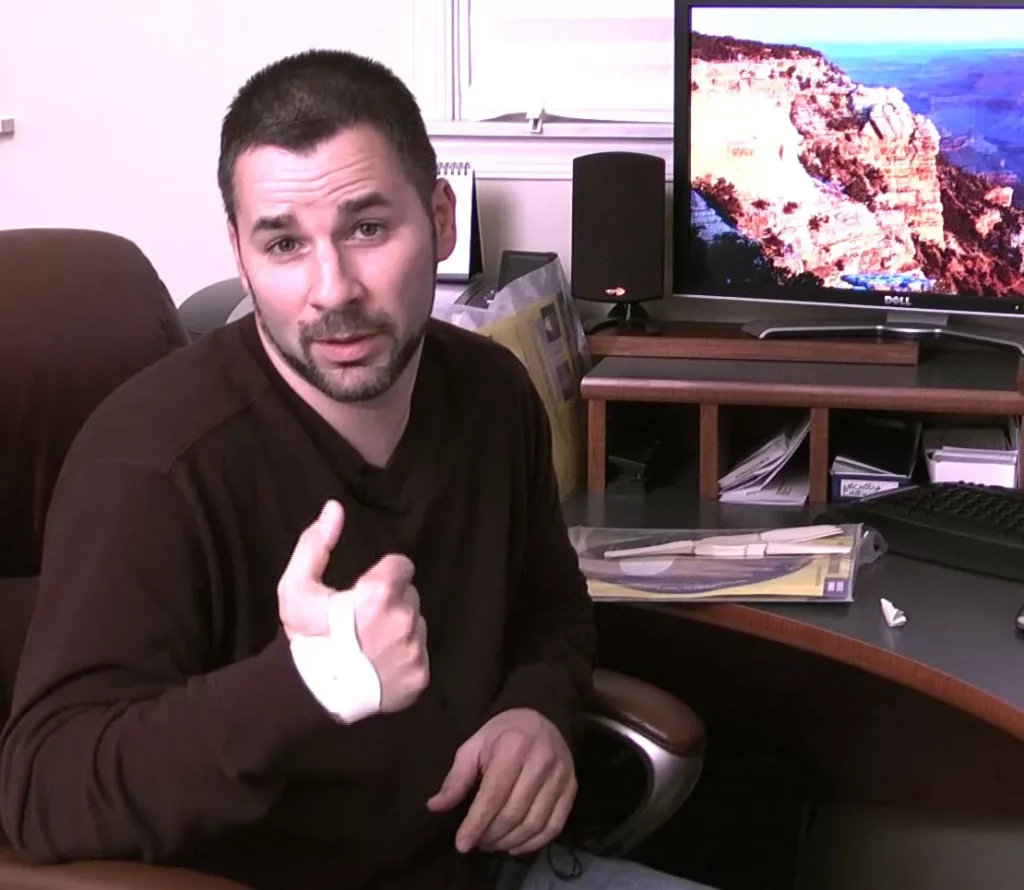
Mr. Ward has used the Carpal Solution with thousands of patients over 17 years. He started as a skeptic, treating one hand with traditional splinting and the other hand with the Carpal Solution to compare. What changed his mind was the difference between holding the wrist and stretching the tissue:
“The reason that I like the Carpal Solution is that we are doing more than just trying to hold that wrist in a static position. We’re actually trying to create a biological change in the body… We’re trying to get this ligament to stretch and open that tunnel just a little bit more, without any invasive measures, no needles, no scalpels, no anything like that.”
— Alan Ward, MOT, OTR, Master Occupational Therapist, in a video interview
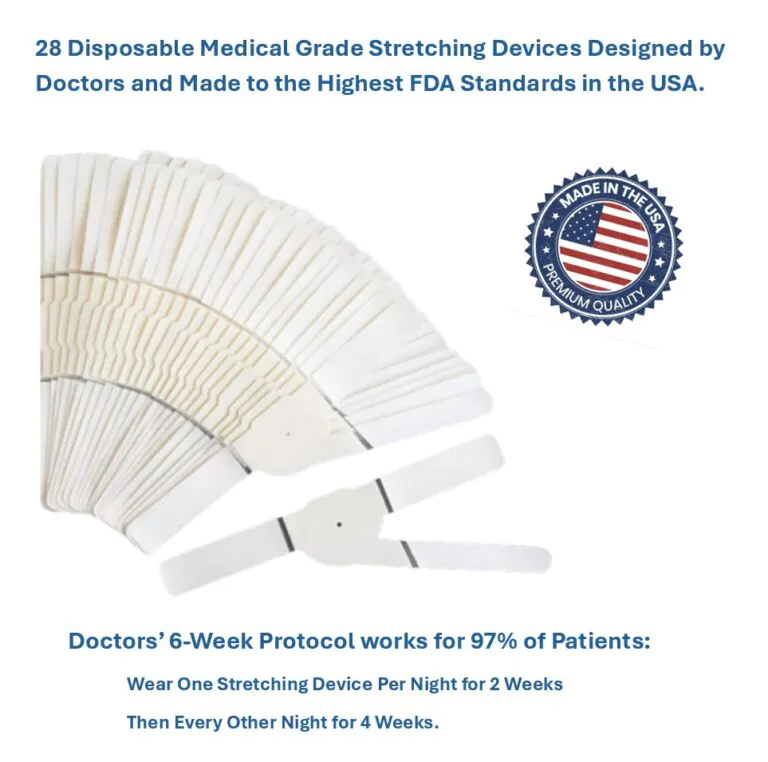
The Carpal Solution is not a rigid brace. It uses soft, disposable stretch-taping devices worn for 6 to 8 hours at night. They gently and passively stretch the soft tissue around the carpal tunnel while you sleep, which opens space, takes pressure off the median nerve and helps the area drain trapped inflammation. Your hand stays free to move, and the devices are comfortable enough to sleep in.
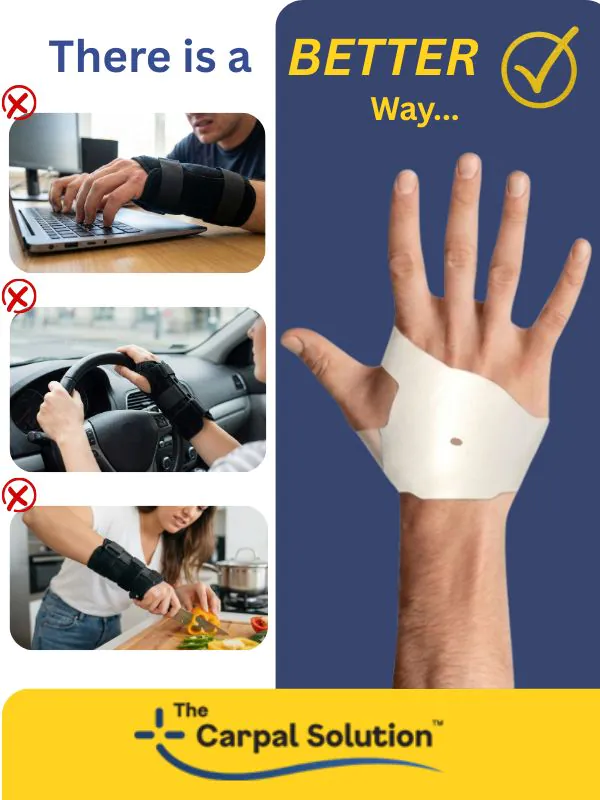
That makes the Carpal Solution a natural choice when people ask for a carpal tunnel prevention brace. Instead of wearing a brace every day, most people use it as an occasional night treatment:
- To keep carpal tunnel in remission: one night anywhere from once a week to once every six months, depending on how hard you use your hands.
- To prevent carpal tunnel if you have never had it: occasional nights during busy work seasons, pregnancy, or any time you notice early tingling.
- Heavy hand use: about one night every 1 to 3 months.
- Inflammatory or autoimmune conditions: more often, as often as every 1 to 2 months or more, as your doctor advises.
Compliance is the hidden advantage. Most prevention plans fail because they depend on daily discipline. Putting on a Carpal Solution device before bed and sleeping takes about a minute. As Mr. Ward puts it, even repeating treatment now and then “still costs way, way less and is way, way less risky than one surgery.”
Why a Passive Stretching Hand Brace Is the Best Brace for Natural Healing
If you are going to wear a wrist brace for carpal tunnel, or you are shopping for a carpal tunnel prevention brace, our doctors believe the best type is a passive stretching hand brace. A rigid brace only holds the wrist in place. A passive stretching hand brace, like the Carpal Solution, does something a rigid splint cannot: it works on the tight soft tissue that crowds the carpal tunnel, while you sleep, so the body can heal itself naturally.
220+ hours of targeted stretching in 6 weeks
The Carpal Solution is worn for 6 to 8 hours a night. Over the standard six-week protocol, that adds up to more than 220 hours of gentle, targeted stretching of the soft tissue around the carpal tunnel. No therapist, exercise routine or daytime carpal tunnel prevention brace can deliver that much stretching in the same time. And because it happens during sleep, it takes almost no time out of your day.
Jump-starting the body’s natural healing
Our doctors view carpal tunnel syndrome as a problem of trapped inflammation. When carpal tunnel begins, pressure builds in the carpal tunnel space. That pressure squeezes not only the median nerve, but also the small blood vessels and lymph channels that normally drain fluid and inflammation away from the wrist. The body’s natural healing process is blocked: fluid cannot drain, swelling builds, and the pressure keeps rising.
A passive stretching hand brace breaks that cycle. Night after night, the gentle stretch opens space in the tunnel, relieves pressure on the restricted lymph channels and restores normal drainage. With the pressure off, the body can clear the trapped inflammation and do what it is designed to do: heal.
What results to expect
- Over 90% of patients: carpal tunnel symptoms can be completely resolved over the six-week protocol.
- About 10% of patients: those with excessive systemic inflammation need 8 to 12 weeks of treatment to reach complete remission.
- Even the slower 10%: are usually 50 to 70 percent better after just 6 weeks with the Carpal Solution stretching hand brace.
If you are in that slower group, our doctors’ Doctor’s Recommendations for Persistent Carpal Tunnel Symptoms and Foods to Avoid for Carpal Tunnel explain how to lower systemic inflammation and speed things up. Learn more about the six-week protocol in Why a Six Week Carpal Tunnel Treatment Protocol?
That is the difference between a carpal tunnel prevention brace that only holds and a passive stretching hand brace that heals: one keeps the wrist still for a few hours, the other gives your body the space it needs to recover.
Prevention Brace Options Compared
| Option | What it does | Best use | Drawbacks |
|---|---|---|---|
| Rigid cock-up wrist splint | Holds the wrist straight | Short periods of heavy lifting; some people at night | Bulky; stiffness and weakness if worn all day; does not stretch tissue |
| Soft daytime wrist brace or wrap | Light support and a reminder to keep the wrist straight | Occasional use during long tasks | Little evidence for prevention; can feel protective while strain continues |
| Compression glove | Mild compression and warmth | Comfort | Does not change wrist position or tissue |
| Carpal tunnel night splint | Limits wrist bending while you sleep | Easing night symptoms | Many people find rigid splints hard to sleep in; holds but does not stretch |
| The Carpal Solution | Gently stretches the soft tissue around the carpal tunnel for 6 to 8 hours at night | Treatment, and occasional prevention nights once a week to once every six months | Requires a minute of setup at bedtime; 97% patient satisfaction over 21 years and 4.9 out of 5 stars on independent review sites like Google Reviews and Birdeye |
Who Should Think About Prevention
You do not need a carpal tunnel prevention brace or any special treatment if your hands feel fine. But prevention makes sense if you:
- Have had carpal tunnel before, even if it went away.
- Use your hands hard every day, such as typing, assembly, hair styling, dental work, playing music, driving or using tools.
- Sleep on your side with your wrists curled.
- Are pregnant, or have diabetes, thyroid disease or rheumatoid arthritis.
- Carry extra weight, which raises the risk of carpal tunnel syndrome.
- Notice early signs, such as tingling in the thumb, index and middle fingers when you wake up.
See who is most at risk in Carpal Tunnel Syndrome Symptoms: Who Is at Risk.
A Day-and-Night Carpal Tunnel Prevention Plan
Mr. Ward finds prevention works best when daytime habits and nighttime treatment work together:
- Keep your wrists neutral at work. Adjust your keyboard, mouse and chair so your wrists stay straight, and avoid resting the heel of your hand on hard edges.
- Take short breaks. Every 30 to 60 minutes, drop your hands, shake them out and change positions.
- Stretch during the day. Gentle wrist and finger stretches, nerve glides and tendon glides, up to 6 sets of 10 repetitions a day if it fits your schedule. Hold each stretch about 15 seconds and rest about 30 seconds. See Carpal Tunnel Prevention Exercises.
- Skip the squeeze balls. Grip trainers, putty and stress balls are not helpful while you are healing; grip strength returns on its own once pressure comes off the nerve.
- Use a brace only for the right job. A rigid splint for short periods of heavy lifting is fine. Do not wear one all day.
- Protect your nights. Avoid sleeping with your wrists curled, and use the Carpal Solution as an occasional prevention night, from once a week to once every six months.
- Lower inflammation. Cut back on sugar and processed foods, stay hydrated and stay active. See Foods to Avoid for Carpal Tunnel.
Pairing daytime stretching with nighttime passive stretching is the most powerful prevention combination we know. The night treatment is also the easiest part to stick with, because it works while you sleep.
When Healing Needs a Doctor’s Help and Professional Medical Evaluation
- Constant numbness that does not improve or loss of feeling in the fingertips that does not improve in 4 to 8 weeks.
- Extreme loss of the muscle at the base of the thumb, with loss of grip strength that does not improve over 6 to 8 weeks.
- Worsening symptoms over 6 to 8 weeks while using the best conservative treatments
- Symptoms that begin suddenly after hand or wrist trauma, a fracture or severe sprain from a fall or auto accident.
- Odd Symptoms that are not consistent with the Carpal Tunnel Symptoms listed on this website, that might be indicative of other nerve issues. A nerve conductivity study can clear up the confusion with minimal costs and not too much pain and no risk.
These signs may mean more advanced nerve involvement or a different condition and deserve professional medical evaluation and in person consultation. Home treatment can be used alongside professional in-person medical care while you wait for the healthcare delivery system to fit you into their schedule. There is no reason to wait doing nothing. You can start proven natural conservative treatment with good patient reviews while you wait for your appointments. If your symptoms start improving over 6 to 8 weeks, then you know you are on the right track and surgery is not necessary.
The Bottom Line
Can a wrist brace prevent carpal tunnel? Not reliably. A carpal tunnel prevention brace can hold the wrist straight and a night splint may ease symptoms for some people, but braces do not loosen the tight tissue or clear the trapped inflammation that cause carpal tunnel, and wearing one all day can make the hand stiffer and weaker.
The better plan is to keep your hands moving and stretched during the day and treat the tissue at night. The Carpal Solution does that while you sleep, and occasional prevention nights, once a week to once every six months, help keep carpal tunnel from coming back.
Carpal Tunnel Prevention Brace: FAQ
Can a wrist brace prevent carpal tunnel?
There is little evidence that a wrist brace prevents carpal tunnel syndrome. A night splint may ease symptoms for some people who already have it, but a brace holds the wrist still and does not change the tight tissue or trapped inflammation that cause carpal tunnel.
Should I wear a carpal tunnel prevention brace at work?
Most hand therapists do not recommend wearing a rigid brace all day. It can cause stiffness and weakness and shift strain to other joints. Use a brace for short periods of heavy lifting, and focus on wrist position, breaks and daytime stretching instead.
Is it better to wear a wrist brace at night?
Night is when many people curl their wrists for hours, so night is the best time for treatment. A night splint can limit bending, but the Carpal Solution goes further by gently stretching the soft tissue around the carpal tunnel while you sleep.
How often should I use the Carpal Solution for prevention?
Most people use one night anywhere from once a week to once every six months. Heavy hand users often use it every 1 to 3 months, and people with inflammatory conditions may use it more often.
Can wearing a brace too much make carpal tunnel worse?
It can. Wearing a rigid brace for long periods can stiffen the wrist and weaken the hand muscles, and it does nothing to loosen the tissue over the carpal tunnel.
What is the best prevention wrist brace?
For prevention, a brace matters less than what you do day and night. Daytime stretching and breaks, plus occasional nights with the Carpal Solution, give the best protection with the least effort.
Related Reading
- Best Wrist Brace for Carpal Tunnel
- Carpal Tunnel Night Splint
- Occupational Therapy for Carpal Tunnel
- Causes of Carpal Tunnel Syndrome
- The Root Cause of Carpal Tunnel Syndrome: Trapped Inflammation
Sources
- Splinting for carpal tunnel syndrome. Cochrane Database of Systematic Reviews. 2023. Cochrane
- Perez-Balke G, Buchholz B. Ergonomics and carpal tunnel syndrome. Work. 1994;4(3). IOS Press
- Shiri R, et al. The effect of excess body mass on the risk of carpal tunnel syndrome: a meta-analysis of 58 studies. Obesity Reviews. 2015. HealthDay report
- Ward A. Video interview on carpal tunnel syndrome and the Carpal Solution. First Hand Medical. MyCarpalTunnel.com
Disclosure: First Hand Medical makes the Carpal Solution. Mr. Ward uses the Carpal Solution with his occupational therapy patients and is featured on this website as a medical expert. This article is for education and is not a substitute for advice from your own doctor.