 Created by renowned Harvard health care professionals.



Written by Jeff Conley, President of First Hand Medical · Medically reviewed by Michelle Robin, DC, chiropractor and wellness expert, founder of Your Wellness Connection in Kansas City · Last reviewed: November 2026
Table of Contents
It is human nature to try to aggressively treat any malady with the maximum force of treatment options. However, by following human nature, many areas of medicine are providing “too much medicine” that in many cases actually causes more harm than good for the patient. This guide explains carpal tunnel treatment without medication, and why less medicine can mean better health.
This is a contrarian concept that has been put forward by a leader in the study and research of Health Policy and Clinical Practice, Dr. H. Gilbert Welch. Dr. Welch was an Internist at the Veterans Administration Medical Center in White River Junction, Vermont for many years and was a Professor of Medicine at Dartmouth Institute for Health Policy and Clinical Practice for over a decade.
Dr. Welch Authored a book addressing the subject in detail called: Less Medicine More Health
He also wrote another book called: Over-Diagnosed: Making People Sick in the Pursuit of Health
Like many areas of medicine, the diagnosis and treatment of Carpal Tunnel Syndrome fall into the negative cycle of:
“Too much medicine being applied for worse health outcomes.”
 Dr. Welch was one of the first to establish the case that too much medical care could be a problem, not just because it is so expensive, but because it can result in adverse effects for the patient. It’s not to deny that some people get too little medical care, rather, it’s that the conventional concern about “too little medical treatment” needs to be balanced with a concern about “too much”: Too many people are being tested and exposed to the harmful effects of the testing process; too many people being subjected to treatments they don’t need—or can’t benefit from or that have too many side effects or risks.
The American public has been sold the idea that seeking medical care is one of the most important steps to maintain wellness. Surprisingly, medical care is not, in fact, well correlated with good health. So, more medicine does not necessarily equal more health; in reality the opposite may be true.
A complex web of factors has created the phenomenon of over-diagnosis: the popular media promotes fear of disease and perpetuates the myth that early, aggressive treatment is always best; in an attempt to avoid lawsuits, doctors have begun to leave no test undone, no abnormality overlooked; and profits are being made from screenings, medical procedures, and pharmaceuticals.
Revealing the social, medical, and economic ramifications of a health-care system that over-diagnoses and over-treats patients, Dr. H. Gilbert Welch makes a reasoned call for change that would save us pain, worry, and money.
Such testing of healthy individuals all too often results in over-diagnosis and over-treatment, because in reality there is “nothing to fix.” As a result, contend the authors, although a few will be helped, many will be over-diagnosed, and some will be harmed.
Carpal Tunnel Treatment Without Medication: Why Less Can Be More
The page argues that the usual first steps in carpal tunnel therapy, such as splints, oral medication, injections and surgery, are not always the best fit, and that gentler options deserve a look. Talk with your doctor about the full list of options. You can read about carpal tunnel treatment options, carpal tunnel surgery and carpal tunnel symptoms.
Examples of too much medicine for worse outcomes, and why carpal tunnel treatment without medication is often better:
Example 1 – Wrist Splints and Oral Pain Medication
A common treatment option offered to patients with Carpal Tunnel Pain on their first Doctor visit is to prescribe a wrist splint and oral pain medication. The reality is that neither of these treats the cause of carpal tunnel. In a review of published studies, about 30% of patients treated with wrist splinting reported significant improvement in their symptoms (Bland, Muscle & Nerve, 2007), and pain pills do not relieve the pressure on the nerve.
Wrist Splints sometimes relieve some discomfort from movement at first, but rigid splints worn for long periods can weaken the hand and forearm muscles, and a rigid piece of fiberglass or metal pressing against the soft tissue can irritate it. A splint holds the wrist in a neutral position, which can reduce pain from movement, but it does not promote healing from carpal tunnel syndrome. It causes muscle atrophy and stiffness, and its tight compression restricts blood circulation and lymphatic fluid exchange, which slows the dispersion of entrapped swelling, the root cause of carpal tunnel syndrome. Our medical team has observed that splints give some relief at first but aggravate symptoms in the long run. Immobilization is great for fractures and sprains, but not for carpal tunnel syndrome. Many patients tell us their symptoms did not improve, or got worse, with rigid wrist splints and hand braces.
Oral pain medication has little effect on Carpal Tunnel because blood circulation to the injured tissue is blocked by the trapped inflammation and trapped lymphatic fluid that are putting pressure on the Median Nerve in the Carpal Tunnel. If the actives to not reach the injured tissue they have little effect in relieving pain. Also, there are way too many side effects and dependency issues associated with using oral pain medication of any kind to treat a chronic condition like Carpal Tunnel Syndrome.
It is just not worth the risks for minimal pain relief from these pain medications. Long-term use of pain and anti-inflammatory pills can harm the stomach, kidneys, liver and heart. Why put key organs at risks for short term pain relief that does not contribute to a long-term solution to the problem of pressure on the Median Nerve in the Carpal Tunnel. Carpal tunnel treatment without medication avoids these risks entirely.
Example 2 – Steroid Injections
Steroid Injections are often applied in the second visit after the wrist splints and oral pain medication did not help. Steroid injections often relieve carpal tunnel symptoms for a few months, but for most people the benefit fades. In a 2024 systematic review, 41.6% of patients who had a steroid injection eventually had carpal tunnel surgery, and 29% needed another injection (Chan et al., Hand, 2024). These steroid treatments are not a long-term answer for most people. Carpal tunnel treatment without medication can be repeated whenever symptoms return, without those risks.
 The bigger question is do steroids have any risks or problems to which a patient should be wary of exposing themselves. Most patients generally have a natural wariness towards steroid treatment. The negative long-term consequences of steroid use by athletes in professional or Olympic sporting events have been well documented. Studies of steroid injections into joints have linked repeated injections to cartilage loss, and repeated steroid injections can weaken tendons and other soft tissue.
Again, why would anyone submit themselves to the long-term risks of repeated steroid injections for short-term pain relief from Carpal Tunnel Symptoms?
Cartilage is the smooth cushion that covers the ends of our bones and allows free movement of joints without pain. Once Cartilage is gone from our knees or elbows, or wrists, bone on bone movement will cause excruciating pain, limiting movement and virtually preempting natures best medicine:
Daily Cardiovascular Exercise.
Example 3 – Carpal Tunnel Surgery
Carpal Tunnel Surgery has a patient satisfaction rate lower than 69% (about 31% of patients report lingering or recurring symptoms after surgery, and no patient is satisfied with lingering symptoms) based on patient surveys. There is anywhere from 3 weeks to 12 weeks of downtime due to Carpal Tunnel Surgery and a host of potential complications ranging from permanent loss of grip strength to permanent tenderness at the point of incision. About 8% of people say their Carpal Tunnel Symptoms get worse after surgery (Bland, Muscle & Nerve, 2007: a review of 209 studies covering 32,936 operations). It can be a very frustrating and time-consuming process with many rehabilitation visits and oral pain medication to deal with post-operational pain.
 However, many patients who believed Carpal Tunnel Surgery was a permanent fix are distressed and unsettled when their Carpal Tunnel Symptoms return even after surgery. How often carpal tunnel symptoms come back after a “successful surgery” has rarely been studied beyond a few years. The highest published rate is 57% of patients with at least some symptoms returning within five and a half years (Nancollas et al., 1995, reviewed in Louie, Earp and Blazar, Hand, 2012).
Based on two decades of clinical experience with patients, our doctors estimate that symptoms return for 80 to 90% of patients within 10 years of surgery. This is not a statistically researched figure. It is their best estimate until the work is done to follow carpal tunnel patients for 10 years or more, as other orthopedic fields do for hip and knee replacements. Why so little certainty? Published recurrence rates range from about 4% to 57%, a spread that shows how poorly this question has been studied. Studies define recurrence differently, follow patients for only a few years and lose many of them along the way. The lowest figures count only repeat operations, a biased approach that ignores patient satisfaction and the patient’s perspective, so they are not credible. Read more about carpal tunnel recurrence after surgery. Getting to surgery also means waiting: for appointments, a nerve test, insurance approval and an opening in a busy surgeon’s schedule. A safe, non-invasive treatment can relieve the sleep loss, numbness and pain while you wait.
The bad news is, second surgeries have a patient satisfaction rate between 16% and 40% based on patient surveys. This is due to the formation of scar tissue from the first surgical procedure.
Third surgeries for Carpal Tunnel Pain are strongly discouraged by Medical School Experts due to the potential for complications due to scar tissue built up from the previous two surgical procedures. Also, when the risk associated with any surgical procedure and its trauma are considered, for a relative short-term benefit. Surgery is a poor choice for the treatment of a syndrome caused by trapped inflammation and trapped lymphatic fluid. For most people, carpal tunnel treatment without medication or surgery should come first.
Carpal Tunnel Treatment Without Medication: What Actually Helps
If pills, injections and surgery are the “too much medicine” path, what does the gentler path look like? Our doctors build carpal tunnel treatment without medication around one anchor and a few helpers.
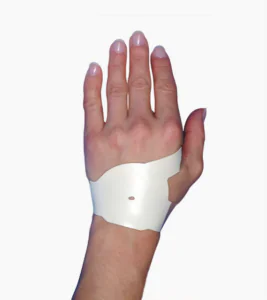
The anchor: passive stretching while you sleep
The Carpal Solution is a medically prescribed passive stretching device worn at night. It gently stretches the tight tissue around the carpal tunnel and relieves pressure on the median nerve, with no pills, needles or surgery. Over the six-week protocol, it delivers more than 220 hours of targeted stretching.
- Relief of the worst symptoms usually begins in two to three weeks.
- Over 90% of people resolve their symptoms within six weeks.
- About 10% of people, usually those with excess inflammation throughout the body, need 8 to 12 weeks and are typically 50 to 70% better at six weeks.
Over two decades, more than 100,000 people have used the Carpal Solution, with 97% patient satisfaction and 4.9 out of 5 stars on independent review sites like Google Reviews.
The helpers
- Cold therapy to calm swelling after a long day of hand work.
- Gentle daytime stretches: up to 6 sets of 10, holding each stretch about 15 seconds with 30 seconds of rest between.
- Compression gloves during the day to increase blood circulation and protect the hand from everyday bumps. Combined with the Carpal Solution at night, it is one of the best combination therapies.
- Better ergonomics and microbreaks at work.
- Diet changes that reduce inflammation, such as those described in Dr. Valter Longo’s The Longevity Diet, Dr. Nicole Avena’s Why Diets Fail and Max Lugavere’s Genius Foods.
- Aerobic exercise once your symptoms are in remission.
Is Carpal Tunnel Treatment Without Medication Right for You?
For most people with mild to moderate carpal tunnel syndrome, carpal tunnel treatment without medication is the right place to start, once a doctor has confirmed the diagnosis. Less medicine does not mean no medical care: the best carpal tunnel treatment without medication still starts with an accurate diagnosis.
See a doctor promptly if your numbness is mainly in the little finger, if symptoms began after an injury, if both your hands and feet are affected, or if you notice weakness or thinning at the base of the thumb. These can point to other conditions or to more advanced nerve compression that needs a doctor’s care.
Excerpted from book: Overdiagnosed
“As I’ve noted, the conventional wisdom is that more diagnosis—particularly, more early diagnosis—means better medical care. The logic goes something like this: more diagnosis means more treatment, and more treatment means better health. This may be true for some. But there is another side to the story. More diagnosis may make healthy people feel more vulnerable—and, ironically, less healthy. In other words, excessive diagnosis can literally make you feel sick. And more diagnosis leads to excessive treatment—treatment for problems that either aren’t that bothersome or aren’t bothersome at all. Excessive treatment, of course, can really hurt you. Excessive diagnosis may lead to treatment that is worse than the disease.”
“All three of us (authors) are academic physicians: we see patients, we teach students, and we do research. But we are also people, and therefore potential patients. As people, we are concerned about the relentless expansion of the medical profession and the subsequent drive to turn people into patients. It is the melding of these two viewpoints—medical and personal—that provides the motivation for this book.”
Over-diagnosed Excerpt – New York Times Article – January 24, 2011
There is a better way to treat Carpal Tunnel Syndrome.
The adage “Less is More” applies in the case of Carpal Tunnel Treatment.


ORDER YOUR CARPAL SOLUTION TODAY
The ONLY treatment for carpal tunnel that comes with a no questions asked 30-Day Patient Satisfaction Guarantee and in-house dedicated pain relief team.
When Healing Needs a Doctor’s Help and Professional Medical Evaluation
- Constant numbness that does not improve or loss of feeling in the fingertips that does not improve in 4 to 8 weeks.
- Extreme loss of the muscle at the base of the thumb, with loss of grip strength that does not improve over 6 to 8 weeks.
- Worsening symptoms over 6 to 8 weeks while using the best conservative treatments
- Symptoms that begin suddenly after hand or wrist trauma, a fracture or severe sprain from a fall or auto accident.
- Odd Symptoms that are not consistent with the Carpal Tunnel Symptoms listed on this website, that might be indicative of other nerve issues. A nerve conductivity study can clear up the confusion with minimal costs and not too much pain and no risk.
These signs may mean more advanced nerve involvement or a different condition and deserve professional medical evaluation and in person consultation. Home treatment can be used alongside professional in-person medical care while you wait for the healthcare delivery system to fit you into their schedule. There is no reason to wait doing nothing. You can start proven natural conservative treatment with good patient reviews while you wait for your appointments. If your symptoms start improving over 6 to 8 weeks, then you know you are on the right track and surgery is not necessary.
Carpal Tunnel Treatment Without Medication: Frequently Asked Questions
Can carpal tunnel be treated without medication?
Yes. For most people with mild to moderate symptoms, nightly passive stretching with the Carpal Solution, cold therapy, gentle stretches and better ergonomics relieve symptoms without pills or injections.
Are pain pills effective for carpal tunnel?
They may dull pain for a while, but they do not relieve the pressure on the median nerve, and long-term use carries risks to the stomach, kidneys, liver and heart.
Are steroid injections a long-term answer?
For most people, no. The relief often fades within months. In a 2024 systematic review, 41.6% of patients eventually had surgery and 29% needed another injection.
Is there a carpal tunnel cure without medication?
No. Carpal tunnel syndrome is chronic and recurring and cannot be cured, by surgery or anything else. The Carpal Solution is the next best thing, controlling symptoms at home without downtime, risks, scar tissue or complications.


