 Created by renowned Harvard health care professionals.


Carpal Tunnel Test Procedure
Review our clinical study results to test hand strength before and after use of The Carpal Solution.
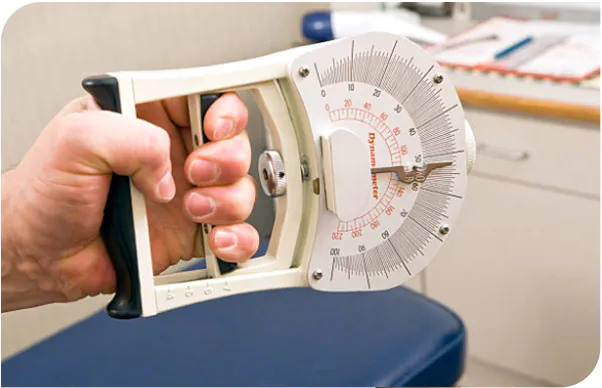
The carpal solution test procedure measured hand strength before and after use, using a pinch tester and a grip tester.
Pinch Tester Test is accomplished by applying pressure while the tester is between the distal pad of the first digit (thumb) and two distal joint of the second digit (index finger). Three readings were taken, the average of the three readings were recorded.
5 Position Grip Tester Test: Positions 1, 3 and 5 were selected to give the full range of muscle action. The Participants are instructed to squeeze 3 times at each position; the average of the 3 grip tests is calculated and recorded. By taking the average of three tests at each position, we minimize any skewing of the data due to a one-time high intensity squeeze or a particularly weak one-time squeeze.
All participants were instructed to wear the Carpal Solution every night for two weeks, using a new Carpal Solution each night. Normal activity was not to be altered, except if the patient was wearing a Cock-Up Splint, they were asked to discontinue the use of the splint during the study.
Base readings were recorded prior to the beginning of testing. Participants returned 3 times (Monday, Wednesday, Friday), to have the Pinch Tester and 5 Position Grip Tester performed and recorded. In exchange for participation, the volunteers received free samples of the Carpal Solution for use in the trial and also received feedback on the grip strength study, but received no other compensation for their participation. A total of 18 hands from 11 patients participated in the study.
Carpal Solution Test Procedure: What Was Measured
This carpal solution test procedure used two simple tools… The pinch tester measures how hard a person can squeeze between the thumb and finger, and the grip tester measures overall hand strength at several positions.
Why Strength Tests Matter
Hand strength can drop when the median nerve is under pressure, so changes in pinch and grip readings can show whether a treatment is helping. In the carpal solution test procedure, the readings were recorded before testing began, so each person could be compared with their own starting point. Study results from a company should be read with care, and your doctor can explain what they mean for you.
How Doctors Test for Carpal Tunnel
A different carpal tunnel test procedure is used in the clinic. A doctor usually starts with your symptoms and a physical exam, then may use Phalen’s test and Tinel’s sign to try to reproduce the tingling. A nerve conduction study can also measure how well the median nerve is working. You can read more about how carpal tunnel syndrome is diagnosed.
What the Results Mean for You
Higher pinch and grip readings suggest less pressure on the median nerve, but they are only one piece of the picture. Pain, numbness and sleep matter just as much when you decide how a treatment is working for you. Keep a simple log of your symptoms each week so you can share it with your doctor.
Limits of the Carpal Solution Test Procedure
A small test with a few participants cannot prove how a treatment works for everyone. The measurements show strength at certain points in time and do not replace a medical evaluation. If your hands are weak, numb or painful, see a doctor rather than relying on a home test.
Questions to Ask Your Doctor
- Which carpal tunnel test procedure do you recommend for my symptoms?
- Do I need a nerve conduction study?
- What treatment should I try first?
Keep the carpal solution test procedure in mind as you compare treatment options, and talk with your doctor about what the results mean for you.
Learn More
For general medical background on any carpal tunnel test procedure, see the NINDS fact sheet on carpal tunnel syndrome. You can also see how the Carpal Solution works and read the carpal tunnel symptoms that may call for a test.