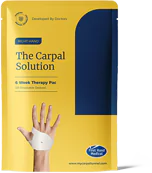
Created by renowned Harvard health care professionals.



Cardiologist, Medical Expert and Golf Health Advisor at First Hand Medical
Table of Contents
About Doctor Edward A. Palank, MD
Edward A. Palank, M.D. – FACC, FACPE, CPE is a medical expert in cardiology and served on the Board of Directors of the American College of Physician Executives and the New England Heart Institute.
Dr. Palank has over thirty years of experience as a leading cardiologist, founder and administrator of cardiology programs, and faculty instructor at leading medical schools. A New England cardiologist who now practices in Fort Myers, Florida, he is board certified by the American Board of Internal Medicine and affiliated with HealthPark Medical Center and Lee Memorial Hospital.
The Golf Doc
Dr. Palank is also an avid golfer and the author of The Golf Doc: Health, Humor and Insight to Improve Your Game, a book of health tips for golfers. He has contributed to Golf Digest and appeared as a guest on The Golf Channel. In the book he is a strong advocate for walking the course for both health and play, and as a cardiologist he devotes a chapter to automated external defibrillators (AEDs) on golf courses.
Why Golfers Get Carpal Tunnel
Golfers have a high incidence of carpal tunnel syndrome because they grip the club firmly and then exert immense force as they swing through and strike the ball for distance and accuracy.

Numb, tingling arms, hands and wrists and a weak grip associated with carpal tunnel syndrome can wreak havoc in a golf game because the golfer loses the feel for the game and the feel of the club. Because golf requires so much practice to perfect, the repetitive stress on the hands and wrists is constant.
The muscles that grip the club are in the forearm, and their nine tendons pass through the carpal tunnel beside the median nerve. Every practice swing loads those tendons. When the soft tissue around them swells, the nerve is squeezed, and golfer carpal tunnel shows up as numb fingers, tingling at night and a weaker grip.

 “People like Golfers, who use their hands intensely over and over again, exposing themselves to repetitive stress daily need a reliable home treatment for Carpal Tunnel that works for most patients. The Carpal Solution is that treatment. It has 97% patient satisfaction percent of patients. If you have Carpal Tunnel, it is your best first line of treatment.”
Doctor Palank’s Advice for Golfers
Dr. Palank has also served as a medical advisor to medical device companies, including First Hand Medical. He is on the Advisory Board at First Hand Medical and a strong proponent of natural treatment of carpal tunnel with the Carpal Solution, especially for golfers who are struggling with hand pain, wrist pain, forearm pain or loss of grip strength.
Doctor Palank recommends that golfers with carpal tunnel, hand pain, wrist pain or loss of grip strength use the Carpal Solution to get back to peak performance in the game they love. Golfers can depend on it to keep playing and practicing without the downside of carpal tunnel syndrome.

What Golfers Can Expect From Home Treatment
The Carpal Solution is a home treatment for carpal tunnel worn at night. Its targeted passive stretching restores flexibility to the injured soft tissue, relieves pressure on the median nerve and lets lymph fluid flow freely to clear out the swelling. It is your body that does the healing; the Carpal Solution just jump-starts it, so you can keep playing.
Most people are better from their worst symptoms in two to three weeks, and over 90% resolve in 6 weeks. The Carpal Solution has 97% patient satisfaction over 21 years and 4.9 out of 5 stars on independent review sites, and neurologists, including Dr. James S. Zu, MD, PhD, of Edison, New Jersey, call it a better first line of defense.
A splint holds the wrist in a neutral position, which can reduce pain from movement, but it does not promote healing from carpal tunnel syndrome and is no help on the course. Carpal tunnel surgery has a patient satisfaction rate lower than 69%, because about 31% of patients report lingering or recurring symptoms, and no patient is satisfied with lingering symptoms. A season lost to surgery recovery is a high price for any golfer. Waiting for a doctor? The average new-patient wait is 31 days (AMN Healthcare, 2025), so you can start while you wait for carpal tunnel treatment.
You can read more about hand pain while golfing, or see how a golfer overcame carpal tunnel. To meet the rest of the specialists, visit our medical team page.
Doctor Edward A. Palank FAQs
Who is Doctor Edward A. Palank?
Edward A. Palank, MD, FACC, FACPE, CPE, is a cardiologist with over thirty years of experience, the author of The Golf Doc, and a member of First Hand Medical’s Advisory Board.
Why does a cardiologist advise golfers about carpal tunnel?
Dr. Palank is an avid golfer who writes about golfers’ health. He has seen how hand pain, numbness and a weak grip take away a golfer’s feel for the club.
What home treatment for carpal tunnel does Dr. Palank recommend?
He recommends the Carpal Solution, a nighttime passive stretching treatment, as the first line of treatment for golfers with carpal tunnel.
Is golfer carpal tunnel common?
Golfers grip the club firmly and swing with great force over and over, so carpal tunnel symptoms are common among golfers who practice and play often.
Further Reading
Dr. Edward A. Palank at Lee Health
Dr. Edward A. Palank, MD, cardiologist, U.S. News & World Report
Dr. Edward Palank, MD, on Doximity
Review of The Golf Doc: Health, Humor, and Insight to Improve Your Game
When Healing Needs a Doctor’s Help and Professional Medical Evaluation
- Constant numbness that does not improve or loss of feeling in the fingertips that does not improve in 4 to 8 weeks.
- Extreme loss of the muscle at the base of the thumb, with loss of grip strength that does not improve over 6 to 8 weeks.
- Worsening symptoms over 6 to 8 weeks while using the best conservative treatments
- Symptoms that begin suddenly after hand or wrist trauma, a fracture or severe sprain from a fall or auto accident.
- Odd Symptoms that are not consistent with the Carpal Tunnel Symptoms listed on this website, that might be indicative of other nerve issues. A nerve conductivity study can clear up the confusion with minimal costs and not too much pain and no risk.
These signs may mean more advanced nerve involvement or a different condition and deserve professional medical evaluation and in person consultation. Home treatment can be used alongside professional in-person medical care while you wait for the healthcare delivery system to fit you into their schedule. There is no reason to wait doing nothing. You can start proven natural conservative treatment with good patient reviews while you wait for your appointments. If your symptoms start improving over 6 to 8 weeks, then you know you are on the right track and surgery is not necessary.