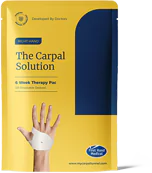
Created by renowned Harvard health care professionals.



Written by Jeff Conley, President, First Hand Medical · Medically reviewed by Michelle Robin, DC, chiropractor and wellness expert, founder of Your Wellness Connection in Kansas City · Last reviewed: November 2026
Proactive people looking for less invasive, natural and effective care often turn to alternative medical treatments, as long as those treatments are backed by credible medical reasoning and real results. There may be no more compelling case for an alternative approach than carpal tunnel syndrome, because the usual conventional carpal tunnel treatment path so often ends in surgery, and carpal tunnel surgery has one of the lowest patient satisfaction rates in medicine.
Table of Contents
Why Try Alternative Medicine for Carpal Tunnel? The Short Answer
Why try alternative medicine for carpal tunnel syndrome? Because each step of conventional carpal tunnel treatment has real limits. Rigid splints can ease pain from movement but do not promote healing and cause muscle atrophy. Steroid injections usually give temporary relief. Surgery has a patient satisfaction rate lower than 69%, and symptoms often return. A doctor-developed alternative, nighttime passive stretching with the Carpal Solution, has 97% patient satisfaction over 21 years, with no downtime and none of the risks of surgery. It should be used with your doctor’s guidance.
The Conventional Carpal Tunnel Treatment Path
Carpal tunnel release surgery, which cuts the transverse carpal ligament, is one of the most frequently performed hand operations. According to the Carpal Solution medical team, that is largely because the usual steps in conventional carpal tunnel treatment tend to lead patients, one after another, toward the operating room: first a splint, then anti-inflammatory pills, then a steroid injection, then surgery.
It is not hard to see why people look for another way once they understand what each of those steps can and cannot do. More and more people with carpal tunnel symptoms are seeking natural alternative options as word spreads about the outcomes of carpal tunnel surgery.
Why Try Alternative Medicine Before Rigid Splints?
Most often, conventional carpal tunnel treatment starts with a rigid wrist brace. A splint holds the wrist in a neutral position, which can reduce pain from movement, but it does not promote healing from carpal tunnel syndrome. It causes muscle atrophy and stiffness; in one study, 14 days in a cast cost about 8% of muscle size and 23% of strength (Wall, Acta Physiologica, 2014). Its tight compression also restricts blood circulation and lymphatic fluid exchange, which slows the dispersion of entrapped swelling, the root cause of carpal tunnel syndrome.
Our medical team has observed that splints give some relief at first but aggravate symptoms in the long run. Splints make sense for immobilizing broken bones and sprained ligaments while they heal, but they make little sense for repetitive stress disorders and soft tissue conditions like carpal tunnel syndrome or trigger finger.

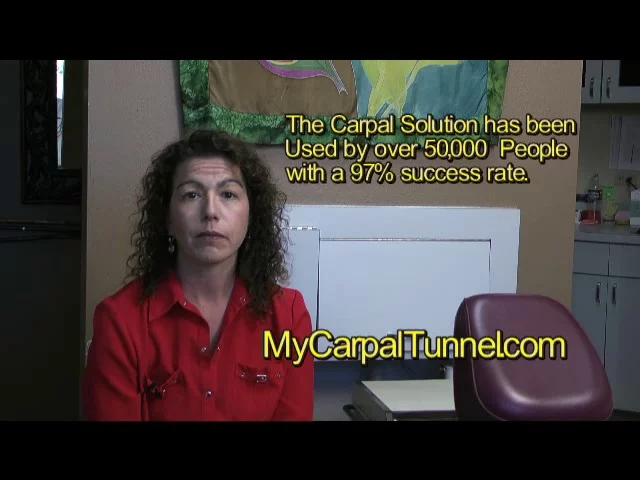
Patients and doctors share their views in the video below. Dr. Michelle Robin, founder of Your Wellness Connection, talks about symptoms and treatments for carpal tunnel syndrome, and you will hear patients describe controlling their symptoms with the Carpal Solution.
97% patient satisfaction over 21 years!
Call Toll-Free: (1) 800-798-5210 or : (1) 801-930-9240
Why Try Alternative Medicine Before Steroid Injections?
When symptoms worsen, conventional carpal tunnel treatment often offers a corticosteroid injection to reduce inflammation. Corticosteroids are related to hormones the body makes, but an injection delivers a concentrated dose directly into the wrist, far beyond what the body produces there on its own.
Injections sometimes help a lot for a month or two, and sometimes do not help at all. In a randomized trial, injections reduced symptoms at 10 weeks compared with placebo, but by one year most patients had gone on to surgery: 73% after placebo and 61% to 64% after a steroid injection (Atroshi and colleagues, 2013). For a chronic, recurring condition, a treatment that wears off and cannot be repeated freely is a poor long-term plan.
What about pain pills?
Between the splint and the injection, many people are told to take anti-inflammatory pills. They can take the edge off pain, but a Cochrane review found that anti-inflammatory pills, diuretics and vitamin B6 were no better than placebo for carpal tunnel symptoms (O’Connor and colleagues, 2003). Long-term use also carries stomach, kidney and heart risks, which matters for a condition that can recur for years.
Why Try Alternative Medicine Before Surgery?
Many people find that sooner rather than later, the conventional path leads to surgery, and some practitioners skip the earlier steps and recommend it directly. Yet surgery has its own limits. Carpal tunnel surgery has a patient satisfaction rate lower than 69%: about 31% of patients report lingering or recurring symptoms, and no patient is satisfied with lingering symptoms. A surgery that leaves symptoms behind is not a successful surgery.
About 8% of patients say their condition is worse afterward, and second surgeries have a patient satisfaction rate of only 16% to 40%.
Even after a successful surgery, symptoms often return. In one study, 57% had at least some symptoms come back within 5.5 years (Nancollas, 1995). Our doctors estimate 80 to 90% within 10 years from two decades of clinical experience; that is their best estimate, not a statistically researched figure. Read more about recurrence after surgery.
The risks of any surgery
Surgery is routine for surgeons, and it is human nature to downplay risks you deal with every day. Patients deserve the full picture. Any operation carries risks such as reactions to anesthesia, infection, blood clots and bleeding.
Risks specific to carpal tunnel surgery
During carpal tunnel surgery, the transverse carpal ligament, one of the strongest ligaments in the wrist, is cut to relieve pressure on the median nerve. Possible problems include:
- Loss of grip and pinch strength, which can be lasting for some patients
- Tenderness and pain around the scar, sometimes called pillar pain
- Reduced hand dexterity and fine motor control in some people
- Rehabilitation that ranges from several weeks to a year or more
- Scar tissue that can press on the nerve and make symptoms worse
- Injury to the median nerve, tendons or other soft tissue under the ligament
- The need for a repeat surgery, which carries all of these risks again
Read more about carpal tunnel surgery and the 6 carpal tunnel surgery myths.
A Doctor-Developed Alternative: The Carpal Solution
This is why “why try alternative medicine?” is a question so many people ask, and why many look for alternative medical treatment to get carpal tunnel under control. The Carpal Solution was developed by Dr. Clyde E. Morgan for his wife, who was suffering from carpal tunnel syndrome. He knew the outcomes of surgery and was determined to find a better way. His gentle hand massages every night were working, but they took a lot of time, so he set out to build a device that could do the stretching while she slept.
Working with medical device designers, Dr. Morgan developed the Carpal Solution from soft, Hypoallergenic (No Latex) medical-grade materials. It gently stretches the soft tissue around the carpal tunnel during sleep, relieving pressure on the median nerve and helping trapped swelling disperse. It relies on the same principle as kinesiology taping, which drew wide attention when Olympic beach volleyball players wore it at the 2008 Beijing Games: support soft tissue without immobilizing it.
| Stage | Schedule | What most people notice |
|---|---|---|
| Weeks 1–2 | Every night | Most people are better from their worst symptoms in two to three weeks. |
| Weeks 3–6 | Every other night | Over 90% of people reach remission by 6 weeks. |
| Higher inflammation | 8 to 12 weeks | About 10% of people are 50–70% better at 6 weeks and need 8 to 12 weeks. |
| After remission | Once a week to once every six months | Prevention nights to keep symptoms away. |
Over the six-week protocol, it delivers over 220 hours of targeted passive stretching. Remission usually lasts 5 to 7 years for most people, ranging from 1 to 17 years. It has 97% patient satisfaction over 21 years and 4.9 out of 5 stars on independent review sites like Google Reviews, and over 100,000 people have used it over two decades.
Neurologists, including Dr. James S. Zu, MD, PhD, of Edison, New Jersey, call the Carpal Solution a better first line of defense for carpal tunnel syndrome and consider surgery a last resort. If you can control this repetitive syndrome naturally, you avoid repeated exposure to the risks of injections and surgery. Patients sometimes call the Carpal Solution their carpal tunnel “cure.”
Carpal tunnel syndrome is chronic and recurring and cannot be cured, by surgery or anything else. The Carpal Solution is the next best thing, controlling symptoms at home without downtime, risks, scar tissue or complications.

Why try alternative medicine wisely: what to look for
Not every “natural” product deserves your time or money. Before trying an alternative carpal tunnel treatment, ask a few questions:
- Was it developed by doctors, and does it make sense based on how carpal tunnel works?
- Does it address the cause, the trapped swelling around the median nerve, or only mask the symptoms?
- Is it safe to repeat when symptoms return, since carpal tunnel is chronic and recurring?
- Does it avoid immobilization, which weakens the forearm and hand muscles?
- What do patients say? Look for satisfaction ratings on independent review sites, not just testimonials on a sales page.
- Is there a guarantee, and will insurance help pay for it?
Natural therapies that work alongside it
Our doctors use the Carpal Solution as the anchor treatment and other conservative therapies to accelerate recovery. Physical and occupational therapy can improve ergonomics and hand use. Chiropractic care and massage can ease tension in the forearm, shoulder and neck. A TENS unit can help with pain, and an anti-inflammatory diet can lower the systemic inflammation that slows healing for some people.
Compression gloves worn during the day can increase circulation, and gloves by day with the Carpal Solution at night is one of the best combination therapies. Skip grip, squeeze-ball and putty exercises while you are healing.
Conventional Carpal Tunnel Treatment vs. the Alternative at a Glance
| Conventional carpal tunnel treatment | Carpal Solution | |
|---|---|---|
| Approach | Splint, pills, injection, then surgery | Nighttime passive stretching at home |
| Effect on healing | Splints and pills ease pain; injections usually wear off | Helps trapped swelling disperse |
| Downtime | Weeks to months after surgery | None |
| Patient satisfaction | Surgery: lower than 69% | 97% over 21 years |
| When symptoms return | Repeat injections are limited; second surgeries: 16% to 40% satisfaction | Repeat the protocol or use prevention nights |
Getting started while you wait
In our doctors’ two decades of clinical experience (not a published statistic), people with three or more of the common carpal tunnel symptoms can be about 95% confident they have carpal tunnel syndrome. Get an in-person evaluation and formal diagnosis, and with that confidence you can start a natural, non-invasive treatment while you wait. The average wait for a new-patient physician appointment is 31 days (AMN Healthcare, 2025); read more about waiting for carpal tunnel treatment.
The Carpal Solution comes with a 30-Day Patient Satisfaction Guarantee, is billed under HCPCS code L3924, and many health insurance plans reimburse 70 to 80%. A gentle, drug-free approach lets you try natural healing first, with your doctor’s guidance. For general medical background on treatment options, see the NINDS fact sheet on carpal tunnel syndrome.
When Healing Needs a Doctor’s Help and Professional Medical Evaluation
- Constant numbness that does not improve or loss of feeling in the fingertips that does not improve in 4 to 8 weeks.
- Extreme loss of the muscle at the base of the thumb, with loss of grip strength that does not improve over 6 to 8 weeks.
- Worsening symptoms over 6 to 8 weeks while using the best conservative treatments
- Symptoms that begin suddenly after hand or wrist trauma, a fracture or severe sprain from a fall or auto accident.
- Odd Symptoms that are not consistent with the Carpal Tunnel Symptoms listed on this website, that might be indicative of other nerve issues. A nerve conductivity study can clear up the confusion with minimal costs and not too much pain and no risk.
These signs may mean more advanced nerve involvement or a different condition and deserve professional medical evaluation and in person consultation. Home treatment can be used alongside professional in-person medical care while you wait for the healthcare delivery system to fit you into their schedule. There is no reason to wait doing nothing. You can start proven natural conservative treatment with good patient reviews while you wait for your appointments. If your symptoms start improving over 6 to 8 weeks, then you know you are on the right track and surgery is not necessary.
Why Try Alternative Medicine for Carpal Tunnel: FAQ
Why try alternative medicine for carpal tunnel syndrome?
Because conventional carpal tunnel treatment often moves from splints to injections to surgery, and each step has limits. A doctor-developed alternative like the Carpal Solution offers relief without downtime or surgical risk.
Is alternative medicine safe for carpal tunnel?
Non-invasive options like nighttime passive stretching are low risk. Choose treatments developed by doctors, and keep your own doctor informed.
Does the Carpal Solution replace my doctor?
No. Unlike conventional carpal tunnel treatment, it can be done at home, but get an evaluation and formal diagnosis. The Carpal Solution can be started while you wait and used alongside your doctor’s care.
How long do steroid injections last for carpal tunnel?
Relief is usually temporary, often a month or two. In one trial, most patients had gone on to surgery within a year whether they received an injection or a placebo.
What is the patient satisfaction rate for carpal tunnel surgery?
Lower than 69%, because about 31% of patients report lingering or recurring symptoms. Second surgeries have a patient satisfaction rate of 16% to 40%.
Can I combine the Carpal Solution with chiropractic care or therapy?
Yes. Our doctors use it as the anchor treatment, with physical therapy, occupational therapy, chiropractic care and diet changes to speed recovery.
How soon does the Carpal Solution work?
Most people are better from their worst symptoms in two to three weeks, and over 90% reach remission by 6 weeks.
Sources
- Atroshi I et al. Methylprednisolone injections for the carpal tunnel syndrome: a randomized, placebo-controlled trial. Annals of Internal Medicine, 2013.
- O’Connor D et al. Non-surgical treatment (other than steroid injection) for carpal tunnel syndrome. Cochrane Database of Systematic Reviews, 2003.
- Wall BT et al. Muscle disuse during immobilization. Acta Physiologica, 2014. doi:10.1111/apha.12190.
- Bland JDP. Patient-reported outcome of 1,268 carpal tunnel operations. Muscle & Nerve, 2001. PubMed 11410921.
- Bland JDP. Review of 209 studies (32,936 operations) of carpal tunnel surgery outcomes. Muscle & Nerve, 2007.
- Louie D, Earp B, Blazar P. Long-term outcomes of carpal tunnel release: a critical review of the literature. Hand, 2012 (reviews Nancollas 1995). PMC3418353.
- National Institute of Neurological Disorders and Stroke. Carpal Tunnel Syndrome fact sheet.
- AMN Healthcare. 2025 Survey of Physician Appointment Wait Times.

Order Your Six Week Carpal Tunnel Treatment Now
The ONLY treatment for carpal tunnel that comes with a no questions asked 30-Day Patient Satisfaction Guarantee and in-house dedicated pain relief team.