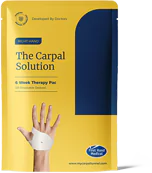
 Created by renowned Harvard health care professionals.


Oral Pain Medication for Carpal Tunnel: Reviewed by Doctors
Oral Pain Medication is not a good choice for the treatment of a chronic, recuring condition, like Carpal Tunnel Syndrome. Oral Pain Meds have too many serious side effects for long-term treatment of a chronic syndrome. There is a way to jump-start your body's healing processes, avoid the risks of oral pain medication and heal Carpal Tunnel naturally.


Written by Jeff Conley, President of First Hand Medical · Medically reviewed by Joseph E. Scherger, MD, MPH, family physician and clinical professor at the UC San Diego School of Medicine · Last reviewed: November 2026
Table of Contents
Oral Pain Medication for Carpal Tunnel: 5 Facts Before You Take It
- Pills do not relieve the pressure on the nerve. Oral pain medication for carpal tunnel can take the edge off pain, but the median nerve stays squeezed inside the wrist.
- Over-the-counter relievers are meant for short-term use. The labels for ibuprofen, naproxen and acetaminophen say not to use them for pain for more than 10 days unless a doctor tells you to.
- NSAIDs carry stomach, kidney and heart risks with regular, long-term use, especially for people with a history of ulcers, kidney disease or heart disease.
- Gabapentin is not approved for carpal tunnel, and in a randomized trial it worked no better than a placebo.
- Opioids are habit forming and are a poor choice for a chronic condition like carpal tunnel syndrome.
With any oral pain medication for carpal tunnel, always follow the label or your doctor’s directions, and talk with your doctor or pharmacist before combining medications or taking them for longer than the label allows.
The most common type of oral pain medication for carpal tunnel is the class known as NSAIDs or non-steroidal anti-inflammatory drugs. The most common types of NSAIDs are aspirin and ibuprofen. These work by limiting the formation of inflammation, and can be quite effective in minimizing joint and muscle pain. However, these have a very limited effect on the symptoms of CTS, because these medications do not relieve the pressure on the Median Nerve.
 All systemic oral pain medication, including NSAIDs have some potential complications associated with long-term use. This is why oral pain medication for carpal tunnel is best used only for temporary pain relief. Over-the-counter pain relievers such as ibuprofen, naproxen and acetaminophen should not be used for pain for more than 10 days unless a doctor tells you to, and you should follow the directions on the label or those provided by your physician.
This is the primary reason why Oral Pain Medication is not a good long-term treatment approach for chronic pain conditions, like Carpal Tunnel.
It is generally known that Aspirin, Ibuprofen and most other NSAIDS have gastrointestinal side effects associated with long term use at levels which are effective in treating joint pain. These include problems such as gastritis and stomach ulcers. There can also be potential complications for people that are at risk for heart disease and stroke.
The side effects and serious complications associated with oral systemic pain medication is why it makes so much sense to identify better methods to treat chronic pain right at the source with natural therapy, like the Carpal Solution, rather than exposing all of your organs to consistent high levels of pain medication over a long period of time.
In addition to aspirin and ibuprofen, there are currently several types of both over-the-counter pain medication, as well as prescription pain medication that are all classified as NSAIDs. The three types of NSAIDs most commonly used to treat bone, muscle and joint pain such as hand pain, wrist pain, arm pain, shoulder pain, and neck pain include:
- Ibuprofen (non-prescription, OTC brand names such as Advil, Motrin, Nuprin)
- Naproxen (non-prescription, OTC brand names such as Aleve, Naprosyn)
- COX-2 inhibitors (prescription brand names such as Celebrex, several other COX-2 inhibitors have been withdrawn from the market because of an increased risk of heart attack and stroke)

Best Practice for Using Oral Pain Medication for Carpal Tunnel
It is best to use NSAIDs continuously for several days in a row to build up a base level of anti-inflammatory in the circulatory system. The efficacy is lower if taken only one day a week. Taking the drug regularly in the recommended dose lets the drug build up over time and maximizes the effect. It is generally accepted that eliminating inflammation from an injury can also contribute to promote a rapid healing environment for injured tissue.
NSAIDs and the pain relief medication acetaminophen (brand name Tylenol) have different mechanisms of action. Sometimes doctors recommend taking the two medications at the same time. Some people report feeling more effective pain relief when they take both an NSAID and acetaminophen for their pain.
Again, as oral pain medication for carpal tunnel, this combined approach tends only to take the edge off the most intense symptoms and not provide any long-term relief. It will not relieve the pressure on the Median Nerve.
NSAIDs are generally considered to be non-habit forming pain medication.
No one should use NSAIDs for chronic pain medication for more than two weeks, without a physician’s directive and regular monitoring for possible complications.
NSAIDs Potential Risks and Common Complications
NSAIDs are cleared from the blood stream by the kidney, so it is very important that patients over 65 years of age or patients with kidney disease consult a physician prior to taking the medication. If patients take an NSAID for an extended period of time (six months or more), a blood test needs to be performed regularly to check for early signs of kidney damage. Kidney damage is a real possibility with long-term exposure to oral pain medication.
NSAIDs may also cause stomach upset or possibly ulcers. Patients with stomach ulcers or a history of stomach ulcers should first consult with their physician. Signs of stomach ulceration and intestinal bleeding typically include one or a combination of the following symptoms: abdominal pain, black tarry stools, weakness, or dizziness upon standing.
Most types of NSAIDs have a variety of other potential risks and complications associated with them. While most side effects are rare, it is important for patients to remain aware of them and under supervision by a health professional. As a general rule, patients with any of the following factors should meet with their doctor before taking any type of NSAID:
- If you have Diabetes
- If you have Heart disease
- If you have High blood pressure
- If you have had an Allergic reaction to any pain reliever medication
- If you are Pregnant, about to become pregnant, or breast feeding
- If Regularly Consume three or more alcoholic beverages a day
- If you have any Thyroid Problems
- If you are about to have any type of surgery
In order to ensure that NSAIDs are used safely, patients should meet with a physician to evaluate their individual risk factors and to determine the most appropriate dosages and treatment options.
As with all medications, patients should discuss with their doctor all other medical conditions and allergies before pain medications are taken. Patients should strictly follow label directions for all pain medications.
Oral Prednisone Medication
 Among prescription oral pain medication for carpal tunnel, doctors often prescribe oral prednisone caplets for short-term relief of carpal tunnel pain. Prednisone is a powerful steroidal medication that can have some effect on Carpal Tunnel Syndrome Pain in the short run. However, it is a poor choice for the Treatment of any chronic condition like, Carpal Tunnel Syndrome, because routine or long-term use carries serious side effects.
Some of the side effects will make Carpal Tunnel Worse in the long run and lead to life threatening conditions with long-term usage. We urge extreme caution in any treatment of Carpal Tunnel Syndrome with steroidal treatments.
Common side effects of long-term steroid treatment are well studied and well understood they include:
- Increases in appetite, often results in weight gain (bad for Carpal Tunnel Syndrome and your overall health)
- Suppresses Immunity Response
- Suppressing the body’s normal healing and repair processes- (Not Good for Carpal Tunnel Healing)
- Nervousness, restlessness
- Water retention, swelling in hands and feet – This makes Carpal Tunnel worse!!!!
- Irritability and Sudden unexplainable mood swings
- Relationship with loved ones and friends often suffer creating more anxiety and unhappiness.
- Sleep interruption – irregular sleep patterns (Makes Sleep more difficult which is already a major problem due to Carpal Tunnel hand numbness)
- Distance from Normal Social Circles
- Muscle weakness and loss of desire to exercise
- Declining Physical Fitness
- Blurred vision – Cataracts or glaucoma
- Increased growth of body hair
- Lower Immunity to disease
- Lower resistance to infection
- Swollen, “puffy” face or round face syndrome
- Acne and skin disorders
- Increased Incidence of Osteoporosis – weakening bones & joints – loss of mobility – more difficult to exercise
- Higher blood sugar, which can worsen diabetes
- Higher blood pressure
- Upset Stomach
- Bloating Digestive System
- Difficulty getting sufficient REM sleep – leading to more anxiety and irritability
- Easy Bruising and Skin Wounds
- Deterioration of important organs and body tissue with long-term use – examples include loss of Esophagus, deep skin wounds with ordinary bumps and contact with the outside environment.

 Narcotic Pain Medication
Represent the most powerful and most dangerous class of oral pain medication. Narcotics are only available through a doctor’s prescription. Doctors are very careful about providing these oral pain medications because they are habit forming. Though narcotics are the most powerful way to deal with pain, they are a poor choice for chronic pain conditions like Carpal Tunnel Syndrome, because they are extremely addictive. No one wants to add an addiction to Narcotics to their Carpal Tunnel challenges.
Occasionally, a doctor will prescribe Narcotics for Carpal Tunnel for short-term relief in extreme cases. The emphasis is on short-term relief. However, in most cases, Narcotics are reported to only take the edge off the most intense symptoms and will not relieve the overall symptoms of this chronic condition.
Narcotics, like every other oral pain medication for carpal tunnel, will not relieve the pressure on the Median Nerve. This is why most doctors believe that the risks of narcotic medications are not worth the very limited short-term symptom relief for CTS.
Gabapentin for Carpal Tunnel?
There is a new class of oral pain medication now being prescribed by many Doctors for Carpal Tunnel Syndrome and other forms of nerve related pain. It is called Gabapentin and it is prescribed as an “off-label prescription treatment for Carpal Tunnel Syndrome Treatment”. Pharmaceutical representatives encourage Doctors to prescribe this medication for Carpal Tunnel Syndrome and for nerve pain “off-label”. “Off-label” means using a medication for something it was not approved for.
Gabapentin is approved by the FDA to help control epileptic seizures and to treat nerve pain after shingles (postherpetic neuralgia), but it is not approved for treating Carpal Tunnel Syndrome. An “Off-label prescription” means the FDA has not evaluated the medication for the suggested use. It also means that it is not an FDA approved application of the medication. So, Gabapentin is not approved by the FDA for treating Carpal Tunnel Syndrome.
 Some Doctors are prescribing Gabapentin in combination with Opioid Narcotics in an effort to lower the exposure of the patient to the narcotic. This is a very dangerous practice. Gabapentin and opioids when used together can seriously depress respiration of the patient.
Since respiration (breathing) is key to staying alive, any combination of drugs that seriously depresses respiration should only be used in extreme circumstances in a clinical setting where the patient can be monitored continuously and with intubation available as an option by trained experienced medical professionals like anesthesiologist or emergency medical doctors.
The combined use of these medications has led to a significantly increased rate of death in patients using both pain medications at the same time. Gabapentin, opioids, and the risk of opioid-related death: A population-based nested case–control study https://www.ncbi.nlm.nih.gov/pmc/articles/PMC5626029/
You can learn more about Gabapentin and its side effects and why the Doctors at First Hand Medical see no reason to justify the use of narcotics, opioids or Gabapentin for the treatment of Carpal Tunnel Syndrome. In a randomized controlled trial, gabapentin was no better than a placebo for carpal tunnel symptoms (Hui et al., European Journal of Neurology, 2011), and in 2019 the FDA warned that gabapentin can cause serious breathing problems, especially when combined with opioids.
The side effects are too risky to justify its use for Carpal Tunnel Syndrome.
https://www.mycarpaltunnel.com/carpal-tunnel-treatment-reviews/golfer-conquers-carpal-tunnel/
There are too many safer options for the effective treatment of Carpal Tunnel Syndrome to expose patients to the risks of Gabapentin or Narcotic Medication, like opioids.
The Side Effects of Gabapentin Treatment for Carpal Tunnel
Common Side Effects of Gabapentin for Carpal Tunnel Treatment
- Swelling of hands, feet, or legs (adding extra swelling to a Carpal Tunnel Condition will make Carpal Tunnel Syndrome Symptoms more intense and less tolerable – For this reason alone Gabapentin is a poor choice for treating CTS.
- Dizziness, loss of balance and unsteadiness, which can lead to falls and injury.
- Drowsiness, sleepiness, or tiredness – You need to be careful about driving or heavy equipment operation
- Coordination problems (clumsiness, stumbling, awkward movement)
- Nausea and vomiting
- Unexplained Headaches
- Vision problems (blurred or double vision, unusual eye movements)
- Weight gain
- Dry mouth, constipation, or diarrhea
- Flu-like symptoms (fever, sore throat, body aches)
- Difficulty speaking
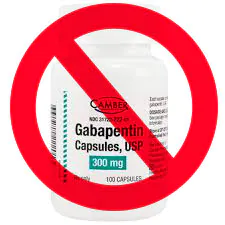

Gabapentin is a poor oral pain medication for the treatment of Carpal Tunnel. There are much better treatment options with no side effects.
Prescribing Gabapentin for CTS could be considered Medical Malpractice
Recommending Gabapentin for CTS borders on medical malpractice. Taking Gabapentin typically leads to increased inflammation and swelling of the hands and other extremities. Competent Medical Professionals know that CTS is caused by excess inflammation that gets trapped in the Carpal Tunnel Space at the base of the hand. So, to recommend a medication which typically increases inflammation of the hand and makes Carpal Tunnel Symptoms more intense, this might just be justifiably considered medical malpractice.
It makes no sense to do so. When one considers the potential for the dangerous complications below, this action could only be considered reckless at best, except in extreme circumstances.
Serious Side Effects of Gabapentin for Carpal Tunnel Treatment
- Mood or behavior changes, including new or worsening depression, anxiety, agitation, irritability, leading to suicidal thoughts and or tendencies.
- Mental Stupors, confusion, inability to concentrate and or extreme drowsiness, slow reaction times, etc., making it dangerous to drive or operate heavy equipment.
- Signs of an allergic reaction (anaphylaxis), respiratory trouble, such as difficulty breathing, swelling of the face, lips, throat, or tongue, and rash or hives.
- Breathing problems or respiratory depression, which can manifest as slow or shallow breathing, can result in sudden loss of consciousness
- Liver complications resulting in jaundice, unusual bruising or bleeding, or yellowing of the skin or eyes.
- Severe skin reactions, which may include a rash, high temperature, and swollen glands.
- Unexplained muscle pain or weakness.

Better Options Than Oral Pain Medication for Carpal Tunnel
Because oral pain medication for carpal tunnel only masks symptoms, our doctors recommend treating the cause: the pressure on the median nerve.
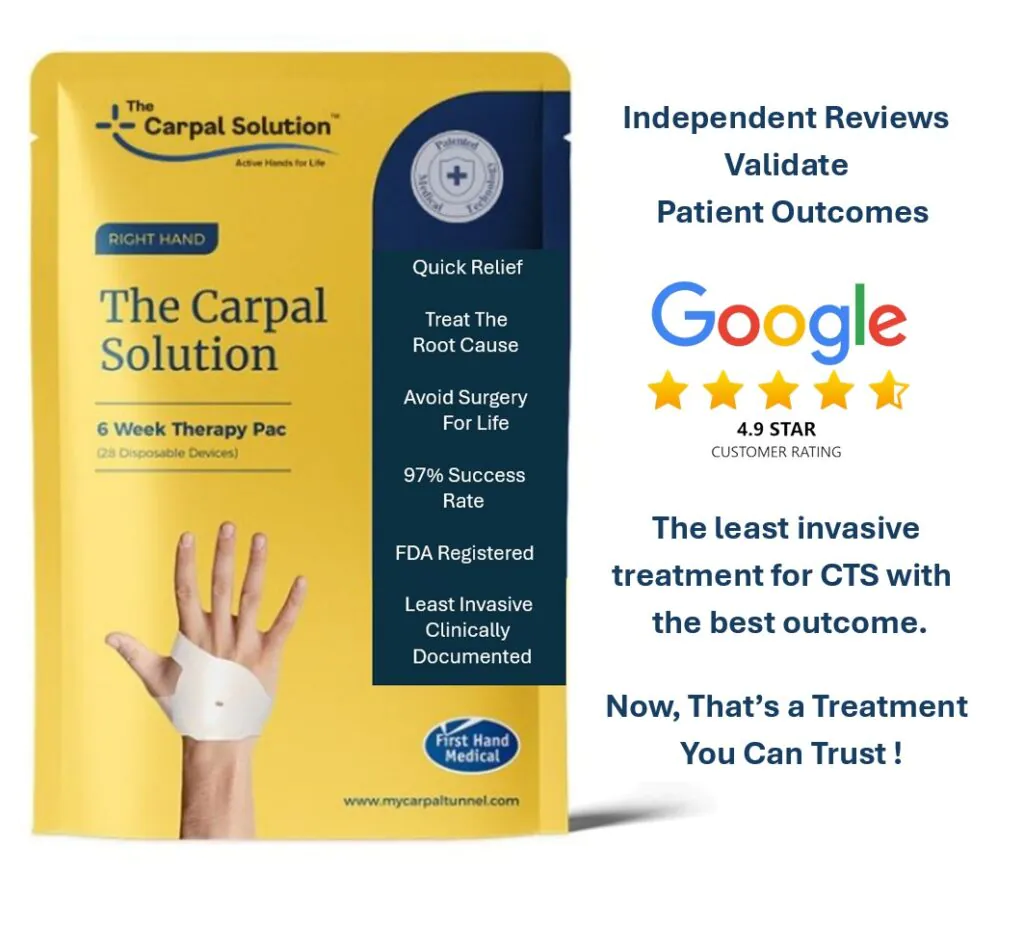
The Carpal Solution is a medically prescribed passive stretching device worn at night. It gently stretches the tissue around the carpal tunnel to relieve the pressure on the nerve, delivering more than 220 hours of targeted stretching over the six-week protocol. Most people feel their worst symptoms ease around three weeks, and over 90% resolve their symptoms within six weeks.
Over two decades, more than 100,000 people have used it, with 97% patient satisfaction and 4.9 out of 5 stars on independent review sites like Google Reviews.
- Cold therapy after a long day of hand work calms swelling without pills.
- Gentle daytime stretches: up to 6 sets of 10, holding each stretch about 15 seconds with 30 seconds of rest between.
- Compression gloves during the day, combined with the Carpal Solution at night, increase circulation and protect the hand from everyday bumps.
- Keep your wrists straight at night, and skip grip strengtheners and squeeze balls while you are healing.
When Healing Needs a Doctor’s Help and Professional Medical Evaluation
- Constant numbness that does not improve or loss of feeling in the fingertips that does not improve in 4 to 8 weeks.
- Extreme loss of the muscle at the base of the thumb, with loss of grip strength that does not improve over 6 to 8 weeks.
- Worsening symptoms over 6 to 8 weeks while using the best conservative treatments
- Symptoms that begin suddenly after hand or wrist trauma, a fracture or severe sprain from a fall or auto accident.
- Odd Symptoms that are not consistent with the Carpal Tunnel Symptoms listed on this website, that might be indicative of other nerve issues. A nerve conductivity study can clear up the confusion with minimal costs and not too much pain and no risk.
These signs may mean more advanced nerve involvement or a different condition and deserve professional medical evaluation and in person consultation. Home treatment can be used alongside professional in-person medical care while you wait for the healthcare delivery system to fit you into their schedule. There is no reason to wait doing nothing.
You can start proven natural conservative treatment with good patient reviews while you wait for your appointments. If your symptoms start improving over 6 to 8 weeks, then you know you are on the right track and surgery is not necessary.
Oral Pain Medication for Carpal Tunnel: Frequently Asked Questions
What is the best oral pain medication for carpal tunnel?
No pill treats the cause of carpal tunnel syndrome. An over-the-counter NSAID or acetaminophen may ease pain for a short time, used as the label directs. Ask your doctor or pharmacist which is safest for you.
Does ibuprofen help carpal tunnel?
It may dull pain for a while, but it does not relieve the pressure on the median nerve, so symptoms usually return when you stop taking it.
Is gabapentin good for carpal tunnel?
Gabapentin is not FDA approved for carpal tunnel syndrome. In a randomized trial, it worked no better than a placebo, and it can cause serious breathing problems, especially with opioids.
How long can I take pain pills for carpal tunnel?
Over-the-counter pain relievers should not be used for pain for more than 10 days unless a doctor tells you to. If you still need them, see your doctor about treating the cause.
Is there a carpal tunnel cure?
No. Carpal tunnel syndrome is chronic and recurring and cannot be cured, by medication, surgery or anything else. The Carpal Solution is the next best thing, controlling symptoms at home without downtime, risks, scar tissue or complications.

Order Your Six Week Carpal Tunnel Treatment Now
The ONLY treatment for carpal tunnel that comes with a no questions asked money-back guarantee and in-house dedicated pain relief team.