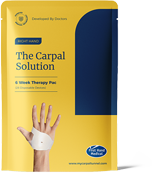
 Created by renowned Harvard health care professionals.

Carpal Tunnel Wrist Support vs. Splints vs. The Carpal Solution: Pros and Cons
When Carpal Tunnel flares, the instinct is to grab any brace for quick relief. But splints, gloves, and supports are not interchangeable. Some offer simple comfort, while others strictly lock the wrist or encourage therapy. Choosing blindly often leads to frustration. We explain the specific job of each device so you can stop guessing and select the tool that actually targets your symptoms.


Why So Many People Feel Stuck Choosing “The Right Brace”
When carpal tunnel symptoms flare, most people want fast relief. The first instinct is usually a brace, splint, glove, or wrist support because it is easy to buy and feels like you are doing something immediately.
The problem is that these products are often lumped together as if they do the same job. They do not. Some are mainly comfort tools. Some aim to control wrist position. Others are designed around a therapy model that helps tissues move more freely rather than remaining rigid. If you know what each category is meant to do, you can stop guessing and start choosing with purpose.
Start with our guide to Carpal Tunnel Syndrome: Symptoms, Diagnosis, Underlying Causes, and Treatment Options for a comprehensive overview of therapy, injections, and surgical options.
If you’re struggling with sleep disruption, learn How Nighttime Stretching Provides Relief to help manage your symptoms before bed.
The Three Categories Explained in Plain English
1. Wrist Support and “Support Sleeves”
This includes soft sleeves, compression wraps, and light supports that provide warmth, mild pressure, and a sense of stability.
What it is best at:
- Comfort.
- Warmth.
- Light support during easy activities.
What it is not best at:
- Keeping the wrist neutral during sleep.
- Reducing nighttime wrist bending.
- Changing the underlying mechanics that trigger symptoms.
Think of soft wrist support like a cozy layer. It may help you feel better in the moment, but it often does not address the positional and tissue factors that drive classic carpal tunnel symptoms.
2. Splints and Rigid Wrist Braces
A splint is designed to hold your wrist closer to neutral, especially while you sleep. Many nighttime symptoms happen because the wrist bends without you noticing, and bent positions can increase pressure in the carpal tunnel.
What it is best at:
- Reducing symptom spikes driven by wrist position at night.
- Creating a stable neutral wrist during a short trial.
- Helping some people sleep more consistently.
What it is not best at:
- Restoring tendon and nerve glide.
- Building long-term tolerance for work and hobbies.
- Preventing stiffness if you wear it too much, especially during the day.
A splint is a positioning tool. It can be helpful, but it is rarely the whole plan.
3. The Carpal Solution, Nighttime Stretching-Based Therapy
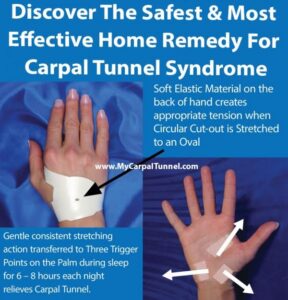
The Carpal Solution is not a splint. It is an active therapy approach based on nighttime stretching principles, designed to improve tissue mobility and reduce irritation while you rest.
What makes it different:
- It aims to improve glide and reduce the “stuck” feeling, rather than simply locking the wrist.
- It is designed to support relief while keeping you active, not immobilized.
- It fits a therapy mindset, short cycles, consistent use, measurable outcomes, and the ability to adjust quickly if you are not improving.
This is a newer way to think about carpal tunnel care. Instead of treating the wrist as if it must be held still to heal, it treats the wrist as if it must move better to stay calm.
Pros and Cons Comparison Table
| Option | What it is | Pros | Cons | Best for |
| Wrist support sleeve or wrap | Soft compression or warmth | Comfortable, easy to wear, can reduce “ache” feelings | Often does not control wrist position, may not change nighttime symptoms, can be too tight | Comfort during light tasks, cold hands, mild swelling sensations |
| Splint or rigid wrist brace | Holds wrist near neutral | Can reduce nighttime bending, helps some people sleep, simple, short trial | It can cause stiffness if worn too much, and daytime use can reduce mobility; it does not restore glide | Nighttime tingling, early symptoms that change with position |
| The Carpal Solution | Nighttime stretching-based therapy | Active approach, supports mobility and tolerance, not immobilization, designed for consistent outcomes. | Requires consistent use, needs tracking, not a quick fix for severe cases | People who want more than immobilization, people who wish to have a therapy-driven plan |
When a Splint Is a Smart Short-Term Tool
A neutral night splint can be a reasonable choice when your symptoms look like classic positional carpal tunnel.
A splint is most likely to help when:
- Tingling or numbness wakes you at night.
- Shaking your hands helps the sensation.
- Symptoms are worse after long driving, typing, or gripping.
- Symptoms started recently after a workload spike.
How to use it without getting stuck:
- Wear it only at night for a short trial, usually 1 to 2 weeks.
- Keep it snug, not tight; tighter is not better.
- Keep daytime use to a minimum to prevent your wrist from stiffening.
- Decide based on results, fewer awakenings, better morning feel, better task tolerance.
When a splint is less likely to be enough:
- Constant numbness that does not change with position.
- Apparent weakness, frequent dropping, or thumb muscle changes.
- Symptoms that have been present for many months without improvement.
In those cases, a more active plan makes more sense, and you may need a medical evaluation and a broader treatment strategy.
When “Wrist Support” Is Mostly Comfort
Soft wrist supports and sleeves can feel good. That matters; comfort can reduce guarding and help you use a lighter grip. But comfort is not the same as a clinically meaningful change in nerve compression.
Soft supports can be reasonable if:
- Your symptoms are mild.
- You want warmth and a reminder to keep the wrist neutral.
- You are pairing it with exercises and habit changes.
Soft supports can backfire if:
- They are tight and increasing tingling.
- You wear them all day and avoid motion.
- You treat them as your only treatment while symptoms progress.
A helpful mental model:
- If your primary problem is “I feel achy,” soft support may help.
- If your primary problem is “My hand goes numb at night,” a neutral strategy, such as splinting or a nighttime therapy approach, is more relevant.
Why the Carpal Solution Is a New Way To Think About Treatment

Most conventional products focus on holding the wrist still. That can help if wrist position is the primary trigger, especially at night. But many people notice something important: they can sleep better with a splint, yet daytime symptoms and grip confidence do not really change.
That is often the missing piece: tissue mobility and tolerance.
Carpal tunnel symptoms are not only about position, but they are also about how the tissues inside and around the tunnel behave under load. When tendon sheaths are irritated, forearm flexors are stiff, or the median nerve is sensitive, small stresses can produce significant symptoms.
The Carpal Solution is designed around a therapy idea:
- Support relief while you rest.
- Apply gentle stretching principles consistently.
- Improve glide and reduce irritation over time.
- Build a plan you can maintain, not a device you must wear forever.
What this approach is not:
- It is not a rigid brace.
- It is not a “wear it tighter to get better” product.
- It is not a replacement for a medical evaluation when red flags are present.
What it is:
- A structured nighttime therapy routine.
- A different option for people who prefer active recovery over immobilization.
- A practical bridge between “do nothing” and “more invasive steps”.
A Simple Two-Week Decision Test
This is the fastest way to know what works for you without piling on multiple products at once.
Step One: Choose Your Primary Approach
Pick one of the following as your main focus for two weeks:
- Neutral night splint trial.
- The Carpal Solution nighttime stretching-based therapy.
You can still do simple microbreaks and gentle movement, but avoid stacking multiple devices at once; you will not know what helped.
Step Two: Track Three Markers Twice a Week
- Sleep interruptions: how many nights per week do symptoms wake you?
- Task tolerance: how long you can type, grip, or work before symptoms start?
- Grip confidence: Do you feel clumsy? Do you drop things less often?
Step Three: Decide Based on Outcomes
- If sleep interruptions drop by about half and daytime tolerance improves, continue for another 2 to 4 weeks.
- If you only improve at night but daytime remains limited, shift toward a more active therapy approach and add the exercise plan.
- If you do not improve at all, or symptoms worsen, move to the comparison guide and consider a medical evaluation.
If you are ready to choose an active therapy approach that improves glide and reduces the “stuck” feeling, start your journey today.
Safety Notes and Red Flags
Do not self-manage for weeks if you have signs that suggest more advanced nerve irritation.
Seek medical evaluation if you have:
- Constant numbness that does not change with position.
- Apparent weakness, frequent dropping, or loss of grip strength.
- Visible thinning at the base of the thumb.
- Symptoms that spread beyond the typical pattern of the thumb, index, and middle fingers.
If you are unsure, do not guess; get guidance.
Optimizing Home Treatment: Combining Therapies and Measuring Progress