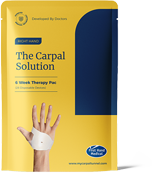
 Created by renowned Harvard health care professionals.

The Carpal Solution: How Nighttime Stretching Provides Relief
Hand numbness waking you up? It’s the classic Carpal Tunnel signal. We often sleep with bent wrists, spiking pressure on the median nerve just when we need rest. While night splints help by keeping the wrist neutral, they don't fix stiffness or restore "glide." Learn why night symptoms happen and why relying solely on immobilization might limit your recovery compared to a more active approach.


Why Nighttime Symptoms Are So Common
If your hand numbness or tingling wakes you up, you are experiencing one of the most classic patterns of carpal tunnel syndrome. Nighttime symptoms occur for several practical reasons.
First, people often sleep with their wrists flexed or tucked under a pillow. Flexion and extension can increase pressure in the carpal tunnel, irritating the median nerve and triggering tingling or pain. Second, the body is less distracted at night, so symptoms feel louder. Third, if your tendons are already inflamed or stiff, even a slight bend can be enough to push the nerve over its “irritation threshold.”
These are the same reasons a night splint can help some people early on; it keeps the wrist closer to neutral during sleep. But immobilization is only one strategy, and it does not address mobility, glide, or tissue adaptability. Evidence summaries note that splinting may provide little or no short-term benefit for symptoms and hand function on average. However, some people do experience overall improvement, and it is generally safe to try as a time-limited tool.
If you want the whole landscape of treatment choices, including splints, therapy, injections, and surgery, start here: Carpal Tunnel Treatment Options: Splints, Therapy, Injections, and Surgery
What a Splint Does, and What It Cannot Do
What a Night Splint Is Good At
- Keeps the wrist nearer to neutral while you sleep.
- Reduces symptom spikes caused by nighttime wrist bending.
- Provides structure and reassurance during a flare.
What a Splint Does Not Do
- It does not improve tissue glide.
- It does not restore tendon mobility.
- It does not build tolerance for work and hobbies.
- It does not strengthen grip control.
- It can contribute to stiffness if worn excessively, especially during the day.
That is why many people report, “My splint helped me sleep, but my daytime symptoms and grip confidence did not really change.” This is also why a new approach matters. See more Carpal Tunnel Treatment Options.
The Carpal Solution Approach, Stretching As Therapy
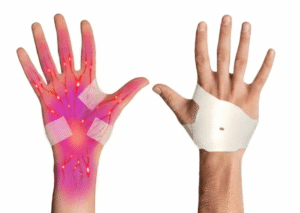
The Carpal Solution is not a splint. It is a stretching treatment designed to apply a therapy mindset to your nights.
Here is the significant shift: instead of only preventing movement, we use safe, controlled stretching principles to support mobility and relief while you rest. The goal is not to force the wrist into extreme positions; the goal is gentle, repeatable tissue input that helps reduce “stuck” feeling in the forearm and wrist, and supports a calmer median nerve.
Why position and movement matter together:
- The median nerve and flexor tendons share a tight space inside the carpal tunnel.
- When tissues are stiff or irritated, nerve “glide” can be reduced.
- Gentle neurodynamic and tendon gliding approaches have shown symptom benefits in some studies, especially in mild cases, although results vary across protocols and populations.
- Clinical guidelines emphasize that many non-operative modalities, including exercise and alternative therapies (see Does Laser Help Carpal Tunnel? What the Evidence Says), have not shown improved long-term patient-reported outcomes as a category, which is why a practical plan should focus on safety, short-cycle evaluation, and upgrading options if you are not improving.
So we use a simple, patient-centered rule: try the approach for a defined period, track real outcomes, and adjust quickly.
For exercise details that align with this philosophy, visit Carpal Tunnel Stretching and Exercises.
Who This Is Best For
Nighttime stretching therapy is often a strong fit if you:
- Have nighttime tingling or numbness that wakes you up.
- Have mild to moderate symptoms that change with position.
- Want a carpal tunnel remedy that doesn’t require immobilizing your wrist all day?
- Have tried a splint and felt only partial relief.
- Want a structured at-home treatment you can stick with.
Nighttime stretching is not a shortcut for severe compression. Get medical evaluation promptly if you have:
- Constant numbness that does not change with position.
- Clear weakness, frequent dropping, or loss of grip strength.
- Visible thinning at the base of the thumb.
These patterns can signal more advanced nerve injury, where delaying effective treatment is risky.
How To Use Nighttime Stretching Safely
A good stretching plan is gentle, consistent, and boring in the best way.
Safety Rules
- Stop before sharp pain, burning, or electric shock sensations.
- Keep the stretch mild; you should feel “release,” not strain.
- Symptoms should settle within 5 to 10 minutes after you change position.
- If symptoms worsen overnight, reduce intensity or stop, and reassess.
What “Success” Feels Like
- Fewer sleep interruptions.
- Less need to shake hands at night.
- Less morning stiffness in the wrist and forearm.
- More stable grip confidence during the day.
What “Too Much” Looks Like
- Tingling increases as soon as you stretch.
- Numbness lingers into the next day.
- Pain becomes sharper or travels beyond your typical pattern.
If you want a broader view of what to do next if you are not improving, see: Symptoms, diagnosis, underlying causes, and treatment options.
How Does This Fit With Other Treatment Options
Nighttime stretching therapy is not “anti-medicine.” It is a step in a complete decision pathway.
Here is the simple comparison:
| Option | Best for | Key benefit | Main limitation |
| Night splint | Night bending triggers symptoms | Neutral wrist during sleep | Immobilization may help some; average benefits are modest |
| Therapy and exercise | Movement-related symptoms | Builds tolerance, improves mechanics | Results vary, needs consistency, long-term benefit not proven across all exercise types [5] |
| Corticosteroid injection | Persistent mild to moderate symptoms | Can improve symptoms for up to months and reduce the need for surgery at 12 months | Often temporary, procedure-based |
| Surgery | Severe or refractory CTS | Decompresses the nerve reliably | Recovery time, procedure risks |
Common Mistakes and How To Fix Them
- Mistake: treating nighttime relief as the whole plan.
Fix: keep the night strategy, add daytime microbreaks, and mobility. - Mistake: pushing stretches hard because you want faster results.
Fix: keep intensity low, increase only after several calm days. - Mistake: wearing wrist support all day and getting stiff. While some find light compression soothing (see Carpal Tunnel Gloves: Comfort vs. Clinical Benefit), you should reserve rigid wrist support for night or targeted tasks to keep daytime motion.
Fix: reserve wrist support for night or targeted tasks, keep daytime motion.
Mistake: ignoring red flags like weakness or constant numbness.
Fix: schedule a medical evaluation, then integrate safe home care.
What To Track, Your At-Home Scorecard
Track these for two weeks:
- Number of nights per week your sleep is interrupted.
- Minutes of comfortable typing or tool use before tingling.
- Grip confidence, do you drop things less often?
- Morning stiffness rating, 0 to 10.
If you see steady improvement, you are building momentum. If you are not improving, you are not failing; you are learning what your case needs next.
Mini Case Example
Sam, 41, wakes nightly with tingling in the thumb and index finger. A wrist splint helped for three nights, then symptoms returned. Sam uses a nighttime stretching approach and adds two daytime microbreaks per hour during heavy computer days. After 10 days, sleep interruptions drop from 6 nights per week to 2, and morning stiffness is reduced. Sam continues for another month, then keeps the routine during travel or heavy workload weeks.
This is the goal: build a plan you can maintain and adapt.
Key Takeaways
- Nighttime symptoms often reflect wrist position during sleep and baseline tissue irritation.
- Splints can help some people for a short trial, but immobilization is not a complete solution.
- A stretching-based therapy approach aims to improve glide and reduce irritation while keeping you active.
- Track outcomes for two weeks, then upgrade your plan if you are not improving.

Specific FAQs for “The Carpal Solution” Product
Have questions about symptoms, treatments, or surgery? Visit our FAQ.