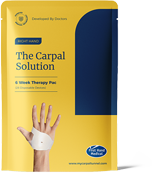
 Created by renowned Harvard health care professionals.

Carpal Tunnel Gloves: Comfort vs. Clinical Benefit, What to Expect
"Copper" and compression gloves are easy to buy, but do they offer real medical benefit for Carpal Tunnel? The truth is, feeling good isn't the same as getting better. Tight gloves can sometimes increase pressure on the median nerve, causing more harm than good. We break down the reality of "support" gloves: what they can do, when they fail, and what you really need for long-term remission.
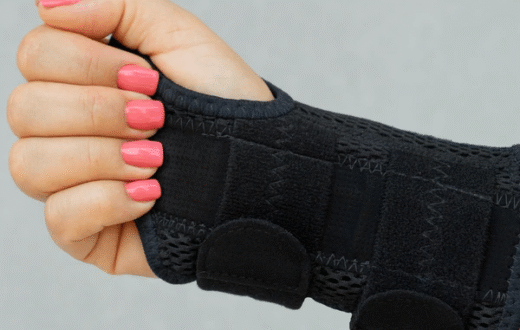

Carpal tunnel gloves are everywhere: compression gloves, fingerless gloves, “support” gloves, copper-infused gloves, and more. If you are dealing with tingling, hand numbness, wrist pain, or sleep interruption, it makes sense to wonder if gloves can provide real carpal tunnel pain relief.
They can feel good. That is the truth.
But comfort and clinical benefit are not the same thing. This guide will help you understand what gloves can realistically do, when they support most, when they can backfire, and what to do instead when your goal is long-term relief and remission.
What “Carpal Tunnel Gloves” Actually Are
Most products marketed as carpal tunnel gloves fall into one of these buckets:
Compression and Warmth Gloves
These are usually soft, stretchy, and fingerless. They apply light pressure and heat retention.
What you usually get:
- A sense of support.
- Warmth that can feel soothing.
- Mild swelling control for some people.
What you usually do not get:
- Reliable wrist positioning.
- A meaningful reduction in carpal tunnel pressure.
Glove Plus Brace Hybrids
Some “gloves” include a rigid or semi-rigid wrist stay. In practice, these function like a wrist brace or splint, just packaged in glove form.
What you get:
- Wrist positioning is often closer to neutral.
What you trade off:
- Less freedom to move, more risk of stiffness if overused.
Grippy Work Gloves
These are task gloves that may change how hard you grip by improving friction. Sometimes they reduce strain, sometimes they increase it because people grip harder.
Comfort vs Clinical Benefit: The Key Difference
Here is a simple way to think about it:
- Comfort tools help you feel better in the moment.
- Clinical tools change the mechanics that drive symptoms.
Carpal tunnel syndrome is a compression and irritation of the median nerve at the wrist. If your symptoms are driven by wrist bending at night, sustained gripping, repeated wrist flexion or extension, or inflamed tendon sheaths, the most significant wins usually come from changing wrist position and improving tissue glide, not from compression fabric.
Gloves can be a helpful accessory. They rarely solve the root problem on their own.
When Gloves Can Be Helpful
Gloves can make sense when your goals are comfort and mild symptom control, especially if you are also doing a real treatment plan.
Good Reasons To Try Gloves
- Your hands feel achy, cold, or mildly swollen.
- You want a gentle reminder to use a lighter grip.
- You are doing short tasks and want comfort and support.
- You are pairing gloves with exercises, pacing, and better wrist positioning.
The Best Time To Use Gloves
- During light daytime activity.
- During short periods of work that make you feel “unstable”.
- During recovery phases, when you want warmth and comfort.
If you are waking at night with tingling in the thumb, index, and middle fingers, gloves alone usually do not address the primary trigger. That is a night position problem, not a fabric problem.
When Gloves Are Unlikely To Help Much
Gloves tend to disappoint when the problem is clearly mechanical compression.
Gloves Are Not a Great Primary Strategy If
- You have nighttime tingling that wakes you repeatedly.
- Shaking out your hands is your main way to get relief.
- You have clear numbness in the thumb, index, and middle fingers.
- You have been dropping things or losing grip strength.
- Your symptoms are constant or worsening.
In these cases, you usually need a better-matched plan, for example, neutral wrist strategies at night, guided stretching therapy, or medical escalation, depending on severity.
The Most Common Glove Mistakes
Buying Tight Gloves and Calling It Treatment
Tighter is not better. If tingling increases with gloves on, the glove is too tight or simply not right for your pattern.
Wearing Gloves All Day
All-day compression can reduce circulation and increase irritation in some people. It can also encourage less movement, which is the opposite of what many wrists need.
Using Gloves To Delay Real Care
If you have constant numbness, weakness, or visible thumb muscle changes, do not gamble on comfort tools.
Expecting Gloves To Replace Wrist Positioning
If the wrist bends during sleep, gloves rarely prevent it unless they include a rigid support, which makes them more like a brace.
How To Choose Gloves Safely

Use this quick checklist.
Fit Checklist
- Snug, not tight.
- No increase in tingling after 5 to 10 minutes.
- Fingers stay warm and normal in color.
- No pressure points at the wrist crease.
Feature Checklist
- Breathable fabric if you sweat easily.
- Open fingertips if you need dexterity.
- Enough flexibility that you do not grip harder to compensate.
Time Checklist
- Start with short sessions, 30 to 60 minutes.
- Remove them and reassess.
- If symptoms worsen, stop.
If you have diabetes, circulation issues, or reduced sensation, be extra careful with compression wear and get clinician guidance.
Gloves vs Splints vs Therapy: What Is Actually Different
Many people bounce between gloves and splints to control symptoms. That can work in the short term, but it often misses the long game.
Gloves
- Best for comfort.
- Limited effect on wrist position.
- Limited effect on proper nerve compression.
Splints and Braces
- Best for night symptoms driven by wrist bending.
- A short trial can help with sleep.
- Overuse can cause stiffness.
- Does not restore tissue glide on its own.
Therapy and Stretching-Based Treatment
- Best for building tolerance and long-term control.
- Focuses on restoring glide, reducing irritation, and improving mechanics.
- Requires consistency, not intensity.
This is where The Carpal Solution fits differently. It is not a splint. It is a guided stretching treatment designed to support relief while keeping you moving, especially at night when symptoms commonly flare.
A Simple Plan That Actually Works With Gloves
If you want to use gloves, use them as an accessory inside a real plan. Here is a straightforward approach.
Week One: Calm the System
- Use gloves only for comfort during short daytime tasks.
- Perform a gentle nerve-glide and stretching routine twice daily.
- Add microbreaks every 30 to 45 minutes during heavy hand use.
- Keep wrists neutral during sleep, and avoid sleeping with wrists curled.
Week Two: Build Tolerance
- Continue gloves only if they do not increase tingling.
- Increase microbreak consistency.
- Add light grip control work if symptoms are calmer, never to fatigue.
- If night symptoms persist, compare splints, injections, and therapy options.
When To Upgrade Quickly
- No improvement in sleep after about two weeks.
- Daytime function is still limited.
- Symptoms feel more constant.
You are dropping objects more often.
What To Expect if You Order a Stretching Treatment Instead of a Glove
If your main goal is long-term relief and remission, you want an approach that changes the underlying mechanics, not just comfort.
A stretching-based treatment is designed to:
- Improve tissue glide around the wrist.
- Reduce irritation that builds throughout the day.
- Support better nights without relying on immobilization.
- Help you return to normal activities with less fear of flare-ups.
If you have been relying on gloves, this can feel like a “new way of thinking,” because it shifts the goal from protecting the wrist by squeezing it, to restoring movement quality so the wrist stays calm.
Try our 6-week or 1-year treatment.

The Effectiveness of Compression and Copper Gloves