 Created by renowned Harvard health care professionals.

Carpal Tunnel FAQs, Symptoms, Causes, Diagnosis, and How The Carpal Solution Helps
Confused by your Carpal Tunnel diagnosis? You aren't alone. Many leave the doctor's office with a label but no real answers about why the numbness and tingling keep returning. Standard treatments like splints or injections often just mask the pain instead of addressing the root cause: trapped inflammation. This guide explains your symptoms and why The Carpal Solution offers a smarter, non-invasive path to relief.


If you have tingling, numbness, burning, weakness, or wrist pain, you may have been told you have carpal tunnel syndrome, but still feel confused about what is actually happening in your hand and wrist.
That confusion is common.
Many people leave a doctor’s visit with a diagnosis, but without a clear explanation of why the symptoms started, why they keep coming back, or why common treatments often do not lead to lasting relief. At The Carpal Solution, we believe patients deserve a simpler, more logical explanation and a more practical path forward.
This guide answers the most common questions about carpal tunnel syndrome, what causes it, how it is diagnosed, and why The Carpal Solution is designed to help where conservative treatments often fall short.
What Is Carpal Tunnel Syndrome?
Carpal tunnel syndrome is a condition involving pressure on the median nerve in the wrist and can lead to symptoms in the hand, fingers, wrist, and even up the arm.
For most people, the symptoms are not random. They usually build over time and can include:
- Tingling in the thumb, index, middle, or ring finger
- Numbness that comes and goes, especially at night
- Burning, aching, or electric-like pain
- Hand weakness
- Trouble gripping or holding objects
- A feeling that the hand is swollen, even when it does not look swollen
According to your brand guide, the core issue should be described as trapped inflammation that causes symptoms and prevents the body from fully resolving it on its own.
What Causes Carpal Tunnel Syndrome?
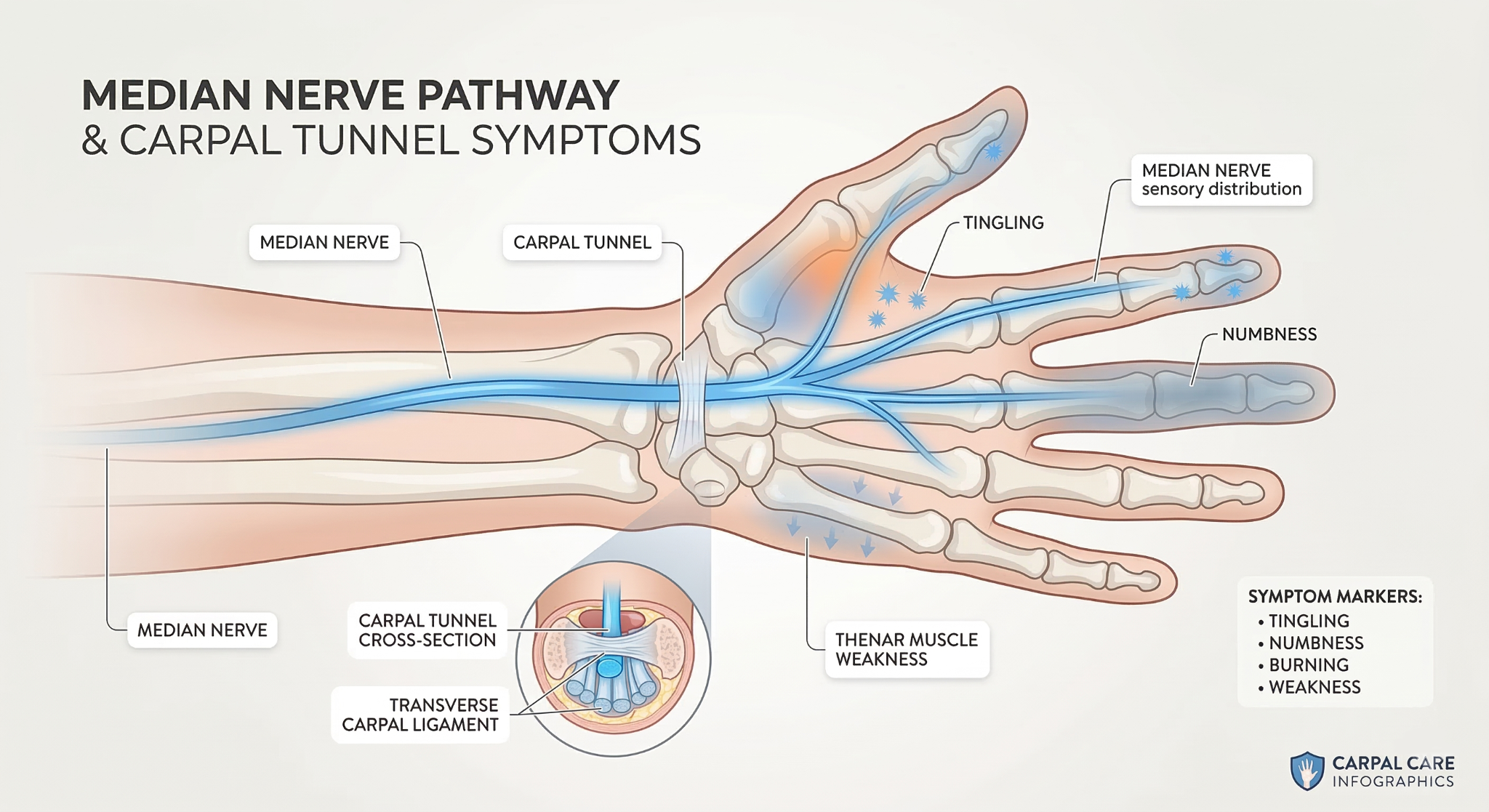
A lot of people are told that carpal tunnel just means a pinched nerve. That is only part of the story.
The Carpal Solution explains carpal tunnel syndrome as a problem of trapped inflammation. As inflammation builds in the wrist area, it can create pressure that pinches the nerve, reduces healthy blood flow, and limits normal lymphatic drainage. When that happens, the body has a harder time calming the irritation and restoring normal function.
In simple terms, the area gets crowded, irritated, and stuck in a cycle. Symptoms show up, but the body also struggles to clear the inflammation that is helping cause them in the first place.
That is one reason symptoms often return after temporary relief methods.
Why Do So Many People Feel Confused About Their Diagnosis?
Because carpal tunnel syndrome is often associated with more than one issue at a time.
Your guide notes that many physiological conditions associated with carpal tunnel syndrome go unnoticed. That helps explain why some people do not fit the “typical” picture, why symptoms can vary from person to person, and why a label alone does not always feel like a complete answer.
Someone may have:
- Nighttime numbness, but not much daytime pain
- Finger tingling, plus forearm tightness
- Weakness without severe pain
- Symptoms that flare during work, sleep, exercise, driving, or repetitive use
This is also why education matters. People need help understanding symptoms, diagnoses, underlying causes, and which treatment approach actually makes sense.
What Are the Most Common Symptoms of Carpal Tunnel Syndrome?
The most common symptoms include:
- Tingling or pins and needles
- Numbness in the hand or fingers
- Wrist pain
- Burning sensations
- Weak grip strength
- Clumsiness with small tasks
- Symptoms that are worse at night or after repetitive activity
Some people also notice that they shake their hands for relief, wake up during sleep because their hands feel “dead,” or avoid certain tasks because their grip no longer feels reliable.
How Is Carpal Tunnel Diagnosed?
Diagnosis usually starts with your symptoms, health history, and a physical evaluation. Many people are also sent for testing, especially when symptoms have been going on for a while.
But one of the important points in your guide is that patients are often pushed toward painful nerve studies and invasive next steps before they fully understand what is happening or what other options are available to them. Tze goal of this page is to educate and help people make a more informed treatment decision.
Why Don’t Common Treatments Always Solve the Problem?

This is one of the biggest questions people ask, especially after trying multiple options.
Do pain medications fix carpal tunnel?
Usually not.
Your guide states that oral pain medications may take the edge off, but do not address the chronic, recurring nature of carpal tunnel syndrome, and can come with significant downsides.
That means they may temporarily reduce symptoms without addressing the underlying issue that keeps the cycle going.
Do Wrist Splints Work?
Sometimes, but often only at first.
Your guide says splints can help a bit early on but may make carpal tunnel worse in the long run, and should mainly be used for heavy lifting. It also notes concern about muscle atrophy with overuse.
That is why many people feel initial relief, then frustration when symptoms return. To see exactly how braces stack up against a smarter alternative over time, read our complete guide on Carpal Tunnel Splints vs. The Carpal Solution: Night-by-Night Results.
Do Steroid Injections Work?
Sometimes, but not for long.
Your guide notes that steroid injections may work about half the time, often last only 2 to 3 months, and should be limited.
That can make them feel like a short-term patch rather than a long-term strategy.
Is Surgery a Permanent Fix?
Not always.
Your guide says many patients assume surgery will permanently solve the problem, but symptoms can come back, and it describes surgery as only working about 50 percent of the time. It also notes that some physicians move to surgery because the other options are known to have limitations.
For someone hoping to avoid an invasive procedure, that can be a major reason to look for a better non-surgical option first. Curious about what the actual recovery window looks like for each of these paths? We break it all down in How Long Does Carpal Tunnel Take to Heal? Timelines by Treatment
What Makes the Carpal Solution Different?
The Carpal Solution is designed around a different idea.
Instead of relying on risky oral pain medication, restrictive splints, steroid injections, painful nerve studies, or surgery, it aims to support the body more naturally while helping address the trapped inflammation pattern described in your guide.
In other words, it is built for people who want a non-invasive option that makes more sense for an ongoing condition.
With the Carpal Solution, You Do Not Need To Rely On:
- Risky oral pain medication
- Restrictive splints
- Steroid injections
- Painful nerve studies
- Carpal tunnel surgery
That positioning comes directly from your guide and should be a core part of the page message.
Who does The Carpal Solution Help?
The Carpal Solution may be a strong fit for people who:
- Have numbness, tingling, burning, or weakness consistent with carpal tunnel symptoms
- Want a non-surgical approach first
- Are frustrated by temporary relief from braces, medications, or injections
- Want help addressing the likely underlying problem, not just masking pain
- Need something practical for daily life
- Want a treatment path that does not revolve around invasive procedures
It is especially appealing to people who have been told to “wait and see,” even though the symptoms keep interrupting work, sleep, exercise, driving, or household tasks.
Who the Carpal Solution May Not Be For
The Carpal Solution may not be the right fit for people who:
- Want a medication-first approach
- Only want occasional symptom masking
- They are fully committed to surgery as their first option
- Do not want to follow a consistent home-use routine
- Expect relief without using the product as directed
This section helps set realistic expectations and makes the page more trustworthy. It also supports the “who it helps / who it doesn’t” update you requested.
How To Use the Carpal Solution, a Simple Walkthrough
One reason people appreciate The Carpal Solution is that it gives them a clear process to follow.
Step 1: Identify Your Symptom Pattern
Notice when your symptoms are strongest. Is it at night, during work, after repetitive hand use, after lifting, or first thing in the morning?
This matters because it helps you connect your symptoms to real-life triggers.
Step 2: Apply the Carpal Solution as directed.
Use the product according to its instructions and fit it properly so it can do its job comfortably and consistently.
Step 3: Use it consistently
Like most non-invasive approaches, consistency matters. A tool cannot be very helpful if it is used only occasionally.
Step 4: Pay attention to changes
Look for signs such as reduced tingling, less nighttime waking, improved comfort with activity, or greater confidence with the hand during daily tasks.
Step 5: Stay ahead of flare-ups
If certain tasks trigger symptoms, use The Carpal Solution as part of a smarter routine rather than waiting for the pain or numbness to return.
The Long-Term Outlook and Limitations of Standard Care
Final Thoughts
If you have been told your choices are medication, a brace, injections, painful testing, or surgery, it makes sense to feel discouraged.
But those are not the only paths people consider.
The Carpal Solution is positioned as a smarter, non-invasive option for people who want to understand what is really going on, address the problem more logically, and avoid treatments that are invasive, restrictive, risky, or short-lived. That positioning comes directly from your brand guide and should remain central to the page.
Next Steps: Ready to take a smarter approach to your wrist health? Order The Carpal Solution today to start your non-invasive recovery routine. If you still have questions about your specific symptoms after reading through the FAQs, feel free to Contact us.