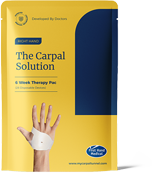
 Created by renowned Harvard health care professionals.

Self-Test for Carpal Tunnel, and what you can do while waiting to see a Doctor
Suspect Carpal Tunnel? If you're dealing with hand numbness or dropping objects, don't just wait for your appointment to act. While a doctor's exam is needed for a final diagnosis, self-tests can help you validate your symptoms now. Learn how to perform these checks at home and discover simple, low-risk ways to relieve median nerve pressure and make your daily tasks easier while you wait.


Why a self-test helps, but is not the final word
Carpal tunnel syndrome happens when the median nerve is compressed at the wrist. Classic symptoms include tingling, numbness, and pain in the thumb, index, and middle fingers, sleep interruption, dropping objects, and loss of grip or pinch strength. Self-tests can reproduce symptoms and raise or lower your suspicion, which is helpful while you arrange a clinical exam. Accuracy studies show that no single maneuver is perfect. Combining your history with a few maneuvers is more informative than relying on any one test.
Clinicians often use electrodiagnostic testing and ultrasound to confirm the diagnosis, grade severity, and rule out look-alike problems such as cervical radiculopathy or ulnar neuropathy. Use this guide to organize your observations and initiate low-risk steps that can often make day and night easier.
For a complete overview of what these signs mean, see our Symptoms & Diagnosis Guide.
Carpal tunnel self-test checklist, step-by-step
Before you begin, note which hand is more affected, what time of day is worst, and which tasks trigger symptoms. If any maneuver causes sharp pain or new weakness, stop and note the result for your clinician.
1) Map your symptoms
- Where: The Thumb, index, middle, and thumb side of the ring finger suggest median nerve involvement. The small finger is usually spared in carpal tunnel and may point to a different nerve if involved.
- When: Nighttime waking is common since sleep positions tend to flex the wrist and raise tunnel pressure. Driving, typing, gripping tools, and holding a phone also commonly aggravate symptoms.
- How it feels: Tingling, pins and needles, burning, or a swollen sensation in the fingers. Shaking the hand may bring brief relief, which is a classic clue.
2) Phalen test
- How to perform: Sit or stand. Flex your wrist so your palm faces the underside of your forearm, or place the backs of your hands together with both wrists flexed. Hold for up to 60 seconds.
- Positive: Tingling, numbness, or pain reproduces in the thumb, index, or middle finger within the hold time.
- Why it matters: Phalen is widely used, but accuracy varies across studies. It is a helpful screening tool when used in conjunction with other maneuvers and your medical history.

3) Tinel sign
- How to perform: With the wrist relaxed, gently tap over the carpal tunnel area at the base of the palm in line with the thumb to the middle finger.
- Positive: Tingling shoots into the thumb, index, or middle finger.
- Why it matters: Tinel is quick but not definitive. Accuracy estimates vary, so use them as one piece of the picture.
4) Durkan compression test
- How to perform: Press firmly with your thumb over the carpal tunnel area, about where a watch face would sit, for 30 to 60 seconds.
- Positive: Tingling or numbness appears in the median nerve distribution.
- Why it matters: Direct compression is often more provocative than tapping, and many clinicians use it to increase sensitivity in mild cases. Accuracy still varies across studies and techniques.
5) Hand elevation test
- How to perform: Raise both hands above your head, elbows straight, and hold for up to 2 minutes.
- Positive: Reproduction of tingling or numbness in median-innervated fingers, especially when the position is sustained.
- Why it matters: Evidence suggests the hand elevation test has good diagnostic accuracy and is simple to perform at home.
6) Quick function screen
- Grip and pinch: Open a tight jar, hold a full mug, button a shirt, or tap your thumb to each fingertip quickly.
- Watch for: Clumsiness, dropping items, loss of fine motor control, or visible fatigue in the thumb muscles. Functional difficulty, combined with a positive symptom map, increases suspicion.
How to interpret your results
Use this simple framework to organize your self-test findings.
- High suspicion pattern: Typical symptoms, night waking, and at least two positive maneuvers in the median nerve distribution. This pattern merits a timely clinical evaluation, and you can begin low-risk steps now.
- Intermediate suspicion pattern: Typical symptoms with mixed or negative self-tests, or atypical symptom map with positive tests. Consult a clinician to clarify the diagnosis, as other conditions can mimic CTS.
- Lower suspicion pattern: Atypical symptoms, small finger involvement, neck pain with arm radiation, or all tests harmful despite intense symptoms. Request a professional evaluation that focuses on differentiating diagnoses.
Remember, accuracy studies show that clinical examination maneuvers have moderate diagnostic value at best, so they are aids, not final answers. Confirmation, if needed, typically involves nerve conduction studies with or without ultrasound to assess severity and rule out other potential causes.
When to escalate or seek urgent care
Contact a clinician promptly if any of the following occur.
- Constant numbness that does not fluctuate
- Noticeable thumb muscle shrinking or weakness
- Progressive loss of grip or pinch that affects safety
- Symptoms in the small finger or whole hand numbness with neck pain, which may indicate a different nerve or spinal source
In these situations, clinicians may expedite electrodiagnostic testing or imaging and discuss earlier definitive options if severe median nerve compression is confirmed.
Preparing for your visit, what to bring and ask
- Your symptom notes: How many nights you woke up, activities that triggered symptoms, and what helped.
- A photo of your workstation or tool setup: Your clinician can immediately spot wrist flexion or forceful pinch postures.
- Past conditions and medications: Diabetes, thyroid disease, pregnancy, and inflammatory arthritis can increase the risk of CTS. List any recent changes that might affect swelling or fluid retention.
- Questions to consider:
- Does my pattern match the carpal tunnel syndrome, or do we need to rule out another nerve issue?
- What is the benefit of electrodiagnostic testing or ultrasound in my case?
- If conservative steps do not help, what are the evidence-based options to follow?
- How will we measure progress and decide whether to escalate?
Assessing Severity and Self-Management of Carpal Tunnel Syndrome.