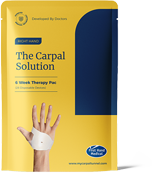
 Created by renowned Harvard health care professionals.

When Numbness Persists: Why You Shouldn’t Wait to Get Care
Waking up to shake out a numb hand again? It’s easy to hope persistent tingling will just vanish, but recurring numbness is a clear warning sign of trapped inflammation. Waiting only allows the cycle to worsen, often pushing you toward restrictive splints, risky meds, or surgery. Learn why you shouldn't ignore these symptoms and how to take action early with a smarter, non-invasive approach.


If your hand keeps going numb, especially at night, during work, or while doing everyday tasks, it is easy to tell yourself it is probably nothing serious.
A lot of people do exactly that.
They wait, adjust how they sleep, shake out their hand, ignore the tingling, and hope it goes away on its own. But when numbness keeps coming back, that is usually a sign that the problem is not resolving, and waiting too long can mean more frustration, more disruption, and more pressure to move toward treatments you may not want. Your brand guide makes it clear that this kind of content should help educate people about symptoms, diagnoses, and underlying causes, while guiding them toward treatment before they are funneled into invasive options.
This article explains why persistent numbness matters, why waiting is rarely the best plan, and why The Carpal Solution is positioned as the smarter non-invasive option compared to conservative treatments.
Numbness Is Not Something To Brush Off
Occasional hand discomfort after overuse is one thing.
Recurring numbness is different.
When numbness keeps happening, your body is telling you that something is interfering with normal function. Within the framework of your brand guide, carpal tunnel syndrome is not just a simple pinched-nerve problem. It is a trapped inflammation problem, where inflammation causes symptoms and also blocks the body’s ability to relieve that inflammation on its own by pinching the nerve, blood flow, and lymphatic channels.
That means persistent numbness is not just an inconvenience. It can be a sign that the cycle is continuing rather than healing.
Why People Wait Too Long
Most people do not delay care because they are careless. They delay because the symptoms are confusing.
Your brand guide notes that even after speaking with a doctor, many people still do not really understand what is going on. It also points out that there are many physiological conditions connected to carpal tunnel syndrome that people do not realize are involved.
So people often think:
- Maybe I just slept on it wrong
- Maybe it is from typing too much
- Maybe it will calm down next week
- Maybe I only need a brace now and then
- Maybe it is not serious unless I have severe pain
But persistent numbness is one of the clearest signs that the issue is not simply disappearing on its own.
What Persistent Numbness Can Lead To

When numbness becomes a pattern, it often starts to affect more than just comfort.
It can interfere with:
- sleep
- grip strength
- confidence using your hand
- repetitive work
- driving
- lifting
- exercise
- simple daily tasks
That is why waiting is such a problem. What starts as “just nighttime numbness” can slowly turn into an issue that affects how you work, rest, and function day to day.
Why “Wait and See” Often Does Not Make Sense
The logic is simple.
If the condition involves trapped inflammation that is also blocking the body’s ability to resolve the problem, then continuing to wait without doing anything meaningful often just allows that cycle to continue. That is the exact logic your brand guide wants carried through these pieces, logical, accurate, and easy to understand, without overcomplicating the explanation.
Waiting may feel passive and harmless, but for many people, it just means the symptoms become more established while they lose time.
Why Common Next Steps Can Feel Disappointing
One reason people delay seeking care is that they dislike the treatment options they think are available to them.
That concern makes sense, and your brand guide directly addresses it.
Oral Pain Nedication
Your guide says these medications are risky, can be dangerous or addictive, and should not be used for a chronic recurring condition like carpal tunnel syndrome. It also says they mainly just take the edge off.
Splints
Your guide says splints may help a bit at first, but can make carpal tunnel worse in the long run, should mainly be used for heavy lifting, and may lead to muscle atrophy.
Steroid Injections
Your guide says steroid injections work about 50 percent of the time, usually last only 2 to 3 months, and should be limited.
Surgery
Your guide says many physicians move toward surgery because the other options often do not work, but surgery only works about 50 percent of the time, and symptoms can come back.
This is an important message for the blog. People should not wait, but they should also not feel that “getting care” automatically means they must accept invasive, risky, or ineffective options.
What Getting Care Should Really Mean
Getting care should mean understanding what is happening, recognizing that persistent numbness is a sign worth acting on, and choosing a treatment path that actually makes sense for a chronic recurring condition.
Your brand guide says the goal is to educate customers, help diagnose and get treatment, and position The Carpal Solution as the superior option compared to conservative treatments.
That changes the tone of the message.
Instead of saying, “Ignore it until it gets bad enough for surgery,” the better message is:
Pay attention early, identify what is driving the symptoms, and choose a non-invasive option before the condition takes over more of your life.
Why the Carpal Solution Is the Better Next Step
The Carpal Solution is positioned as the smarter answer for people who do not want to keep waiting, but also do not want to jump into medications, restrictive splints, steroid injections, painful nerve studies, or surgery. Your guide says every piece should reinforce exactly that.
This matters because persistent numbness is often the moment when people realize they need to do something, but they still want that “something” to be logical, safe, and non-invasive.
That is where The Carpal Solution fits best.
Who Should Stop Waiting

This message is especially relevant for people who:
- wake up with numbness regularly
- notice tingling during repetitive work
- feel hand weakness more often
- keep shaking out their hand for relief
- have symptoms that come and go, but never fully leave
- have already tried to ignore the issue and seen no real improvement
These are the people most likely to benefit from taking action sooner rather than later.
Who the Carpal Solution Helps
The Carpal Solution may be a strong fit for people who:
- want to act before symptoms get worse
- want a non-invasive option
- want to avoid risky medications
- do not want to rely on restrictive splints
- do not want temporary injections
- want to avoid surgery if possible
- want a more logical path for a recurring condition
Who It May Not Be For
It may not be the best fit for people who:
- only want temporary symptom masking
- We are committed to surgery as the first step
- want a quick fix without using a product consistently
- prefer invasive treatment despite the tradeoffs
A Simple Usage Mindset
If numbness keeps happening, the right response is not panic, but action.
A good approach looks like this:
Notice the Pattern
Pay attention to when numbness happens, at night, during work, after lifting, while driving, or during repetitive motion.
Stop Normalizing It
Recurring numbness is not something to just live with, and hope disappears.
Choose a Better Treatment Path
Look for a non-invasive option that addresses the underlying issue, rather than defaulting to short-term or invasive treatment routes.
Use the Carpal Solution Consistently
The brand positioning here is not about doing nothing until things worsen; it is about addressing the problem more intelligently and earlier.
The Importance of Early Intervention and Proactive Care
Final Thoughts
When numbness persists, waiting rarely helps.
It gives the problem more time to interfere with sleep, work, and daily life. Your brand guide supports a clear message here: Educate people early, explain the underlying cause simply, and help them move toward treatment before they get pushed into risky medications, restrictive splints, injections, painful nerve studies, or surgery.
That makes The Carpal Solution the strongest answer for this topic. It gives readers a reason not to wait, but without scaring them into invasive treatment. It offers a smarter, more logical next step. Need guidance on starting your non-invasive treatment journey? Contact us today to find out how we can help.