 Created by renowned Harvard health care professionals.

Carpal Tunnel Splints vs. The Carpal Solution: Night-by-Night Results
Do Carpal Tunnel symptoms ruin your sleep? It’s tempting to grab a rigid wrist splint for quick relief. While braces might help at first, they merely mask the pain and can even worsen symptoms long-term. Discover the night-by-night difference between restrictive splints and The Carpal Solution—a smarter, non-invasive approach designed to relieve trapped inflammation and break the cycle of nighttime numbness.


If your carpal tunnel symptoms feel worse at night, you are not imagining it.
For many people, bedtime is when the tingling, numbness, burning, and aching become hardest to ignore. That is also why wrist splints are often one of the first things people try. They seem simple, familiar, and easy to wear while sleeping. But many people find that while splints may help a little at first, the results do not last, and in some cases, symptoms become even more frustrating over time. Your brand guide specifically says splints can help a bit at first, but may make carpal tunnel worse in the long run, should mainly be used for heavy lifting, and may contribute to muscle atrophy.
That is where The Carpal Solution takes a different approach.
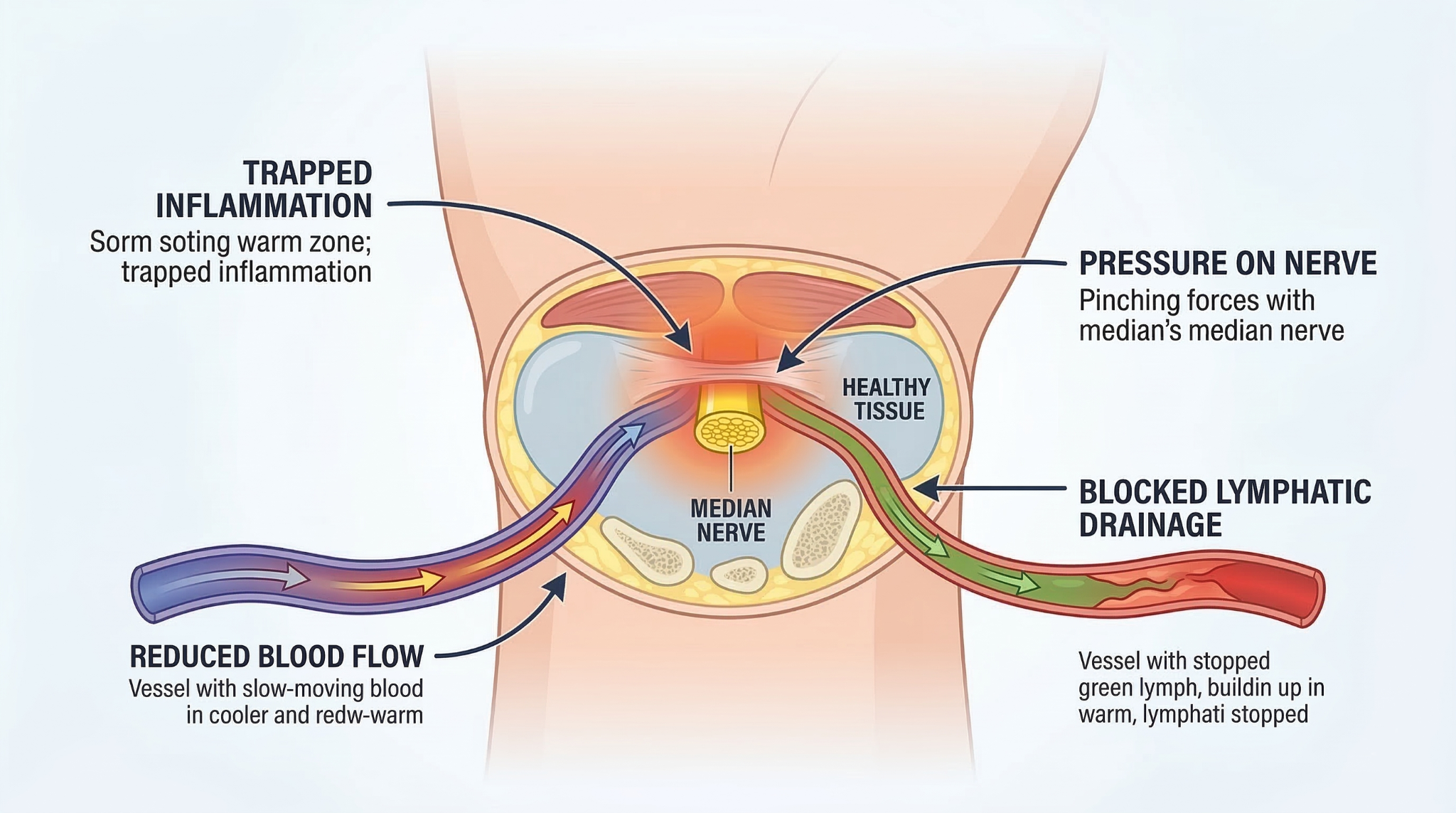
Instead of positioning carpal tunnel as just a nerve problem, your brand guide frames it as a problem of trapped inflammation. In that explanation, inflammation creates pressure that pinches the nerve, reduces healthy blood flow, and blocks lymphatic channels, making it harder for the body to resolve the problem on its own.
This article walks through what happens night by night with splints versus The Carpal Solution, which option may help, and why so many people looking for real relief move beyond restrictive braces.
Why Carpal Tunnel Often Feels Worse at Night
Nighttime symptoms are one of the most common complaints with carpal tunnel syndrome. You finally stop moving, try to rest, and suddenly your hand is buzzing, numb, stiff, painful, or weak. Many people wake up and have to shake out their hands just to get temporary relief.
That pattern matters because it shows how ongoing irritation can build into a repeating cycle. According to your brand guide, the real problem is not just the nerve itself; it is the trapped inflammation surrounding the area, which also interferes with the body’s natural healing response.
What Splints Do at Night
Splints are meant to hold the wrist in a controlled position while you sleep. On the surface, that sounds logical. If wrist position affects symptoms, then keeping the wrist stable should reduce irritation.
And sometimes it does, at least at first.
Your guide makes that point clearly. Splints help in the beginning. But it also warns that they can make carpal tunnel worse in the long run and may lead to muscle atrophy when overused.
So the real question is whether a splint can help for a night or two. The real question is whether it is a good long-term answer for a chronic, recurring problem.
Night-by-Night, Splints vs. the Carpal Solution
Night 1 to Night 3
With a splint:
You may notice some early relief. The wrist feels supported, movement is limited, and nighttime irritation may seem more manageable.
With The Carpal Solution:
You begin using a non-restrictive option designed to help the body address the trapped inflammation pattern underlying carpal tunnel symptoms. Instead of simply immobilizing the area, the goal is to support a better healing environment. This aligns with the brand guide’s core positioning of The Carpal Solution as the superior alternative to conservative treatments such as restrictive splints.
Night 4 to Night 7
With a splint:
This is when many people start to realize that support comes with trade-offs. The brace can feel bulky, rigid, awkward, or frustrating to sleep in. It may reduce motion, but it does not necessarily address why symptoms keep returning.
With The Carpal Solution:
This is where the difference in philosophy becomes clearer. The Carpal Solution is positioned as a better option for people who do not want to rely on restrictive splints, risky medications, injections, nerve studies, or surgery.
Week 2 and Beyond
With a splint:
Relief may plateau. Some people find they are still waking up with numbness or tingling, just with a brace on. According to the guide, long-term splint use can actually make things worse and is better reserved for situations like heavy lifting, not as an ongoing answer night after night.
With The Carpal Solution:
The appeal is that it is designed for people seeking a more logical, non-invasive solution to an ongoing condition. Instead of settling for symptom management alone, it is meant to support the body more naturally and help break the cycle that keeps symptoms coming back.
Why the Carpal Solution Is Different From a Splint
A splint is mainly about restriction. It tries to limit motion.
The Carpal Solution is positioned around a different goal. It is designed for people who want relief without depending on restrictive braces or other short-term, invasive, or frustrating treatment options. Your guide is explicit that each piece should reinforce these points:
- No risky oral pain medication
- No restrictive splints
- No steroid injections
- No painful nerve studies
- No carpal tunnel surgery
That makes this more than a comfort comparison. It is really a difference in treatment philosophy.
Who Nighttime Splints May Help
To keep the piece balanced and useful, splints are not completely useless. Based on your guide, they may help people who:
- Need short-term support
- Want temporary nighttime stabilization
- Are doing heavy lifting and need occasional protection
But even then, your guide does not frame splints as a smart long-term solution.
Who the Carpal Solution Helps
The Carpal Solution may be a better fit for people who:
- Wake up with numbness, tingling, burning, or pain
- Have already tried a wrist splint and felt underwhelmed
- Want something non-invasive
- Want to avoid injections or surgery
- Are you tired of treatments that only take the edge off
- Want a more logical approach to a chronic, recurring condition
Who the Carpal Solution May Not Be For
It may not be the best fit for people who:
- Want only temporary symptom masking
- Prefer a rigid brace, no matter the downsides
- You are looking only for a quick fix without consistent use
- Have already decided that surgery is their first and only option
A Simple Usage Walkthrough
How People Often Use a Splint
They strap it on before bed, hope it prevents wrist movement, and see whether symptoms are quieter by morning.
That simplicity is part of the appeal, but it is also the limitation. It is still a restrictive brace, and according to your guide, that is not the direction you want patients relying on for long-term results.
How People Use the Carpal Solution
They use it as directed as part of a consistent nighttime routine, to address the underlying pattern of trapped inflammation that contributes to their symptoms.
The key difference is expectation. With a splint, the goal is usually temporary control. With The Carpal Solution, the goal is to move toward real relief with a non-invasive approach aligned with how the condition is explained in your brand guide.

FAQ TOPICS
The Carpal Solution vs. Traditional Splints
Final Thoughts
A wrist splint may seem like the easy nighttime answer, and for a few nights, it may even feel helpful. But according to your brand guide, that early relief does not make it the right long-term option. Splints are restrictive, may worsen the problem over time, and do not match the more logical approach your brand wants to present.
The Carpal Solution is the stronger story here. It gives readers a non-invasive alternative that aligns with your core message. Carpal tunnel is not just something to brace and endure; it is something to understand and address more intelligently. If you are ready to address the root of the problem without restrictive braces, order The Carpal Solution today.