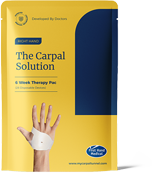
 Created by renowned Harvard health care professionals.

Hand Numbness Is A Carpal Tunnel Symptom
Hand numbness in the thumb, index, and middle fingers is often a carpal tunnel symptom — not just your hand falling asleep. If you feel "pins-and-needles" in your thumb, index, and middle fingers, it’s not just your hand falling asleep—it’s the hallmark of Carpal Tunnel Syndrome. From night pain to clumsiness with simple tasks, learn how to recognize the specific patterns of nerve compression before they impact your daily life.


Hand Numbness as a Carpal Tunnel Symptom: What It Really Feels Like
People describe a pins-and-needles feeling or a sense that the hand has fallen asleep. The giveaway pattern is typically found on the thumb, index, and middle fingers, sometimes on the thumb side of the ring finger, while the little finger is usually spared. Symptoms often come in waves, worse at night, during driving, reading, or phone use. Many wake up shaking or flicking their hands to relieve tingling, only to do it again later. Over time, fine tasks feel clumsy, jar lids fight back, and your grip may fade, which can lead to dropping things without warning.
If this sounds familiar, your numbness may be the sensory signal of median nerve compression in the carpal tunnel.
Why The Median Nerve Causes These Specific Symptoms
The median nerve passes through a narrow channel at the wrist, sharing space with flexor tendons. When that space becomes crowded, pressure rises, and the nerve signals falter. Sensory fibers to the thumb, index, and middle fingers are most sensitive. Early on, symptoms come and go, usually with wrist flexion or prolonged gripping. Later, they can persist at rest. Motor fibers that power the thenar muscles of the thumb may weaken in more advanced cases, which shows up as reduced pinch strength and thumb opposition problems.
Self Checks You Can Try Today

These simple checks do not replace a professional exam; they help you notice patterns worth acting on. If you would like a step-by-step check, you can try our Self-Test for Carpal Tunnel.
- Night test: Do your symptoms wake you from sleep, especially with your wrist bent under a pillow or tucked in?
- Position test: Does tingling build when you hold a phone, knit, read, or drive, and ease when you shake the hand out?
- Finger map: Are the thumb, index, and middle fingers involved, while the little finger is spared?
- Button pinch: Does the thumb feel weak when fastening small buttons or opening a jar?
If most answers are yes, carpal tunnel syndrome rises to the top of the list, and you should consider a focused evaluation.
Triage: Mild, Moderate, Or Severe
Use this quick triage to decide how quickly to escalate care.
- Mild: Intermittent tingling or numbness, primarily at night or with specific tasks, no constant numbness, no noticeable weakness.
Action: Initiate conservative steps and track symptoms for 2 to 4 weeks. - Moderate: Frequent symptoms that interrupt sleep or work, occasional dropping objects, and early grip weakness.
Action: Add professional guidance, consider confirmatory testing, and consider targeted treatments. - Severe: Constant numbness in the median nerve digits, clear loss of grip or thumb muscle bulk, frequent dropping, and daily function at risk.
Action: Seek prompt evaluation for definitive treatment. Time matters when weakness or constant numbness appears.
Not Every Numb Hand Is Carpal Tunnel: Compare Common Mimics
Hand numbness has several potential sources. This quick comparison can help you discuss the right tests with your clinician.
| Condition | Finger Pattern | Common Triggers | Other Clues |
| Carpal tunnel syndrome | Thumb, index, middle, and sometimes the radial half of the ring finger | Nighttime, wrist flexion, gripping, driving, phone use | Little finger spared, shaking out helps, possible grip decline |
| Ulnar nerve compression at the elbow or wrist | Ring and little finger | Elbow flexion, resting elbow on hard surfaces | Numbness on the ulnar side of the hand, grip for the ring and little finger tasks is weak |
| Cervical radiculopathy, neck origin | A variable can include all fingers | Neck positions, overhead work | Neck or shoulder pain, symptoms with neck rotation or extension |
| Peripheral neuropathy, systemic | Stocking glove distribution | Variable | Often, both hands and feet, systemic conditions. |
If your pattern does not match the classic median nerve territory, do not worry. It simply means you should receive a tailored assessment to avoid an incorrect plan.

The Mayo Clinic lists numbness or tingling in the thumb, index, middle, and ring fingers — typically sparing the little finger — as one of the most reliable indicators of carpal tunnel syndrome versus other nerve compression patterns.
What To Do In The First Two Weeks
Start simple. These steps often settle early symptoms and help you sleep better while you arrange an evaluation.
- Night neutral wrist splint, trial only: Wear a comfortable neutral wrist brace during sleep for 2 to 3 weeks. Neutral means straight wrist, not flexed or extended. Daytime use is optional for provoking tasks only.
- Adjust your wrist angles: Raise your keyboard, lower your chair slightly, or add a wrist rest to keep your wrist in a neutral position during typing and mouse work.
- Micro breaks: Every 30 to 45 minutes, relax your hands, open and close them gently, then return to a neutral position.
- Task rotation: Alternate forceful or high-repetition tasks with lighter activities when possible.
- Symptom journal: Track night awakenings, object drops, and a 0 to 10 symptom score twice daily. This turns vague impressions into actionable data.
If you see no improvement after 2 to 4 weeks, or if symptoms are moderate to severe, move to a formal diagnosis pathway.
When To Seek A Formal Carpal Tunnel Diagnosis
A careful history and targeted exam are crucial. Clinicians may use simple provocation maneuvers, then, when useful, order confirmatory tests. The two most common options are nerve conduction studies, sometimes paired with electromyography, and diagnostic ultrasound of the median nerve. Testing is helpful in three scenarios: when your pattern is atypical, objective severity will guide treatment decisions, or when you need to rule out a mimic, such as ulnar neuropathy or a neck source.
If you notice constant numbness, visible thinning of the thumb mound, or progressive weakness, prioritize an expedited appointment.
Good to know: Many people can improve without surgery, especially when symptoms are mild and of short duration, and when underlying contributors are addressed early.
Underlying Causes You Can Influence
There are many contributors that can tighten the space or increase tissue volume in the carpal tunnel. Some are outside your control, others are modifiable.
- Work and hobby factors: Prolonged wrist flexion or extension, forceful gripping, vibration exposure, and tight tool handles.
- Metabolic and medical conditions: Diabetes, thyroid imbalance, inflammatory arthritis, fluid retention.
- Anatomy and life stages: Smaller carpal tunnels, pregnancy, and menopause related changes.
- Lifestyle contributors: Weight gain, inactivity, and poor sleep habits that lead to wrists being bent.
You may not change your anatomy, but you can change your wrist posture, task design, tool choice, and sleep habits. Addressing even one or two items often reduces symptoms meaningfully. If you need help identifying your specific contributors, consider our 6 Week Treatment or 1 Year Treatment options, both of which are covered by our 30-day money-back guarantee.
Sleep, Work, and Daily Life Tips
Sleep without the midnight wake-up:
- Keep the wrist straight with a soft, breathable brace.
- Avoid tucking hands under pillows or curling wrists tightly.
- If you wake with tingling, gently straighten the wrist and shake out the hand, then reset your position.
At the desk:
- Keyboard and mouse at elbow height, forearms supported, wrists straight.
- Consider a split keyboard or vertical mouse if your wrists angle inward.
- Set a reminder for micro breaks and hand openers.
On the go:
- Use phone stands or pop grips to keep your wrist in a neutral position.
- Switch hands during extended scrolling or texting.
- For driving, adjust the seat so that your elbows are lightly bent and your wrists stay straight on the wheel.
Grip strength returns with smarter loads:
- Use jar openers, thicker handled tools, and bags with padded straps.
- Spread the load across both hands, and avoid one-handed heavy carries when possible.
Key Takeaways
-
- Hand numbness that primarily affects the thumb, index, and middle fingers, especially at night, is closely associated with carpal tunnel syndrome.
-
- If symptoms interfere with sleep, work, or cause you to drop things, consider seeking a focused evaluation beyond self-care.
-
- A short trial of night splinting, posture adjustments, and microbreaks often reduces symptoms in mild cases.
-
- Formal testing clarifies severity and rules out mimics, which protects you from the wrong treatment path.
-
- Address the underlying contributors you can control, then choose targeted care steps that match your level of severity.
Hand numbness that primarily affects the thumb, index, and middle fingers, especially at night, is a classic carpal tunnel symptom.
FAQ TOPICS
Carpal Tunnel Syndrome
Talk To a Human, Next Steps
If hand numbness is waking you up, interrupting work, or causing you to drop things, you deserve a plan that fits your life. Our 6 Week Treatment and 1 Year Treatment programs are designed to target the root causes of your symptoms and help you avoid carpal tunnel surgery whenever possible. Both are backed by our 30-day money-back guarantee. Start your treatment today.