 Created by renowned Harvard health care professionals.


Carpal Tunnel Inflammation: The Key to Managing Carpal Tunnel for Life

Systemic inflammation keeps feeding carpal tunnel syndrome. Here is how it works, which conditions raise it, and seven ways to control it for life.
Carpal tunnel inflammation doesn’t start and stop at your wrist. Swelling in the carpal tunnel is fed by two sources: how you use your hands, and how much inflammation your whole body produces. That second source, systemic inflammation, is why carpal tunnel syndrome (CTS) lingers for some people, returns for others and can come back even after surgery.
The good news is that systemic inflammation can be controlled. This guide explains how it drives carpal tunnel, which health conditions raise it, and seven practical ways to lower it, so you can keep carpal tunnel in remission naturally for life.
Key Takeaways
- Diabetes, obesity, rheumatoid arthritis and hypothyroidism each raise the risk of carpal tunnel syndrome, in some cases about twofold.
- Systemic inflammation keeps feeding carpal tunnel inflammation, which is why CTS behaves as a chronic, recurring condition.
- The strategy has two parts: clear the trapped inflammation in the tunnel, and slow the production of new inflammation in the body.
- Exercise, better sleep, blood sugar control, an anti-inflammatory diet, a healthier weight and good oral care all lower markers of inflammation.
- People with higher systemic inflammation may need occasional preventive treatment to stay in remission.

Table of Contents
What Is Carpal Tunnel Inflammation?
The carpal tunnel is a narrow passage at the base of the hand. The median nerve shares it with nine flexor tendons and their lining. When fluid and swelling build up in that tight space, pressure rises.
Carpal tunnel syndrome is called an entrapment syndrome because the nerve is trapped. The same pressure also squeezes the small blood vessels and lymph channels that drain fluid from the tunnel. Blood flow slows, lymph drainage slows, and fluid gets trapped. Medical reviews describe chronic high pressure, blocked venous outflow and local swelling as the main elements of CTS.[1]
That creates a cycle. Normal pressure in the carpal tunnel is roughly 2 to 10 mmHg; in CTS it often rises above 20 to 30 mmHg, enough to slow drainage further and cause swelling in and around the nerve. The extra pressure in the carpal tunnel space puts pressure on the median nerve, restricts blood flow and limits the drainage of lymph fluid in the lymph system.[2]
Our doctors call this the root cause of carpal tunnel: trapped inflammation. For the difference between inflammation, swelling and lymph fluid, see decoding inflammation, swelling and lymph fluid.
All of these fluids travel through the lymphatic system of the body (hence, lymph fluid) and are essentially the same, in that all of them are over 95% water with different impurities. Full blood circulation and free drainage of the lymphatic fluids are essential to help the body get ahead of the inflammation curve, jump-start the body’s natural healing processes, and reduce the excess pressure on the median nerve in the carpal tunnel space.
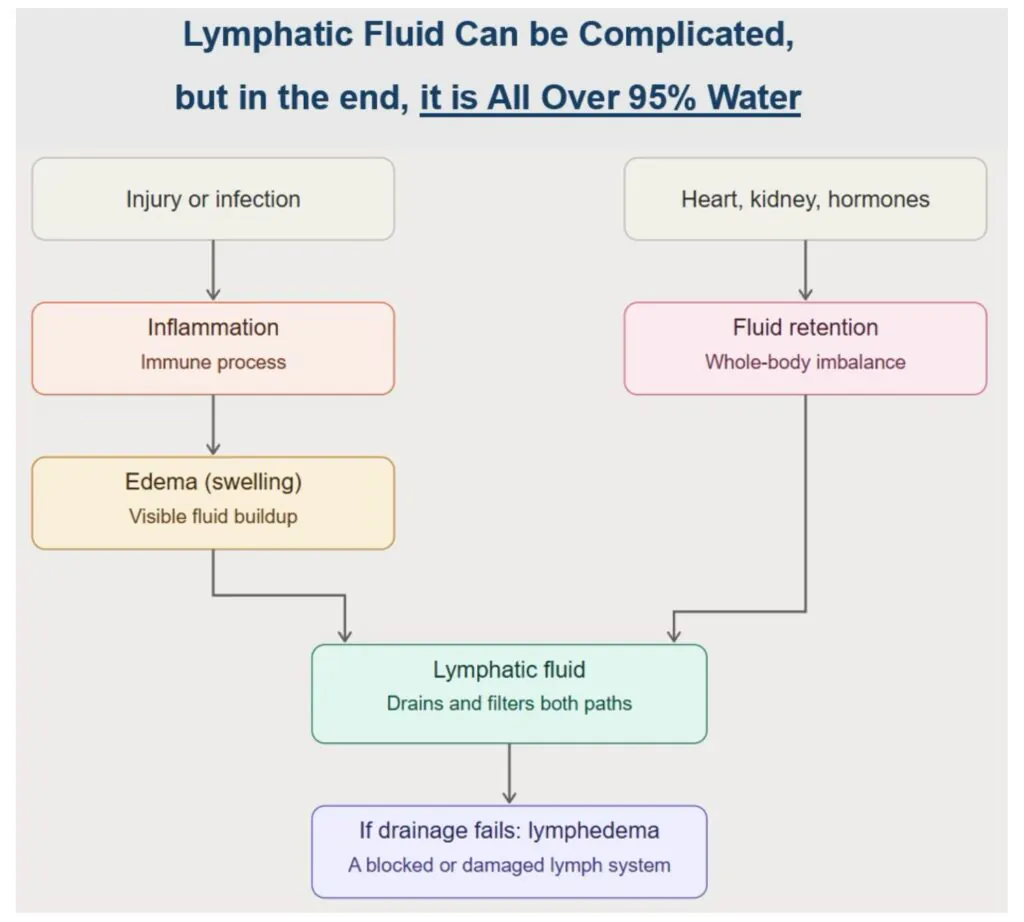
Local vs. Systemic Inflammation: Two Sources, One Tunnel
First Hand Medical’s doctors group carpal tunnel inflammation into three types:
| Type | Where it comes from | What it means for CTS |
|---|---|---|
| Normal daily inflammation | Everyday hand use and healing | Cleared easily when drainage is working |
| Excess physical inflammation | Repetitive gripping, typing, tools, injury | Overloads the tunnel; often improves with rest, ergonomics and stretching |
| Excess systemic inflammation | Whole-body conditions such as diabetes, obesity, thyroid disease, autoimmune disease, hormonal changes | Keeps supplying new fluid and swelling; slows recovery and drives recurrence |
When the body produces inflammation faster than it can clear it, it falls behind. Fluid accumulates in the tightest spaces first, and the carpal tunnel is one of the tightest. For a deeper look at this mechanism, read how systemic inflammation fuels CTS.
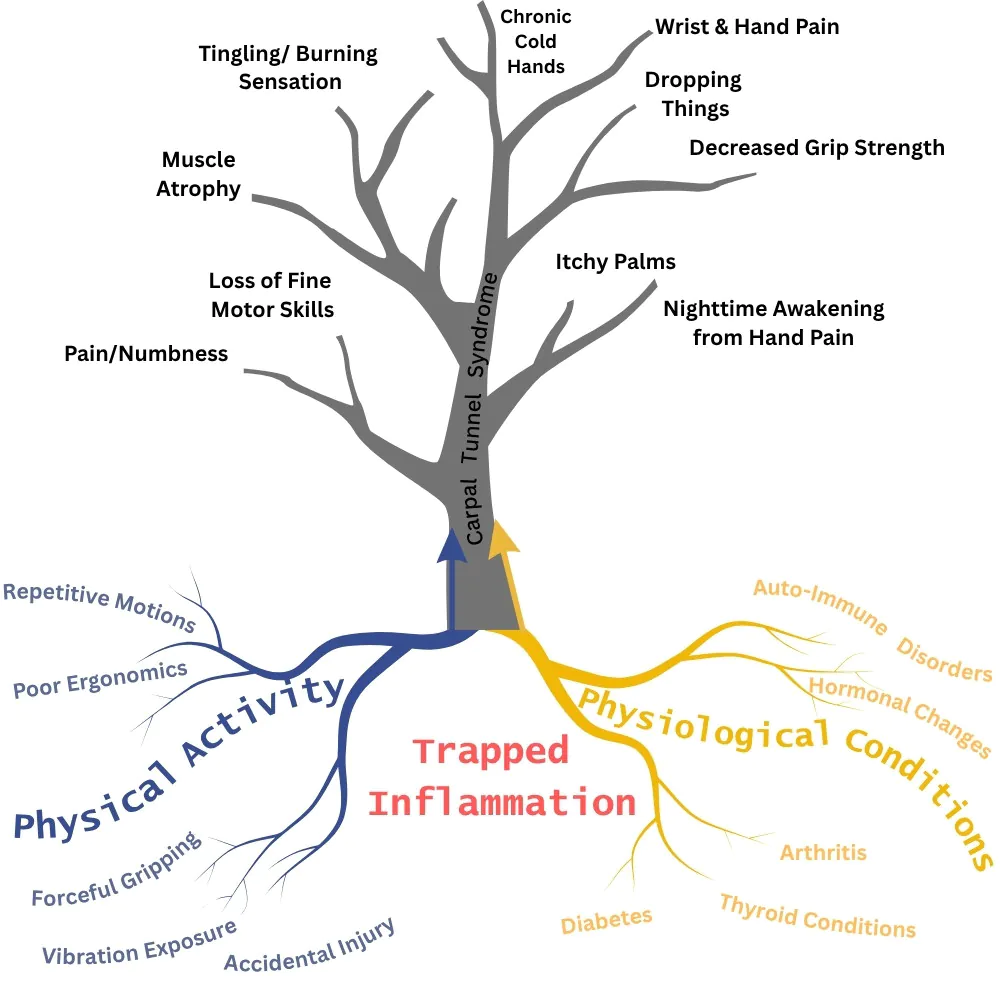
The Evidence Linking Systemic Inflammation and Carpal Tunnel
Large studies consistently link inflammatory and metabolic conditions to carpal tunnel syndrome:
| Condition | What the research shows |
|---|---|
| Diabetes (type 1 and 2) | A meta-analysis of 36 studies found about 70% higher odds of CTS after adjusting for other factors.[3] In the UK Biobank (over 400,000 people), diabetes was linked to 1.75 times the odds, even after accounting for weight.[4] |
| Higher blood sugar | In a Swedish cohort study of more than 30,000 adults, higher HbA1c and blood glucose levels (measured in about 5,500 of them) were associated with a higher risk of CTS.[5] |
| Obesity | A meta-analysis of 58 studies found obesity roughly doubled the odds of CTS, and each one-point increase in BMI raised the odds by about 7%.[6] |
| Rheumatoid arthritis | About twice the odds of CTS in a meta-analysis.[7] In one population study, CTS was more common in the years before rheumatoid arthritis was diagnosed (13% vs. 6%), so it can be an early sign.[8] |
| Hypothyroidism | About 40% higher odds of CTS after adjusting for other factors.[9] |
| Pregnancy | CTS symptoms are reported in 31% to 62% of pregnancies, and more than half still have symptoms a year after delivery.[10] |
| Low-grade inflammation | Higher C-reactive protein (CRP), a blood marker of inflammation, was linked to CTS symptoms spreading beyond the hand toward the elbow.[11] |
These are associations, and each condition affects the carpal tunnel in more than one way. But the pattern is clear: when the body’s overall inflammatory and metabolic load goes up, so does the likelihood of carpal tunnel inflammation. See who is at risk of carpal tunnel syndrome and the full list of causes of carpal tunnel syndrome.
Why Systemic Inflammation Makes Carpal Tunnel a Lifelong Condition
Systemic inflammation explains three things patients often find frustrating.
Slower recovery. If the body keeps producing excess inflammation, treatment has to clear carpal tunnel inflammation faster than new fluid arrives. People with higher systemic inflammation often take longer to reach remission, as our doctors note in their recommendations for persistent symptoms.
Recurrence. Inflammation comes and goes with weight, blood sugar, hormones, stress, sleep and illness. When the load rises again, symptoms can return.
Return after surgery. Carpal tunnel release cuts a ligament to make more room. It doesn’t change how much inflammation the body makes. Recurrent CTS is reported in 7% to 20% of cases after a first release.[12] That’s why there is no one-time carpal tunnel cure, and why carpal tunnel can return after surgery.
The goal, then, isn’t a one-time fix. It’s long-term control of carpal tunnel inflammation, the same way people manage blood pressure or asthma.
The Two-Part Strategy: Clear It and Slow It
Managing carpal tunnel inflammation for life comes down to two jobs:
- Clear the trapped inflammation already in the carpal tunnel, by reopening drainage so the body can carry the fluid away.
- Slow the production of new inflammation by bringing down the body’s overall inflammatory load.
Doing only the first gives relief that may not last. Doing only the second is slow and may never fully empty a tunnel that’s already congested. Together, they put CTS into remission and help keep it there.
7 Ways to Control Carpal Tunnel Inflammation for Life
1. Clear carpal tunnel inflammation at night with The Carpal Solution
The Carpal Solution is a home treatment kit developed by First Hand Medical’s doctors. A single-use stretching device, applied before bed, holds a gentle, targeted stretch on three areas around the carpal tunnel for 6 to 8 hours while you sleep.
Over the 6-week protocol, that adds up to more than 220 hours of stretching designed to open lymph channels, restore blood flow and disperse trapped inflammation.
Independent trials support the drainage principle. In a 2024 randomized trial of 80 patients, adding lymphatic drainage to splinting reduced swelling of the median nerve and improved symptoms more than splinting alone.[13] A 2025 trial reached a similar conclusion.[14] First Hand Medical reports relief of the worst symptoms in about three weeks and remission in six weeks for most users; these are company figures. Patients rate the kit 4.9 out of 5 on Google Reviews.
2. Get blood sugar under control
Diabetes is one of the strongest risk factors for CTS, and higher blood sugar, measured by HbA1c, is linked to higher risk even across the general population.[5] If you have diabetes or prediabetes, working with your doctor to keep your blood sugar in range is one of the most important steps you can take to lower carpal tunnel inflammation.
Ask your doctor when you last had your HbA1c checked. Blood sugar control also tends to improve with the next three steps: diet, weight and exercise.
3. Follow an anti-inflammatory diet for carpal tunnel
First Hand Medical’s doctors recommend a low-carbohydrate diet, because diets high in refined carbohydrates and sugar accelerate systemic inflammation. Research supports cutting back on fast-acting carbohydrates: a 2026 meta-analysis of 21 randomized trials found that low-glycemic diets modestly lowered CRP, IL-6 and other inflammatory markers.[15] In a review of 22 trials comparing dietary patterns, the Mediterranean diet produced the largest reductions in inflammatory markers such as IL-6.[16]
A practical anti-inflammatory diet for carpal tunnel looks like this:
- Cut back on sugar, sweet drinks, white bread, pastries and other refined carbohydrates.
- Build meals around vegetables, leafy greens, beans, nuts and olive oil.
- Choose fish, poultry and other protein sources over processed meats.
- Limit alcohol and heavily processed snack foods.
No diet has been proven to cure carpal tunnel on its own. Diet works by lowering the background inflammation that keeps feeding carpal tunnel inflammation.
4. Work toward a healthier weight
Excess weight is one of the most consistent risk factors for CTS: each one-point rise in BMI raises the odds by about 7%.[6] Fat tissue itself releases inflammatory signals that add to carpal tunnel inflammation, and extra fluid and tissue add pressure in tight spaces like the carpal tunnel.
Weight loss helps, but it isn’t a permanent fix by itself. In a small study, 14 of 16 patients with CTS improved after weight-loss surgery.[17] A Swedish study of more than 40,000 patients found a 23% lower risk of CTS in the first three years after weight-loss surgery, but the benefit faded over time.[18] Combine weight management with the other steps here.
5. Move every day
Regular exercise is one of the most reliable ways to lower systemic inflammation, and with it carpal tunnel inflammation. A meta-analysis of 83 studies found that exercise training lowered CRP, with bigger drops when weight also came down, and a significant benefit even when it didn’t.[19] Walking, cycling, swimming and strength training all count; aim for most days of the week.
For your hands specifically, pair night treatment with daytime stretching: up to 6 sets of 10 repetitions a day, holding each stretch for 15 seconds with 30 seconds of rest, if it fits your day. See the day-and-night exercise program.
6. Protect your sleep
Poor sleep and inflammation feed each other. A meta-analysis of 72 studies with more than 50,000 people linked sleep disturbance to higher CRP and IL-6.[20] Carpal tunnel makes this worse, because numbness and pain wake people at night (why symptoms are worse at night).
Treating carpal tunnel inflammation at night helps break the cycle: fewer awakenings mean better sleep, and better sleep supports lower inflammation. Keep a regular sleep schedule and avoid sleeping with bent wrists. Read more about carpal tunnel and sleep loss.
7. Care for your gums and treat underlying conditions
Gum disease is a common, easily overlooked source of whole-body inflammation. A meta-analysis of 20 randomized trials found that treating periodontal disease modestly lowered CRP.[21] First Hand Medical’s doctors recommend regular dental cleanings plus daily flossing (string floss or a water flosser), a good electric toothbrush and an alcohol-free mouthwash.
Just as important, work with your doctor on any condition that raises inflammation: diabetes, thyroid disease, rheumatoid arthritis, lupus, gout, kidney disease or hormonal changes. If you have arthritis, see our guide to carpal tunnel and arthritis.
Preventive Treatment Based on Your Inflammation Profile
Once carpal tunnel is in remission, people with higher systemic inflammation can use occasional preventive nights with The Carpal Solution to keep carpal tunnel inflammation from building up again. First Hand Medical’s doctors recommend this schedule:
| Your inflammation profile | Suggested preventive treatment |
|---|---|
| Most patients | Remission often lasts 5 to 7 years; repeat the 6-week protocol if symptoms return |
| Minor systemic inflammation | One night every 3 to 6 months |
| Heavy hand use at work (dentists, hygienists, electricians, hairstylists) | One night every 1 to 3 months |
| Autoimmune or other inflammatory conditions | One night every 1 to 2 months |
| Severe autoimmune conditions (e.g., rheumatoid arthritis, fibromyalgia) | One night every 1 to 2 weeks |
Lowering your systemic inflammation with the steps above can reduce how often you need preventive treatment.
Special Situations: Pregnancy, Menopause and Autoimmune Disease
Pregnancy. Fluid retention increases carpal tunnel inflammation, so symptoms are common during pregnancy, and they don’t always go away after delivery: more than half of women still had symptoms at one year, and about 30% at three years.[10] Gentle, drug-free night treatment is a good fit. See carpal tunnel treatment during pregnancy.
Menopause. Hormonal shifts change fluid balance and tissue elasticity, which can add to carpal tunnel inflammation, and CTS becomes more common in women around midlife. Talk with your doctor about managing menopausal changes.
Autoimmune conditions. Rheumatoid arthritis, lupus, Sjögren’s syndrome and similar conditions raise carpal tunnel inflammation and often call for more frequent preventive nights. Because CTS can appear before rheumatoid arthritis is diagnosed, new hand numbness with joint pain or morning stiffness is worth mentioning to your doctor.[8]
Tracking Your Carpal Tunnel Inflammation Over Time
- Use our self-test for carpal tunnel to set a baseline.
- Keep a weekly log of night symptoms, daytime tingling and grip, rated 0 to 10.
- Note what changes alongside flares: weight, blood sugar, illness, poor sleep, heavy hand use or hormonal changes.
- Ask your doctor whether tests such as HbA1c, thyroid function or CRP make sense for you, and review them over time.
Patterns in your log show which triggers drive your carpal tunnel inflammation. For more on managing CTS without clinic visits, see carpal tunnel treatment at home.
When to See a Doctor
- Constant numbness, day and night.
- Wasting of the muscle at the base of the thumb, or clear weakness.
- Sudden, severe symptoms after an injury.
- New hand symptoms along with joint pain, morning stiffness, fatigue, unexplained weight change or excessive thirst, which can point to an underlying condition.
If you’ve had carpal tunnel surgery, wait at least three months before starting The Carpal Solution so the tissue can heal. For all your options, see our carpal tunnel non-surgical treatment guide.
Carpal Tunnel Inflammation FAQs
Is carpal tunnel caused by inflammation?
Swelling in the carpal tunnel raises pressure on the median nerve and blocks the drainage of fluid, which traps inflammation in the tunnel. Carpal tunnel inflammation comes from hand use and from systemic inflammation linked to conditions such as diabetes, obesity, thyroid disease and arthritis.
Can an anti-inflammatory diet help carpal tunnel?
It can help as part of a plan. Low-glycemic and Mediterranean-style diets lower markers of inflammation in trials. Diet won’t clear an already congested tunnel on its own, so combine it with night treatment such as The Carpal Solution.
Does diabetes cause carpal tunnel?
Diabetes is a major risk factor. Studies find about 70% higher odds of CTS in people with diabetes, and higher blood sugar is linked to higher risk. Good blood sugar control is an important part of managing carpal tunnel.
Will losing weight help my carpal tunnel?
It may. Higher BMI is consistently linked to CTS, and risk fell in the first years after weight-loss surgery in one large study. The benefit faded over time, so weight loss works best combined with treatment and other anti-inflammatory habits.
Does smoking cause carpal tunnel?
A 2022 meta-analysis of 31 studies didn’t support a direct link between smoking and CTS.[22] Quitting is still good for circulation and overall health.
Do anti-inflammatory pills help carpal tunnel?
Over-the-counter anti-inflammatories may ease pain briefly, but the AAOS guideline found too little evidence to recommend them as a treatment for CTS.[23] Lowering systemic inflammation through lifestyle and clearing the tunnel directly are more useful long term.
Related Reading
- The Root Cause of Carpal Tunnel: Trapped Inflammation
- Systemic Inflammation Slows Recovery from Carpal Tunnel
- Decoding Inflammation, Swelling & Lymph Fluid
- Carpal Tunnel Cure: The Honest Truth and a Plan for Life
- Carpal Tunnel Treatment at Home: Why Care Is Moving Home
- Carpal Tunnel Non-Surgical Treatment: 7 Options That Work
- Natural Carpal Tunnel Treatment: Backed by Evidence
- Carpal Tunnel Home Remedies: Developed by Doctors Are Best
- Carpal Tunnel Syndrome Remedy: Relief for Every Symptom
Take Control of Inflammation, Take Control of Carpal Tunnel
Carpal tunnel inflammation has two sources, so the plan has two parts: clear what’s trapped in the tunnel and slow what your body produces. Do both, and most people can keep carpal tunnel in remission for life.
Start Tonight: Order The Carpal Solution
30-day money-back guarantee. New to the kit? Follow our quick-start guide. Questions? Call (800) 798-5210
References
- Hidayati HB, et al. Current diagnosis and management of carpal tunnel syndrome: a review. Anaesth Pain Intensive Care. 2022;26(3):394–404. doi:10.35975/apic.v26i3.1902
- Aboonq MS. Pathophysiology of carpal tunnel syndrome. Neurosciences (Riyadh). 2015;20(1):4–9. nsj.org.sa
- Pourmemari MH, Shiri R. Diabetes as a risk factor for carpal tunnel syndrome: a systematic review and meta-analysis. Diabet Med. 2016;33(1):10–16. pubmed.ncbi.nlm.nih.gov/26173490
- Wiberg A, et al. Replication of epidemiological associations of carpal tunnel syndrome in a UK population-based cohort of over 400,000 people. J Plast Reconstr Aesthet Surg. 2022. doi:10.1016/j.bjps.2021.11.025
- Rydberg M, et al. Diabetes mellitus as a risk factor for compression neuropathy: a longitudinal cohort study from southern Sweden. BMJ Open Diabetes Res Care. 2020;8(1):e001298. drc.bmj.com
- Shiri R, et al. The effect of excess body mass on the risk of carpal tunnel syndrome: a meta-analysis of 58 studies. Obes Rev. 2015;16(12):1094–1104.
- Shiri R. Arthritis as a risk factor for carpal tunnel syndrome: a meta-analysis. Scand J Rheumatol. 2016;45(5):339–346. pubmed.ncbi.nlm.nih.gov/27022991
- George RJ, et al. Arthritis Care Res. 2025. doi:10.1002/acr.25566 (population-based study of carpal tunnel syndrome before and after rheumatoid arthritis diagnosis)
- Shiri R. Hypothyroidism and carpal tunnel syndrome: a meta-analysis. Muscle Nerve. 2014;50(6):879–883. doi:10.1002/mus.24453
- Padua L, et al. Systematic review of pregnancy-related carpal tunnel syndrome. Muscle Nerve. 2010;42(5):697–702.
- Zvonickova K, et al. Systemic low-grade C-reactive protein is associated with proximal symptom spread in carpal tunnel syndrome. PAIN Rep. 2024;9(3):e1156. doaj.org
- Jones Q, et al. Clinical, electrophysiological, and intraoperative analysis and postoperative success of revision surgery for persistent and recurrent carpal tunnel syndrome. ePlasty. 2024;24:e56. hmpgloballearningnetwork.com
- Cihan E, et al. The impact of lymphatic drainage and nerve mobilization techniques on nerve morphology in mild-to-moderate carpal tunnel syndrome: a randomized controlled trial. Clin Rehabil. 2024;38(12):1633–1644.
- Kablan N, et al. The effect of manual lymphatic drainage on intraneural edema of the median nerve in patients with carpal tunnel syndrome: a randomized controlled trial. J Hand Ther. 2025;38(1):80–90.
- Effects of low glycemic index/load diets on metabolic and inflammatory markers in humans: a meta-analysis of 21 randomized controlled trials. Front Nutr. 2026.
- Koelman L, Egea Rodrigues C, Aleksandrova K. Effects of dietary patterns on biomarkers of inflammation and immune responses: a systematic review and meta-analysis of randomized controlled trials. Adv Nutr. 2022;13(1):101–115.
- Study of 16 patients with carpal tunnel syndrome after bariatric surgery. Muscle Nerve. 2009;40(4). Summary: newswise.com
- Lane J, et al. J Plast Reconstr Aesthet Surg. 2024;97:245–255 (Swedish nationwide matched cohort study of bariatric surgery and carpal tunnel syndrome).
- Fedewa MV, Hathaway ED, Ward-Ritacco CL. Effect of exercise training on C reactive protein: a systematic review and meta-analysis of randomised and non-randomised controlled trials. Br J Sports Med. 2017;51(8):670–676. bjsm.bmj.com
- Irwin MR, Olmstead R, Carroll JE. Sleep disturbance, sleep duration, and inflammation: a systematic review and meta-analysis. Biol Psychiatry. 2016;80(1):40–52.
- Demmer RT, et al. The influence of anti-infective periodontal treatment on C-reactive protein: a systematic review and meta-analysis of randomized controlled trials. PLoS ONE. 2013;8(10):e77441. doaj.org
- Lampainen K, et al. Is smoking associated with carpal tunnel syndrome? A meta-analysis. Healthcare. 2022;10(10):1988. mdpi.com
- Keith MW, et al. American Academy of Orthopaedic Surgeons clinical practice guideline on the treatment of carpal tunnel syndrome. J Bone Joint Surg Am. 2010;92(1):218–219. pmc.ncbi.nlm.nih.gov/articles/PMC6882524
Disclosure: MyCarpalTunnel.com is owned by First Hand Medical, maker of The Carpal Solution. This article is educational and not a substitute for medical advice; talk with your doctor about your symptoms and any underlying conditions. Results reported by First Hand Medical reflect the company’s clinical experience and patient reports; individual results vary.