 Created by renowned Harvard health care professionals.


Carpal Tunnel Surgery for Musicians: Why Players Recommend Natural Therapy First
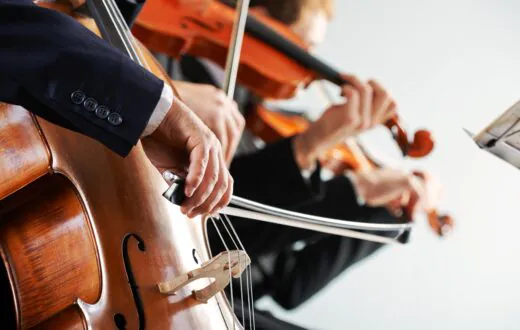
Carpal tunnel surgery for musicians is a harder decision than for almost anyone else, because a performing career depends on fine finger control, feeling and grip. Here is why musicians recommend a non-invasive therapy to one another first, and keep surgery as a last resort.
Table of Contents
Musical artists provide so much enjoyment to the world with their remarkable hand dexterity, discipline and rhythmic talent, yet often they find that they are limited in sharing their enlightening gift by repetitive stress injuries (RSI) to their hands and wrists.
Carpal Tunnel Syndrome is one of the most common RSIs that affects musicians. Artists like guitarists, pianists and violinists have a high incidence of CTS because they use their fingers and hands so intensely every day to practice their craft and expand their talent so they can perform to ever higher levels of musical perfection.
Musicians are the least likely to allow surgical procedures to be performed on their hands, because when there are complications like a loss of grip strength, loss of range of motion or lost sensitivity in their fingers, it will likely mean a change of profession or the end of their music playing and performances. Musical artists are so passionate about their music – surgery on their hands for most is unthinkable and only a last resort after using proven stretching therapy using the Carpal Solution at night during sleep.
Pianist, Musical Director & Composer “Cures” Carpal Tunnel Hand Pain
Watch a video of Music Director, Pianist and Composer, Diane in California, telling how she got relief from CTS after trying everything else. The Carpal Solution worked and continued to allow her to play intensely 12 hours per day.
How Musicians Control Carpal Tunnel with Proven Natural Stretching Therapy
For instance an artist seeking to be a virtuoso pianist or someone on track to become a performance guitarist is never going to let their hands and fingers go under the knife. When CTS surgery results come in with a patient satisfaction rate lower than 69% and about 8% of surgery patients actually end up with worse symptoms after surgery (Bland, Muscle & Nerve, 2007: a review of 209 studies covering 32,936 operations) due to increased scar tissue —-the prognosis is not acceptable to a thinking person, except as a last resort. The medical community and health insurers alike, are in agreement that CTS surgery should be considered only after every well-documented non-invasive therapy has been attempted.
So what is an aspiring player to do to protect their hands from repetitive stress injury? Fortunately, a relatively new clinically documented, proactive stretching therapy has been developed by a doctor working with his wife and patients with Carpal Tunnel Syndrome (developed in 2001).
It is called Carpal Solution TherapyTM . Neurologists, including Dr. James S. Zu, MD, PhD, of Edison, New Jersey, call it a better first line of defense for Carpal Tunnel Syndrome because it is non-invasive, all natural and does not result in the complications associated with other CTS treatments. There is no downtime, no steroid injections, no rigid restrictive wrist splints, no complications from oral pain meds, no risky surgery. Most importantly it relieves your worst symptoms in two to three weeks with complete remission in just the Six Week Protocol.
The Carpal Solution is a soft tissue stretching therapy with a unique comfortable brace that you only wear at night. It is ideal for musical artists like clarinet players or those who play guitar and piano or the violin because there is no threat to your hands and no downtime away from your passion.

Why Musicians Recommend a Non-Invasive Carpal Tunnel Therapy
Among performers, word of mouth carries weight. Musicians recommend options that let them keep playing, which is why a therapy used at night during sleep, with no downtime away from the instrument, appeals to them. The page describes musicians sharing the Carpal Solution with one another, and that fellowship is a big part of the experience.
Musicians form a powerful fellowship as they are all uniquely passionate about their art and understand, relate and feed off one another’s passion. When a debilitating hand condition like Carpal Tunnel limits one’s ability to perform, they unite to battle Carpal Tunnel with the same kind of passion, deep empathy and loyal camaraderie. Musician Friends do not let fellow musicians suffer silently. These dedicated artists share the Carpal Solution Therapy with one another with unique passion and dedication compared to most other professions. This dedication has preserved careers, saved bands and lifted orchestras to new levels of performance.
Before choosing any therapy, it helps to confirm the diagnosis with a doctor. That is also why musicians recommend getting a proper diagnosis first. The NINDS carpal tunnel syndrome fact sheet is a good general reference, and it can help you talk with your healthcare provider about the options that fit your playing schedule.
Watch videos of people who “Cured” their Carpal Tunnel Naturally and Avoided the Risks of Carpal Tunnel Surgery!



Carpal Tunnel Surgery for Musicians: Why the Stakes Are Higher
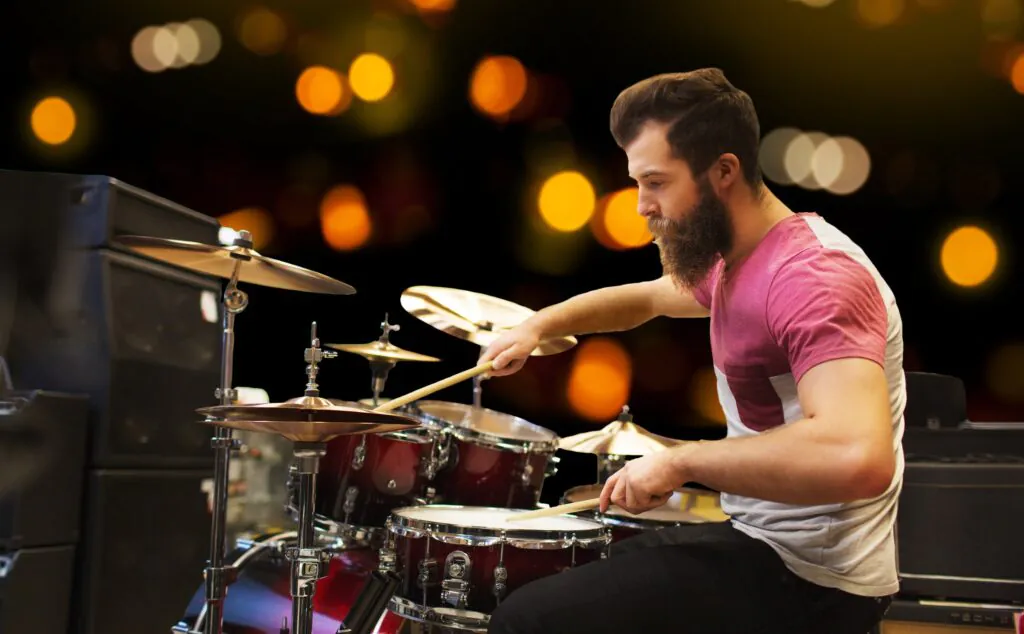
Carpal tunnel surgery has a patient satisfaction rate lower than 69%: about 31% of patients report lingering or recurring symptoms, and no patient is satisfied with lingering symptoms. For a musician, lingering numbness or weakness in the fingertips is more than an inconvenience. It can mean missed notes, lost tone control and a shorter career. That is why carpal tunnel surgery for musicians deserves extra caution.
Our doctors also see patients who report permanent loss of grip strength, permanent incision tenderness and permanent loss of dexterity after carpal tunnel surgery. That is their clinical experience with patients, not a published statistic, but for a pianist, guitarist, drummer or violinist any one of those problems can end a performing career.
Even after a successful surgery, symptoms often return: 57% of patients had at least some symptoms return within five and a half years (Nancollas et al., 1995), and our doctors estimate 80 to 90% within 10 years, based on two decades of clinical experience rather than published research. Second surgeries have a patient satisfaction rate between 16% and 40%. See recurrence after carpal tunnel surgery and 6 carpal tunnel surgery myths.
Carpal tunnel surgery for musicians, like any musician hand surgery, also means time away from the instrument while the incision heals and strength returns. Ask your surgeon how long you would need to stop playing before you decide.
Musician Hand Pain and Repetitive Strain Injury in Musicians
Repetitive strain injury in musicians usually follows the same pattern: long practice sessions, a heavy concert schedule and little rest for the hands. The muscles that bend the fingers and thumb sit in the forearm, and their nine tendons pass through the carpal tunnel beside the median nerve. Hours of fast, precise finger work inflame the soft tissue around those tendons, and the swelling squeezes the nerve and restricts blood flow and lymph drainage.
That is why musician hand pain often comes with numbness and tingling in the thumb, index and middle fingers, waking at night, and musician wrist pain that spreads into the forearm. Left alone, weakness can follow in the forearm, thumb and fingers, and players usually notice it first as lost speed and control.
If you have three or more of the carpal tunnel symptoms listed on this site, our doctors’ two decades of clinical experience suggest you can be about 95% confident it is carpal tunnel syndrome. You should still get an in-person evaluation from a doctor, but you can start a natural, non-invasive treatment while you wait. See a doctor promptly for constant numbness, weakness or thinning of the muscle at the base of the thumb.
What Musicians Recommend Before Carpal Tunnel Surgery

Before carpal tunnel surgery for musicians is even considered, players recommend the Carpal Solution because it works while they sleep, so there is no time away from the instrument. The six-week protocol gives over 220 hours of targeted passive stretching that restores flexibility to the injured soft tissue, relieves pressure on the median nerve and lets blood and lymph fluid flow freely to clear out the swelling. It is your body that does the healing; the Carpal Solution jump-starts it.
- Night treatment: most people are better from their worst symptoms in two to three weeks, and over 90% reach remission in six weeks. About 10% with excess systemic inflammation need 8 to 12 weeks and are usually 50% to 70% better at six weeks.
- Daytime stretches: if your schedule allows, up to 6 sets of 10 gentle stretches a day, holding each for 15 seconds with 30 seconds of rest.
- No grip exercises while healing: skip squeeze balls and putty; grip strength returns with normal playing once the pressure is off the nerve.
- After a big concert program: many players use the Carpal Solution anywhere from once a week to once every six months to stay in remission.
A splint holds the wrist in a neutral position, which can reduce pain from movement, but it does not promote healing from carpal tunnel syndrome. Our doctors observe that splints compress the wrist and restrict circulation and lymphatic flow, which slows the clearing of swelling, and immobilization causes muscle atrophy over time.
The Carpal Solution has 97% patient satisfaction over 21 years and 4.9 out of 5 stars on independent review sites like Google Reviews, and over 100,000 people have used it over two decades. Waiting for a specialist? The average new-patient wait is 31 days (AMN Healthcare, 2025); see waiting for carpal tunnel treatment. More musicians’ experiences: musician carpal tunnel, a musician finds relief and 10 tips for musicians.
Protecting Your Hands Between Rehearsals

Musician hand pain and musician wrist pain build up over hours of practice, rehearsal and performance. Before you consider musician hand surgery, these habits help the hands recover while the Carpal Solution works at night:
- Practice in shorter blocks. Play for 25 to 45 minutes, then rest your hands for five minutes. Several short sessions are easier on the tissue than one long one.
- Warm up slowly. Start with easy scales or long tones before fast passages or heavy repertoire.
- Keep the wrists neutral. Adjust bench height, strap length, music stand and chair so your wrists are not bent up, down or sideways for long stretches.
- Use the least tension that works. Squeezing a pick, bow, stick or neck harder than needed loads the forearm muscles whose tendons run through the carpal tunnel.
- Add gentle daytime stretches. Our doctors suggest up to 6 sets of 10 gentle wrist and finger stretches, holding each for 15 seconds with 30 seconds of rest. Skip grip trainers and squeeze balls while you heal.
- Plan for heavy weeks. Wear the Carpal Solution the night after a long rehearsal, recording session, tour date or gig.
Repetitive strain injury in musicians is common, and so is the fear of surgery on the hands that earn a living. Diane, a Los Angeles music director and pianist, was offered surgery on both wrists and her elbow at once. She chose conservative treatment instead and went back to 12-hour playing days. Read her piano wrist pain Patient Experience, and see more musicians’ experiences on our Patient Experience with Carpal Tunnel page.
When Healing Needs a Doctor’s Help and Professional Medical Evaluation
- Constant numbness that does not improve or loss of feeling in the fingertips that does not improve in 4 to 8 weeks.
- Extreme loss of the muscle at the base of the thumb, with loss of grip strength that does not improve over 6 to 8 weeks.
- Worsening symptoms over 6 to 8 weeks while using the best conservative treatments
- Symptoms that begin suddenly after hand or wrist trauma, a fracture or severe sprain from a fall or auto accident.
- Odd Symptoms that are not consistent with the Carpal Tunnel Symptoms listed on this website, that might be indicative of other nerve issues. A nerve conductivity study can clear up the confusion with minimal costs and not too much pain and no risk.
These signs may mean more advanced nerve involvement or a different condition and deserve professional medical evaluation and in person consultation. Home treatment can be used alongside professional in-person medical care while you wait for the healthcare delivery system to fit you into their schedule. There is no reason to wait doing nothing. You can start proven natural conservative treatment with good patient reviews while you wait for your appointments.
If your symptoms start improving over 6 to 8 weeks, then you know you are on the right track and surgery is not necessary.
Carpal Tunnel Surgery for Musicians: FAQ
Can musicians have carpal tunnel surgery?
Yes, and carpal tunnel surgery for musicians is sometimes necessary, but it should be the last resort. Carpal tunnel surgery has a patient satisfaction rate lower than 69%, and lingering numbness or weakness matters more to a player than to most people. Try proven conservative treatment first.
Do I have to stop playing to treat carpal tunnel naturally?
No. The Carpal Solution is worn at night during sleep, so most musicians keep practicing and performing while they treat it, with none of the downtime that carpal tunnel surgery for musicians brings.
Is musician hand pain always carpal tunnel?
No. Other conditions can cause hand pain. Numbness and tingling in the thumb, index and middle fingers, especially at night, point to carpal tunnel. A doctor’s evaluation and, if needed, a nerve conduction study can sort it out.
How long is recovery from carpal tunnel surgery for musicians?
Recovery varies, and many musicians need weeks to months before they can play at full strength and speed again. Some never regain the same fine control, and about 31% of patients report lingering or recurring symptoms after surgery, which is why carpal tunnel surgery has a patient satisfaction rate lower than 69%. For a musician, a conservative treatment first protects both the hands and the career.
Which musicians get carpal tunnel most often?
Pianists, keyboard players, guitarists, bassists, drummers, violinists, cellists and other string players are all at risk, because each instrument asks for hours of fast, repetitive finger and wrist work. Musicians who also type, teach or drive long distances to gigs add even more strain. Music teachers who demonstrate for students all day, and session players who record for hours, are at especially high risk of musician wrist pain.
What is the first thing to try for musician hand pain?
Rest between sessions, keep the wrists neutral, and start a conservative home treatment such as the Carpal Solution, which is worn only at night so you can keep playing. See a doctor promptly for constant numbness, weakness or thinning of the muscles at the base of the thumb.
Can I use the Carpal Solution after carpal tunnel surgery?
Yes. If symptoms linger after carpal tunnel surgery for musicians or anyone else, it can help, but wait three months after surgery so the surgically disturbed tissue can heal first.


